
Search engines are changing.
Instead of just matching keywords, modern search engines rely on entity SEO to understand what your content is actually about, how different topics connect, and which brands or websites deserve visibility in search results.
This shift is powered by technologies like Google’s Knowledge Graph, natural language processing, and other AI systems that help interpret user intent beyond simple keyword matching.
In other words, ranking today isn’t just about optimizing for a keyword.
It’s about becoming an entity. Something search engines recognize, understand, and associate with specific topics.
That’s what entity SEO is all about.
In this guide, we’ll break down how entity-based SEO works, how it differs from traditional SEO, and what you need to do to build topical authority and get recognized as a relevant entity in your space.
Key Takeaways:
- Entity SEO is how search engines understand topics, not just keywords, by connecting entities within the Knowledge Graph.
- Becoming an entity means building consistent signals across your content and external mentions, not just optimizing individual pages.
- Keywords still matter, but they now support a broader entity-based SEO strategy focused on user intent and semantic search.
- Topical authority and structured content help search engines connect your site to relevant entities and concepts.
- Off-page signals like mentions and placements strengthen your presence in Google’s Knowledge Graph and search results.
- Entity SEO builds on traditional SEO rather than replacing it.

Link building cheat sheet
Gain access to the 3-step strategy we use to earn over 86 high-quality backlinks each month.
What is Entity SEO?
Entity SEO is about helping search engines understand who or what you are, not just what keywords you use.
To understand this, you need to know what an entity is.
An entity is something Google can clearly identify and understand on its own.
For example:
- The Eiffel Tower is an entity
- Elon Musk is an entity
- New York is an entity
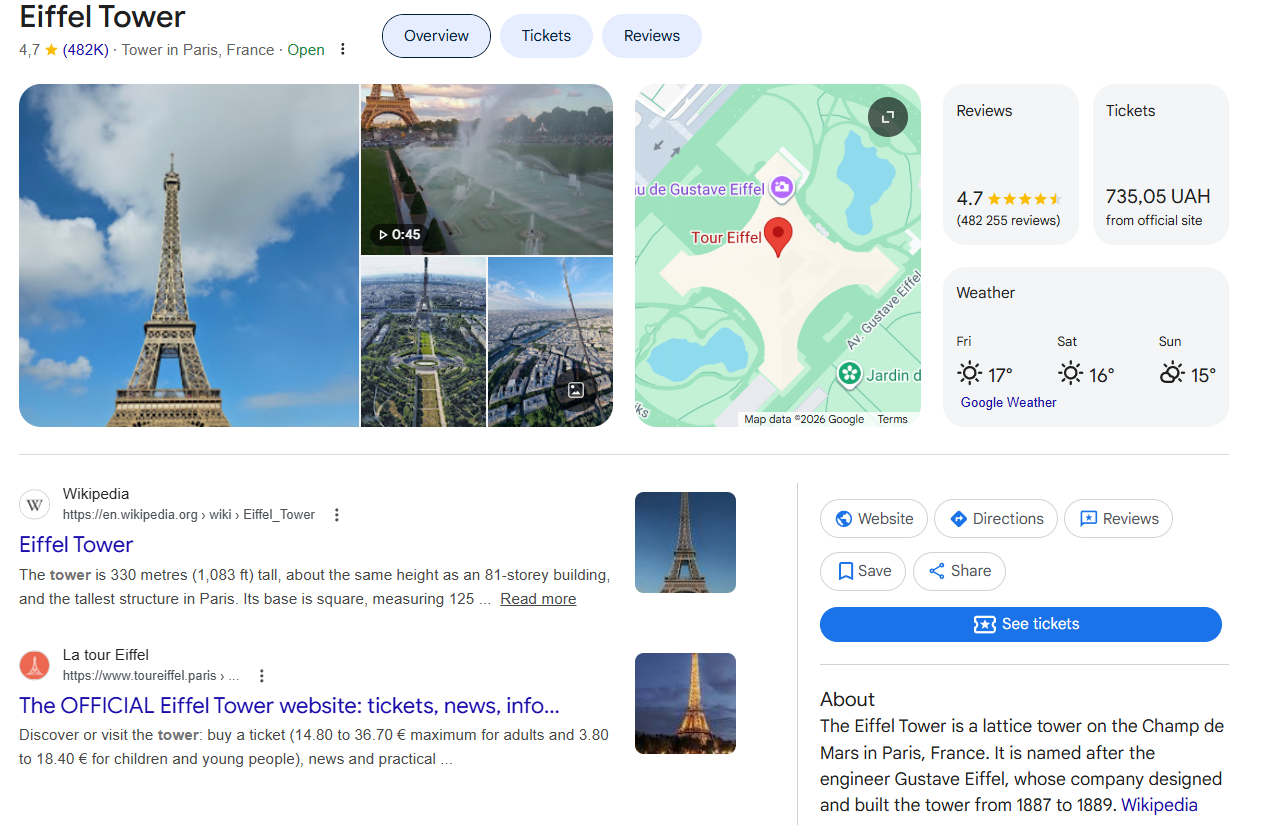
Google doesn’t need extra context to understand these. It already knows what they are, how they relate to other things, and where they fit in its Knowledge Graph.
Now compare that to a keyword like “best SEO tools.”
That’s not an entity. It’s just a phrase.
Traditional SEO focuses on optimizing content around keywords like that.
Entity SEO goes a step further.
Instead of just targeting keywords, you’re helping search engines understand:
- what your brand is
- what topics you’re associated with
- how you relate to other entities in your space
Search engines use systems like the Knowledge Graph, semantic search, and natural language processing to connect all of this together.
So when your content, your mentions, and your overall presence are consistent, Google starts treating your brand as a recognized entity, not just another website.
That’s important because search engines don’t rank pages in isolation anymore.
They look at:
- how well your content matches user intent
- how strongly you’re associated with a topic
- and how you connect to other relevant entities
This is why two pages targeting the same keyword can get completely different search results.
One page is just optimized for a keyword.
The other is backed by a clear entity, strong entity relationships, and consistent signals across the web.
That’s what entity SEO helps you build.
Does Entity SEO Replace Traditional SEO?
No, entity SEO does not replace traditional SEO. It builds on top of it.
Traditional SEO is still the foundation. You still need keyword research, optimized content, and a solid SEO strategy to rank in search engines.
Keywords are how you tell search engines what your content is about.
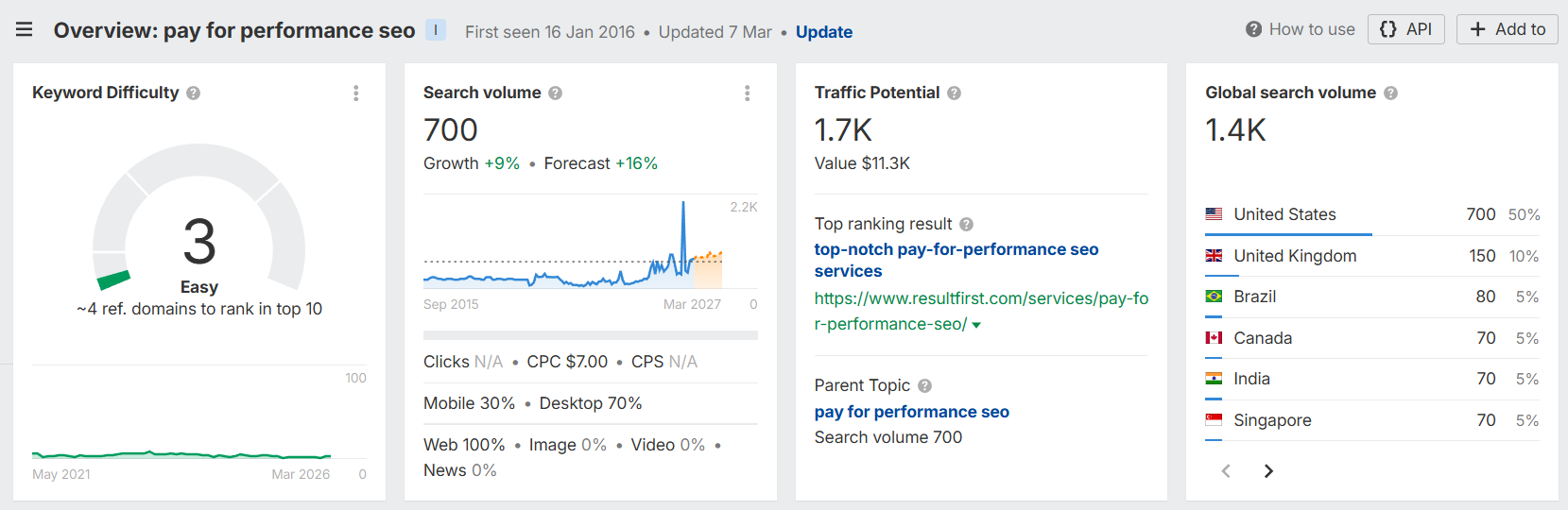
But that alone is no longer enough.
Entity SEO comes into play once search engines start connecting the dots between your content, your brand, and other relevant entities across the web.
Think of it this way:
- Traditional SEO helps you rank for a keyword
- Entity SEO helps search engines understand why you should rank
An entity is not something you create directly.
It is something that forms over time as search engines gather information about you from:
- your content
- your internal linking structure
- your external mentions and placements
When enough consistent signals exist, search engines begin associating your site with specific topics. That is when you start becoming a recognized entity.
This is why keywords are not replaced.
They are still essential for matching user intent, structuring your content, and guiding your content strategy.
But instead of treating each keyword as a separate target, entity-based SEO connects them through topic clusters and topical authority.
Ahrefs has an awesome graph explaining this visually:
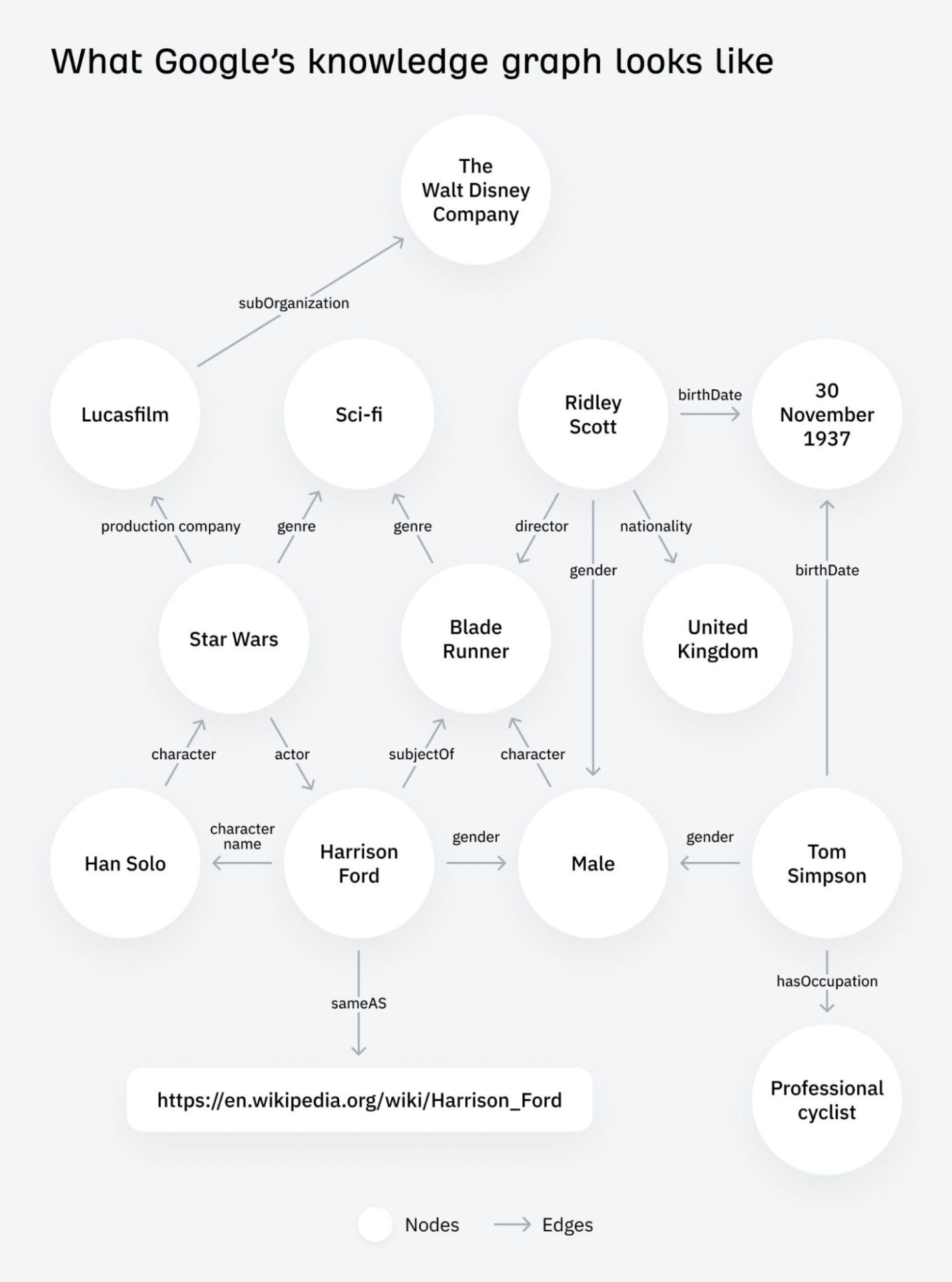
For example, instead of writing isolated articles for different keywords, you build a network of content that reinforces the same core entity.
Over time, this strengthens your position in search results because search engines see you as a reliable source within that topic.
How Do You Become an Entity?
Step 1: Take Care of Your Own Site
Before you worry about mentions, backlinks, or anything off-page, you need to get your own site in order.
This is where most of your core entity signals come from.
Search engines look at your content, your internal linking, and your overall structure to figure out what your site is about. If that foundation is weak or scattered, it becomes much harder to build a clear entity later on.
The first thing you should focus on is building topic clusters.
Instead of publishing random articles targeting unrelated keywords, group your content around a central topic, also called a seed keyword. Each piece should support a broader theme and connect back to a core page.
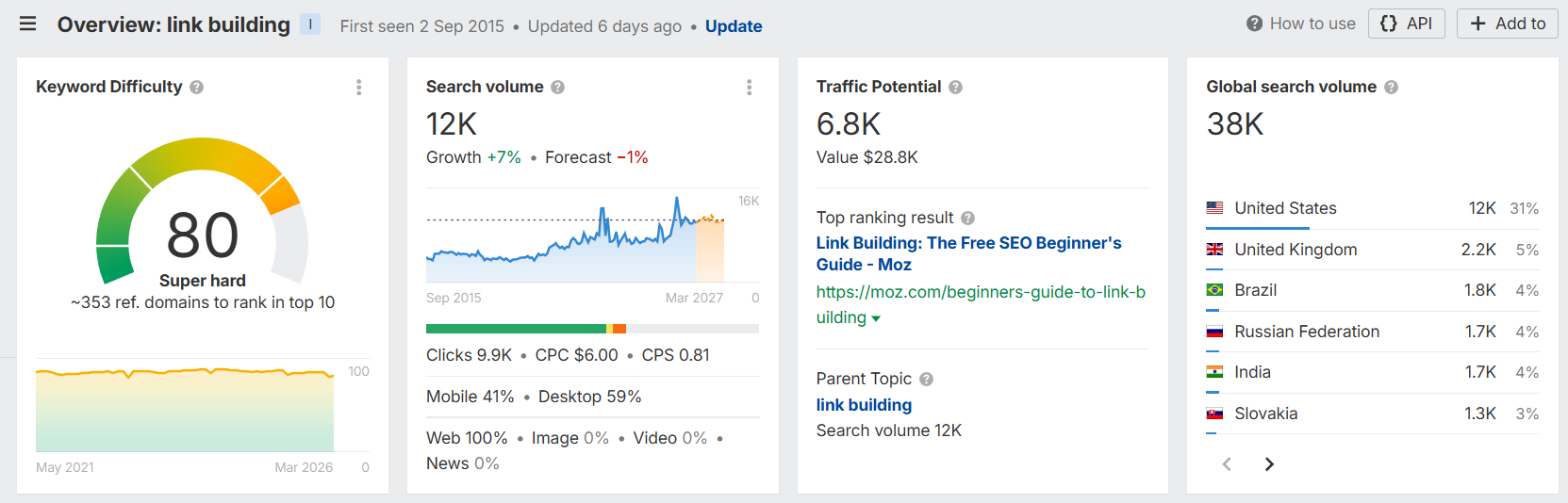
This is how you build topical authority.
For example, if your core topic is link building, you shouldn’t just have one article targeting that keyword. You should have multiple pieces covering related keywords, each reinforcing the same entity from a different angle.
That’s where keyword research still plays a role.
You want a mix of:
- informational long-tail keywords for blog content
- commercial keywords for product pages, comparisons, and list posts
Together, they help you cover both user intent and depth within a topic.
But content alone isn’t enough.
You also need to connect everything properly through internal linking.
Every single page on your site should be easily accessible within 3 clicks or less, and have at the very least 5 internal links pointing to it. More important pages should have more.
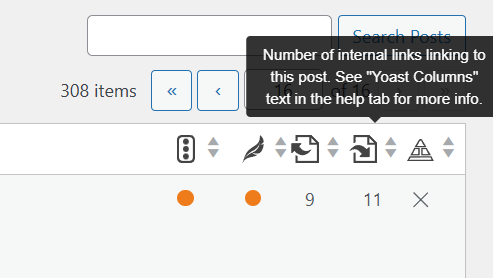
Your internal links should:
- connect related pages
- reinforce your main topics
- guide both users and search engines through your content
This helps distribute context across your site and makes your entity much clearer.
On top of that, you should use schema markup and structured data wherever possible.
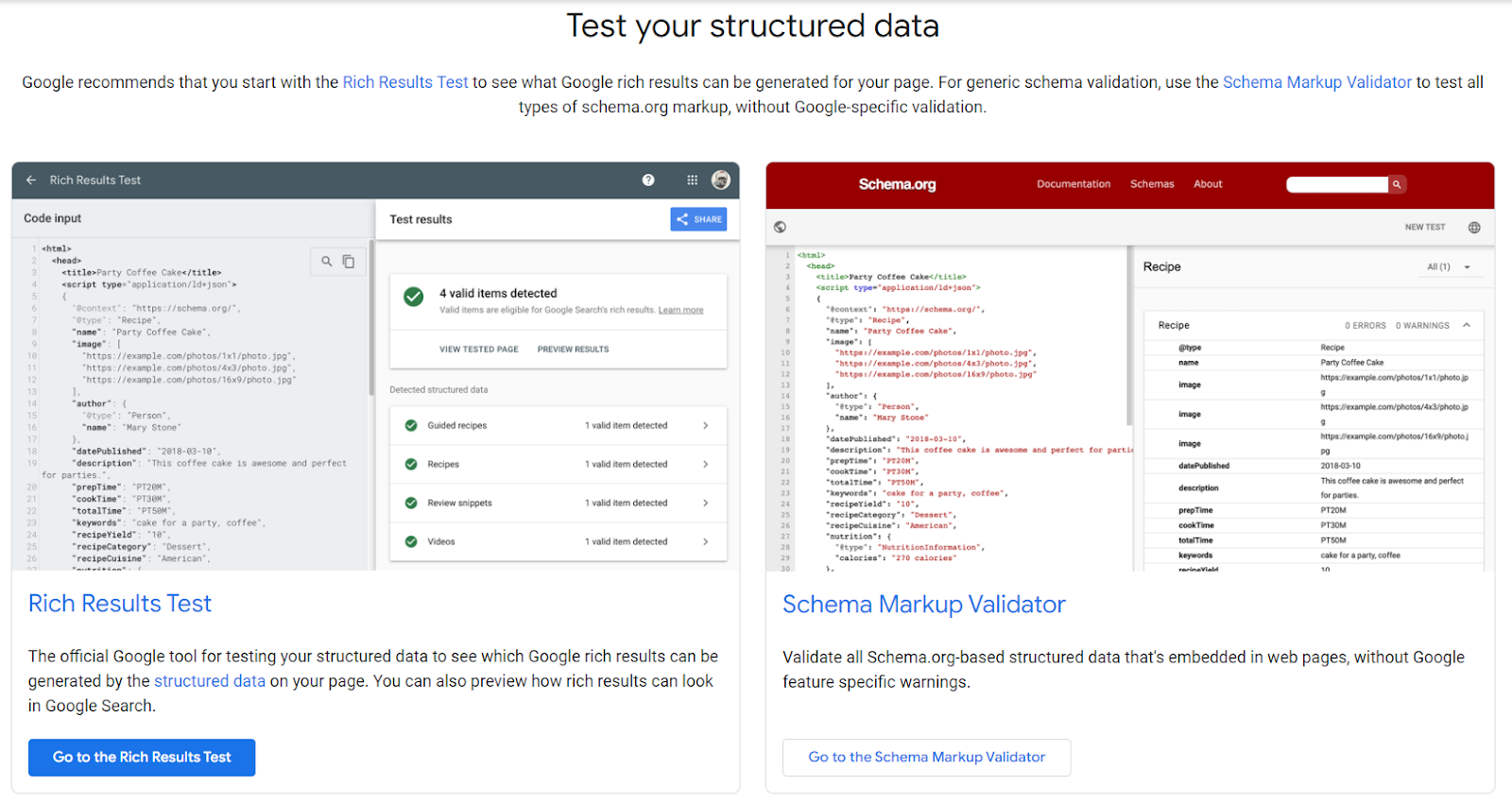
This is one of the most direct ways to tell search engines what your content represents. Schema helps define entities explicitly instead of leaving everything up to interpretation.
Over time, all of this adds up.
Step 2: Focus on Off-Page SEO
Once your site is structured properly, the next step is to build entity signals outside of it.
This is where entity SEO really starts to take shape.
Search engines don’t just look at your own content. They look at how other websites mention you, where you appear, and how you connect to other relevant entities across the web.
There are two layers to this.
First: Claim Your Listings
Start with the basics.
Claim your profiles on major platforms like:
- G2
- Capterra
- Crunchbase
- industry-specific directories
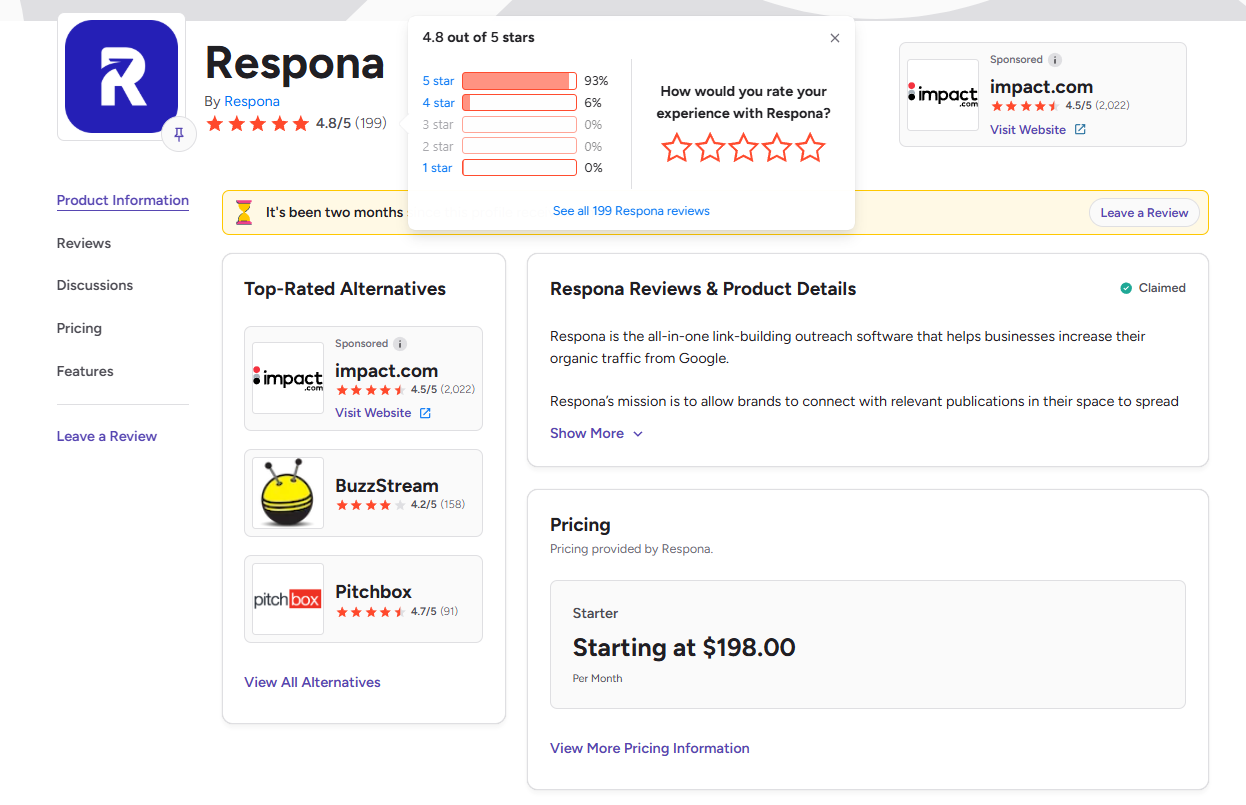
If you’re doing local SEO, your Google Business Profile also plays a role here.
These listings help establish your core entity and give search engines structured data about your business.
They are easy wins, but they’re not enough on their own.
Second: Earn Real Mentions on Relevant Sites
This is the part that actually moves the needle.
To become a recognized entity, you need consistent, high-quality entity mentions on real websites in your niche.
Not just directories.
Not just random backlinks.
You need placements on blogs, publications, and company sites that search engines already trust.
Like the top link building tools listicle on Backlinko:
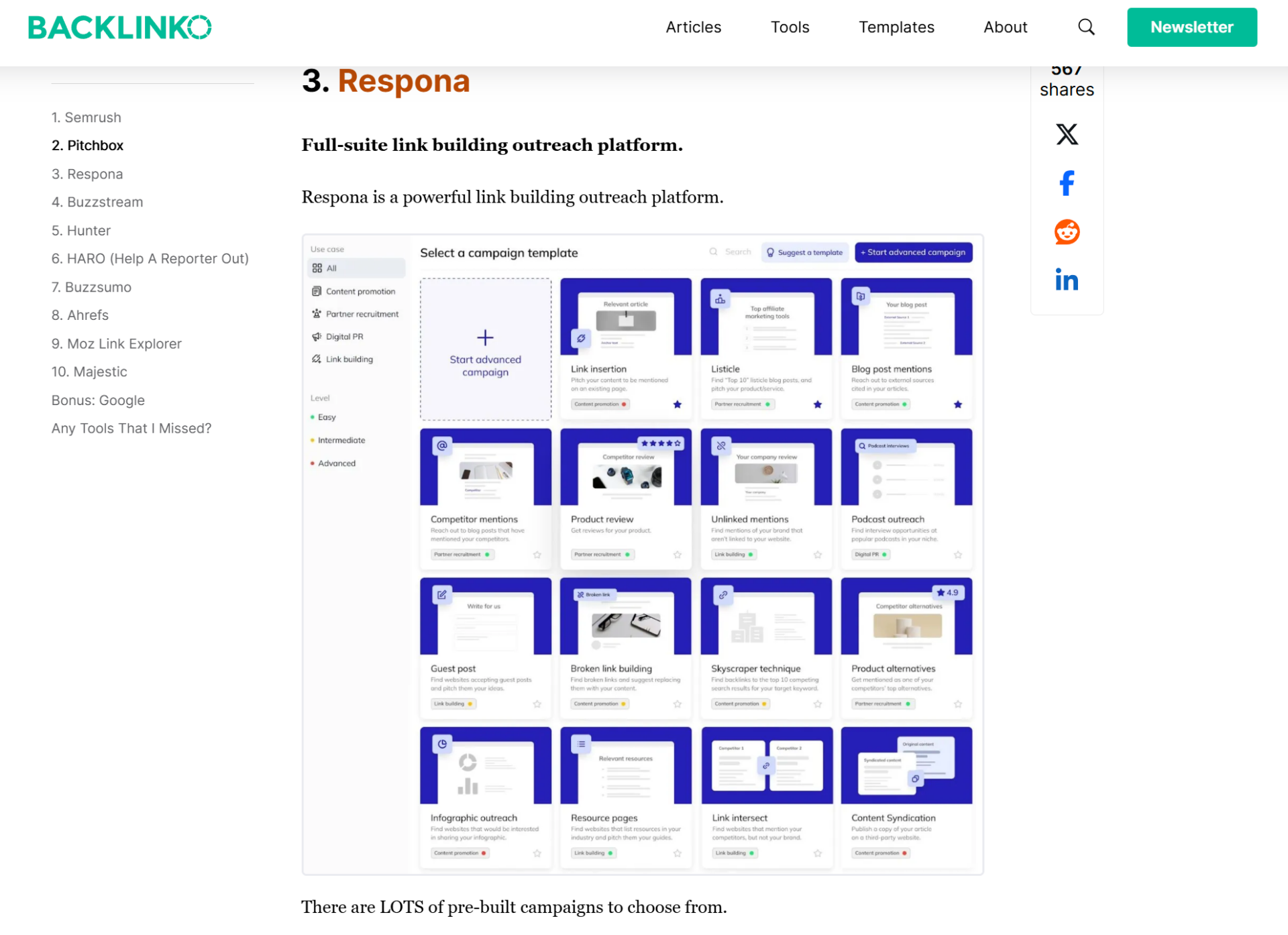
Even more importantly, these mentions should create clear entity relationships.
For example:
- your brand mentioned alongside competitors
- your tool included in a “best tools” list
- your company referenced in relevant content
Listicle-style placements are especially powerful for entity SEO.
These are structured, comparison-based pieces of content that are perfect for both search engines and AI systems.
They align directly with user intent and are commonly used as sources for features like Google AI Overview.
However, building these kinds of mentions at scale is not easy.
You need to:
- find the right opportunities
- pitch relevant placements
- build relationships
- and repeat this consistently
That’s exactly what our done-for-you link building is built for.
We focus on securing placements that don’t just give you backlinks, but actually strengthen your entity through structured, relevant mentions on authoritative sites.
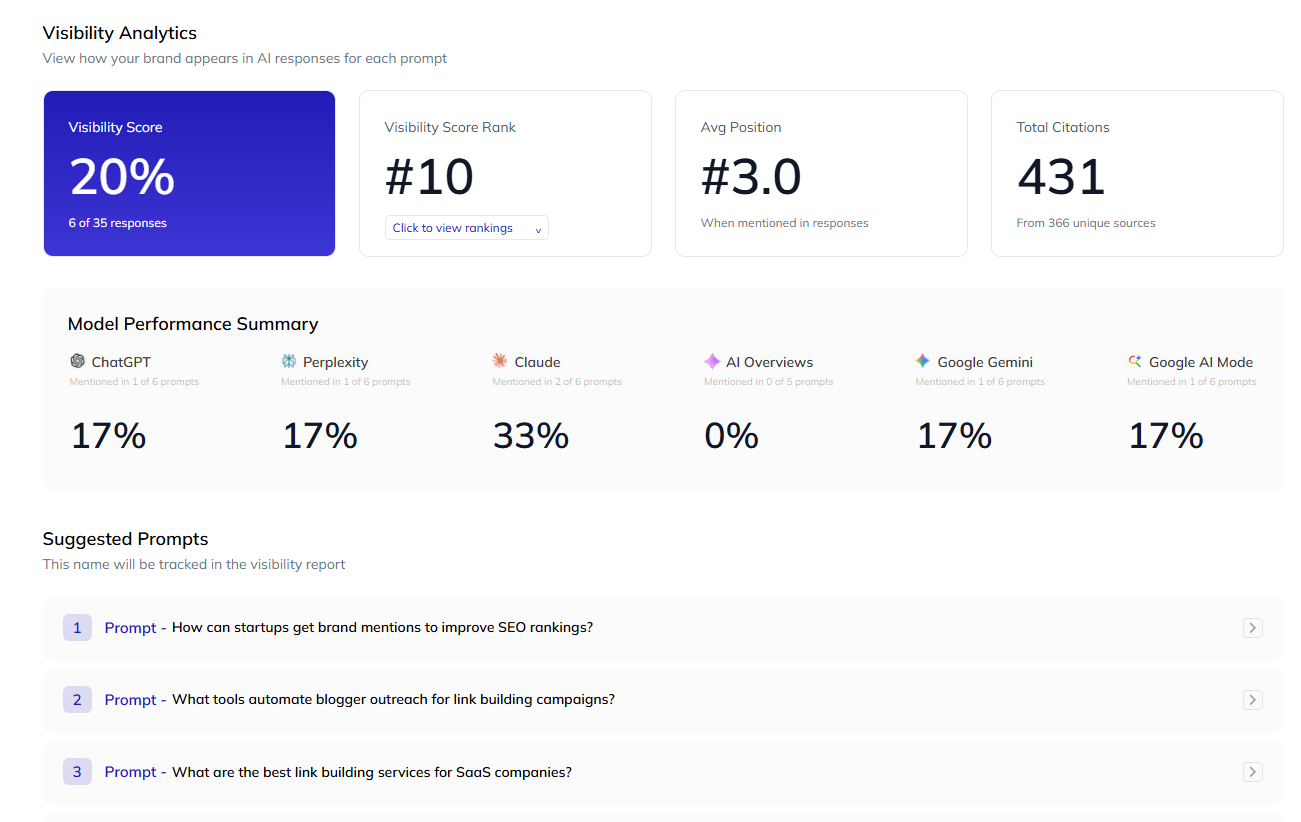
On top of that, our Campaigns feature helps you track your AI visibility.
It shows:
- where your brand is being mentioned
- which sources are influencing AI-generated answers
- and where you’re missing coverage compared to competitors
From there, we turn those gaps into targeted link building opportunities that improve both your search results and your presence in AI systems.
Link building cheat sheet
Gain access to the 3-step strategy we use to earn over 86 high-quality backlinks each month.
Now Over to You
Entity SEO is where search engines are heading.
You still need keyword research, content, and a solid SEO strategy to get discovered. But if you want to consistently show up in search results, you need to go beyond keywords and build a recognizable entity.
That means creating connected content, strengthening your internal linking, and earning mentions that tie you to other relevant entities in your space.
Over time, this is what helps you build topical authority and become something search engines actually understand and trust.
If you don’t want to handle outreach and placements yourself, our done-for-you link building helps you secure structured mentions on relevant sites and track your AI visibility through Campaigns, so you can see exactly where your entity stands and where to grow next.
Frequently Asked Questions (FAQ)
What is an entity in SEO?
An entity is something that search engines can clearly identify and understand on its own.
This can be a person, a company, a product, or a place. For example, Elon Musk, New York, or the Eiffel Tower are all entities.
In entity SEO, the goal is to help search engines recognize your brand as a defined entity and connect it to relevant topics within the Knowledge Graph.
What is the Knowledge Graph?
The Knowledge Graph is Google’s system for storing and connecting entities.
Instead of treating content as isolated pages, it maps relationships between entities like companies, people, products, and concepts.
This is what powers features like knowledge panels and helps Google deliver more accurate search results based on meaning, not just keywords.
Does entity SEO replace keywords?
No.
Keywords are still essential because they help match your content to user intent and guide your content strategy.
Entity SEO builds on top of keyword-based SEO by helping search engines understand how different keywords, topics, and entities are connected.
How do you appear in a knowledge panel?
To appear in a knowledge panel, search engines need strong and consistent entity signals.
This includes:
- structured data like schema markup
- consistent information across your site and external platforms
- mentions on authoritative websites
- listings like your Google Business Profile
Over time, these signals help Google connect your entity to its Knowledge Graph.
What helps improve entity SEO?
Improving entity SEO comes down to building clarity and consistency across your presence.
This includes:
- creating content around topic clusters
- using internal linking to connect related pages
- implementing schema and structured data
- earning mentions on relevant websites
- building relationships with other entities in your space
All of this helps search engines better understand your role in a topic and improves your chances of showing up in search results.