What you missed from the Bigest Week in Communications.
It’s been a tough year for communicators.
The regulatory landscape radically shifted overnight. A volatile economic environment put everyone on their toes and cost some their jobs. And of course, AI necessitated constant upskilling and creativity.
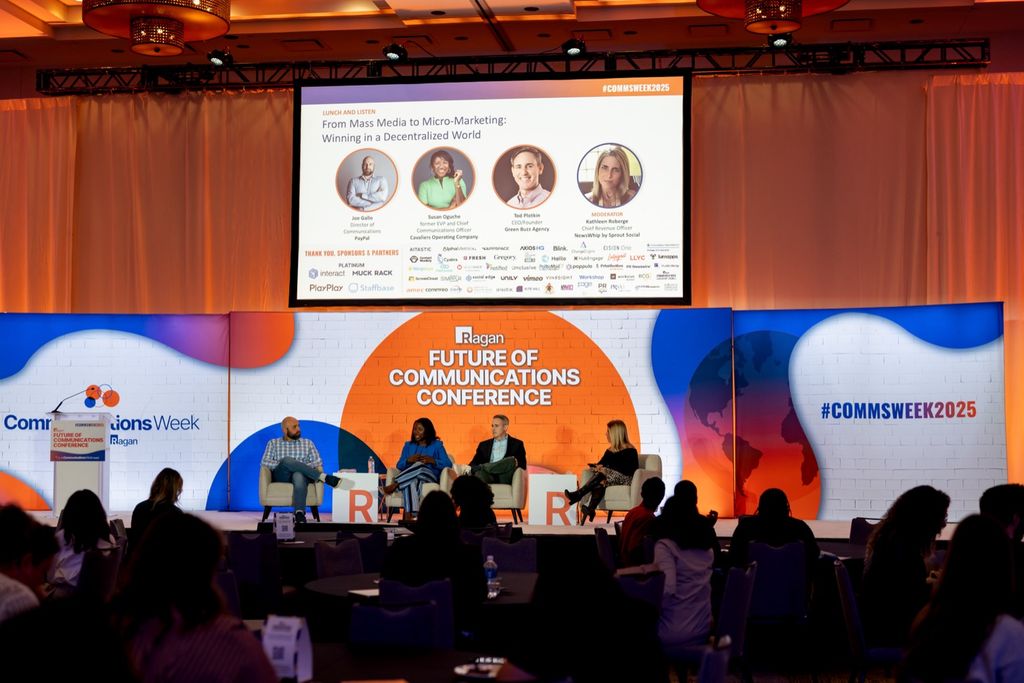
But the 700 communicators at Ragan’s Future of Communications Conference in Austin, Texas last week were still full of energy and excitement for what lay ahead.
As the crowds noshed on BBQ and tacos, they talked about how difficult the year had been. But whether from the main stage or in casual conversations in the hall, all seemed to maintain a healthy hope for the future. They recognized the challenges ahead, but also saw opportunity for communicators who lean into strategy, evolve their skillsets and stay nimble.
Here are some of the biggest takeaways from the speakers.
- “Trends are substantial shifts in human behavior. Trending is the story of the day, the headline, the recirculated hashtag,” said Matt Klein, futurist and cultural researcher. “But we’ve conflated the two. We think the trending is the trend. We think the trending is more important than it actually is — but it’s not.” Read more from Klein’s keynote.
- “Be the CEO of your own brand and advocate for yourself. If not you, then who? Get as much specific feedback as you can and let that help guide you,” said Lorraine K. Lee, speaker and author of “Unforgettable Presence: Get Seen, Gain Influence, and Catapult Your Career.”
- “Even if you’re not switching roles, your skills need to evolve. The value comes from the combination of what machines can do and what humans can uniquely provide, meaning judgment and connection,” said Ty Heath, director at LinkedIn’s B2B Institute.
- “Building reputational capital means you can’t just turn it on in a crisis. You have to build it over time. The first time you reach out to a reporter shouldn’t be when you need something. They should already know you and want to work with you,” said Amanda Coffee, CEO of Coffee Communications and ex-Under Armour, PayPal and eBay.
- “Crisis management isn’t just about putting out fires. It’s about knowing which ones are going to spread and which ones you can contain. The better you can tell the difference the stronger your reputation will be,” said Linda Barnhart, senior director in APCO’s crisis & issues management practice.
- “Silence (from employees) doesn’t necessarily mean disengagement. Understanding how people perceive the world and make decisions is useful for communicating effectively and reaching all employees,” explained Golda Lee Bruce, senior communications officer for the International Monetary Fund.
- “When it comes to social platforms, show up intentionally. Not everywhere and not out of obligation,” said Melissa Blum, founder of M.T. Deco.
- If there’s something you can show and tell, show and tell it in person. It makes a difference,” said Kelly Kaplan, senior director of external communications at WM.
Join the excitement of the Future of Communications Conference next year, Nov. 11-13 in Austin, Texas. See you there!
The post Top takeaways from Ragan’s Future of Communications Conference 2025 appeared first on PR Daily.