Lital Castel
18 June 2025

No matter how unique your app is or how many resources you’ve invested, success hinges on whether you can get it in front of the right audience. Simply put, no downloads, no impact—and in today’s fiercely competitive app marketplace, downloads are only the starting line.
In May 2025, 46,723 were released on the Apple App Store. While your app may not be fighting for physical shelf space, it’s definitely competing for attention in an overcrowded digital marketplace.
This means that a successful app launch strategy requires more than just being listed in the app stores—it demands a well-rounded marketing plan that covers both launch-day buzz and sustained long-term growth. Getting the foundation right from the outset is the key to making sure your app doesn’t just get noticed but also keeps users coming back for more.
Here’s what your thoughtfully crafted marketing plan for an app launch should involve:
Pre-launch Strategy
1. Market Research
Every successful mobile app launch begins with in-depth market research. As the saying goes, “Keep your friends close and your competitors closer.”
However, for your app to break through the noise, this market research needs to go beyond just identifying your competitors. You also must tap into potential strategic opportunities.

- Instead of simply analyzing what competitors are doing, focus on identifying gaps your app can fill. Are they offering a particular feature that you aren’t? What key features are they lacking that your app offers?
- Use data-driven insights from various tools such as Google Trends or Sensor Tower. These can help you understand how your audience interacts with existing apps in your niche and uncover pain points that aren’t being addressed.
For example, if you’re developing a health and fitness app and notice competitors lack social community features, this can become an opportunity. Building social elements into your app, like fitness challenges with friends, will most likely give you an edge in engaging users. The goal is to launch an app that not only stands out but also resonates with unmet user needs.
2. Persona Mapping
Now that you’re familiar with your enemies—it’s time to get to know your friends.
Persona mapping involves creating fictional characters for your target audience, considering every detail and characteristic, from demographics to location, educational level, income, needs, and interests.
This is an opportunity to go beyond basic data points like age or location—consider your audience’s interests, pain points, and what motivates them. For example, if your app targets young professionals who value efficiency, ask yourself: What features would make their lives easier? What challenges do they face daily?

Creating these user personas allows you to tailor your marketing strategy to real-world user behaviors and preferences, ensuring your efforts are laser-focused. For instance, if one of your personas is “Lianne,” a 23-year-old from London who loves going out with her friends and performing the latest viral dances on TikTok, you could focus your social media marketing on engaging content like short-form videos that resonate with her interests and habits.
Ultimately, persona mapping ensures that every marketing initiative—from app store optimization (ASO) to social media engagement—it’s that level of detail you need (and more) to ensure that your marketing investments aren’t a shot in the dark and that all your future initiatives are user-centered.
3. Branding Elements
Remember that the devil is in the details. Getting your branding right from the start is crucial to developing a solid brand identity and avoiding confusion and inconsistencies. Work with a design team to deliver branding that genuinely represents your app, from a simple yet catchy logo to an extended color palette, fonts, and supporting visuals. Ensure your team knows how to apply your branding to marketing materials and external communications.
4. App Store Optimization (ASO)
With over 6 million apps available across leading app stores, app visibility isn’t a given.
App Store Optimization (ASO) is a set of practices that can help you increase discoverability and improve conversion rates in app stores. Some of these are straightforward, like having an eye-catching app icon and high-quality screenshots, while others require specialized mobile marketing strategy services.
For example, keyword optimization requires thorough keyword research to identify high-traffic yet low-competition search terms that your audience is likely using. You must then define your priority keywords and optimize all your copy.
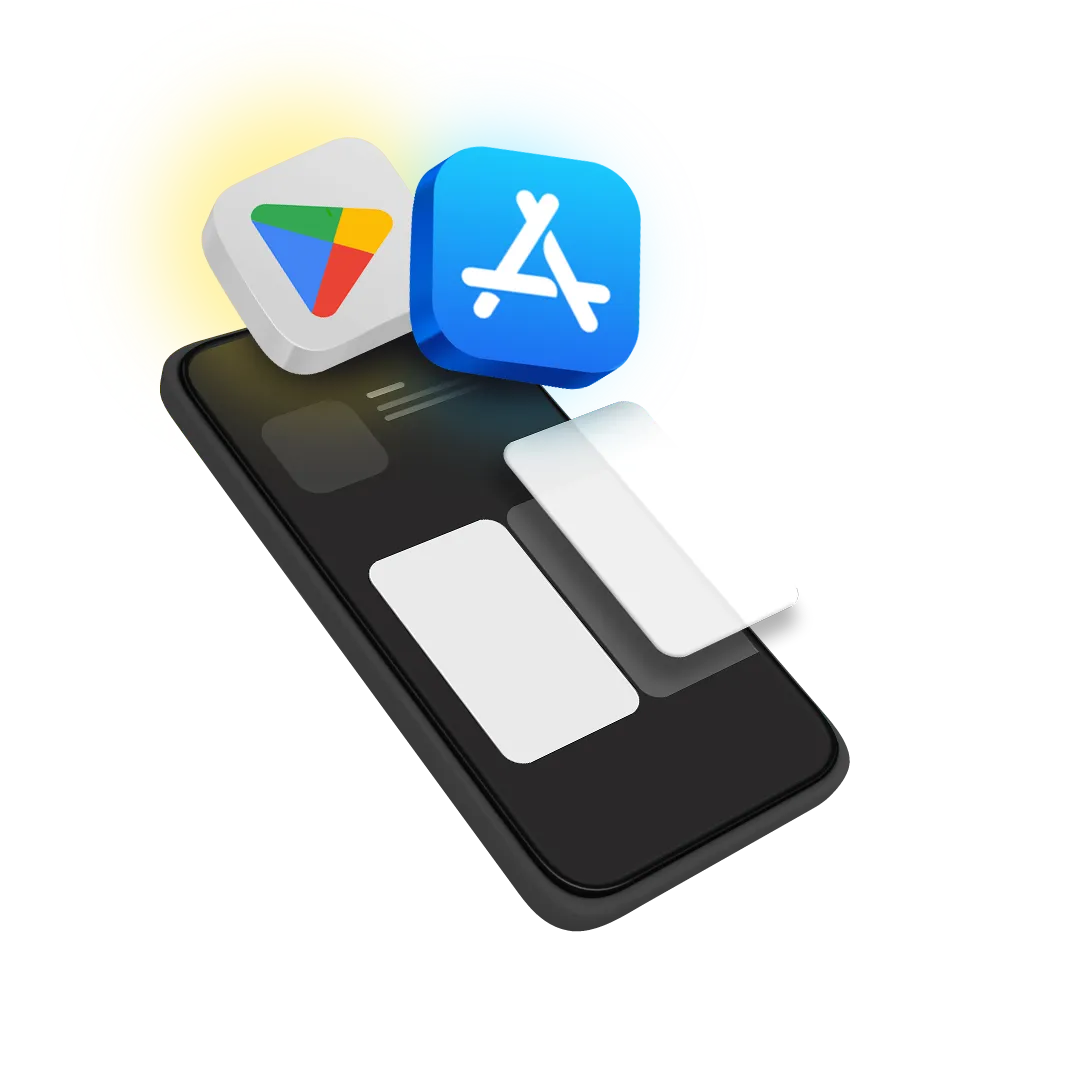
Note that there are critical differences between iOS and Google App Store in their indexing and keyword ranking approach.
For example, your app description doesn’t impact keyword rankings in the Apple App Store. However, Apple offers a keyword field that is invisible to users but used by Apple’s algorithms for indexing. On the other hand, Google uses short and long description fields for indexing purposes, so optimizing these is crucial.
5. Conversion Rate Optimization
The ASO best practices you implement will also help you improve conversions. However, to get users to take the final step and download your app, the focus should be engagement. Compelling copy that speaks to your audience’s needs and interests is crucial.
Consider setting up A/B testing to see what messaging resonates best with your audience in the early stages and increase your chances of conversion success in the long term. You can set up A/B testing for app store elements like titles and descriptions and in-app elements like onboarding tutorials and notifications.
Lastly, consider implementing referral programs, incentives, and email drips for people who engage with your website but don’t click the download button.
6. Website Landing Pages
Mobile marketing for a new product has to start with the basics: being searchable on Google. Create a website using your app’s name as the URL, apply your branding across the pages, and ensure you showcase every important app feature on your homepage.
If you have other priorities or need a suitable skill set in your team, you can partner with an expert web development company to build your website quickly. Ensure the website is simple, easy to navigate (the fewer landing pages, the better to avoid prolonged customer journeys that don’t convert), and has plenty of clear CTAs to download your app or find in app stores.
If your app is freemium and has different pricing options, you could embed short demo videos on your website to showcase the added features users can unlock with premium tiers. Demo videos are a great sales enablement tool and can boost customer spending.
7. Social Media
Generating social media buzz is the best way to avoid the sound of crickets after you launch your app. Create social media profiles across all the relevant channels, and select the exact name of your app as the handle (Duolingo67 and Spotify_Music don’t sound the smoothest).
Ideally, you would have a head start of at least one to two months of consistent posting before your app launch to maximize your chances of getting brand visibility. Some lead generation ideas you can implement include creating teaser videos, behind-the-scenes shots, and an official countdown for your app launch date.
You can also organize giveaways to get people to like or interact with your page in exchange for exclusive access to features or create an exclusive beta group to test your app before anyone else can (which gives you even more user-generated content to play with).
The social media world is your oyster, but you must streamline your efforts instead of trying every single strategy without clear metrics or goals. Mobile app marketing services can help you prioritize initiatives to ensure ROI.
Launch Day Strategies
If the brand visibility and momentum are there, you now need to move your prospects down the demand generation funnel and get them to download your app. Your user acquisition strategies for launch day should include the following:
1. Cross-platform Launches
If your users can’t find your app in their app store, they will likely turn away and not think twice about it. Therefore, it’s crucial to simultaneously launch your app across all app platforms to ensure the broadest coverage and highest chance of conversion.
2. Exclusive Launch Day Incentives
You can offer special discounts, access to exclusive features, or additional referral bonuses to those who refer your app to friends and get them to download it on the day. This creates a sense of urgency and encourages immediate action.
3. Paid Ads
Share your exclusive incentives through targeted paid ad campaigns across socials to boost visibility. Your market research and persona mapping will help segment the most relevant audiences so you can optimize ad spend.
4. Launch Event
Host a virtual or in-person launch event with influencers or even a select number of potential users chosen from a social media competition. This will create extra buzz and support community building.
5. Influencer Marketing
Want to reach an audience you don’t have yet? That’s what influencers are here for. Quickly tap into your desired audience by getting an industry influencer to create social content for your launch day (and beyond). Agencies like Moburst can support you with strategic research, exclusive influencer networks, goal setting, and monitoring.
Post-launch Strategies
A mobile app launch marketing plan doesn’t end with the launch itself. Post-launch, you should focus on providing long-term value and maintaining engagement to improve customer retention. Some strategies include:
1. Continuous Monitoring
Define key marketing metrics you want to track in the long term, including:
- Conversion rates
- Daily active users (DAU)
- Retention rates
- Churn rates
- Customer lifetime value (CLV)
- Average revenue per user (ARPU)
Then, monitor these regularly (ideally, weekly) to see what’s working and what needs work. Make sure you have a clear idea of success—some benchmark based on a market intelligence tool or the expertise of a dedicated agency like Moburst, who are experts in results-driven app marketing.

2. User Feedback
Incentivize users to leave reviews and ratings by offering them discounts and raffle entries or simply sending them a gentle email reminder or push notification. Allocate a team member responsible for monitoring reviews and responding to user comments to ensure every user gets a response. This will improve the customer experience, foster brand loyalty, and encourage positive word-of-mouth.
3. Customer Engagement
Create nurture streams to keep communication channels open with customers and improve retention. These could include email streams, SMS, push notifications, or in-app notifications. Ensure your social media content is also targeted and personalized based on user behavior and interests, and continue to leverage influencers to build a sense of community and belonging within your user base.
Ready to Achieve Measurable App Growth?
A successful app launch goes beyond the product itself—it hinges on a comprehensive, strategic approach. Every step is crucial, from conducting thorough market research and understanding your target audience to optimizing your app’s visibility through ASO and building early engagement through social media. By focusing on both the initial launch and ongoing efforts to retain users, you can increase downloads, build loyalty, and achieve lasting success.
Here’s how to get started implementing a marketing strategy for your app launch:
- Market Research – Use tools like Google Trends or SEMrush to analyze your competitors’ strengths and weaknesses.
- Persona Mapping – Develop detailed customer personas using online templates, focusing on demographics, user behavior, and needs.
- Branding Elements – Ensure your brand identity is consistent across all channels by working with experienced design teams.
- App Store Optimization (ASO) – Conduct thorough keyword research and optimize descriptions, icons, and screenshots for each app store.
- Conversion Rate Optimization (CRO) – Set up A/B testing for app store elements and referral programs to improve engagement and downloads.
- Website Landing Pages – Invest in professional web development to create a simple, intuitive website that showcases your app and includes demo videos.
- Social Media Buzz – Develop a pre-launch social media strategy that includes teaser videos, countdowns, and influencer collaborations.
- Post-launch Engagement – Create nurturing campaigns through email, SMS, and in-app notifications to maintain user engagement and encourage long-term retention.
The mobile app marketing landscape continues to evolve rapidly, with new apps flooding the market daily. As competition intensifies, app owners must constantly innovate their launch strategies to stand out. This includes adopting cutting-edge technologies such as AI-driven marketing, personalized in-app experiences, and deeper integration with social platforms. Staying agile and adapting to new trends is critical for driving app visibility, engagement, and long-term success in 2024 and beyond.
To outperform the app store competition, you need a trusted app launch marketing partner like Moburst—a leading app marketing agency that offers a complete package of mobile app launch services.
Our team of experts has worked with over 600 products and some of the world’s largest companies, so you can rely on us to deliver a results-driven mobile app launch strategy that spikes engagement, conversions, and ROI. We’re a full-service, one-stop-shop digital marketing agency that provides innovative mobile solutions to a marketing plan for your app launch.
Lital Castel
Lital is Moburst’s Content Manager & Email Marketing Specialist. She specializes in coming up with engaging ideas and research to capture the trendiest topics in the digital and mobile marketing world. She is passionate about productivity and optimizing your day, but you can probably find her playing video games while cuddling with her dog on the couch to wind down at the end of a long day.