Plus: Air Canada CEO announces retirement over French language controversy; Bluesky users revolt over AI.
Iran’s Islamic Revolutionary Guard Corps has threatened to attack the Middle East outposts of a variety of American tech companies, including Nvidia, Microsoft, Apple, Google and many more, CNBC reported.
“From now on, for every assassination, an American company will be destroyed,” the IRGC wrote in a Telegraph post. Specifically, attacks would begin on Wednesday at 12:30 ET.
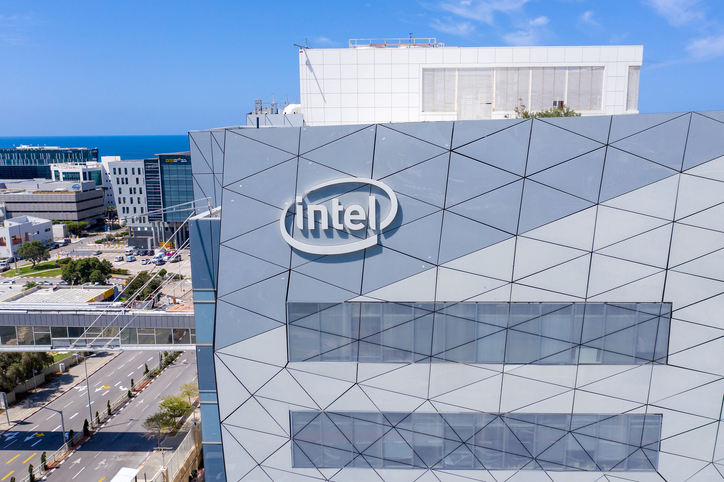
CNBC asked each of the 18 companies named in the threat for comment. Most did not respond. Microsoft, Google and JP Morgan all specifically declined comment. Only Intel gave an on-the-record response.
“The safety and wellbeing of our team is our number one priority,” a spokesperson said. “We are taking steps to safeguard and support our workers and facilities in the Middle East and are actively monitoring the situation.”
We can safely assume that in the absence of a public statement, there are still a variety of internal statements aimed at nervous employees, including perhaps work-from-home options.
Why it matters: These are delicate times. Not only are governmental assets under attack in this war, but the businesses that so often serve as ambassadors of American culture around the world are being openly and explicitly targeted for attack.
On the one hand, it’s slightly surprising that other companies haven’t issued anodyne statements akin to Intel’s. It says nothing while at least acknowledging the situation. On the other hand, it’s not surprising. No company wants to stick its head up and risk becoming the first organization attacked.
This is a challenge that many communicators have never trained for. Natural disasters, targeted shooters and terrorism are all part of standard playbooks. But pre-announced threats of attack by a state actor are uncharted territory.
Unfortunately, it’s time to start charting. Internal comms reigns supreme here, with the messages sent to calm and protect employees far more important than external statements. But the external statements will come in time, whether or not the attacks take place.
It’s time to run another tabletop exercise, add another scenario to your crisis plan and keep the people of the Middle East in your thoughts.
Editor’s Top Reads:
- We reported last week on the controversy surrounding Air Canada CEO Michael Rousseau. His lack of French language skills in the bilingual nation was brought to light in the wake of the tragedy at LaGuardia airport that killed two Air Canada pilots. He earned condemnation from the prime minister and many others. Now, Rousseau will retire by the end of the third quarter, paving the way for a Francophone leader. While the airline’s statement announcing the change does not tie it directly to the controversy, instead emphasizing that succession planning has been underway for some time, there is one line that gives a nod to the situation: “The Board will consider a number of performance criteria in assessing candidates, including the ability to communicate in French.” It also stresses that the airline is “proudly headquartered in Montréal, Québec,” where 82% of the population speaks French as their first language. The rest of the statement reads as a standard amicable transition announcement, with positive, grateful quotes from both Rousseau and the company. This is a graceful way to allow for change that allows everyone to save face and have an orderly transition. The organization and Rousseau acted, not in haste and panic, but strategically. Hopefully, this will position Air Canada for the long term.
- Users of Bluesky really hate the company’s new AI feature, Attie. The agentic AI is meant to allow users to build their own social feed using conversational language. But within a short period of time, the Attie account became the most blocked on the website, dethroning Vice President JD Vance from the top spot. The backlash specifically surrounds the concept of generative AI potentially creating more low-quality content on the platform. “We hear the concerns about AI,” wrote Bluesky Chief Innovation Officer Jay Graber. “Our goal is to use this technology to give people greater control, not to generate content. Attie uses AI to help you create custom feeds without having to know how to code.” The communications challenge here is complex. People seem to be reacting more to the concept of generative AI rather than what Attie is actually designed to do. This is a warning flag that, far from being a selling point, AI is actually becoming a source of distrust for consumers, no matter its actual purpose. Keep this in mind when crafting your own comms.
- Golf superstar Tiger Woods announced that he would seek treatment after he rolled his car and was charged with DUI in Florida. “I know and understand the seriousness of the situation I find myself in today,” Woods wrote on X. “I am stepping away for a period of time to seek treatment and focus on my health. This is necessary in order for me to prioritize my well-being and work toward lasting recovery.” He asked for privacy during this time. It’s a carefully worded statement that both takes some responsibility for his actions while not specifically saying what sort of treatment he’s seeking — which could prove important in the pending legal case against him. Overall, his tone may earn favor both with the public and the courts. Regardless, we wish him well in his recovery.
Allison Carter is editorial director of PR Daily and Ragan.com. Follow her on LinkedIn.
The post The Scoop: Iran threatens American tech giants with attack; most remain silent appeared first on PR Daily.