Plus: AI has a PR problem; Axe seeks to town down the cloud of cologne.
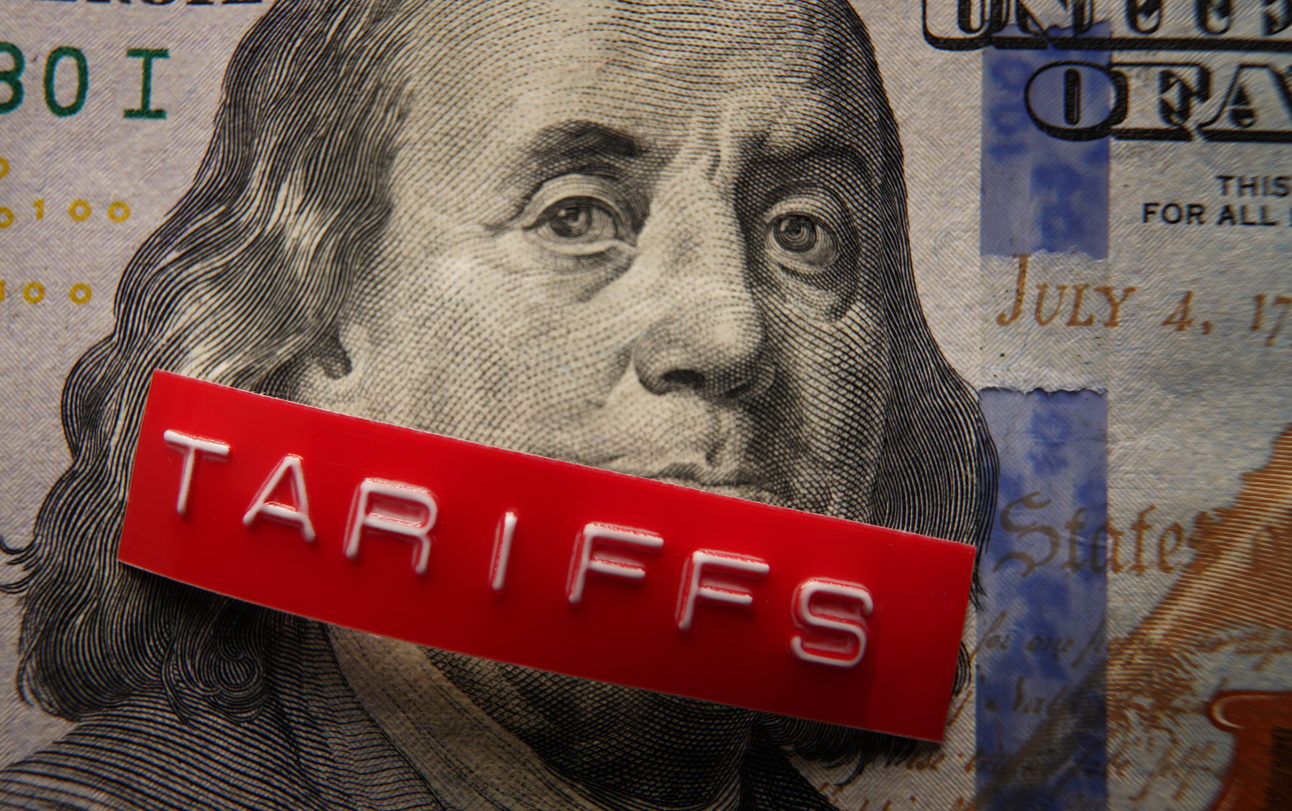
On Friday, the U.S. Supreme Court struck down the rationale for President Donald Trump’s sweeping tariffs. Later that same day, Trump announced that he still had the power to levy tariffs, and that, effective immediately, a 10% tariff would apply to every nation in the world.
Wait, make that 15%, he decided the next day.
This threw other nations, as well as businesses at home and abroad, into utter uncertainty about what’s actually happening. Did previous trade agreements negotiated under other tariff rules still stand, or had those been wiped away?
“Pure tariff chaos from the US administration,” Bernd Lange, the Chair of the European Parliament’s committee on International Trade, wrote on X. “No one can make sense of it anymore — only open questions and growing uncertainty for the EU and other US trading partners.”
In a statement released Sunday, the European Commission demanded immediate clarification and used Trump’s own “Art of the Deal” language against him: “A deal is a deal. As the United States’ largest trading partner, the EU expects the U.S. to honour its commitments set out in the Joint Statement — just as the EU stands by its commitments.”
For its part, the Trump administration insists its policy remains in place.
“The legal tool to implement it — that might change, but the policy hasn’t changed,” said U.S. Trade Representative Jamieson Greer in an interview.
But what does that actually mean?
Why it matters: The Trump administration has its own style of communication. We don’t often highlight it here in The Scoop, because that strategy doesn’t work for most other people or organizations. Call it straightforward, call it bombastic, it’s Trump’s own style, and it’s gotten him to the White House twice. It sounds convincing and strong in a social media post or on the campaign trail.
But when those simple words smack into complex trade realities, questions are left behind that, over time, can erode the trust of partners.
While a politician might want to deliver simple soundbites, like across-the-board tariffs, the people, Americans and foreigners, need details. How is trade impacted? What happens to existing deals? What happens in 150 days, when Trump will need approval from Congress to continue the tariffs?
This scenario shows the importance of strong contingency plans. The Trump administration had the benefit of months to plan for a Supreme Court victory or loss. Letters could have been drafted to each trading partner about the status of their agreements. Communications to American businesses about possible impacts could have been prepared.
For now, uncertainty will continue to reign.
Editor’s Top Reads:
- AI has a PR problem. Unlike many other technological advancements, which are received with excitement from the general public, AI faces widespread skepticism. “I can’t really remember a boom with such active hostility to it,” William Quinn, co-author of “Boom and Bust: A Global History of Financial Bubbles,” told the New York Times. “People usually find new technology exciting. It happened with electricity, bicycles, motorcars. There were fears but also hopes. A.I. is notable, perhaps unique, for the lack of enthusiasm.” Jensen Huang, CEO of chipmaker Nvidia, blamed “very well-respected people who have painted a doomer narrative, end-of-the-world narrative, science fiction narrative.” Whoever is to blame, organizations like OpenAI and Microsoft, among others, must find a way to make the technology exciting rather than existentially threatening to jobs, creativity and even life on Earth. Leaders like Sam Altman of OpenAI aren’t helping matters when they compare the resources needed to train an LLM to the energy needed to “train” a human being for the same task. Simply not speaking like a super villain will likely take the AI industry a long way at this particular moment in time.
- Axe body spray understands how the world sees it: A cloud of stink accompanying teenage boys, almost as bad as the hormonal BO it’s intended to hide. Now, it’s trying to change that perception through a change to its packaging. A new nozzle on its bottles will offer a smaller spray of scents like Cherry Spritz and Midnight Amber in an attempt to tone down the olfactory assault. “We keep hearing about the Axe cloud, how it goes everywhere,” Dolores Assalini, head of Axe US, told the Wall Street Journal. “So we really wanted to address that, both from a technology standpoint and from a user standpoint.” The move to change perception from not only a messaging standpoint but also a packaging standpoint is notable and demonstrates the limitations of PR: you can say whatever you want, but if the product itself still encourages a certain use, you’ll probably fail. When product and PR work together, that’s when true change can happen.
- The prestigious British Film Academy Awards turned uncomfortable when an attendee with Tourette syndrome yelled profanities at several points, most unfortunately a racial slur at Michael B. Jordan and Delroy Lindo, who are Black. Some news outlets identified the person as John Davidson, whose life with Tourette’s syndrome was chronicled in the nominated film “I Swear.” BAFTA host Alan Cumming addressed the situation during the broadcast: “Tourette syndrome is a disability, and the tics you’ve heard tonight are involuntary, which means the person who has Tourette syndrome has no control over their language. We apologize if you were offended.” This is a difficult situation. Regardless of the lack of intent from the person with Tourette, the situation will leave a lasting mark on the BAFTAs as well as the two men presenting the award. The explanation in the moment was strong and helpful, but apologies “if you were offended” in the face of one of the most offensive words in the English language falls flat. Still, given the complexities of the situation, Cumming and the BAFTAs handled it with grace — though one hopes apologies were made to Jordan and Lindo.
Allison Carter is editorial director of PR Daily and Ragan.com. Follow her on LinkedIn.
The post The Scoop: America’s tariff shifts leave rest of the world questioning its reliability appeared first on PR Daily.