Decades ago, in the annals of advertising agency history, BBDO had an approach to creating winning communications. It was called The Four Point Process. The Four Point Process was a really big deal because, at the time, ad agencies had the best, most innovatively profitable research departments in town. The Four Point process made use of BBDO’s groundbreaking – and since widely-copied – Problem Detection Study.
On the surface, the BBDO Four Point Process seems pretty simple. It asked four questions that had to be addressed for brand success and, of course, a great, compelling advertising campaign.
- Know your prime prospect
- Know your prime prospect’s problem
- Know your product
- Break The Boredom Barrier
In its heyday, The Four Point Process helped create powerful brands with successful marketing campaigns, including Campbell’s Chunky Soup, H&R Block, and Timken Roller Bearings.
This article is part of Branding Strategy Insider’s newsletter. Join the world’s smartest marketers and subscribe here for actionable insights delivered directly to your inbox.
Today, with AI, digital formats, and the speed of technology, these four principles seem outdated. But the beauty of brand management is that the principles that create, grow, and maintain powerful, great brands are evergreen.
The basis of The Four Point Process is knowing your customer as if that person were your best friend. Know the customer’s opinions, values, ethos, personality – all components beyond age, gender, marital status, income, and presence of children.
Once you understand who the customer is, understand the customer’s problems. Not just wants. Problems. When you ask people what they want you miss key insight; they provide generic features such as soup that tastes good, a washing machine that is easy to use, and dog food your dog will eat. A clean hotel room. When you ask customers about their problems, you gain specific, actionable insights for innovation and renovation. Canned soups are just not hearty. The complex washing machine buttons make me feel stupid. I cannot stand the smell of an open can of dog food. I just cannot have a comfortable night’s sleep.
Losing touch with your customers and their problems can destroy brands. When a brand solves a customer’s problems, that brand becomes part of that customer’s life. The customer identifies with the brand.
In 1978, BBDO and its client, General Electric, worked together to understand that customers had questions about their GE appliances. Unaddressed complaints and inquiries frustrated users. Many customers had simple questions, including questions about how to cook items. GE created the groundbreaking GE Answer Center, a 24/7 toll-free telephone line staffed by real people (1978 – no mobile phones, no bots, landlines only, no home computers…). In its first year, the GE Answer Center addressed 500,000 calls. Helping customers solve their problems endeared GE to them. You need to be in the way-back machine – by almost 50 years – to feel the power of the GE Answer Center.
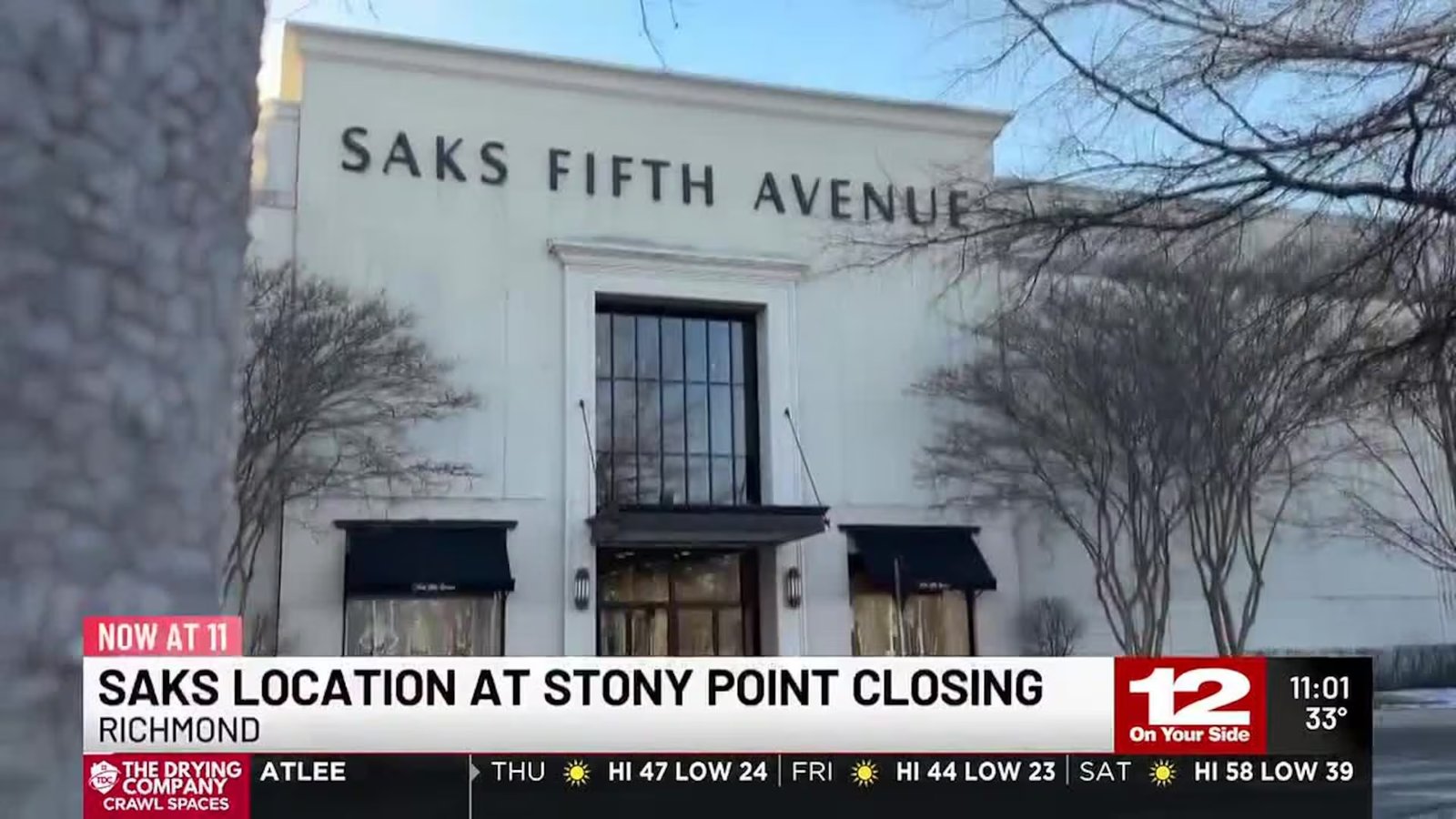
As we now learn, losing touch with customers, no longer solving customer problems, becoming generic are just some of the reasons why The New York Times’ inquiry into the demise of Saks Fifth Avenue titled their article, “Falling Out Of Step With Their Shoppers.”
I know. Another story about the department store.
But American retail history is important for understanding how to make retailing exciting, compelling, and viable in the present and future. The Times’ story is not just an evaluation of Saks Fifth Avenue’s brand mismanagement. It is also a condemnation of the brand mismanagement of department stores.
Based on The Times’ analysis, it is just miserably clear that Saks, specifically, and department stores, in general, took their fingers off the pulse of their customers. Saks, along with other department stores, forgot who their customers were and what problems they were solving for them.
For example, some people shop for the spontaneity of the experience. Finding that unexpected, but perfect item.
One of the elements that makes shopping in places such as Costco, Aldi, or TJ Maxx so delightful is the “treasure hunt” aspect. The idea that you can find that special something if you keep your eyes open. These items may be available for a limited time or may be a wonderful surprise. The concept of finding a unique item was once part of the department store’s underpinning. And, each department store had its own areas of expertise for unique items.
Previous Saks Fifth Avenue shoppers told The New York Times that they could run into Saks during lunch or after work for a remarkable gift. These shoppers were not looking for a Chanel suit that could be purchased at any upscale store. These shoppers were seeking a surprisingly delightful, only-at-Saks Fifth Avenue present. As one shopper indicated, there was always that feeling of “possibility and chance.”
Over time, department stores became more alike, a sea of sameness. Or as an analyst quipped, “Lackluster upon lackluster.” Any store identity was wiped clean.
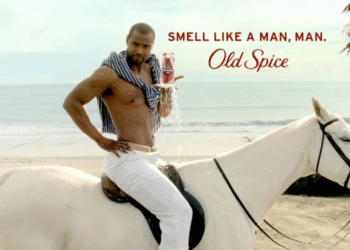
This affected the US automotive industry in the 1990s. Vehicles started to look alike. Ford made a Mercury and a Ford look identical except for the grille. After Ford bought Jaguar, the Jaguar was made on the Taurus platform. Driving behind a Jaguar was sad: you actually thought it was a Taurus.
It is not an insight to say that people identify with brands.
When car brands were so distinctive, ad people would say, “You are what you drive.” There was also the saying, “You are what you eat.” One of the criteria for building a great brand is knowing how to connect with and motivate customers so they say, “This brand is for me.” This means knowing the customers’ opinions, psychographics, interests, personal values, and achievements.
Take into account the difference between awareness and familiarity. Awareness is an on/off switch: you are either aware or not. But familiarity is a scale. You can be unfamiliar, somewhat familiar, or possibly extremely familiar. Familiarity means you know enough to have an opinion. I might say that I am aware of Crypto, but I just do not know enough about Crypto. Or, I am aware of Aveeno and its advertising, but it is just not a brand for me.
Brands confer identity. Department stores used to confer identity. The New York Times points out that 50 years ago, “Bloomingdale’s had become so popular because it functioned as a neighborhood store on the Upper East Side, probably the largest congregation of upper-middle-class affluence gathered anywhere in the world.”
Since then, there has been a “sterilization” of the department store. There is a loss of identity, which is also like a loss of self, in a way. This has nothing to do with Amazon. This has everything to do with becoming so mass-minded that the brand is sort of liked by many but generally unloved, losing the most profitable group, loyalists.
Thinking that customers want store after store with the same luxury goods’ stores-within-stores is stultifying. And, apparently, not worth the time.
Macy’s is a prime example. Macy’s’ history is one of providing a shopping venue for affordable glamour. Macy’s also has a little-known history of fostering employment and opportunity for women. Macy’s was a training ground for, and a promoter of, women in business. As a place where women could flourish, Macy’s employees delivered a sense of feminine self-respect and accomplishment to customers. So important, because a majority of Macy’s most profitable customers were – and still are – women. The idea of a working woman needing suitable yet elegant, smart, fashionable business wear at affordable prices was a winner.
This is all gone now.
Brands may say that their businesses are different. Brands may say that their businesses have different problems. The truth is that brands tend to suffer from the same problems across the board; they just give different names to those problems.
As a marketer, your job is to compete. Compete differently with The Blake Project.
You might say that the BBDO Four Point Process is old hat: that was then, this is now. You might say that, but you would be wrong. Understanding your target audience and their problems is the path to success. Having a specific target audience does not mean turning away customers. Those customers you believe you are turning away are probably like-minded others. Customer-problem-based innovation and renovation are absolute necessities. Begin all innovation and renovation with customers and their problems.
Brands can live forever, but only if properly managed. Brand mismanagement is a marketing and business profitability sin. If you do not know your customers as if they were your best friends, and if you are not solving their problems, you are headed for commodity corner.
Just ask Saks Fifth Avenue.
Contributed to Branding Strategy Insider by Joan Kiddon, Partner, The Blake Project, Author of The Paradox Planet: Creating Brand Experiences For The Age Of I
At The Blake Project, we help clients create meaningful differences that increase value and underpin competitive advantage. Please email us to learn how we can help you compete differently.
Branding Strategy Insider is a service of The Blake Project: A strategic brand consultancy specializing in Brand Research, Brand Strategy, Brand Growth, and Brand Education