
Voice search optimization gets treated like a whole new discipline, but in practice, it really is not.
I spent a long time looking for voice-specific tricks before realizing the obvious. The pages that perform well in voice search are usually the same ones already doing the right things in regular search. They answer long tail questions clearly, load fast, and are easy for search engines and AI systems to understand.
If your site is technically sound, optimized for conversational queries, and structured in a way that works for AI overviews, you are most of the way there.
In this article, I will explain why voice search SEO is not as different as it sounds and where your focus should actually be.

Link building cheat sheet
Gain access to the 3-step strategy we use to earn over 86 high-quality backlinks each month.
Is Voice Search SEO Any Different?
This is usually the first question that comes up, and it is also where most of the confusion starts.
When I first looked into voice search optimization, I assumed there had to be some fundamental difference. Different ranking factors. Different algorithms. Different rules. That assumption turned out to be wrong.
In reality, voice SEO is not a new system running alongside traditional SEO. It is the same search engine responding to a different type of search query.
The only tangible difference is how people phrase those queries.
When people type, they shorten everything. They drop filler words. They aim for efficiency. “Best link building tools” is a perfectly normal typed search.
When people speak, they do the opposite. They ask full questions using natural language. “What are the best link building tools for small teams” is much closer to how voice queries sound in real life.
That difference in behavior pushes you toward longer tail keywords than you might normally target. Not because Google demands it, but because voice search users do.
Once you account for that, the rest looks very familiar. Google still cares about relevance. It still rewards clear answers. It still favors pages that load quickly, are easy to crawl, and are structured in a way that makes sense.
That is it.
Technical First
There is no separate technical SEO checklist for voice search optimization.
The same issues that hurt you in traditional search will quietly block you from voice search results as well. The difference is that voice activated devices and voice assistants are far less forgiving when something is even slightly off.
This is because in order for Google Assistant, Amazon Echo, Google Home, or other smart speakers to generate a cohesive answer for the user’s voice search query, they need to be able to quickly and efficiently “read” your site. In a way that’s drastically different from how a human would.
The first thing I always check is crawlability and indexation.

If a page cannot be reliably crawled and indexed, it has zero chance of being surfaced as a spoken query answer.
That means making sure important pages are not blocked by robots rules, noindex tags, or broken internal links, and that they actually appear as indexed in Google Search Console.
Page speed matters more than people think here. Voice interactions are built around fast responses, and slow pages are a liability.
I pay close attention to mobile performance, server response time, and layout stability. If a page struggles with loading or shifts around while rendering, it is unlikely to be selected as a voice search result.
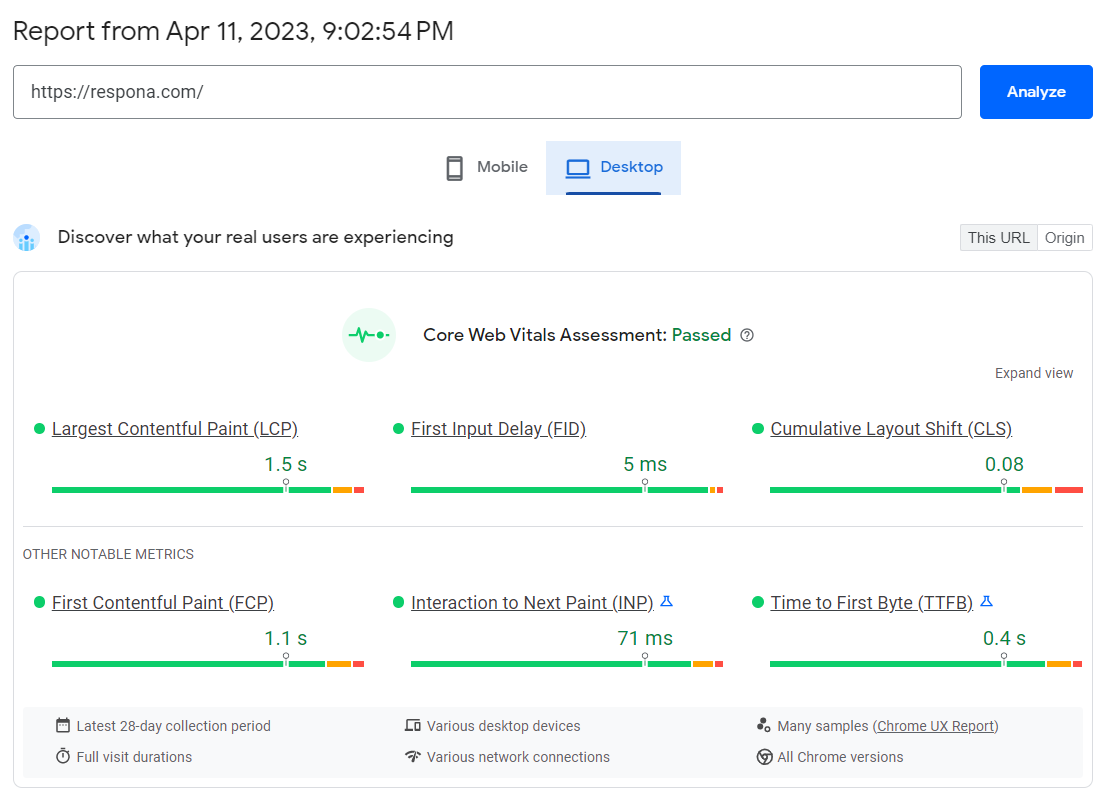
Mobile optimization is non-negotiable.
Most voice queries happen on mobile devices, so responsive design, readable text, and touch-friendly navigation all play a role. If a page feels awkward on a phone, it is usually a bad candidate for voice search visibility.
I also make sure every important page has proper canonical tags, consistent internal linking, and clean redirects prevent confusion about which URL should be treated as the main source. Voice search results rarely come from duplicate or competing URLs.

Finally, I look at how content is structured at the HTML level.
Clear headings, logical sections, and predictable formatting make it easier for search engines and AI systems to extract a single, concise answer. This does not mean rewriting content for bots, just removing ambiguity.
None of these steps are new or exclusive to voice search technology.
Use Schema Markup
Schema markup is one of those things that sounds far more complicated than it actually is.
At its core, schema markup is structured data you add to your pages to help search engines understand what your content is about. Not just the topic, but the role each piece of information plays. A question, an answer, a definition, a product, a review.
For voice search optimization, that clarity matters a lot.
In my experience, pages with clear schema are far more likely to be used as voice search results, especially for question-based voice queries.
You are essentially telling search engines, “This is the question, and this is the answer,” instead of hoping they figure it out on their own.
The most useful schema types for voice SEO tend to be fairly simple. FAQ schema helps map spoken queries to concise answers and works well on an FAQ page. HowTo schema works well for step-by-step queries. Article and WebPage schema help provide overall context about the content and its intent.
Creating schema does not require custom development in most cases. You can generate it using schema generators or plugins, then adjust it to match your content.
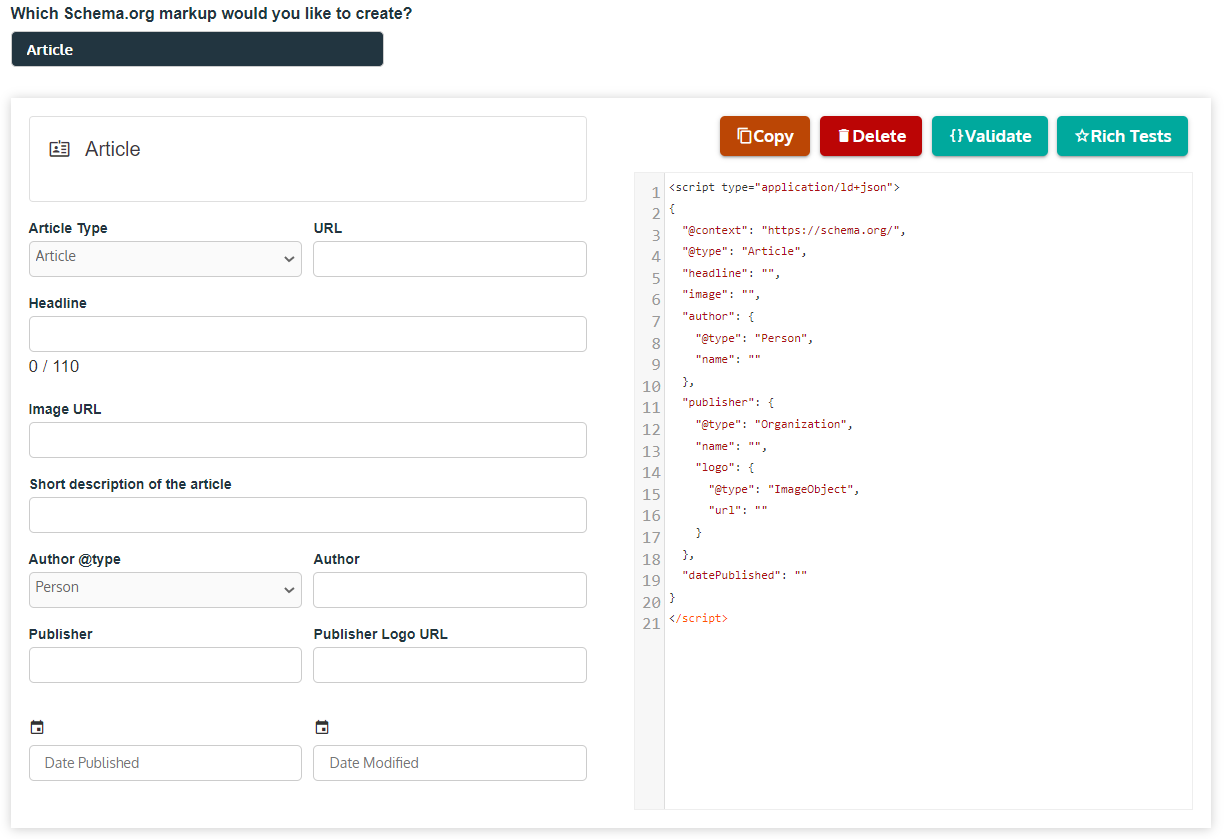
The important part is accuracy. The structured data should reflect what is actually visible on the page. Adding schema for content that does not exist is a fast way to lose trust.
Implementation is usually done by adding the schema in JSON format to the page’s HTML.
Most sites place it in the head section, although it can live in the body as well. Once it is added, I always test it using Google’s rich results or structured data testing tools to make sure it is valid and error-free.
Research Long-Tail Keywords
This is the part of voice search optimization that actually changes how I do keyword research, but only slightly.
Voice search technology pushes you toward longer tail keywords by default because people speak in full sentences using conversational language. They ask questions the way they would ask another person. Short, choppy phrases still exist, but they are far less common when someone is talking instead of typing.
That naturally shifts your keyword selection and your overall SEO strategy.
Instead of focusing only on high-volume head terms, I spend more time looking for specific, question-driven queries and conversational keywords. Things that start with how, what, when, or why. These are the queries voice assistants are constantly trying to answer.
Like this one:
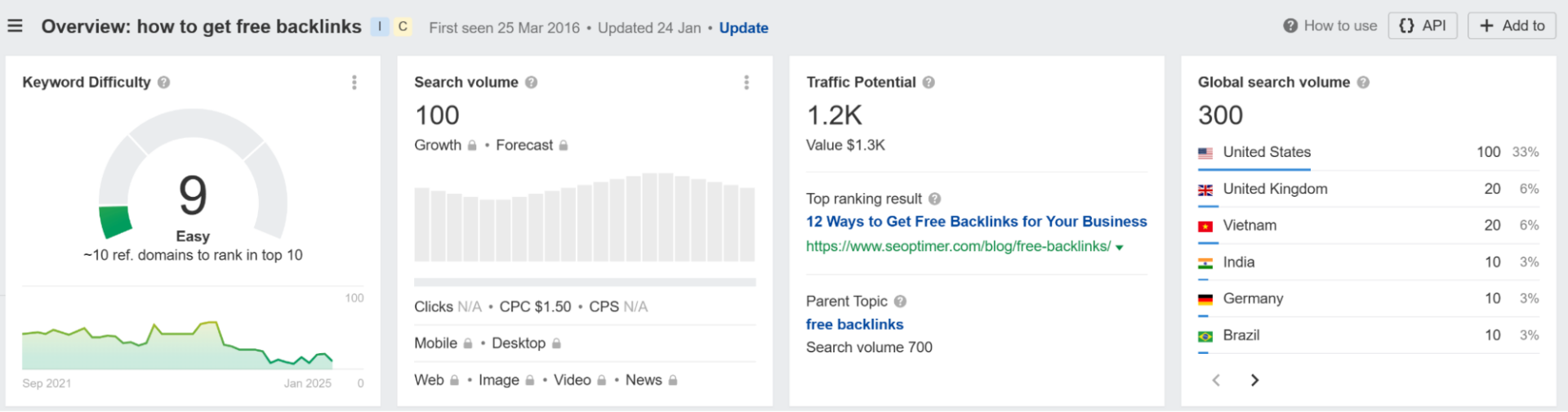
Ahrefs has been one of my go-to tools for this. The keyword explorer and the built-in search suggestions pull a TON of natural language queries that people actually use.
I also rely heavily on search suggestions themselves. Autocomplete and related searches are a direct reflection of how users phrase their questions.
When I see a suggestion that reads like something someone would say out loud using natural language processing, it usually goes straight into my list.
ChatGPT has also become a useful layer on top of that process for content marketing research.
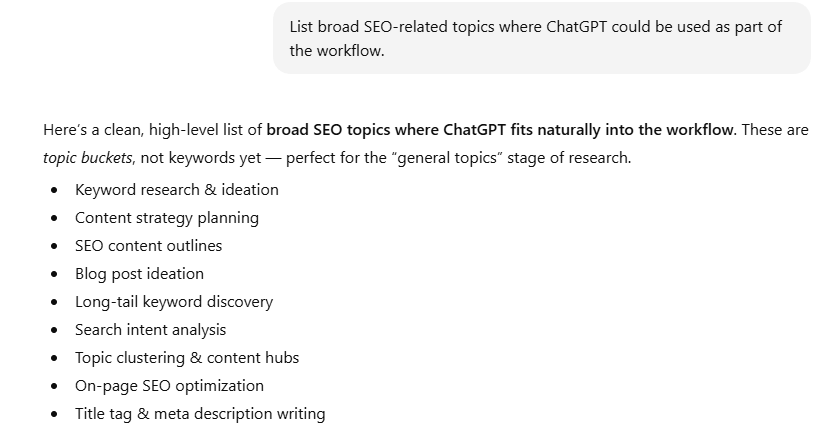
I do not use it as a replacement for data. I use it to generate variations and question formats I might not think of, then validate those ideas in Ahrefs. That combination works especially well for uncovering long tail queries that have clear intent but are easy to miss in traditional keyword lists.
Optimize for AI Overviews
Voice search and AI overviews are much more connected than most people realize.
When someone uses Google Voice Search or another voice assistant, Google is often pulling from the same systems it uses to generate AI overviews and featured snippets. In both cases, the goal is identical.
Provide a clear, accurate answer without forcing the user to dig through a page.
That means if your content is optimized for AI overviews and featured snippets, it is already well-positioned for voice search optimization.
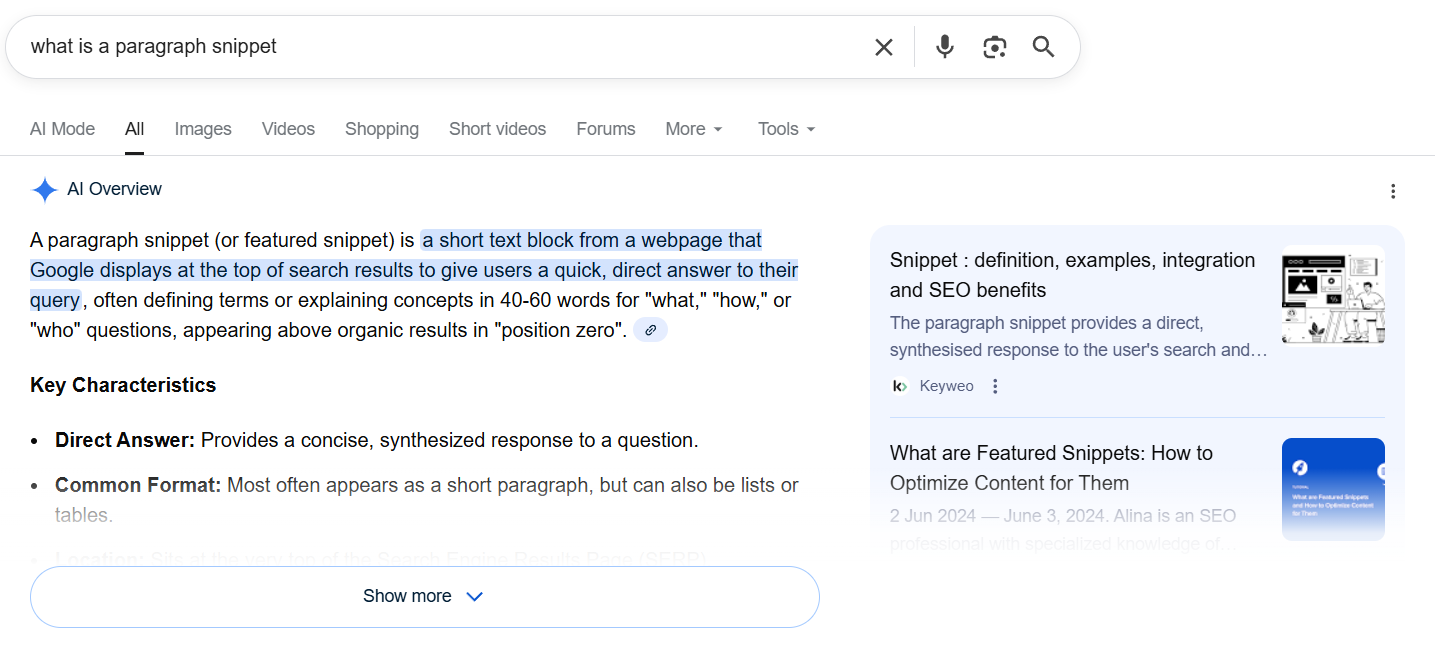
In practice, AI overviews are built by analyzing the top search results and extracting the clearest parts of each page. Google is not looking for creativity here. It is looking for structure, accuracy, and confidence in the answer.
This is why content that ranks well but rambles often gets ignored. If the answer is buried, vague, or overly verbose, it is hard for AI systems to reuse it.
What has worked best for me is structuring content around direct questions and answering them immediately.
Clear headings that mirror search queries, followed by short, precise explanations, make it easy for AI systems to identify what matters. This approach works for both digital marketing content and local SEO efforts.
Lists and step-by-step sections help too where appropriate. Simple tables work well for comparisons, as long as they use clean HTML and stay focused. The goal is not to impress the reader, but to remove ambiguity for Google Search.
Another important factor is the fact you need to be somewhere in the top 10 in order for AI overviews to even consider you. You do not need to rank first, but you do need to be visible on the first page.
For local search visibility, this is where your Google Business Profile, Google Map optimization, and overall local SEO strategy become critical for appearing in voice commerce results and voice commands.
Link building cheat sheet
Gain access to the 3-step strategy we use to earn over 86 high-quality backlinks each month.
Now Over To You
Voice search optimization sounds new, but it rewards the same things that have always worked.
If your site is technically solid, your content answers real long-tail questions, and your pages are structured in a way Google and AI systems can easily understand, you are already doing most of the work. There is no separate playbook. Just better execution of the fundamentals.
The missing piece for most sites is authority.
Voice results results and AI overviews consistently pull from pages that already rank somewhere in the top 10.
Sounds tough? It is.
What if I told you that a mention in an article that ranks in the top 10 is equally as valuable for getting quoted as ranking your own page?
That is exactly what our done-for-you link building service is designed to handle.
We take care of prospecting, outreach, relationship building, and placement using fully white-hat methods that support long-term rankings and AI visibility. You get authoritative links without the time drain or the guesswork.
Frequently Asked Questions (FAQ)
Is voice search SEO different from traditional SEO?
Not really. Voice SEO uses the same ranking systems as traditional SEO, but queries are usually longer and more conversational. If you already optimize for long tail keywords and clear answers, you are most of the way there.
Does voice search optimization require special technical optimization?
There is no separate technical setup just for voice search. A fast, mobile-friendly, well-structured site that is easy to crawl and index performs well in both voice and traditional search. Voice search simply exposes technical issues faster.
How important are long tail keywords for voice search optimization?
They are one of the few real differences. People speak in full questions instead of typing short phrases, so voice queries naturally skew longer. Targeting conversational keywords and question-based queries aligns your content with how voice search is actually used.
Does schema markup help with voice SEO?
Yes, because it helps search engines understand the structure and intent of your content. Schema makes it easier for Google Assistant and other AI assistants to extract accurate answers, which increases the chances of your content being used for voice responses.
Do backlinks still matter for voice search optimization?
Absolutely. Voice search results and AI-generated answers usually come from authoritative pages that already rank well. High-quality backlinks remain one of the strongest signals that help your content get selected as the answer, whether through social media marketing, content marketing, or other digital marketing strategies.