
Most startups do not have a big SEO budget.
There is no in-house SEO specialist, no expensive SEO agency, and no time to test dozens of different tactics. Usually it is just a small team trying to figure out how to get more visibility in search engines while also building the product.
The good news is that SEO for startups does not have to be complicated or expensive.
If you focus on the fundamentals of search engine optimization, you can start generating organic traffic without a massive marketing budget. The key is building a simple SEO strategy that a startup team can realistically execute.
That usually means:
- targeting keywords that are actually possible to rank for
- publishing useful content that answers real search intent
- fixing a few technical SEO basics so search engines can index your pages
- and getting your brand mentioned on sites that already rank
None of this requires a large digital marketing team. In fact, many tech startups build their first wave of organic traffic with just a few consistent SEO efforts.
Below are the exact startup SEO tactics that work well when you have a small team, limited resources, and still want to compete in search results.
Key Takeaways:
- SEO for startups works best when you focus on a small number of achievable goals instead of trying to do everything at once.
- Keyword research should prioritize low-difficulty long-tail keywords that match clear search intent.
Publishing useful content consistently is one of the fastest ways for a startup to build organic traffic and improve visibility in search engines. - A few technical SEO basics like sitemaps, page speed, and proper indexing in Google Search Console can dramatically improve SEO performance.
- Link building and brand mentions on high-authority listicles remain one of the strongest signals for search engines and AI search systems.

Link building cheat sheet
Gain access to the 3-step strategy we use to earn over 86 high-quality backlinks each month.
Start with Low-Difficulty Long-Tail Keywords
If you’re doing SEO for a startup with a small team, the worst thing you can do is chase the biggest keywords in your space.
You’ll lose that fight every time.
Large companies already dominate those search results because they have higher domain authority, larger content teams, and years of link building behind them. A new startup site is not going to outrank them overnight.
The smarter move is to start with low-difficulty long-tail keywords.
These are longer, more specific searches that usually reflect a very clear search intent. Instead of trying to rank for something broad like “link building,” you target searches that look more like:
- keyword research chatgpt
- ai visibility tools
- enterprise search engine optimization agencies
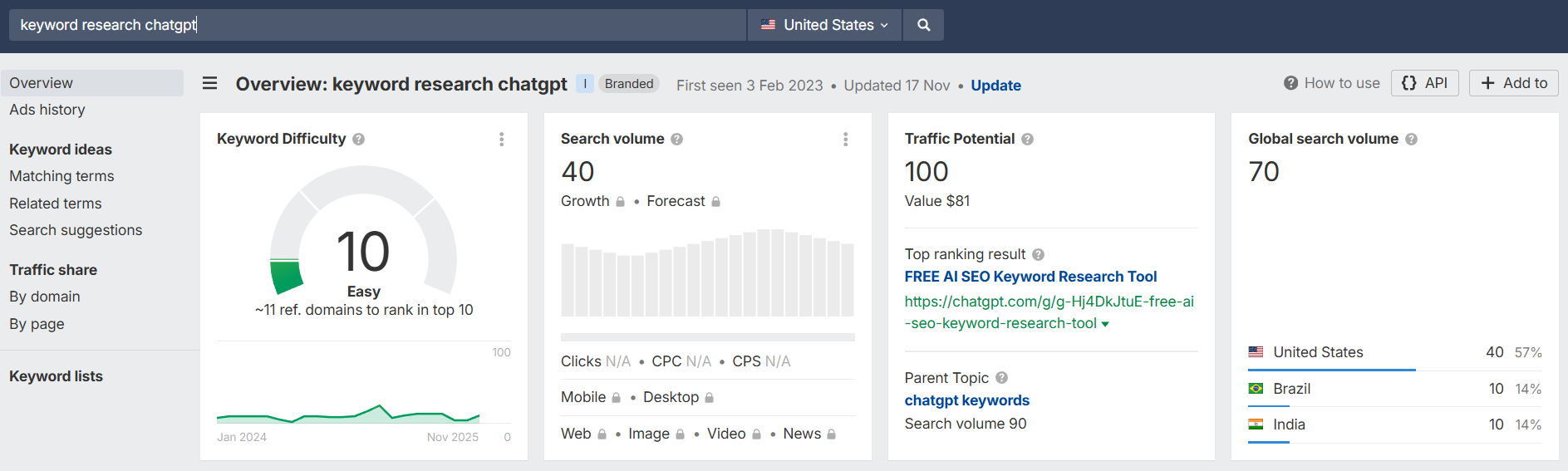
The traffic might be smaller, but the upside is twofold: the keyword is easier to rank for and the people searching it usually know exactly what they’re looking for.
The easiest way to find these is to combine ChatGPT brainstorming with a real keyword research tool.
Start with a broad topic related to your product or industry in Ahrefs or equivalent. Then ask ChatGPT to expand it into long-tail ideas.
For example, you could ask:
“Give me 30 long-tail keyword ideas related to link building for SaaS.”
Or:
“List questions people might search about outreach automation.”
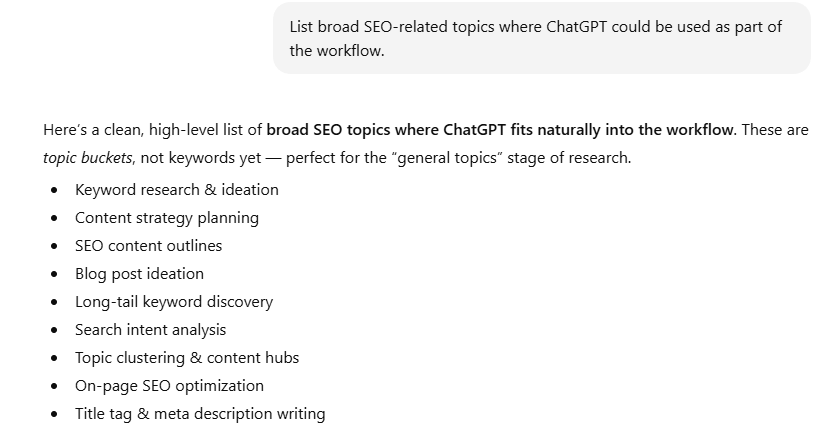
ChatGPT is great at generating ideas quickly. It can bring up angles and keyword variations you probably wouldn’t think of on your own.
Once you have a list, take those ideas into a real keyword research tool like Ahrefs, Semrush, or Google Keyword Planner. That’s where you check the things that actually matter:
If the search results are full of huge sites, skip it. If you see smaller sites ranking, that’s usually a good sign the keyword is achievable.
From there, pick a clear target keyword and build a piece of content around it.
Don’t overcomplicate it. Just make sure the page directly answers the search intent. If someone searches a question, answer it immediately. If they’re looking for tools or comparisons, structure the content so it’s easy to scan.
This approach lets a startup build momentum in search engines much faster. Instead of waiting a year to compete for huge keywords, you start stacking wins with smaller ones.
Optimize Content for AI
Ranking in search engines is still important, but if you want your pages to show up in AI answers, your content also needs to be easy for AI systems to extract and reuse.
Google AI Overviews, ChatGPT, and other AI search tools don’t invent answers from scratch. They look at existing pages, pull the clearest sections, and combine them into a generated response.
So the goal is simple: write content in a way that AI can easily quote.
A few small changes make a big difference.
Start by answering the question immediately.
When someone searches something like “what is link building,” the first paragraph should define it clearly before expanding into details.
Pages that get cited often follow this structure:
- Clear heading that matches the search query
- A short, direct answer right under the heading
- Supporting explanation below it
- Lists, steps, or tables when possible
AI Overviews often assemble answers from multiple sources and formats like lists, comparisons, or step-by-step instructions.
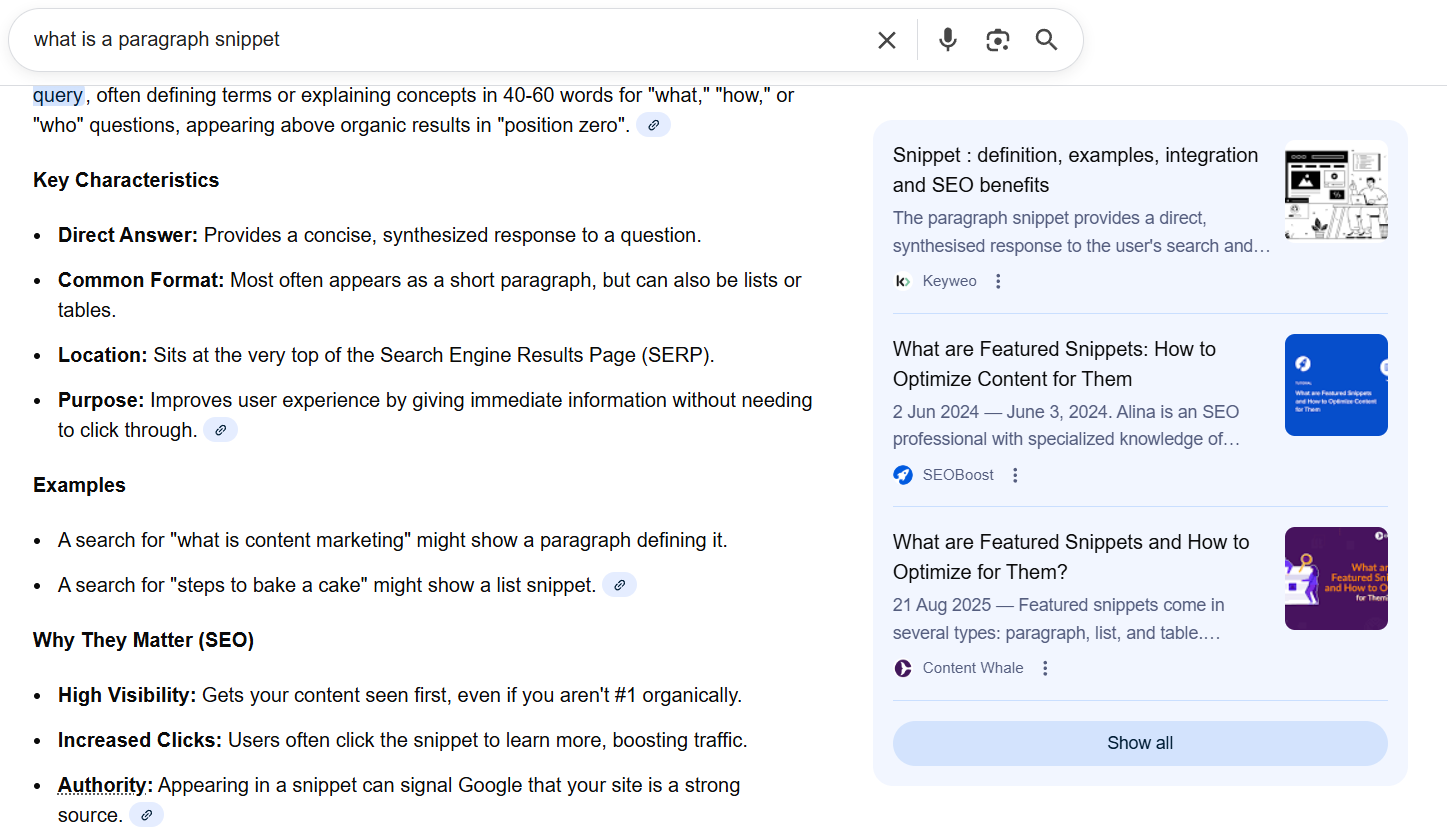
That’s why structured content performs better than long blocks of text.
Each section gives AI systems something clean they can reuse.
Another important factor is topical coverage.
AI search doesn’t just look at one keyword. It often expands a query into multiple related questions and looks for pages that answer several of them. Pages that rank across these related queries are far more likely to get cited in the final AI summary.
So instead of writing thin articles that target one keyword, build pages that cover the whole topic.
If you do that consistently, two things happen:
- Search engines trust your site more.
- AI systems have more sections they can pull into answers.
Technical SEO Isn’t Really So Technical
Technical SEO sounds hard but it really isn’t. Most of it boils down to these three points.
Manually Upload Pages for Indexing
When you publish a new page on your startup’s site, search engines do not always find it right away.
A lot of people assume Google automatically discovers every page the moment it goes live. Sometimes that happens, but often it doesn’t, especially if your site is new and has very few backlinks pointing to it.
The fastest way to solve this is to submit the page manually through Google Search Console.

Think of it as tapping Google on the shoulder and saying, “This page exists. Come crawl it.”
Here’s the process:
- Open Google Search Console
- Paste the page URL into the URL Inspection tool
- Click Request Indexing
That’s it.
Submitting a page manually can often get it crawled much faster. In many cases, it can appear in Google’s index within about a day.
Upload a Sitemap
A sitemap is simply a file that lists all the important pages on your website so search engines can find them easily.
For a new startup site, this helps a lot because search engines may not discover every page on their own yet.
Most CMS platforms generate a sitemap automatically. If you’re using WordPress, plugins like Yoast SEO, Rank Math, or All in One SEO will create a sitemap for you automatically.
You usually don’t need to configure much once the plugin is installed, the sitemap is available at something like:
yourdomain.com/sitemap.xml
If your site doesn’t generate one automatically, you can also create it using a sitemap generator tool like XML-Sitemaps.com or a crawler such as Screaming Frog.
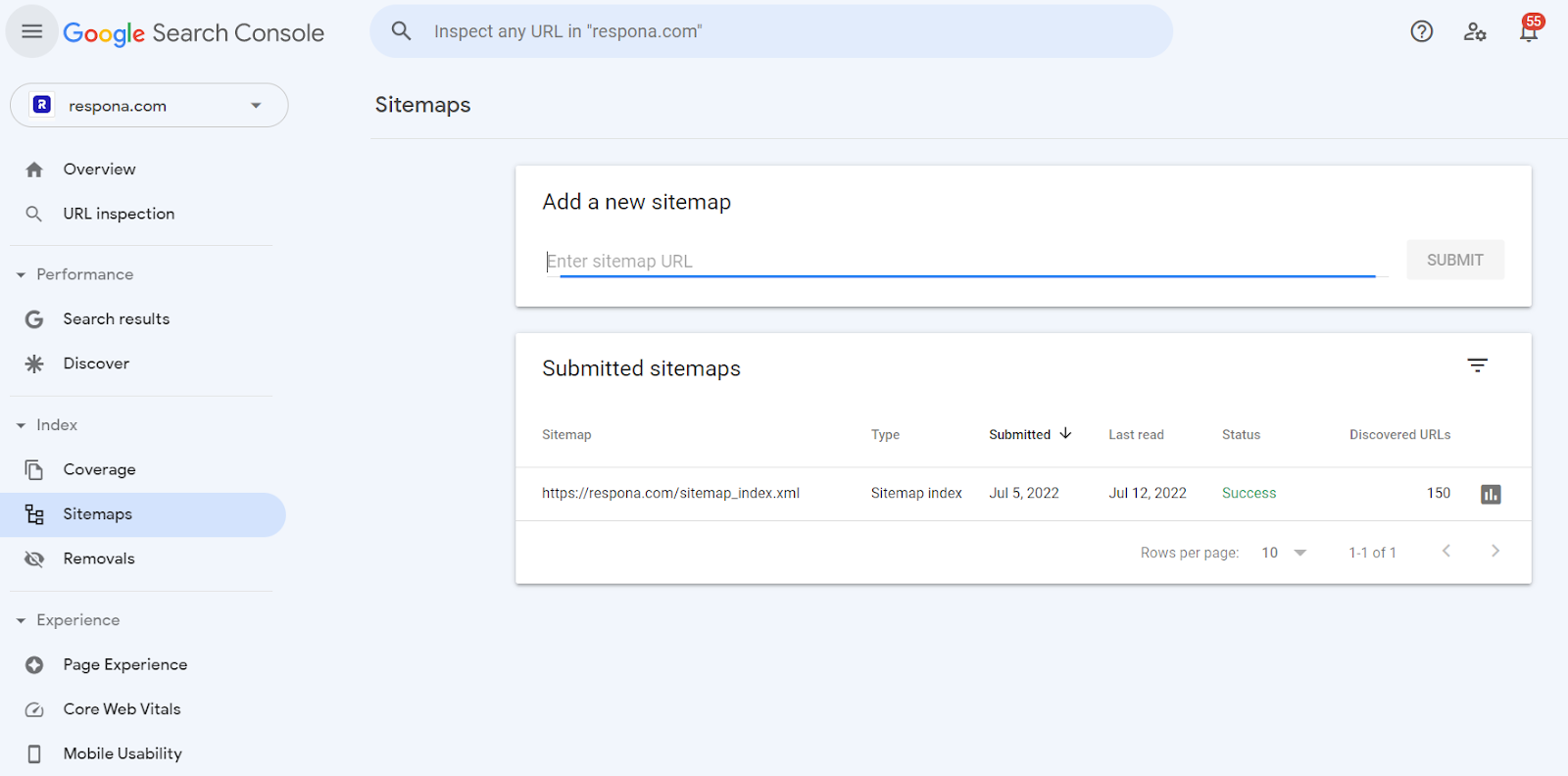
Once the sitemap exists, submit it in Google Search Console:
- Open Google Search Console
- Go to the Sitemaps section
- Paste your sitemap URL (for example sitemap.xml)
- Click Submit
Bring Page Speed Up to… Speed
Page speed is one of those technical SEO things that sounds complicated but is actually pretty straightforward to fix.
The easiest way to check it is Google PageSpeed Insights.
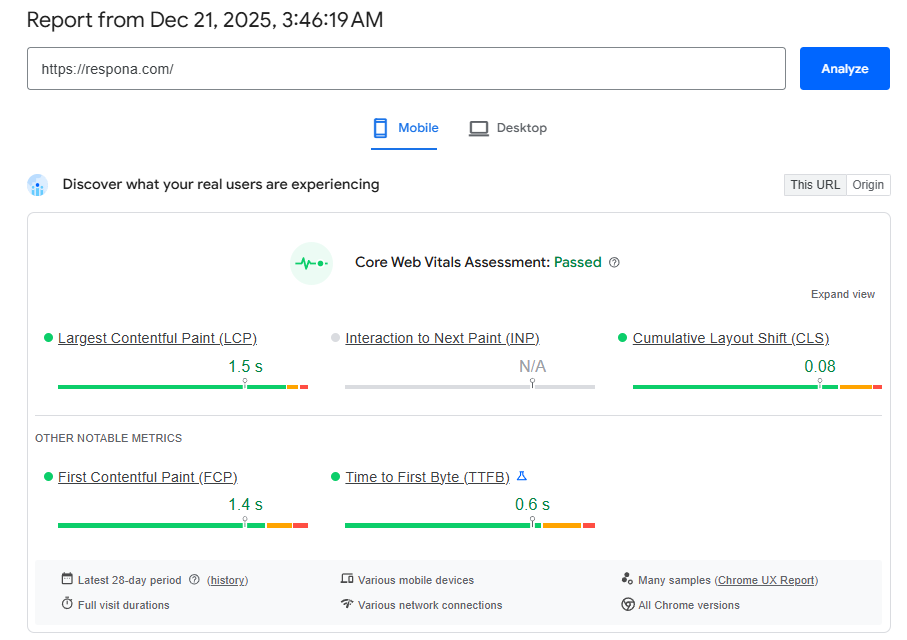
Just paste your URL into the tool and it will analyze your page and give you a score along with a list of recommendations. It also shows your Core Web Vitals, which are metrics Google uses to evaluate user experience and page performance.
The useful part is that PageSpeed Insights doesn’t just tell you something is wrong. It tells you exactly what to fix.
Typical issues it flags include things like:
- images that are too large
- JavaScript or CSS that’s slowing the page down
- unused code
- slow server response times
Each recommendation includes an explanation and suggested fixes. In most cases, improving page speed is just a matter of working through those suggestions one by one.
For startups, the goal isn’t to obsess over a perfect score. It’s simply to get your page performance into the green range so search engines and users both have a good experience.
If you follow the recommendations inside PageSpeed Insights, you’ll usually fix most speed issues without needing a deep technical SEO background.
Get Brand Mentions on Listicles
One thing a lot of startups misunderstand about SEO is where authority actually comes from.
It’s not just your own content.
A large part of visibility in search engines and AI search comes from third-party mentions.
Search engines evaluate what other sites say about your brand, and AI systems rely on those same signals when deciding which companies to reference.
This is especially true for listicles and comparison articles.
When someone searches things like:
- best link building tools
- top outreach platforms
- alternatives to [tool]
The pages that rank are usually listicles published by industry sites. These articles already have authority, backlinks, and steady organic traffic. Because of that, search engines and AI systems frequently treat them as reliable sources.
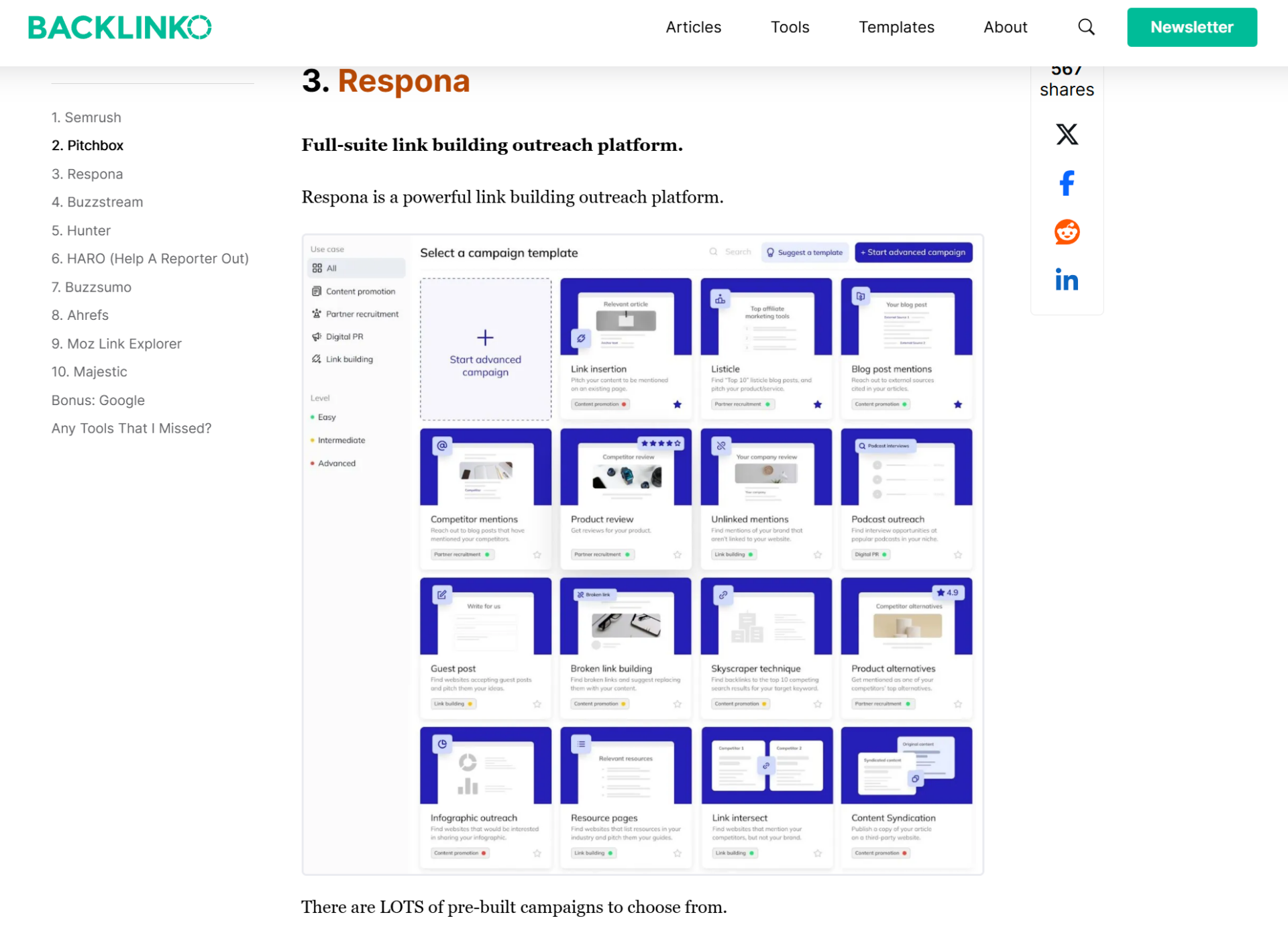
AI answers often pull information directly from these pages rather than from a company’s own website. If your brand appears in those articles, the chances of being included in AI search results increase significantly.
A good example is Backlinko’s link building tools article, which includes Respona as one of the recommended platforms.
Backlinko has strong domain authority, so that mention helps with traditional SEO, but it also increases the likelihood that AI search systems reference the same list when generating answers.
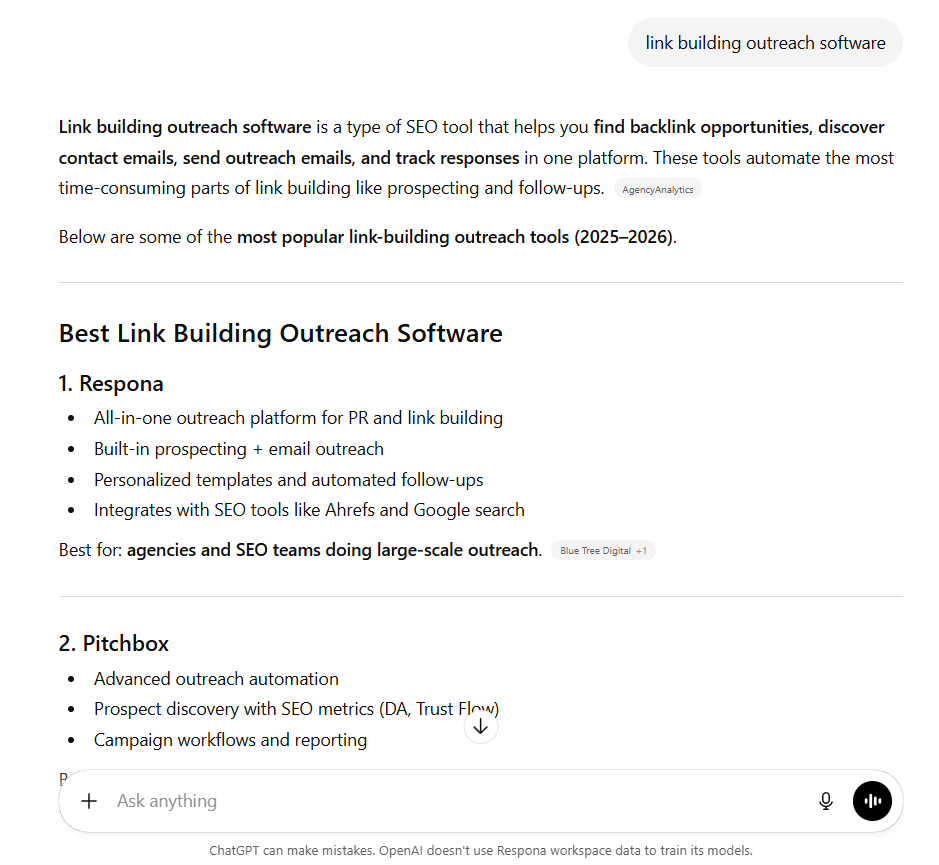
That’s why link building and brand mentions on authoritative listicles are more valuable than ever.
For startups with small teams, doing this manually can be difficult. Identifying the right publications, pitching editors, and securing placements takes time.
That’s exactly what our done-for-you link building service focuses on.
We help place your brand on relevant listicles, comparison pages, and editorial articles across authoritative websites in your industry.
These placements improve SEO performance, strengthen your backlink profile, and increase the chances that both search engines and AI systems reference your brand.
We also recently introduced a Campaigns feature that helps track and improve your AI visibility automatically.
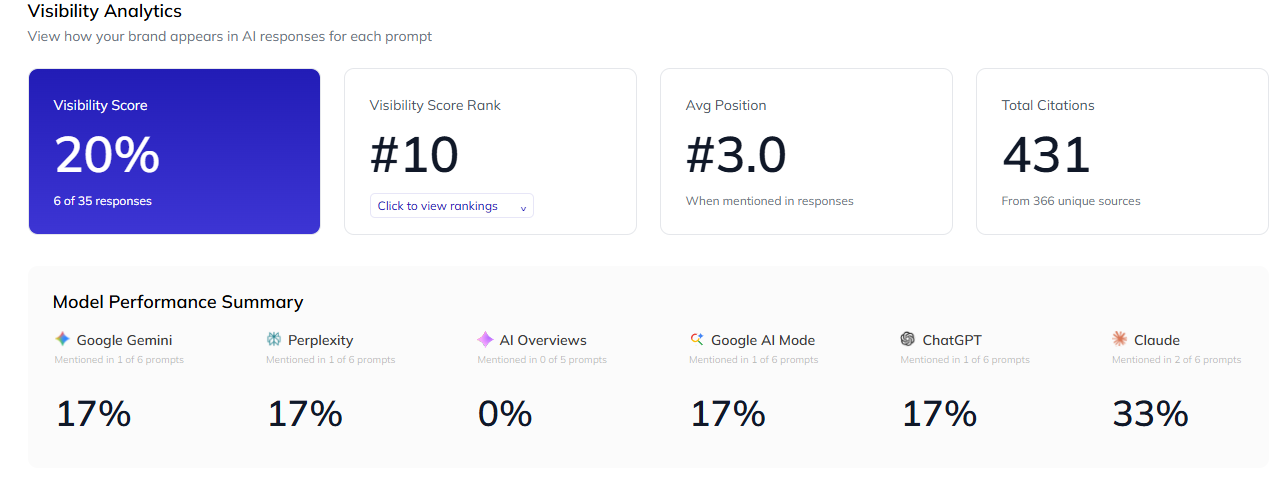
Campaigns monitor whether your brand appears in AI responses across major AI systems like Google AI Overviews, ChatGPT, Perplexity, and others.
The system analyzes which sources those AI models cite for your target topics and identifies where your brand is missing.
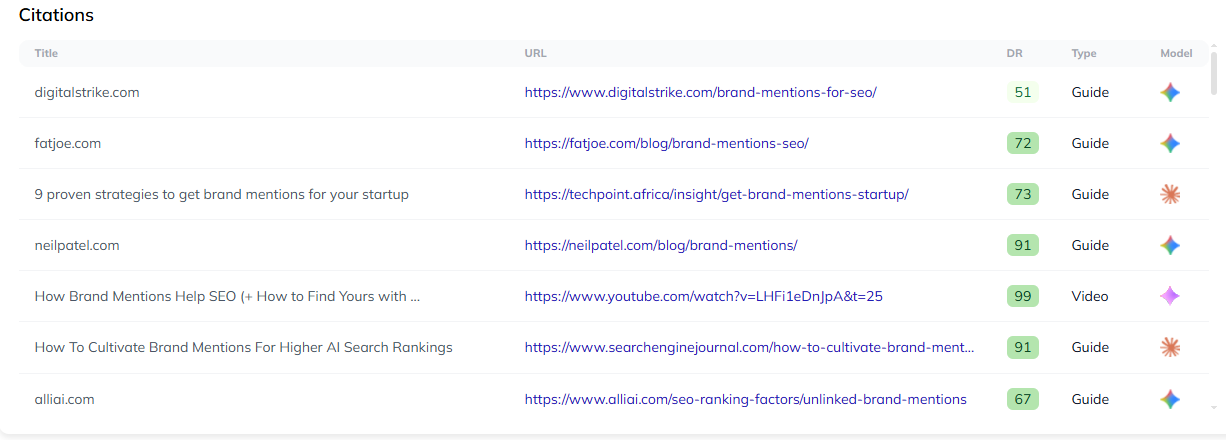
Based on that data, it generates a monthly action plan recommending placements on the types of publications and articles that AI systems already reference.
Instead of guessing where to build mentions, you get a clear roadmap based on real AI citation patterns.
Link building cheat sheet
Gain access to the 3-step strategy we use to earn over 86 high-quality backlinks each month.
Now Over to You
SEO for startups does not have to be complicated or expensive.
Most early-stage companies overthink it and try to do everything at once. In reality, a small team can make real progress by focusing on a few fundamentals: targeting achievable keywords, publishing useful content, fixing basic technical SEO issues, and earning mentions on authoritative sites.
Those steps alone can start bringing in organic traffic and improving visibility in search engines.
But one area that consistently accelerates startup SEO is brand mentions on high-quality listicles and industry articles.
Those placements strengthen your backlink profile, help pages rank in search results, and increase the chances that AI systems cite your brand when generating answers.
That is exactly what our done-for-you link building service is designed for.
We help startups get featured on relevant listicles, comparison pages, and editorial articles across authoritative websites in their industry. These placements improve search engine optimization, strengthen domain authority, and increase visibility in both traditional search and AI search.
And with our Campaigns feature, you can also monitor your AI visibility and receive a monthly action plan that shows where your brand should be mentioned to increase citations in AI responses.
Frequently Asked Questions (FAQ)
What is SEO for startups?
SEO for startups is the process of improving a startup’s visibility in search engines so potential customers can discover the product or service through organic traffic. A typical startup SEO strategy focuses on keyword research, content creation, technical SEO basics, and link building.
How can startups do SEO on a small budget?
Startups can achieve SEO success by focusing on a few high-impact activities: targeting low-difficulty keywords, publishing quality content, fixing basic technical SEO issues, and earning backlinks from authoritative sites. These steps can be executed by a small team without hiring a large SEO agency.
Do startups need technical SEO?
Yes, but most technical SEO for startups is straightforward. Submitting pages through Google Search Console, creating a sitemap, improving page speed, and maintaining a clean URL structure are usually enough to ensure search engines can crawl and index your content properly.
What is the most important SEO strategy for startups?
For most startups, keyword research and content marketing are the most important first steps. Targeting the right keywords and publishing content that matches search intent can start generating organic traffic even before a site has strong domain authority.
Why are backlinks important for startup SEO?
Backlinks signal to search engines that other websites trust your content. Mentions on authoritative sites, especially listicles and comparison articles, help improve rankings, strengthen domain authority, and increase visibility in search results and AI search systems.
Can SEO work for tech startups?
Yes. Many tech startups rely heavily on startup SEO because it can generate long-term organic traffic without ongoing advertising costs. By targeting relevant keywords and building topical authority, startups can compete in search results even against larger companies.