Designers, makers, and others often use 3D printing to rapidly prototype a range of functional objects, from movie props to medical devices. Accurate print previews are essential so users know a fabricated object will perform as expected.
But previews generated by most 3D-printing software focus on function rather than aesthetics. A printed object may end up with a different color, texture, or shading than the user expected, resulting in multiple reprints that waste time, effort, and material.
To help users envision how a fabricated object will look, researchers from MIT and elsewhere developed an easy-to-use preview tool that puts appearance first.
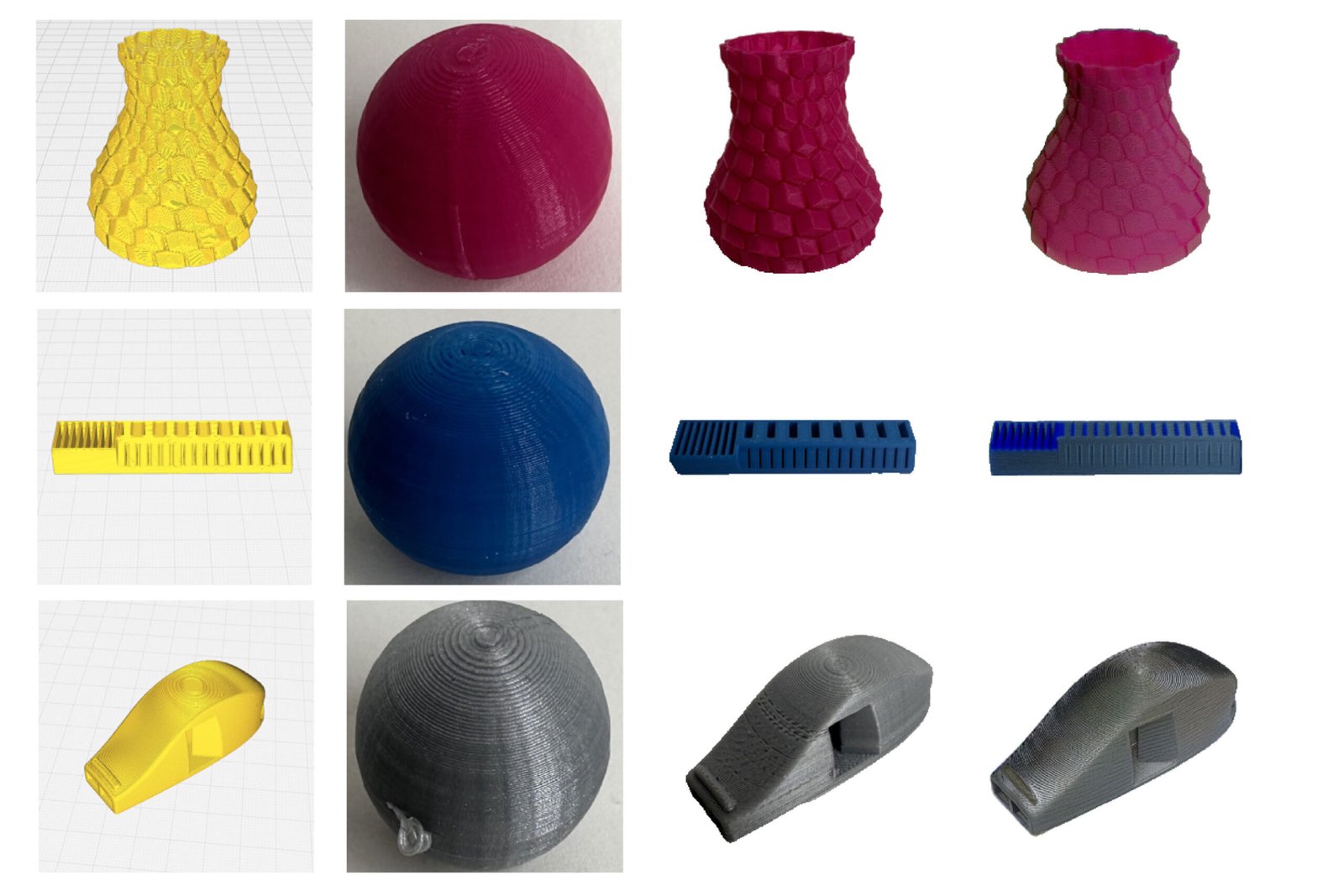
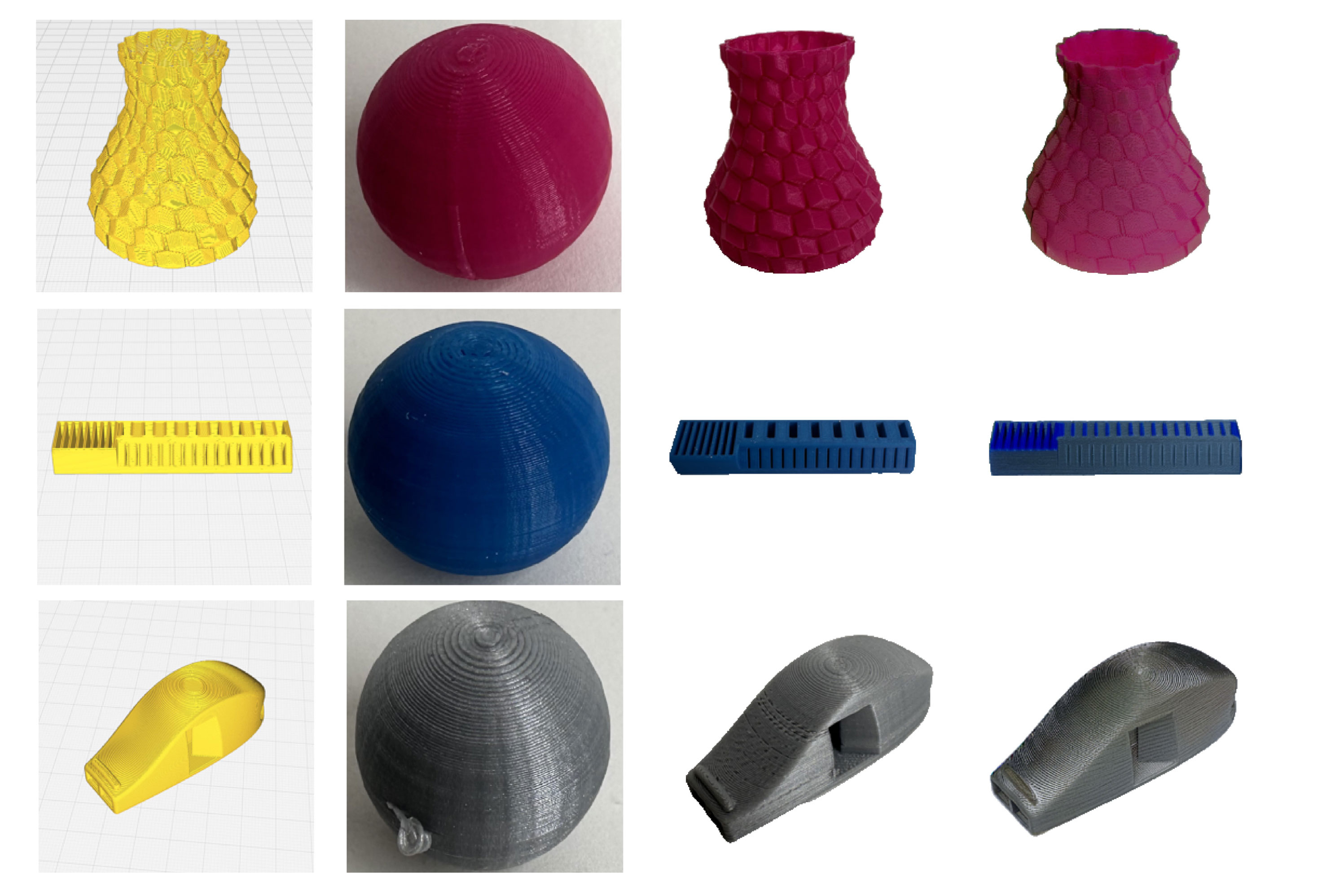
Users upload a screenshot of the object from their 3D-printing software, along with a single image of the print material. From these inputs, the system automatically generates a rendering of how the fabricated object is likely to look.
The artificial intelligence-powered system, called VisiPrint, is designed to work with a range of 3D-printing software and can handle any material example. It considers not only the color of the material, but also gloss, translucency, and how nuances of the fabrication process affect the object’s appearance.
Such aesthetics-focused previews could be especially useful in areas like dentistry, by helping clinicians ensure temporary crowns and bridges match the appearance of a patient’s teeth, or in architecture, to aid designers in assessing the visual impact of models.
“3D printing can be a very wasteful process. Some studies estimate that as much as a third of the material used goes straight to the landfill, often from prototypes the user ends of discarding. To make 3D printing more sustainable, we want to reduce the number of tries it takes to get the prototype you want. The user shouldn’t have to try out every printing material they have before they settle on a design,” says Maxine Perroni-Scharf, an electrical engineering and computer science (EECS) graduate student and lead author of a paper on VisiPrint.
She is joined on the paper by Faraz Faruqi, a fellow EECS graduate student; Raul Hernandez, an MIT undergraduate; SooYeon Ahn, a graduate student at the Gwangju Institute of Science and Technology; Szymon Rusinkiewicz, a professor of computer science at Princeton University; William Freeman, the Thomas and Gerd Perkins Professor of EECS at MIT and a member of the Computer Science and Artificial Intelligence Laboratory (CSAIL); and senior author Stefanie Mueller, an associate professor of EECS and Mechanical Engineering at MIT, and a member of CSAIL. The research will be presented at the ACM CHI Conference on Human Factors in Computing Systems.
Accurate aesthetics
The researchers focused on fused deposition modeling (FDM), the most common type of 3D printing. In FDM, print material filament is melted and then squirted through a nozzle to fabricate an object one layer at a time.
Generating accurate aesthetic previews is challenging because the melting and extrusion process can change the appearance of a material, as can the height of each deposited layer and the path the nozzle follows during fabrication.
VisiPrint uses two AI models that work together to overcome those challenges.
The VisiPrint preview is based on two inputs: a screenshot of the digital design from a user’s 3D-printing software (called “slicer” software), and an image of the print material, which can be taken from an online source or captured from a printed sample.
From these inputs, a computer vision model extracts features from the material sample that are important for the object’s appearance.
It feeds those features to a generative AI model that computes the geometry and structure of the object, while incorporating the so-called “slicing” pattern the nozzle will follow as it extrudes each layer.
The key to the researchers’ approach is a special conditioning method. This involves carefully adjusting the inner workings of the model to guide it, so it follows the slicing pattern and obeys the constraints of the 3D-printing process.
Their conditioning method utilizes a depth map that preserves the shape and shading of the object, along with a map of the edges that reflects the internal contours and structural boundaries.
“If you don’t have the right balance of these two things, you could use up with bad geometry or an incorrect slicing pattern. We had to be careful to combine them in the right way,” Perroni-Scharf says.
A user-focused system
The team also produced an easy-to-use interface where one can upload the required images and evaluate the preview.
The VisiPrint interface enables more advanced makers to adjust multiple settings, such as the influence of certain colors on the final appearance.
In the end, the aesthetic preview is intended to complement the functional preview generated by slicer software, since VisiPrint does not estimate printability, mechanical feasibility, or likelihood of failure.
To evaluate VisiPrint, the researchers conducted a user study that asked participants to compare the system to other approaches. Nearly all participants said it provided better overall appearance as well as more textural similarity with printed objects.
In addition, the VisiPrint preview process took about a minute on average, which was more than twice as fast as any competing method.
“VisiPrint really shined when compared to other AI interfaces. If you give a more general AI model the same screenshots, it might randomly change the shape or use the wrong slicing pattern because it had no direct conditioning,” she says.
In the future, the researchers want to address artifacts that can occur when model previews have extremely fine details. They also want to add features that allow users to optimize parts of the printing process beyond color of the material.
“It is important to think about the way that we fabricate objects. We need to continue striving to develop methods that reduce waste. To that end, this marriage of AI with the physical making process is an exciting area of future work,” Perroni-Scharf says.
“‘What you see is what you get’ has been the main thing that made desktop publishing ‘happen’ in the 1980s, as it allowed users to get what they wanted at first try. It is time to get WYSIWYG for 3D printing as well. VisiPrint is a great step in this direction,” says Patrick Baudisch, a professor of computer science at the Hasso Plattner Institute, who was not involved with this work.
This research was funded, in part, by an MIT Morningside Academy for Design Fellowship and an MIT MathWorks Fellowship.