Last month, Pamela Griffin and two other residents of Taylor, Texas, took to the lectern at a city council meeting to object to a data center project. But later, they sat back as council members discussed a proposed tech factory. Griffin didn’t speak up against that development. No one did.
A similar contrast is repeating in communities across the US. Data centers are meeting unprecedented public resistance, with environmental costs a leading concern. More of them have been needed to power a growing appetite for AI, and they’ve become obvious flash points for communities worried about what automation could mean for them. However, many of the factories getting built to supply servers, electrical gear, and other parts to data centers are facing virtually no opposition.
Factories tend to create more jobs and drain fewer natural resources than data centers do, so with the exception of a few controversial chipmaking fabs in several states, they have been sailing through local hearings to get permits and tax breaks. But experts who follow supply chains say the minimal scrutiny on manufacturing projects highlights a potential new strategy for activists fighting data centers and a source of risk for communities who may be investing in a short-lived boom.
“At some point, people are going to figure out what the critical factory is that can bring all the data centers to their knees, and they will go after that,” says Andy Tsay, a Santa Clara University professor who studies global trade and reshoring.
Though targeting the supply chain could be a new way to slow data center construction, Griffin says organizers are spread too thin to take on more. So for now, the door is wide open to manufacturers to grow their US presence and feed the data center market without overwhelming resistance.
“We need to start at the bottom and get those guys that make those servers, but we first got to get people to understand what these data centers are,” Griffin says. “We need to pick our battles.”
Her focus at last month’s council meeting was on opposing a proposal for a second data center in Taylor, following one being built near her home that she’s suing to stop. That evening, Griffin and her fellow activists knew the council also would be considering a proposed factory for Taiwanese manufacturer Compal. But the site’s potential role in supporting the data center industry wasn’t obvious to them.
Griffin’s case shows what communities protesting data centers are up against if they consider also challenging manufacturing projects: opacity, public perception, and the prospect of additional legal battles.
Server Farms
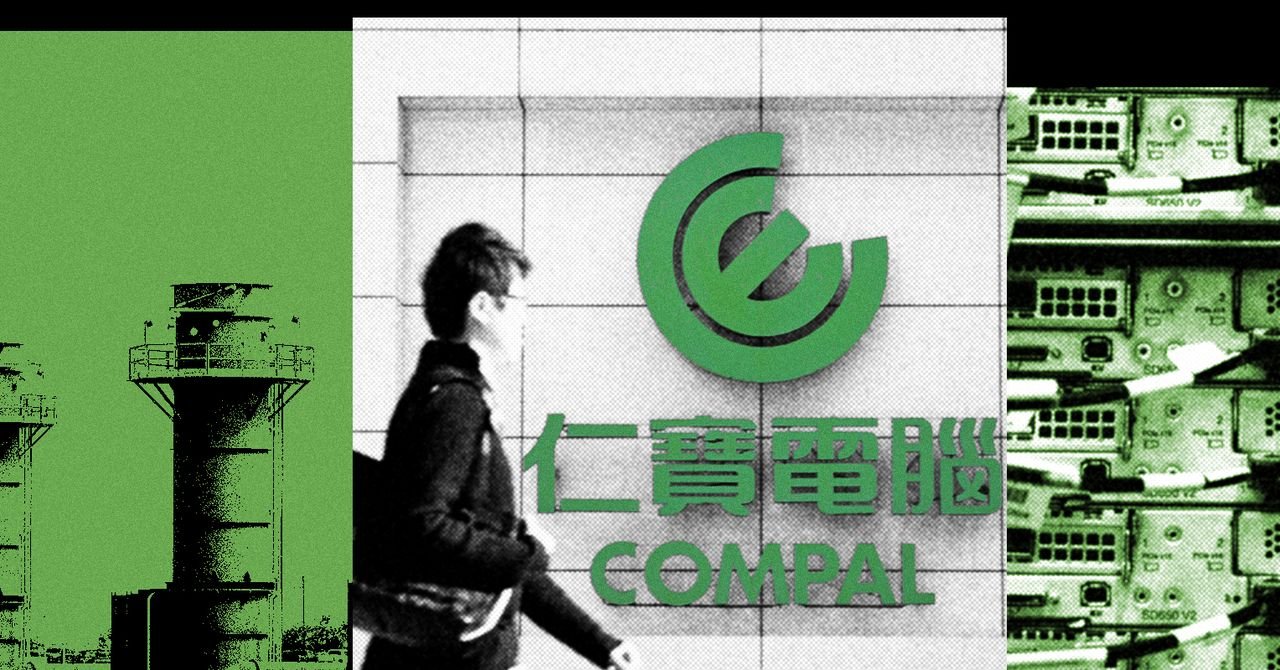
City records describe Compal’s intentions as making “servers,” in addition to everything from smart home devices to automotive electronics.
It’s a broad list, but Compal spokesperson Tina Chang tells WIRED the Taylor factory will be for the company’s server business. The building is being leased by Compal USA Technology, a subsidiary that was established last year for the purpose of expanding Compal’s server product operations in the US. Another site in nearby Georgetown, Texas, announced at the same time as the Taylor facility, will “establish a server service center supporting enterprise and cloud infrastructure needs,” according to the company.
Taylor, which is near Austin, spent over a year courting Compal, which considered alternatives globally before choosing the city. A prebuilt 366,000-square-foot facility won over the company, which said it is signing a nearly $66 million lease with plans to invest $200 million overall. “They fell in love with the openness,” Ben White, president of the Taylor Economic Development Corporation, told the city council at the December meeting. “It gave them the flexibility to do what needed to be done.”