
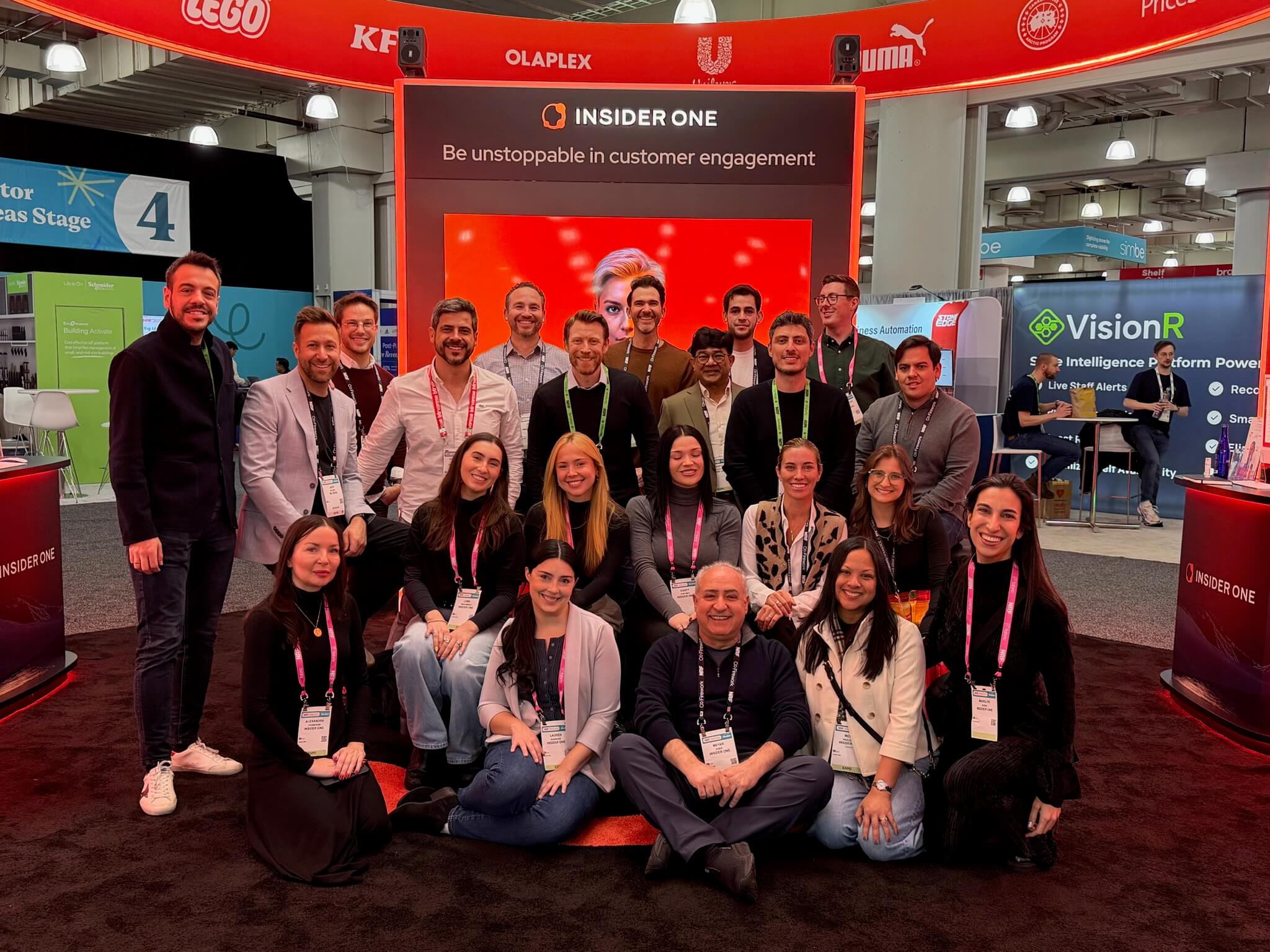
The Insider One team at our booth at the NRF Big Show
Over 40,000 retail leaders gathered in New York last week for the NRF Big Show, and the brands on stage revealed that if AI isn’t in your 2026 roadmap, you’re behind.
The gap is widening fast.
The most innovative retailers are already rebuilding every workflow and operation to put AI at the center, from search to marketing operations, content production, planning, loyalty programs, and decisioning. The brands that are really pulling ahead are turning AI into a system that runs through, not on top of, the business.
Here are five shifts that defined the event, and what marketing, ecommerce, and customer engagement teams need to do to respond to them.
1. AI is infrastructure, not a feature

Leaders from Target and OpenAI discuss how AI has become critical infrastructure in customer engagement.
One of the most telling changes at NRF was how leaders talked about AI. Rather than say they “use AI,” retail leaders described their business as “running on AI,” a theme underscored by Prat Vemana, Chief Information and Product Officer at Target, and Ashley Kramer, VP of Enterprise Revenue at OpenAI, in their session, “A New Era of Retail.”
“When you move from using AI to running on AI, it allows [you] to both modernize the underlying systems and foundational systems and allows you to innovate really fast,” said Vemana.
The subtle difference between these two phrases matters because “using AI” typically means an AI instance in isolation. Running on AI means intelligence can be woven into the core of your business at every layer of operation, including:
- Discovery and search
- Product decisioning and journey orchestration
- Merchandising and operations
- Content creation and localization
- Customer service and associate enablement
This shift echoes what our Co-Founder and CEO, Hande Cilingir, recently articulated about the broader transformation happening across retail and marketing: “AI no longer belongs inside MarTech. It now sits above it. As AITech replaces MarTech, the rules of customer engagement are being reset, marking a seismic shift where human and artificial intelligence work as one.”
Kramer reinforced this evolution by highlighting changes in shopping behavior from keyword-driven search to natural conversation:
“Nobody is searching for ‘white shirt.’ They’re saying, ‘I need a white shirt because I’m speaking at this NRF conference.’”
With this change of behavior in mind, Target changed its approach to search. “We rebuilt the search engine with generative AI, including recommendations both on- and off-platform.”
What this means for customer engagement and marketing teams:
Instead of bolting AI onto existing processes, teams should build systems with AI from the start.
Where to focus today:
- Audit where your customer experience still depends on keyword logic, static rules, or generic segments
- Prioritize AI investments that shift outcomes like conversion, AOV, and retention
- Treat AI as a capability you’ll operationalize rather than a technology you’ll trial
2. The content needs of retail are outpacing production
Content production is becoming one of retail’s largest bottlenecks.
In the “AI-powered content at scale: The Home Depot Marketing reinvention” session, one stat stood out: retail CMOs are being asked for up to 5x more content year over year, and using generative AI to keep up is quickly becoming non‑negotiable.
That demand spike is happening while teams stay flat, budgets tighten, channels multiply, and personalization expectations climb. The demand isn’t just for extra creative banners anymore. Teams are expected to produce content for every customer touchpoint, such as:
- Product detail pages
- Seasonal campaigns
- Email and SMS
- Paid social
- App experiences
- Store signage
- Localization, regionalization, and compliance versions
Home Depot shared how quickly content became an operational constraint. Its content needs outpaced what human teams could deliver. It was missing millions of assets across hundreds of touchpoints, and the shortfall started to limit growth.
But the answer to producing more content wasn’t to hire more designers. Instead, Home Depot needed to build infrastructure with a custom model trained on brand assets, IP, products, and design principles to quickly scale content production without losing quality.
What this means for customer engagement and marketing teams:
Content velocity is a growth constraint now. Generative AI is the only way out.
Where to focus today:
- Identify where your production pipeline bottlenecks: product imagery, offers, localization, and seasonal refreshes
- Build a content operating model that supports scale without sacrificing brand standards
- Leading retailers aren’t just doing more with less. They’re reinvesting AI gains to outpace competition.
3. Loyalty and membership are the most valuable inputs for AI
The retailers getting the most value from AI are learning from their customers in real time.
In “The art and science of modern marketing” session, Kelly Mahoney, Chief Marketing Officer at Ulta Beauty, explained how their 46 million active loyalty members create the foundation behind their personalization efforts.
“The loyalty program is just the beginning of the relationship,” she said. “Data allows us to truly know who is on the other side and personalize the experiences.”
Fabletics reinforced the same idea but from a different angle. After 13 years as a DTC brand with a flexible membership model, they realized they “needed to meet members where they were.” What does that mean? Designing the customer experience through omnichannel efforts around existing behavior rather than adding stores. When Fabletics did, the payoff was clear:
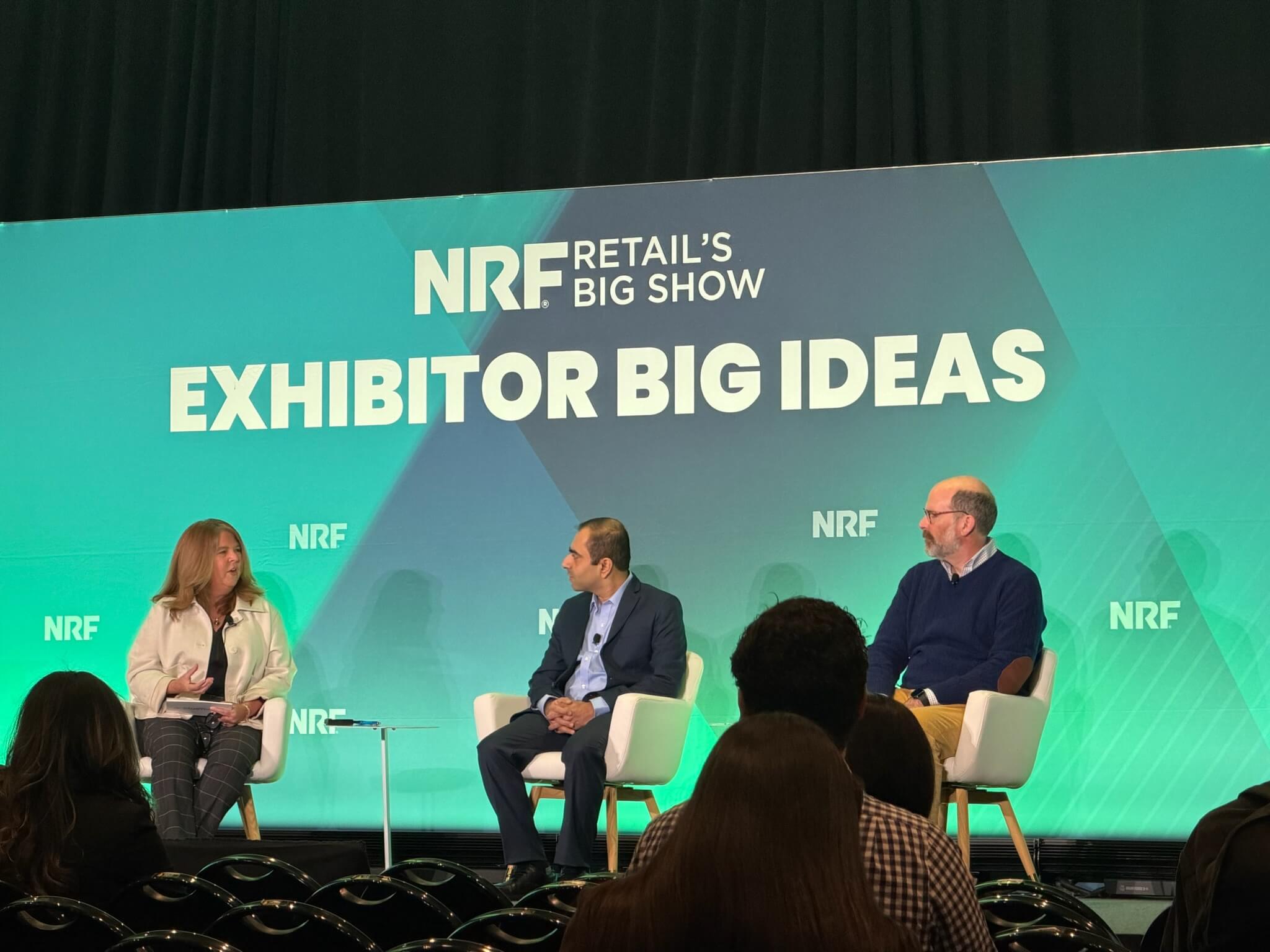
Fabletics leaders share how a membership-first model and physical retail work together to meet customers wherever they are.
“Omnichannel shoppers’ CLTV is infinitely higher than that of those who focus on one channel,” said Tom Farrell, VP Merchandising Systems and Technologies at Fabletics.
The session also revealed something many brands learn the hard way: If your business model is membership-driven, personalization is not optional, your systems and partners have to deliver.
“[It’s] critical to partner with good partners. As a membership model, a lot of partners did not fulfill our needs, so we learned to build proprietary tech unlike retailers.”
What this means for customer engagement and marketing teams: Loyalty isn’t just retention. It’s the intelligence layer that makes personalization more accurate and growth more efficient.
Where to focus today:
- Treat loyalty programs like a first-party data strategy
- Map the loyalty journey beyond purchase: education, discovery, replenishment, win-back
- Use AI to predict needs earlier in the journey rather than only trying to optimizing future messaging
4. The winning formula is AI + humans
A lot of AI coverage gets stuck in extremes. Either “AI will replace everyone,” or “AI is just a productivity hack.” But NRF was refreshingly grounded.
Retailers talked openly about AI as something that should elevate the experience rather than make processes faster or marketing cheaper.
Macy’s framed its approach to AI simply as “Create stories worth telling.” This mindset matters because it shapes how you deploy AI. If the goal is efficiency, you build faster experiences. If the goal is better experiences, you use AI to create more relevance, more personalization, and more confidence in your brand.
Macy’s also shared a guiding principle that applies far beyond department stores: “We are not interested in making the website transactional; we want you to be inspired, create memories.”
That’s the tension for most teams right now. AI can automate, but customers still want meaning, discovery, trust, and inspiration.
What this means for customer engagement and marketing teams. AI scales speed and pattern recognition. Humans scale taste, judgment, and trust.
Where to focus today:
- Stop pitching AI internally as “cost savings” first
- Position it as a way to increase relevance, confidence, and service quality
- Build workflows where humans approve, guide, and elevate what AI generates
5. Data readiness separates pilots from scale
In one quote, Macy’s summed up the harsh reality about enterprise AI:
If you want a single quote that captures how difficult AI can be to operationalize reality of AI implementation and use in enterprises, “We move fast and do POCs for AI; many pilots work, but then when scaled out, they fail.”
The problem with AI at scale isn’t the AI model. It’s everything around it: messy data, weak governance, no clear ownership, and no measurement plan for life beyond the pilot.
Macy’s also reminded attendees that every AI conversation eventually comes back to: “Garbage in, garbage out.” Even a simple use case like summarizing customer reviews breaks if the underlying data isn’t incomplete, inconsistent, or siloed.
And, maybe most importantly, Macy’s anchored the entire conversation in the one thing retailers can’t afford to lose sight of: “Always start with the customer. Even efficiency gains, even operational decision making. Always lead with customer impact.”
What this means for customer engagement and marketing teams.: AI doesn’t fix messy systems. It amplifies them.
Where to focus today:
- Clean and unify customer and product data before you scale AI experiences
- Build measurement plans that match reality (directional indicators first, precision later)
- Treat AI rollout like a transformation program rather than a feature launch
Retail is rebuilding itself around intelligence
NRF Big Show didn’t feel like an “AI trend report.” It felt like a status update on a new retail baseline.
That baseline is this:
- AI is part of the infrastructure now
- Content works like a supply chain
- Loyalty acts as an intelligence engine
- Humans still own the moments that matter
- Data readiness decides whether AI stays a pilot or scales
What does that look like inside a brand? For Ralph Lauren, it means AI stops being a buzzword and becomes a reason to change how teams work together. David Lauren, Chief Branding and Innovation Officer, described how AI projects brought designers, technologists, and retail teams into the same room to work on one shared initiative rather than in siloes. “
“Our mindset was simple: Let’s get started. If something doesn’t work, that’s okay,” which is the kind of culture it now takes to make AI work at scale
That’s the bar now. And it’s only rising.
Make AI real in your customer engagement strategy
One thing that was abundantly clear at NRF is that retail leaders are moving fast. And they’re doing it with AI. Insider One helps them move even faster.
One platform, every channel, infinite possibilities. We’re the most complete customer engagement platform, fueled by the world’s most ambitious AI roadmap. Built to unify data, orchestrate journeys, and activate personalization at scale.