
Search is changing.
More users are getting answers directly from AI search tools like Google AI, Perplexity, and other AI platforms.
Instead of showing a list of links, these systems generate answers and cite a few sources inside features like Google AI Overviews and other AI responses.
If your brand is not included in those answers, your visibility drops even if you still rank in traditional search.
That is why tracking AI visibility is becoming just as important as tracking rankings.
In other words, companies now need tools that track both traditional SEO performance and AI search visibility across different AI systems.
A new category of AI visibility tools is starting to emerge. These tools help monitor how often your brand appears across AI search, track mentions in AI answers, and measure changes in visibility over time.
You can think of the tools below as a small AI visibility toolkit for understanding how your brand appears inside modern AI search.
Below are my personal picks for the best AI visibility tools right now.
Key takeaways:
- AI visibility tools help track where your brand appears across AI search platforms and AI generated answers.
- AI search visibility is becoming an important complement to traditional SEO and search visibility tracking.
- Many tools monitor mentions inside Google AI Overviews, Perplexity responses, and other AI systems.
- Tracking AI visibility helps you understand how often your brand appears in AI answers and how that changes over time.

Link building cheat sheet
Gain access to the 3-step strategy we use to earn over 86 high-quality backlinks each month.
Respona
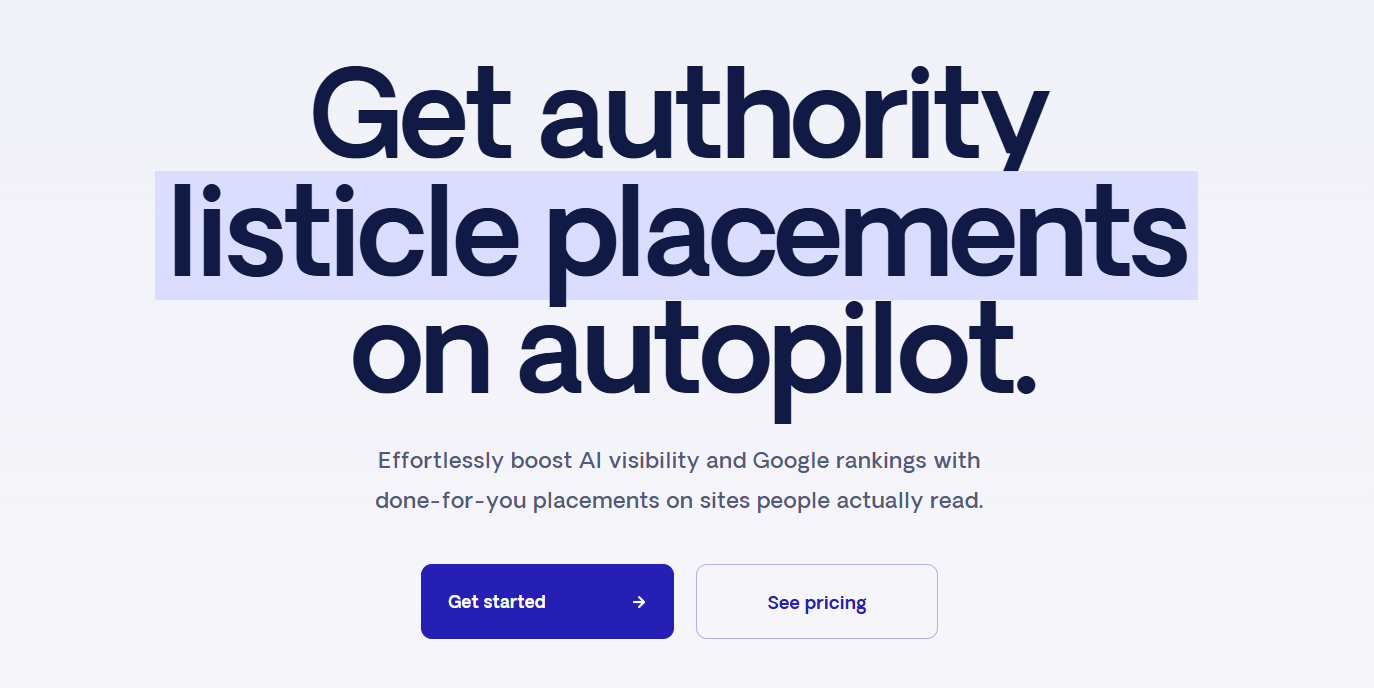
While many tools focus on monitoring visibility, Respona focuses on generating the AI citation signals that influence which sources appear in AI responses.
Respona focuses on influencing the outcome.
Instead of only monitoring where your brand appears in AI answers, Respona helps increase the chances that AI systems reference you in the first place.
The way it does that is through listicle placements and editorial links.
AI search tools frequently pull information from pages like:
- Best tools for X
- Top software for Y
- Alternatives to Z
These types of pages are frequently referenced by AI engines when generating answers for commercial queries. If your brand is included in those pages, your chances of appearing in AI responses increase significantly.
Respona helps secure those placements through targeted outreach campaigns.
You can use it to find relevant listicles, contact website owners and journalists, and pitch your inclusion in those articles. Over time, these placements strengthen both organic search visibility and AI search visibility.
It is a dual benefit strategy.
The same placements that improve search rankings also increase the likelihood that your brand appears in AI answers across platforms like Google AI, Perplexity, and other AI search systems.
Over time, these placements increase brand mentions across authoritative websites and strengthen brand visibility across both search engines and AI systems.
For teams that do not want to manage outreach themselves, Respona also offers a done for you link building service.
The service focuses on securing placements on authoritative websites in your category, including listicles, resource pages, and editorial content that search engines and AI systems frequently reference.
If you are serious about improving AI visibility, tracking tools help you understand the landscape.
Respona helps you actually influence it.
Peec AI
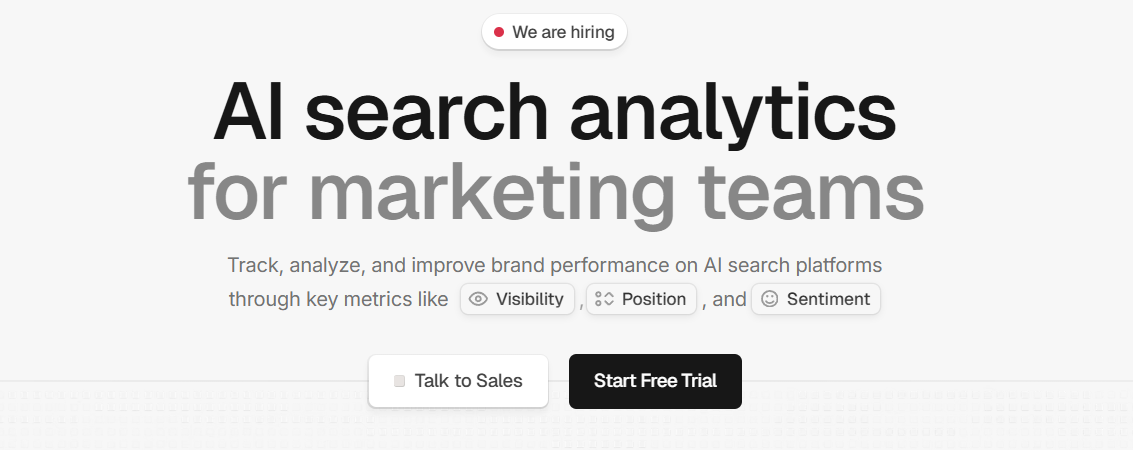
Peec AI is one of the newer AI visibility tools focused specifically on AI visibility tracking.
Instead of looking at traditional search rankings, Peec AI helps you understand how often your brand appears in AI generated answers across different AI search platforms.
You can run prompts across tools like ChatGPT, Perplexity, and Google AI, then track whether your brand is mentioned in the responses. Over time, this gives you a clearer picture of your AI search visibility and how it compares to competitors.
It essentially acts as an AI search visibility tool that tracks how different AI platforms respond to the same queries.
One of the most useful aspects of Peec AI is how it organizes that data. Instead of manually checking dozens of queries across different AI platforms, the tool tracks those responses automatically and shows where your brand appears.
This makes it easier to identify gaps in visibility.
For example, you might notice that competitors appear frequently in AI answers for certain queries while your brand rarely does. That insight can guide your content strategy, link building efforts, and digital PR campaigns.
Some teams also pair it with traditional SEO tools like SE Ranking or Moz Pro to compare AI visibility with search performance.
Profound
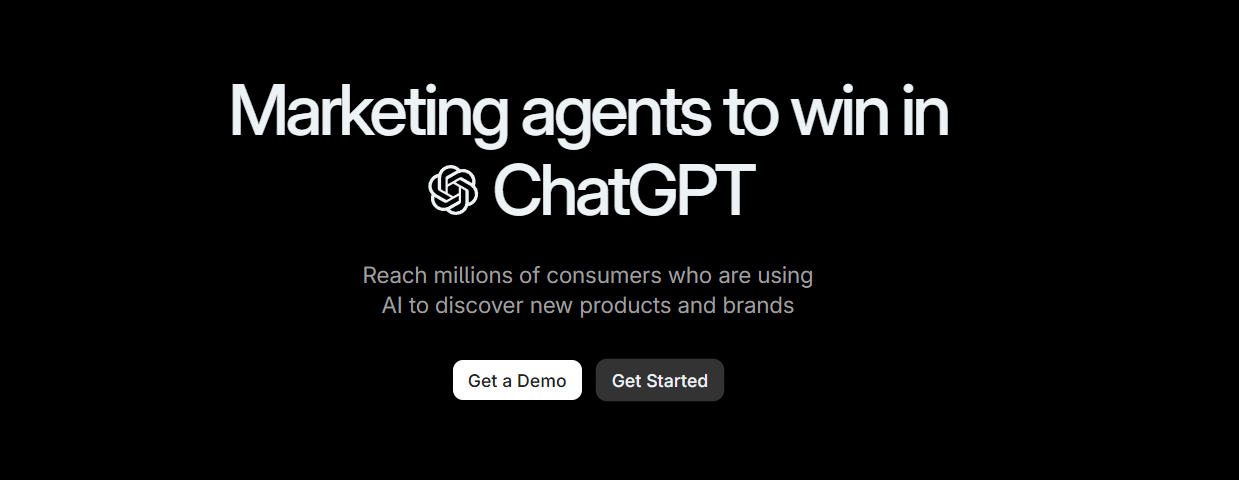
Profound AI is one of the more advanced platforms focused on measuring AI visibility.
The platform tracks how often your brand appears across AI search tools like ChatGPT, Perplexity, and other systems that generate AI answers. Instead of manually testing prompts, Profound runs those queries automatically and records which brands show up in the responses.
The platform functions as an AI visibility platform that monitors how brands appear inside AI generated responses.
This makes it easier to measure changes in AI search visibility over time.
One useful feature is competitor tracking. You can see which companies appear most often in AI generated answers for the queries that matter to your category. That makes it easier to understand who currently dominates AI visibility and where opportunities exist.
One of its key features is the ability to monitor prompt results across different AI models.
Profound also organizes that data into clear reports so you can track trends instead of isolated mentions.
Otterly AI
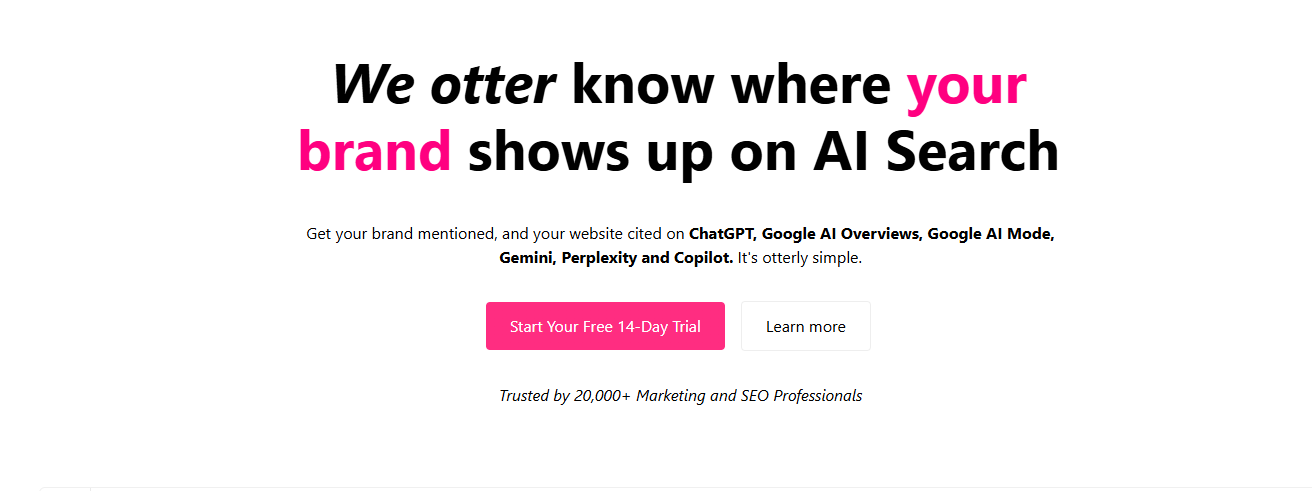
Otterly AI is another tracking tool built for monitoring brand visibility across AI search platforms.
It can run prompts across platforms like ChatGPT, Google AI, and even environments connected to Bing Copilot.
The platform lets you track how your brand appears across AI search tools like Google AI, ChatGPT, and Perplexity. Instead of checking prompts manually, you can run the same queries on a regular schedule and see which brands are mentioned in the responses.
This helps you understand how your visibility changes over time.
For example, if you start appearing more often in AI answers for certain queries, you can connect that change to recent content, link building efforts, or brand mentions across the web.
This makes it easier to see how your brand appears in each AI generated response.
Otterly AI also makes it easy to compare your visibility with competitors. You can track which brands appear most frequently for the same prompts and identify gaps where your brand is missing.
SparkToro Trending
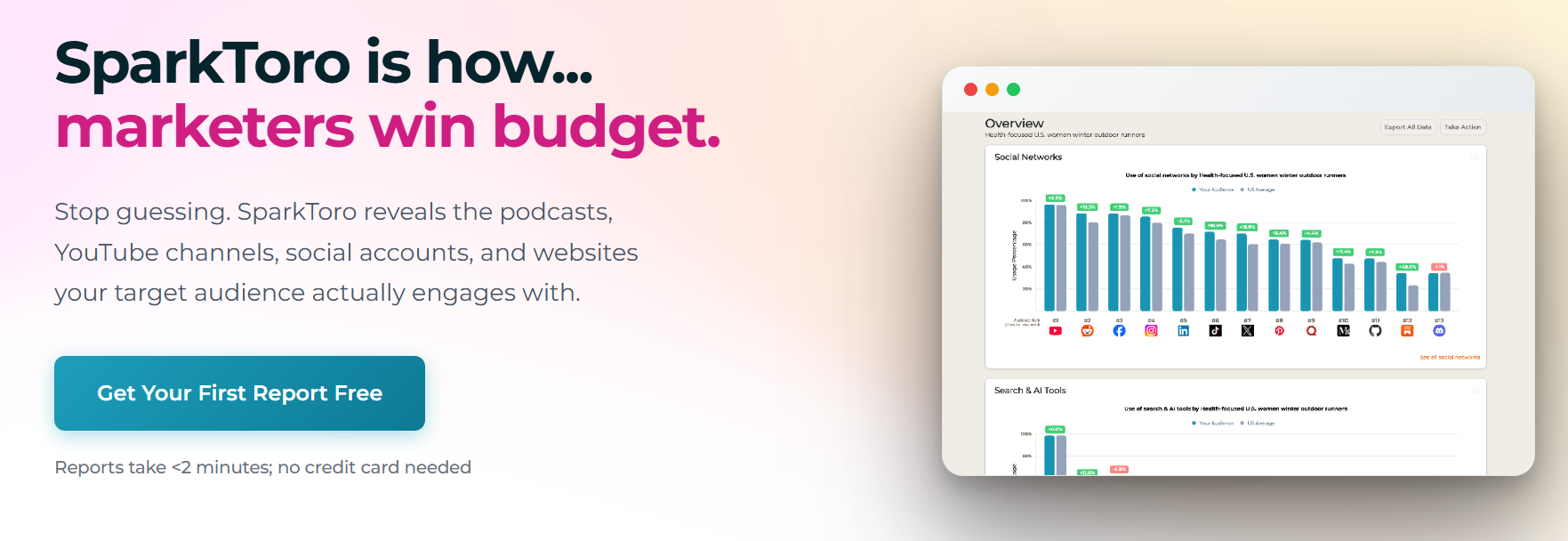
SparkToro Trending takes a different approach to AI visibility.
Instead of tracking where your brand appears in AI answers, it helps you discover the topics and content that are getting attention across the web.
The tool surfaces trending articles, discussions, and resources that are gaining traction in marketing, SEO, and other industries. That makes it easier to spot opportunities to create content that people are already interested in.
This matters for AI search visibility because AI systems often reference sources that are widely cited or discussed online. If your content becomes part of those conversations, your chances of appearing in AI answers increase.
SparkToro Trending can also help you identify which publications and websites frequently publish popular content in your niche. Those sites are often the same authority websites that appear as sources in AI responses.
SparkToro’s Brand Radar data can also highlight where conversations about your brand are happening online.
Airank
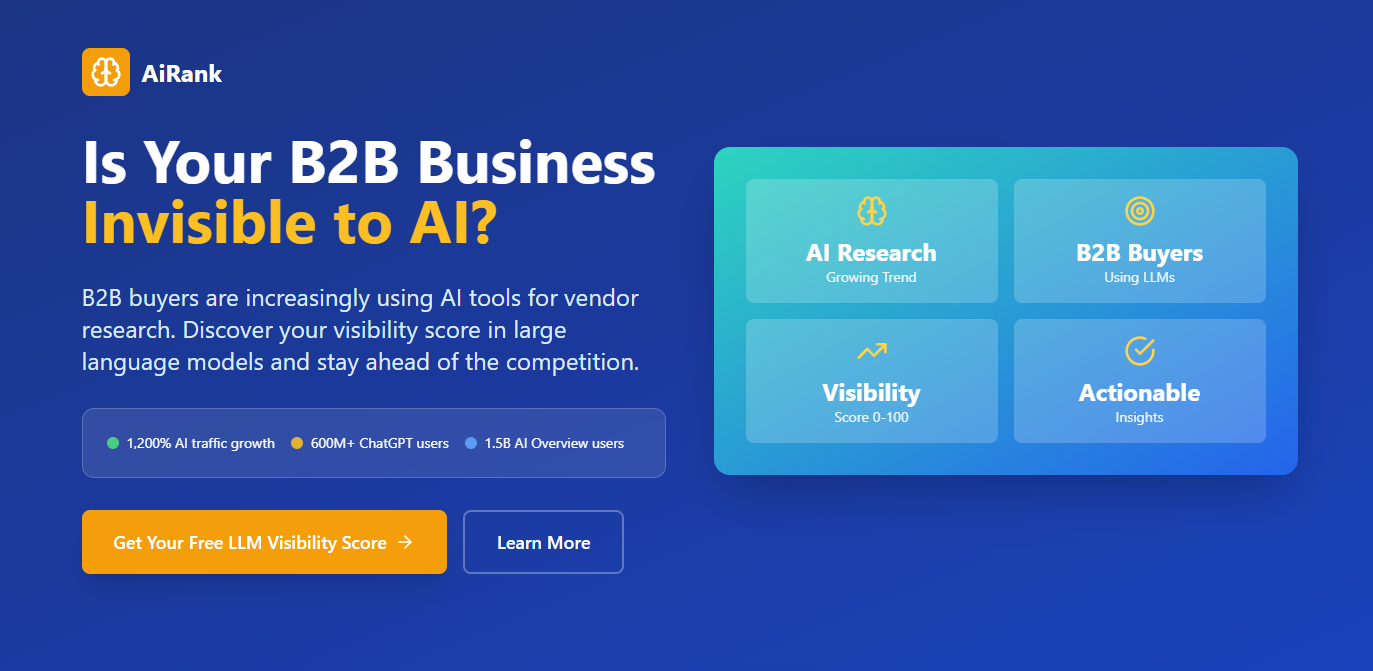
Airank is a tool built specifically for tracking AI search visibility.
In practice, Airank functions as another AI search visibility tool for monitoring how brands appear in AI answers.
The platform focuses on how often your brand appears inside AI answers across different AI search systems. Instead of checking prompts manually, Airank monitors selected queries and records which brands show up in the responses.
This helps you understand how visible your brand is across AI search over time.
One useful aspect of Airank is that it highlights patterns in AI mentions. You can see which competitors appear most frequently for certain queries and where your brand is missing entirely.
That insight makes it easier to identify gaps in your AI visibility strategy.
For example, if a competitor appears consistently in AI answers related to a certain topic, it may indicate stronger brand mentions, more authoritative content, or broader coverage across the web.
RankScale
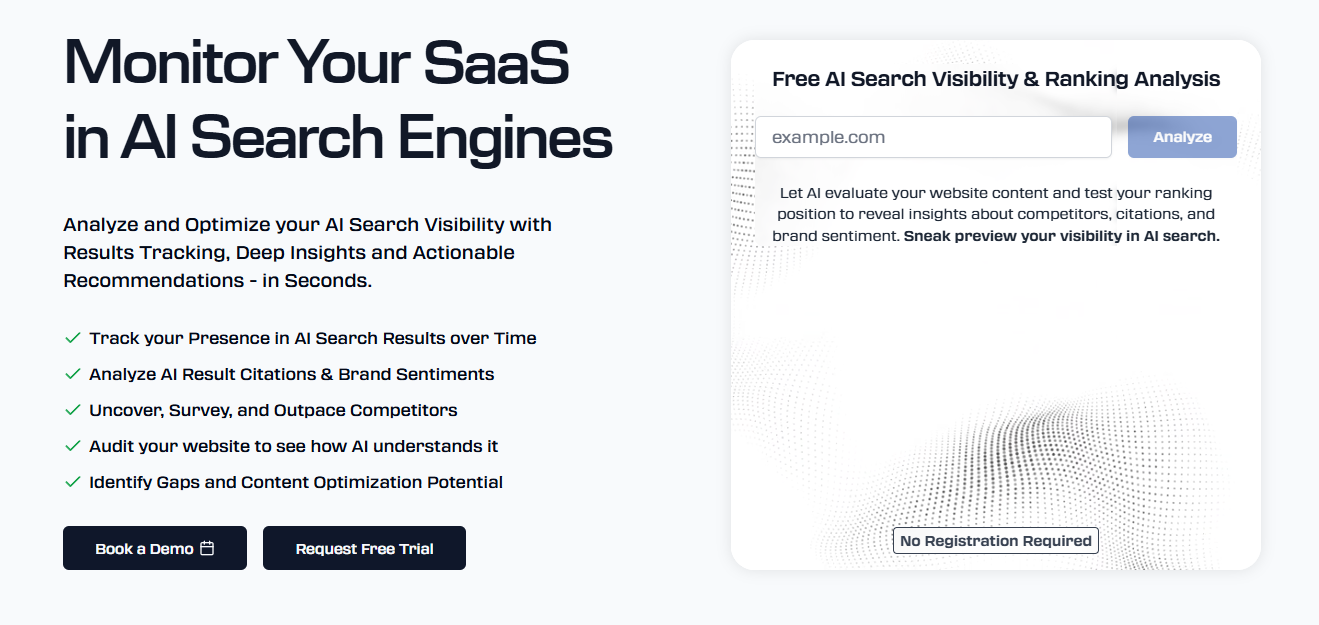
RankScale AI is another platform focused on measuring AI visibility.
The platform tracks how often brands appear across AI systems and measures their share of visibility across prompts. By running a set of queries on a regular basis, RankScale shows which companies appear most frequently in AI responses and how that changes over time.
This type of tracking helps reveal patterns that are hard to see manually.
For example, you may notice that certain brands appear consistently in AI answers for a specific category. That often indicates stronger authority signals across the web, such as editorial links, brand mentions, or widely cited content.
RankScale also helps compare visibility between competitors. By looking at which brands appear most often in AI responses for the same queries, you can get a clearer picture of who currently dominates AI search visibility in your space.
Xfunnel
Xfunnel takes a slightly different approach to AI visibility tracking.
Instead of only monitoring where your brand appears in AI answers, it focuses on how AI systems recommend products and services during buying journeys.
The platform tracks prompts related to commercial queries and records which brands are mentioned in AI generated responses.
This helps identify which brands appear in the final AI response when users ask buying or comparison questions.
That makes it easier to see which companies are being recommended by AI search tools when users ask questions about tools, software, or solutions.
This type of tracking is particularly useful for SaaS companies.
If someone asks an AI platform for the best tools in a category, the brands mentioned in that answer receive a large share of the visibility. Xfunnel helps identify which companies appear most often in those responses and how frequently your brand is included.
OmniSEO AI Visibility Tracker
OmniSEO AI Visibility Tracker is built specifically to monitor how brands appear across AI search platforms.
The tool focuses on visibility tracking across systems like Google AI, Perplexity, and other AI engines that generate answers directly in the interface. Instead of manually checking prompts, you can track a set of queries and see which brands appear most often in the responses.
This helps you measure changes in AI search visibility over time.
One useful feature is how the platform compares your brand with competitors. By tracking the same queries across multiple AI platforms, you can see which companies consistently appear in AI answers and which ones are missing.
That type of data can reveal where your brand visibility is strong and where it still needs improvement.
Some queries also bring up answers generated in interfaces like Google AI Mode, which the tool helps monitor.
LLMClicks
LLMClicks focuses on tracking how brands appear across large language model responses.
The platform helps measure LLM visibility across different AI tools and systems. Instead of manually checking the same questions repeatedly, LLMClicks automates the process and tracks changes over time.
It can also detect when your brand receives an AI mention inside generated answers.
This helps you measure your LLM visibility and understand how often your brand appears compared to competitors.
For example, if a competitor shows up consistently in AI generated answers for certain queries, it usually indicates stronger authority signals across the web, such as editorial links, brand mentions, or widely referenced content.
LLMClicks makes it easier to spot those patterns and identify gaps in your own visibility.
Link building cheat sheet
Gain access to the 3-step strategy we use to earn over 86 high-quality backlinks each month.
Now Over To You
AI search is changing how visibility works. This shift is why many teams now track both traditional search visibility and AI visibility across modern AI tools.
It is no longer just about ranking in a search engine. More users are getting answers directly from AI systems like Google AI, Perplexity, and other platforms that generate responses based on multiple sources.
That means tracking AI visibility is becoming just as important as tracking traditional SEO performance.
The tools above help you understand where your brand appears across AI search and how that visibility changes over time. But tracking alone is only part of the equation.
If you want to appear more often in AI generated answers, you need the signals that those systems rely on. Editorial links, brand mentions, and placements on authoritative websites all influence which sources AI engines reference.
Editorial links and brand mentions increase the likelihood that an AI engine cites your site as a source.
That is exactly what our done-for-you link building service focuses on.
We help secure placements on relevant listicles, resource pages, and editorial articles across authoritative websites in your industry.
These placements improve your organic performance and increase the likelihood that your brand appears in AI answers across platforms like Google AI Overviews, Perplexity, and other answer engines.
Frequently Asked Questions (FAQ)
What are AI visibility tools?
AI visibility tools help track how often your brand appears in AI search responses. They monitor mentions across platforms like Google AI, Perplexity, and other systems that generate answers directly in the interface.
Why is AI search visibility important?
More users are relying on AI systems to answer questions instead of clicking through multiple search results. If your brand is not referenced in those answers, you lose a large share of potential visibility.
How do AI visibility tools work?
Most AI visibility tools run a set of prompts across different AI platforms and track which brands appear in the responses. This helps measure changes in visibility and compare performance with competitors.
Do AI visibility tools replace traditional SEO tools?
No. Traditional SEO tools still help track rankings, backlinks, and organic traffic. AI visibility tools add another layer by showing how often your brand appears in AI generated answers.
How can you improve AI visibility?
Improving AI visibility usually involves earning authoritative links, increasing brand mentions across the web, and publishing content that gets referenced by other websites. These signals increase the likelihood that AI systems cite your brand in their responses.
What is the best AI visibility tool?
The best AI visibility tool depends on your goals. Some tools track AI responses and brand mentions, while others like Respona help increase visibility by securing editorial placements across the web.