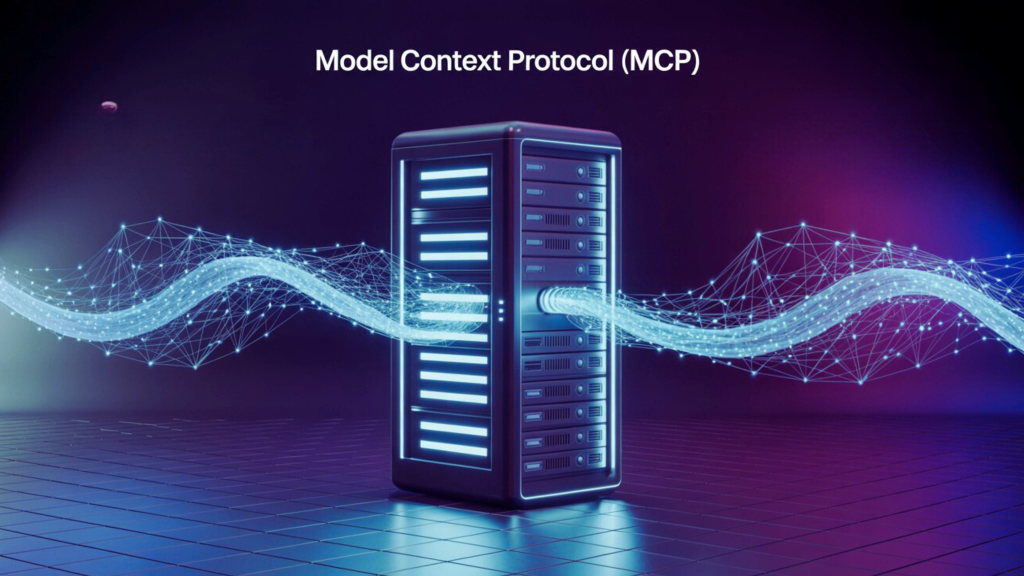
The Model Context Protocol (MCP) has rapidly become a foundational standard for connecting large language models (LLMs) and other AI applications with the systems and data they need to be genuinely useful. In 2025, MCP is widely adopted, reshaping how enterprises, developers, and end-users experience AI-powered automation, knowledge retrieval, and real-time decision making. Below is a comprehensive, technical FAQ-style guide to MCP as of August 2025.
What Is the Model Context Protocol (MCP)?
MCP is an open, standardized protocol for secure, structured communication between AI models (such as Claude, GPT-4, and others) and external tools, services, and data sources. Think of it as a universal connector—like USB-C for AI—enabling models to access databases, APIs, file systems, business tools, and more, all through a common language. Developed by Anthropic and released as open-source in November 2024, MCP was designed to replace the fragmented landscape of custom integrations, making it easier, safer, and more scalable to connect AI to real-world systems.
Why Does MCP Matter in 2025?
- Eliminates Integration Silos: Before MCP, every new data source or tool required its own custom connector. This was costly, slow, and created interoperability headaches—the so-called “NxM integration problem”.
- Enhances Model Performance: By providing real-time, contextually relevant data, MCP allows AI models to answer questions, write code, analyze documents, and automate workflows with far greater accuracy and relevance.
- Enables Agentic AI: MCP powers “agentic” AI systems that can autonomously interact with multiple systems, retrieve the latest information, and even take actions (e.g., update a database, send a Slack message, retrieve a file).
- Supports Enterprise Adoption: Major tech players like Microsoft, Google, and OpenAI now support MCP, and adoption is surging—some estimates suggest 90% of organizations will use MCP by the end of 2025.
- Drives Market Growth: The MCP ecosystem is expanding rapidly, with the market projected to grow from $1.2 billion in 2022 to $4.5 billion in 2025.
How Does MCP Work?
MCP uses a client-server architecture inspired by the Language Server Protocol (LSP), with JSON-RPC 2.0 as the underlying message format. Here’s how it works at a technical level:
- Host Application: The user-facing AI application (e.g., Claude Desktop, an AI-enhanced IDE).
- MCP Client: Embedded in the host app, it translates user requests into MCP protocol messages and manages connections to MCP servers.
- MCP Server: Exposes specific capabilities (e.g., access to a database, a code repository, a business tool). Servers can be local (via STDIO) or remote (via HTTP+SSE).
- Transport Layer: Communication happens over standard protocols (STDIO for local, HTTP+SSE for remote), with all messages in JSON-RPC 2.0 format.
- Authorization: Recent MCP spec updates (June 2025) clarify how to handle secure, role-based access to MCP servers.
Example Flow:
A user asks their AI assistant, “What’s the latest revenue figure?” The MCP client in the app sends a request to the MCP server connected to the company’s finance system. The server retrieves the actual, up-to-date number (not a stale training data guess) and returns it to the model, which then answers the user.
Who Creates and Maintains MCP Servers?
- Developers and Organizations: Anyone can build an MCP server to expose their data or tools to AI applications. Anthropic provides SDKs, documentation, and a growing open-source repository of reference servers (e.g., for GitHub, Postgres, Google Drive).
- Ecosystem Growth: Early adopters include Block, Apollo, Zed, Replit, Codeium, and Sourcegraph. These companies use MCP to let their AI agents access live data and execute real functions.
- Official Registry: Plans are underway for a centralized MCP server registry, making it easier to discover and integrate available servers.
What Are the Key Benefits of MCP?
| Benefit | Description |
|---|---|
| Standardization | One protocol for all integrations, reducing development overhead |
| Real-Time Data Access | AI models fetch the latest information, not just training data |
| Secure, Role-Based Access | Granular permissions and authorization controls |
| Scalability | Easily add new data sources or tools without rebuilding integrations |
| Performance Gains | Some companies report up to 30% efficiency gains and 25% fewer errors |
| Open Ecosystem | Open-source, vendor-neutral, and supported by major AI providers |
What Are the Technical Components of MCP?
- Base Protocol: Core JSON-RPC message types for requests, responses, notifications.
- SDKs: Libraries for building MCP clients and servers in various languages.
- Local and Remote Modes: STDIO for local integrations, HTTP+SSE for remote.
- Authorization Spec: Defines how to authenticate and authorize access to MCP servers.
- Sampling (Future): Planned feature for servers to request completions from LLMs, enabling AI-to-AI collaboration.
What Are Common Use Cases for MCP in 2025?
- Enterprise Knowledge Assistants: Chatbots that answer questions using the latest company documents, databases, and tools.
- Developer Tools: AI-powered IDEs that can query codebases, run tests, and deploy changes directly.
- Business Automation: Agents that handle customer support, procurement, or analytics by interfacing with multiple business systems.
- Personal Productivity: AI assistants that manage calendars, emails, and files across different platforms.
- Industry-Specific AI: Healthcare, finance, and education applications that require secure, real-time access to sensitive or regulated data.
What Are the Challenges and Limitations?
- Security and Compliance: As MCP adoption grows, ensuring secure, compliant access to sensitive data is a top priority.
- Maturity: The protocol is still evolving, with some features (like sampling) not yet widely supported.
- Learning Curve: Developers new to MCP need to understand its architecture and JSON-RPC messaging.
- Legacy System Integration: Not all older systems have MCP servers available yet, though the ecosystem is expanding rapidly.
FAQ Quick Reference
- Is MCP open source? Yes, fully open-source and developed by Anthropic.
- Which companies support MCP? Major players include Anthropic, Microsoft, OpenAI, Google, Block, Apollo, and many SaaS/platform providers.
- Does MCP replace APIs? No, it standardizes how AI models interact with APIs and other systems—APIs still exist, but MCP provides a unified way to connect them to AI.
- How do I get started with MCP? Begin with the official specification, SDKs, and open-source server examples from Anthropic.
- Is MCP secure? The protocol includes authorization controls, but implementation security depends on how organizations configure their servers.
Summary
The Model Context Protocol is the backbone of modern AI integration in 2025. By standardizing how AI models access and interact with the world’s data and tools, MCP unlocks new levels of productivity, accuracy, and automation. Enterprises, developers, and end-users all benefit from a more connected, capable, and efficient AI ecosystem—one that’s only just beginning to reveal its full potential.

Michal Sutter is a data science professional with a Master of Science in Data Science from the University of Padova. With a solid foundation in statistical analysis, machine learning, and data engineering, Michal excels at transforming complex datasets into actionable insights.