If you’re running ads on Meta and feel like your reports suddenly look different, you’re not imagining it.
Meta rolled out a pretty significant attribution change in March 2026, and most advertisers don’t fully grasp what it actually means.
Let’s break it down simply.
What Actually Changed
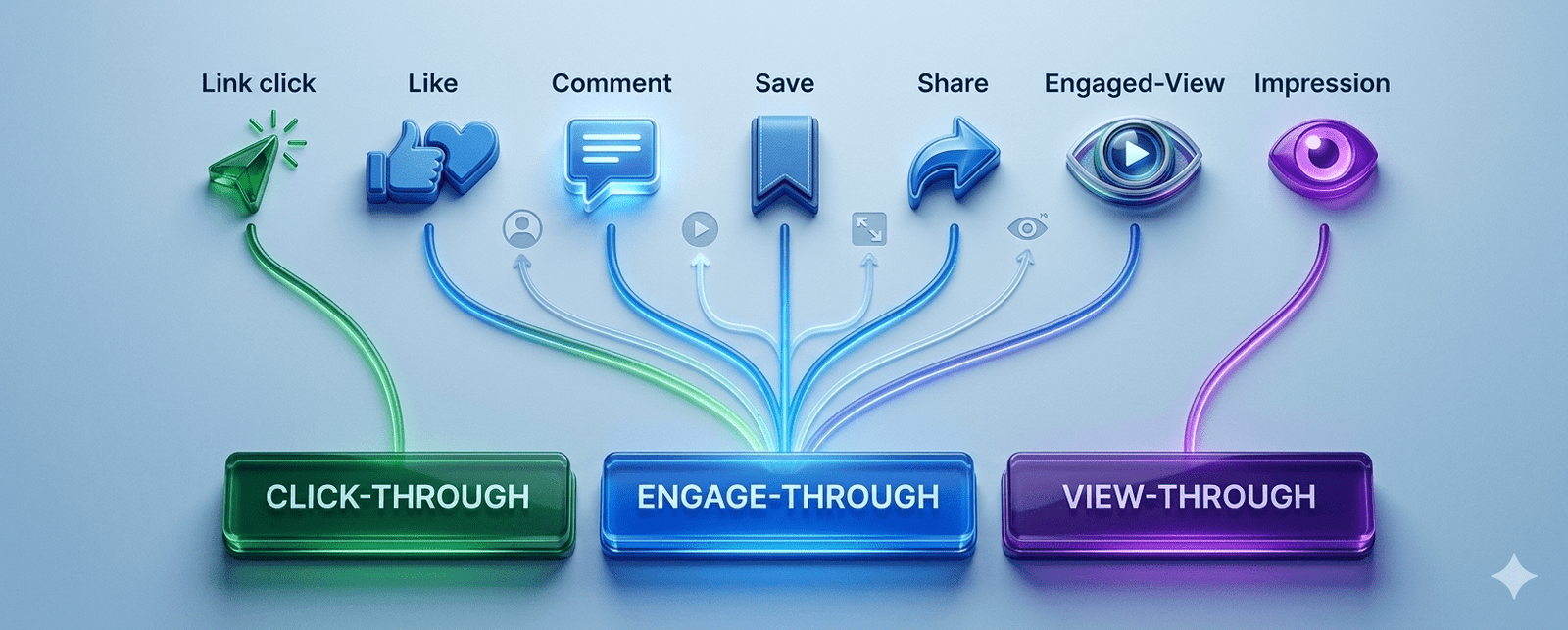
Until now, Meta counted almost any interaction as a click for click-through attribution.
- Someone clicked to read comments
- Clicked your profile
- Liked, saved, shared
Congrats, Meta said, that’s a click.
Now, not anymore.
Only actual link clicks that take users to your website count as click-through conversions.
Everything else has been moved to a new bucket called engage-through attribution.
Sounds harmless, right
Not exactly.
What’s Inside Engage-Through
- Likes
- Shares
- Comments
- Profile clicks
- Video views, now only 5 seconds instead of 10
Basically, everything that is not a real visit to your site.
Meta also bundled in what they call engaged view.
Which means someone watching 5 seconds of a Reel might now get partial credit for a conversion.
Is that a real signal of intent
You decide.
So What’s the Problem
On paper, this change improves accuracy.
In reality, it does something else.
It gives Meta a brand new way to credit itself for more conversions.
And if you’re using broader attribution windows, especially anything engagement-based, your reports can start to look very optimistic.
Which makes cross-channel attribution even messier than it already is.
But I Use a Third-Party Attribution Tool
Cool.
Just remember.
You’re often paying good money for a very sophisticated guess.
- Best case, it’s directionally helpful
- Worst case, it quietly pushes budget into the wrong channel
The Dream vs Reality
In an ideal world
- All ad platforms share a unified user ID
- One sale equals one sale
- Attribution is consistent across channels
In the real world
This will probably happen right after peace in the Middle East.
So don’t wait for it.
What You Can Actually Do
On Meta
- Use 7-day click only attribution
- Avoid engage-through as a decision metric
On Google
- Use 30-day click
- 3-day engaged view
- You can’t set view-through to 0, so keep it at the minimum, 1-day view, and treat it as noise
Critical setup
- Only one pixel on Meta
- Only one purchase event in Google Ads
We’re seeing way too many accounts double counting purchases.
That alone can destroy your decision making.
Bottom Line
Meta didn’t just change a metric.
They changed how success is presented to you.
If you don’t adjust your attribution settings, you’re not measuring performance anymore.
You’re reading a story.

Nicole Blake
Nicole is a digital marketing strategist and eCommerce content creator with a passion for helping online sellers grow their brands through smart tools and creative design. With years of experience in the Shopify and DTC space, Nicole specializes in turning complex tech into actionable insights.
Comments
Powered by Facebook Comments