Recent brand news is full of brand value chatter.
Chatter, not serious discussions. Why? Brand executives still seem disconnected from how customers perceive brand value.
Consumers understand that value, not price alone, is the priority. Consumer-perceived value is based on the total brand experience relative to the total brand costs (price, time, and effort).
Brand executives also misunderstand customers because they believe their brands have a specific segment, which is the “value customer.”
No.
Everyone is a value-conscious shopper. No one wants to buy a bad value. No one texts a friend to say, “Hey, bought that striped crewneck sweater today… a really lousy value.” Whether you are buying a Mercedes or a Toyota, a Moncler parka or an LL Bean parka, people want to believe they purchased the best value.
This article is part of Branding Strategy Insider’s newsletter. Join the world’s smartest marketers and subscribe here for actionable insights delivered directly to your inbox.
Furthermore, as customers, we understand that value is relative. After all, relative value determines a brand’s value by taking into account the value of similar brands. We, as customers, assess brands based on multiple factors, with price being only one.
At some point, we accepted that prices would be high due to a difficult environment, uncertainty, post-COVID greed, logistics, tariffs, and all the other financial shenanigans that are plaguing our daily life and economy. But we still believed in the value of our favorite brands. Times have changed.
Due to these realities, brands altered their perceived brand value. We (as consumers) did not alter our inherent understanding of value. We still assess value as total brand experience relative to total brand costs. This has not changed. Brand value is relative. Those executives who use marketing-ese while playing around with the definition of customer-perceived value are in for a performance shock.
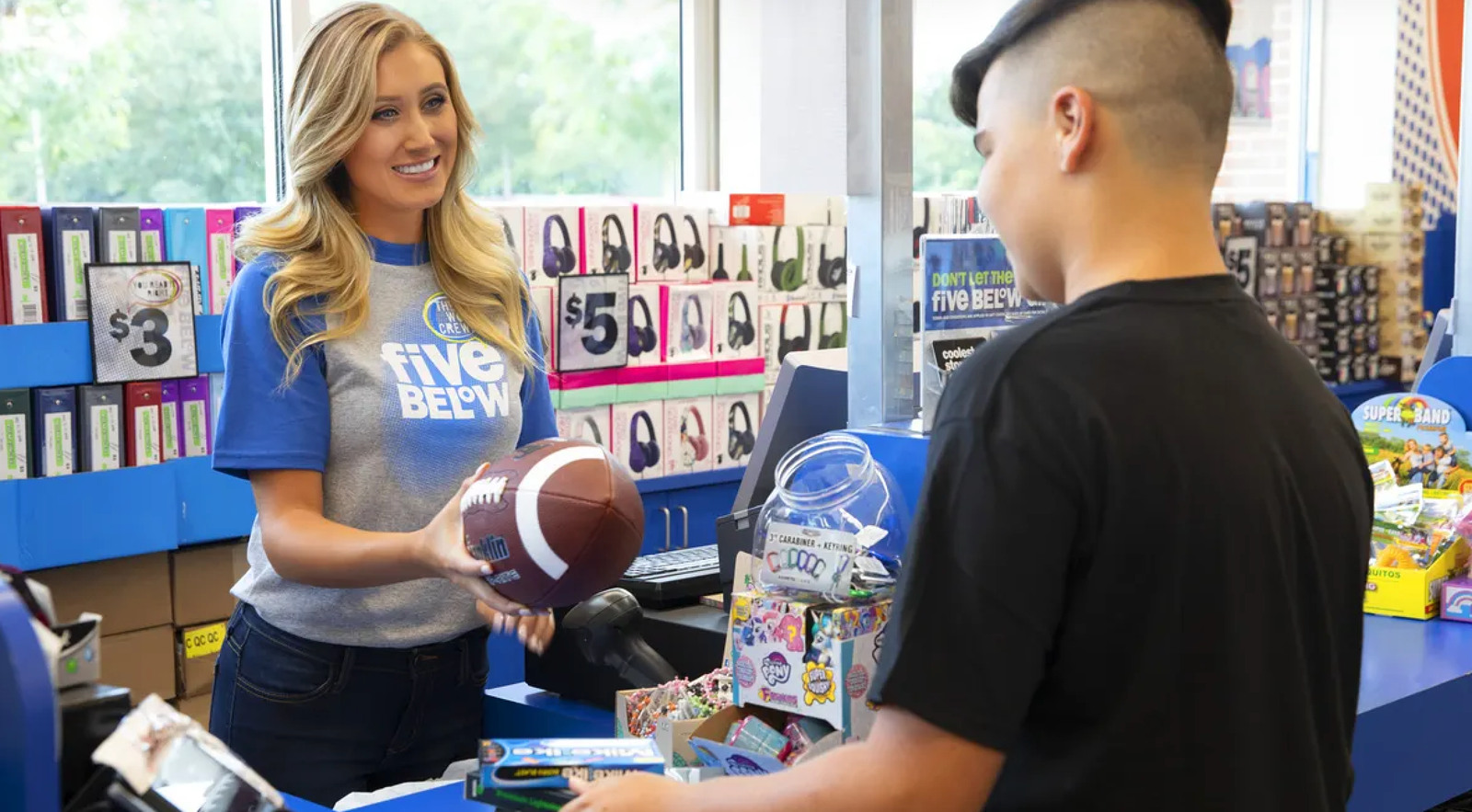
For example, Five Below sells games, party favors, toys, and other miscellaneous items priced at $5 or less. Recently, this mission changed. Some items now cost $6, $7, or a whopping $35.
Five Below’s CFO says, rightly so, that when it comes to shopping, it is all about relative value. Relative value is correct. But, to what is the shopping experience at Five Below relative?
The Five Below CFO then said, ”And so we have the opportunity to go above $5 as long as we jam that item with value.” Not sure what this “jam with value” means for brand management. How does one jam party décor with value? This strategy remains undisclosed. Aside from size and price, there is no indication of how value-packed Five Below items are. This means that perhaps the “jam-packed-ness” is a deal. One might think that items priced at $5 or less are already a deal. Or is it that now, if an item is $5 or below, it is a deal relative to the other items in the Five Below store?
Some background on value:
Value and value creation are high-priority words in executive suites. However, the way brand executives, the C-suite, and board members discuss value and value creation differs significantly from how customers perceive value.
Think about how managers and other executives use value and value creation.
The unfortunate fact is that when you read about or hear companies speak about value and value creation, the board and its management hear increased shareholder value.
This is not value creation. You cannot create sustainable value for your shareholders until you create enduring value for your customers.
All cash flow only has one source. One source. That is it; just one source. That one source is a customer exchanging money for your offering. There is no other source of cash flow. To sustainably increase shareholder value, brands must create enduring customer value. Customer-perceived value is not being told that the item is jam-packed with value. Receiving a lot for a low price may not be perceived as good value.
As a marketer, your job is to compete. Compete differently with The Blake Project.
Customers consider not only price but also time and effort when making a purchase decision. Customers evaluate these total costs against the total brand experience they expect to receive when making the purchase. This mental assessment reflects the customer’s trust that the expected experience will be delivered consistently relative to the costs actually incurred.
The idea of a mental value equation has been around for decades upon decades. Which is why it is stunning when a brand built on a very specific customer-perceived value proposition – Five Below – makes statements that do not take into account the brand basics of value creation.
The Five Below CFO makes the statement that “… customers do not shop by price. Customers shop by need and/or by category.” Yes and no. Yes, needs are important. And, yes, price alone is not the whole story. But we shop by understanding what the total brand experience will be that satisfies our needs/problems relative to the total costs we will incur. A brand can satisfy a need or solve a problem, yet still deliver poor value. This is what plagued Jaguar vehicles in the 1980s and 1990s. Fabulous looking car; amazing handling; says so much about me and my style… and spends over 50% of the time with the mechanic. Satisfied needs but became a terrible value. Turned out that some Jaguar enthusiasts owned two vehicles, since one was always at the dealership service bay.
Five Below shoppers may find the $35 mirror a better value than Wayfair. But what about Amazon? Or a dollar store? Or Costco?
True, need is critical. Satisfying a need is what marketing is all about. But our internal value equation assesses the satisfaction of that need, the entire brand experience relative to price, and the two other costs: time and effort. A consultant told The Wall Street Journal that a store such as Five Below can raise prices above $5. But, “It’s about the relative value.”
Customers will accept a higher price up to a point. But, then, there is indecision as to just which brand is a good value… as brands such as PepsiCo’s Frito-Lay are learning. The astronomical snack prices led us to reconsider the value of Frito-Lay brands. PepsiCo’s snack food brands have been suffering relative to store brands and other private labels. Not just because of price. Because of the relative perceived brand value.
An 8-oz bag of Lay’s potato chips is $4.99. At Whole Foods, the 8-oz bag of 365 potato chips is $2.99. The 365 offering has the patina of Whole Foods and the quality reassurance of 365. At Aldi, an 8-oz bag of potato chips is $1.99. PepsiCo says it will ask grocery stores to lower the price of Lay’s potato chips by 70 cents to $4.29. A bag of Doritos costs about $3, but an Aldi brand Clancy nacho cheese tortilla chips costs $1.59. Frito-Lay states it will relabel packaging to indicate that the bag size is the same and the price is lower. After experiencing a bag of 365 potato chips or Aldi potato chips, the customer-perceived brand value of Lay’s may have changed.
Why should PepsiCo be frightened about the lowered customer-perceived brand value of Lay’s or Doritos relative to these private-label brands? According to Bloomberg BusinessWeek, Aldi “… removed artificial dyes in its private-label products…at 50% lower prices.”
Other food brands have also seen that relative value is under pressure. Brands from General Mills are seeking to make the relative value of their products more attractive. But as one analyst noted, prices are still far too high to align with customers’ perceived value relative to own brands and other unique brands.
Not just food brands.
It seems Newell Brands, home of Sharpies, Graco baby products, and Rubbermaid, is being repriced, believing these new prices will be perceived as a better value. Newell Brands raised prices significantly on its Graco baby products line and the Rubbermaid brand due to tariffs on Chinese imports. But, none of Graco’s and Rubbermaid’s competitors followed. Relative to competition, Graco and Rubbermaid were no longer perceived to be good values. The lack of customer-perceived value reduced sales, resulting in poor performance and a decline in the share price. Shareholders and Wall Street were beyond disappointed in Newell’s financial announcements.
Another elemental principle of relative value that executives often overlook is customers’ perceptions of the competitive set. The competitive set may seem like an outdated 1950s marketing idea. Please do not buy into this unfortunate concept. Unless the customer is a commodity buyer who believes all offerings are the same and buys the cheapest, customers review available brands and create a set of possible brands. Think of this as the customer’s consideration set. Or short list. Short-list brands are defined as the small set of brands that are among the customer’s top three choices. Being on the short list is good, but it is not good enough to be a truly strong brand. It is better to be the preferred alternative on the shortlist.
A brand goal is to be the first choice, the favored, favorite brand, in that consideration set. Compared with other brands in customers’ consideration sets, your brand must be preferred.
When your brand’s value equation is off kilter, the other brands in the consideration set appear to be a better value.
When we worked with KFC, franchisees had a family meal that had always been a winning offer. Year after year, this particular meal of chicken, biscuits, gravy, and a side was a preferred item. Then, that meal lost money. It turned out that KFC’s brand value perception had changed negatively. Research showed that the KFC special family meal was no longer perceived as great value. The change in perceived brand value was not just about price. The change in perceived brand value was also driven by expectations of the KFC experience.
Thinking that the brand team creates value is incorrect. It is up to the customer to perceive whether an item is jam-packed with value, not the marketer. The brand team creates the price, the customer creates the value. Newell put some of the blame for poor sales on the retailer. We hear this blame-the-retailer from General Mills as well. The brand sets the price. Customers set value. The customer perceives whether the item is “jammed with value.”
Building customer-perceived brand value is the pathway to enduring profitable growth. Brands must become smarter about how customers perceive brand value. The entire customer assessment value equation must be addressed. In a competitive world, understanding that customers value a brand’s total brand experience relative to its total brand cost is essential. Being the preferred brand on the short list is also a necessity. To be the preferred brand, your brand must be perceived as the best value relative to the others on the list.
Contributed to Branding Strategy Insider by Joan Kiddon, Partner, The Blake Project, Author of The Paradox Planet: Creating Brand Experiences For The Age Of I
At The Blake Project, we help clients create meaningful differences that increase value and underpin competitive advantage. Please email us to learn how we can help you compete differently.
Branding Strategy Insider is a service of The Blake Project: A strategic brand consultancy specializing in Brand Research, Brand Strategy, Brand Growth, and Brand Education
Post Views: 0