
Most SEO advice starts with keywords.
But keywords don’t matter without understanding search intent.
Two pages can target the exact same keyword and get completely different results. One ranks, the other doesn’t.
The difference usually comes down to whether the content actually matches what the user is trying to do.
Search engines are getting very good at understanding user intent.
They don’t just look at the keyword anymore. They look at the query, the context, and what type of content actually satisfies that intent.
If you get that right, rankings follow. If you don’t, no amount of optimization will save the page.
In this guide, we’ll break down the four types of search intent and how to create content that actually matches each one.
Key Takeaways:
- Search intent determines what type of content will rank, not just the keyword itself
- Informational intent requires clear, structured blog content that answers questions directly
- Commercial intent is driven by comparison content like listicles, reviews, and alternatives pages
- Transactional intent needs focused landing pages or product pages built to convert
- Navigational intent is about helping users quickly find a specific page or brand
- Matching content to intent is one of the most important parts of any SEO strategy

Link building cheat sheet
Gain access to the 3-step strategy we use to earn over 86 high-quality backlinks each month.
What is Search Intent & Why Does it Matter?
Search intent is the reason behind a search query.
This is what people refer to as keyword intent or audience intent. It’s the difference between someone casually browsing and someone ready to take action.
When someone types a keyword into a search engine, they’re trying to do something specific. Learn something, compare options, buy something, or find a specific page.
That’s what search engines are optimizing for.
If your content doesn’t match that intent, it won’t rank. It doesn’t matter how well you’ve done your keyword research or how many times you use the keyword. If the page doesn’t fit what the user expects to see, it gets filtered out.
This is why search intent is so important and why search intent optimization is a core part of any SEO strategy.. It directly shapes what type of content should exist for a keyword.
A quick way to think about it:
- Informational intent → blog post or guide
- Commercial intent → listicle, comparison, review
- Transactional intent → product or landing page
- Navigational intent → brand or specific page
Each intent type requires a different content type, and that’s where most SEO efforts fall apart.
If you mismatch these, you’re fighting the algorithm.
How to Check Search Intent
You don’t need anything complicated to figure this out.
1. Just Google the keyword
This is the easiest way to understand search intent.
Type your target keyword into Google search and look at the results. This quick SERP analysis tells you exactly what search engines expect for that search query.
- Are they blog posts? → informational intent
- “Top X” lists or comparisons? → commercial intent
- Product pages or pricing pages? → transactional intent
- Mostly one brand dominating? → navigational intent
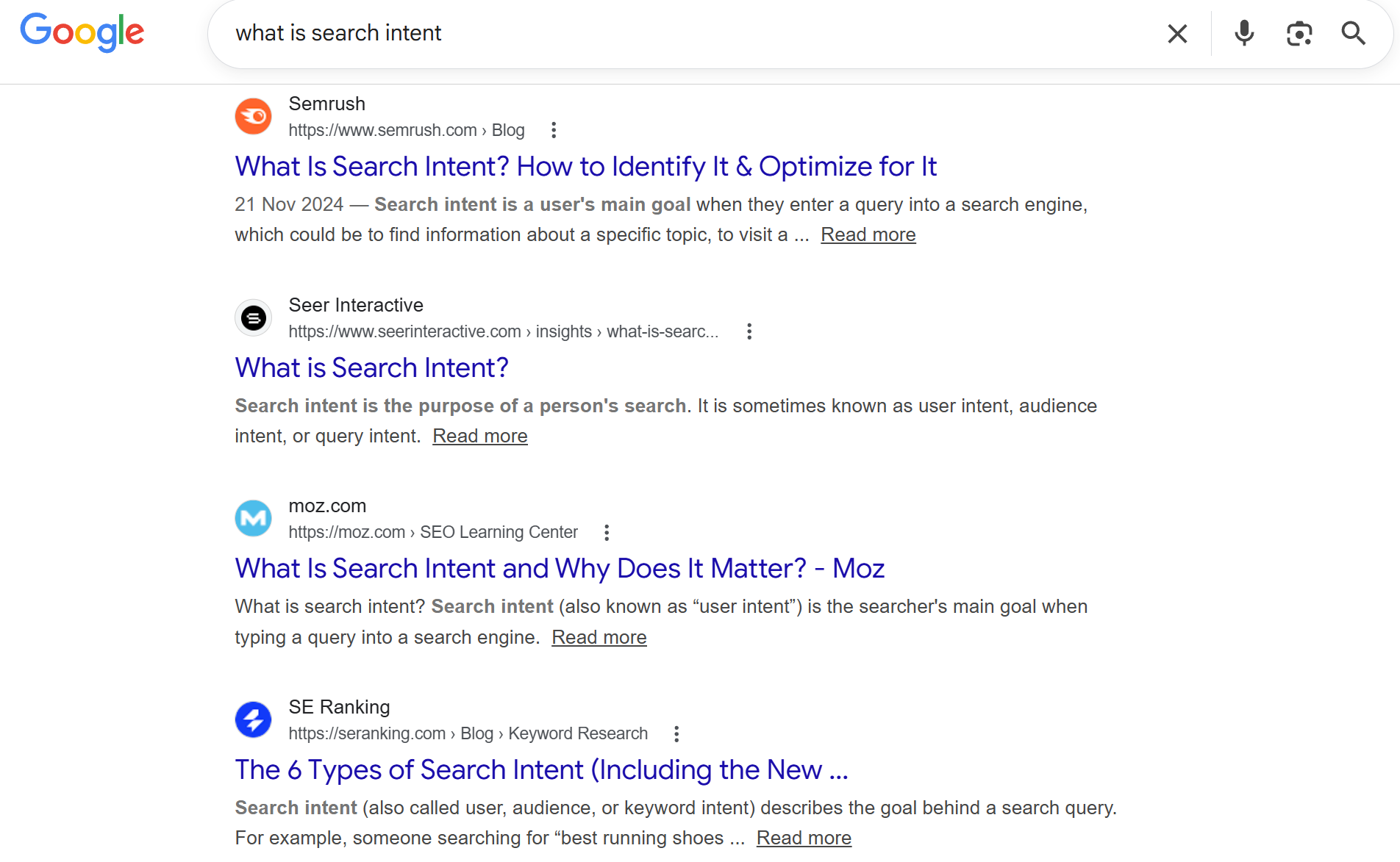
Search results make it very obvious what type of content Google wants to rank. You’re not guessing. You’re aligning with what’s already working.
Also pay attention to SERP features like a featured snippet, AI overview, or other SERP feature placements. They usually reinforce the same intent.
2. Use a keyword research tool
Tools like Ahrefs (or similar platforms) label keyword intent directly.
When you look up a keyword, you’ll usually see tags like:
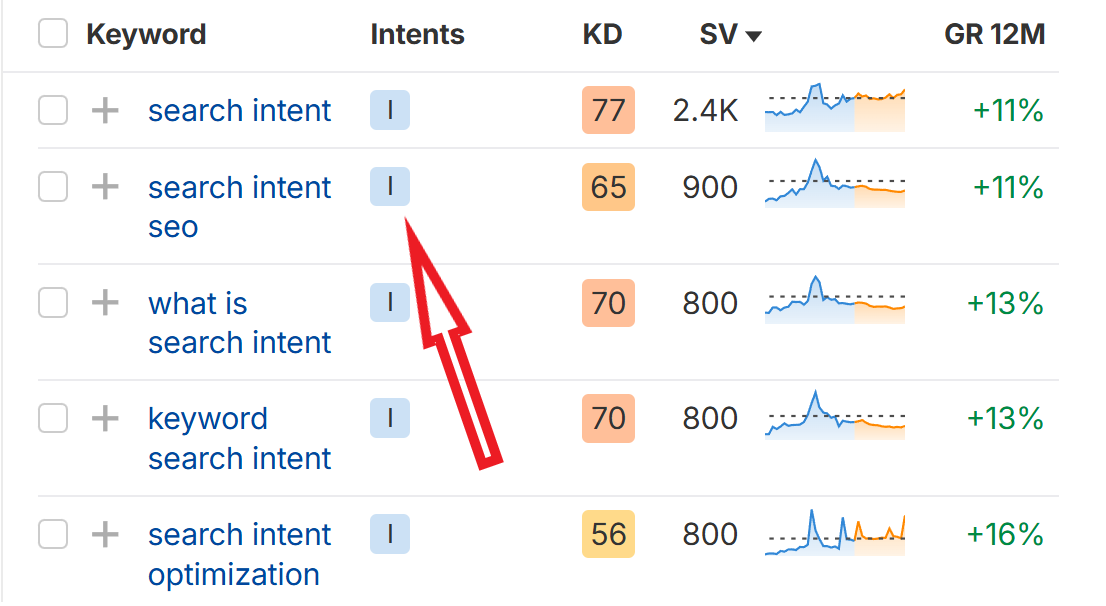
This saves time, especially when you’re working with large keyword lists.
But even then, it’s still worth double-checking the search results yourself. Tools are helpful, but the SERP is the final source of truth.
Tools like Keywords Explorer in Ahrefs also help you break down keyword intent at scale.
You can also cross-check this data in Google Search Console or Google Analytics to see how your existing content performs for different queries.
Informational Search Intent
Informational search intent is pretty straightforward. Someone is trying to learn something.
This is what informational intent looks like in practice.
They’re not looking to buy, compare tools, or sign up for anything. They just want an answer.
Think informational queries like “what is link building” or “how to do keyword research.” The expectation is clear. Give me the answer quickly and then explain it.
And if you look at Google search results for those queries, you’ll notice the same pattern every time. It’s almost all blog posts and guides.
No product pages, no landing pages. Just content that teaches, usually built around an informational keyword and designed as a blog post.
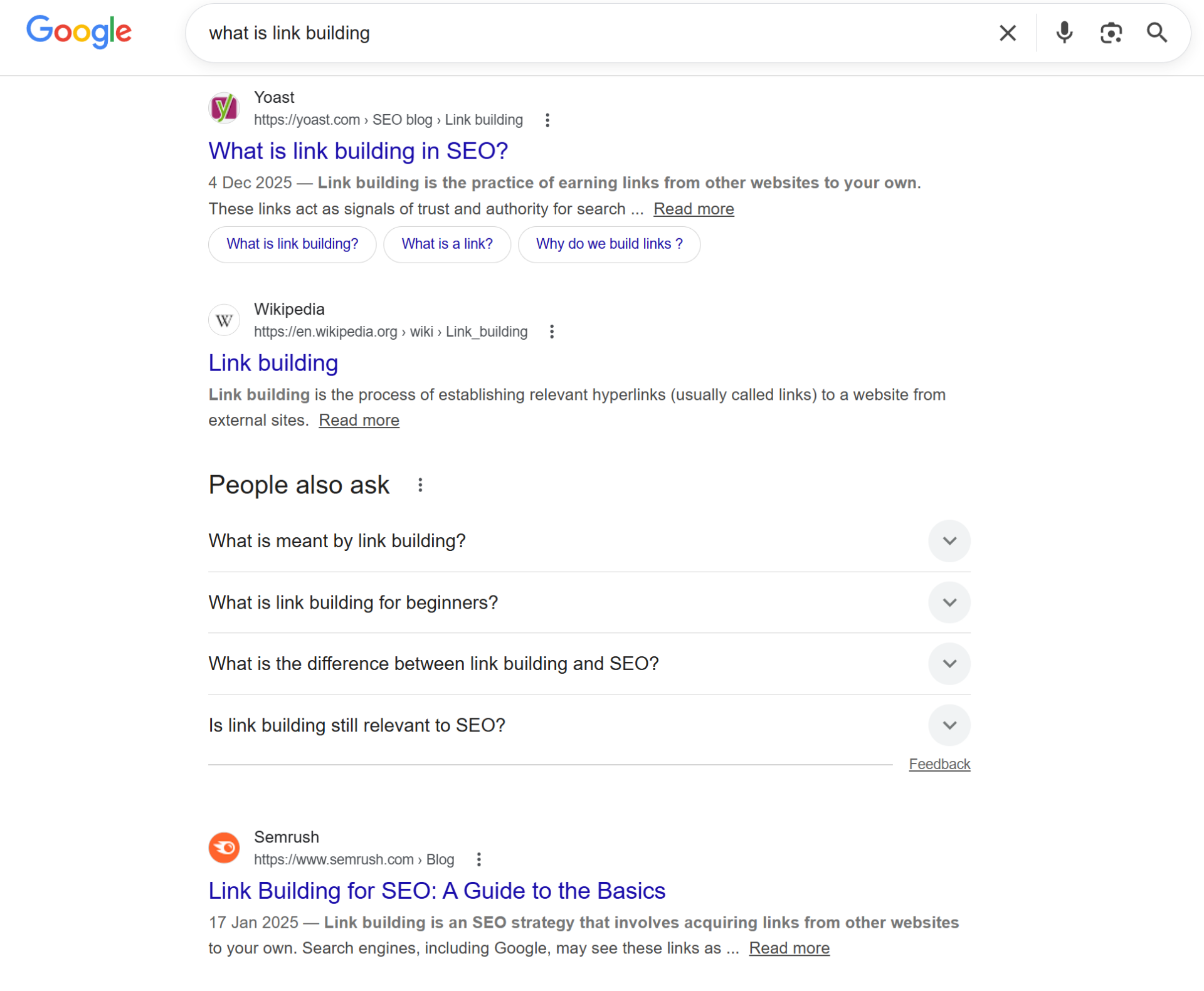
That’s your cue.
What Actually Works Here
If you try to rank a sales page for an informational query, it’s not going to work. The intent is wrong.
What does work is keeping things simple and direct.
The pages that consistently show up are the ones that answer the question right away.
Not after a long intro. Not buried halfway down the page. Right at the top. Then they go deeper, add examples, maybe break things down step by step.
That structure also happens to work really well for AI overviews and featured snippets. Those systems are pulling clean, direct answers. If your content is easy to extract from, it has a much better chance of being used.
Commercial Search Intent
Commercial search intent is where things start getting interesting. It is often called commercial investigation or commercial investigation intent.
This is when someone is researching before making a decision.
They’re not ready to buy yet, but they’re getting close. They’re comparing options, looking at alternatives, trying to figure out what’s best for their use case.
You’ll recognize these queries instantly:
These are all commercial keywords where the user is evaluating options.
Now look at the search results.
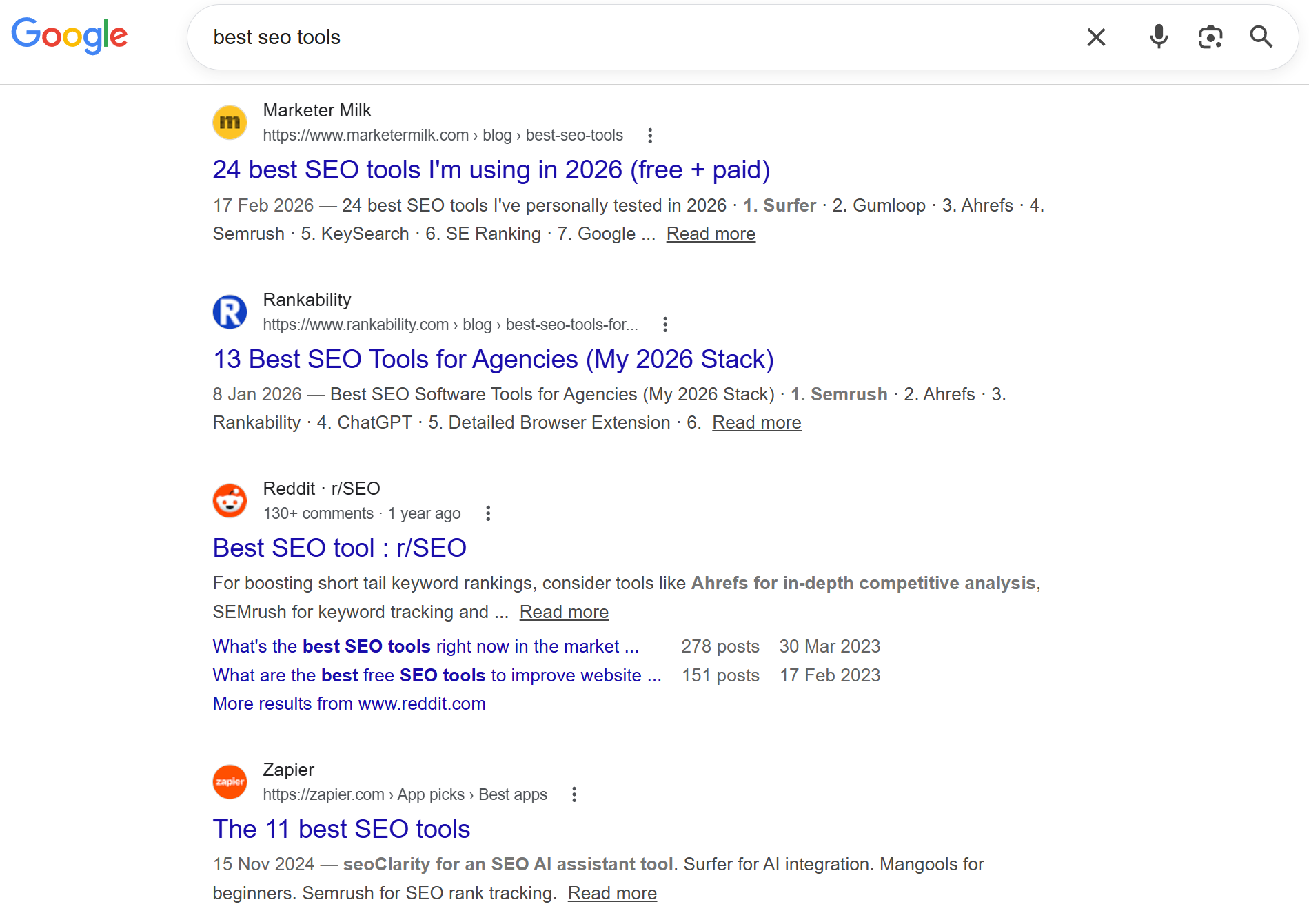
It’s almost always listicles, comparison pages, and reviews.
“Top X” articles dominate. Side-by-side comparisons. Roundups. That’s what search engines know people want based on user behavior and past query patterns.
What Actually Works Here
You can approach this from two angles.
First, create your own comparison content.
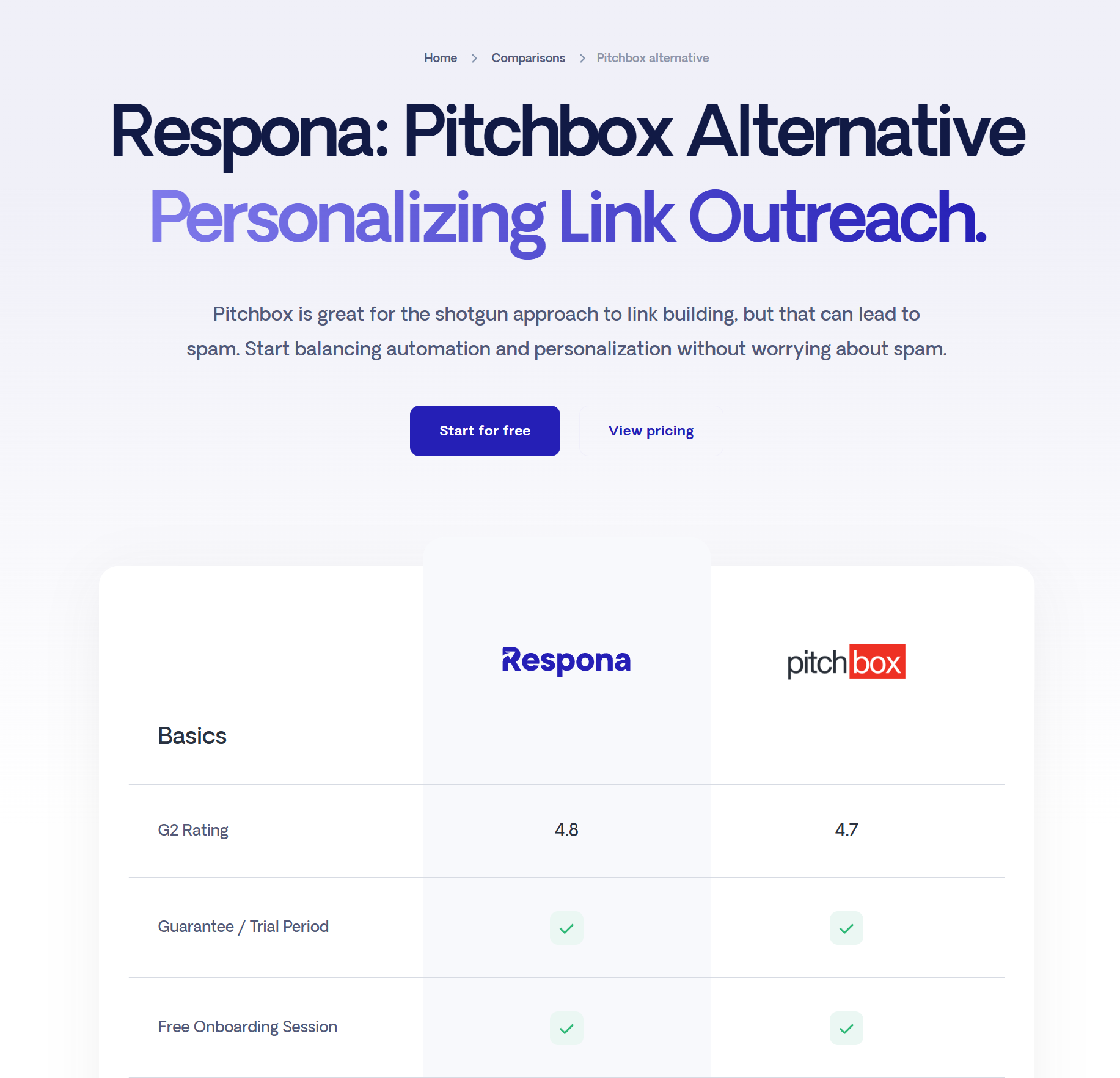
Write listicles. Publish alternatives pages. Compare tools directly. This is where a strong content strategy and content marketing approach really pays off.
Be honest about where you fit and where competitors might be better. That kind of content tends to perform well in both search engines and AI search.
This is a big shift in how commercial intent works in modern search engines.
Second, and this is the bigger lever, get featured in other people’s listicles.
Because here’s what’s changed.
A lot of commercial research is now happening inside AI tools. People ask ChatGPT or Perplexity things like “best outreach tools” or “top SEO platforms.”
And those AI systems don’t just make things up. They pull from third-party sources. Usually the same listicles and comparison pages that rank in Google search.
So if your brand keeps showing up in those articles, you start showing up in AI responses too.
This is where commercial intent connects directly to link building.
It’s not just about getting a backlink anymore. It’s about getting mentioned in the right context.
If your competitors are listed across multiple “best tools” articles and you’re not, search engines and AI systems both pick up on that pattern.
Over time, they start associating those brands with the category.
That’s exactly what we focus on with our done-for-you link building service.
Instead of random backlinks, we secure placements on relevant listicles, comparison pages, and editorial articles that already rank.
The same pages people use for research and the same pages AI tools pull from when generating answers.
We also built our Campaigns feature around this.
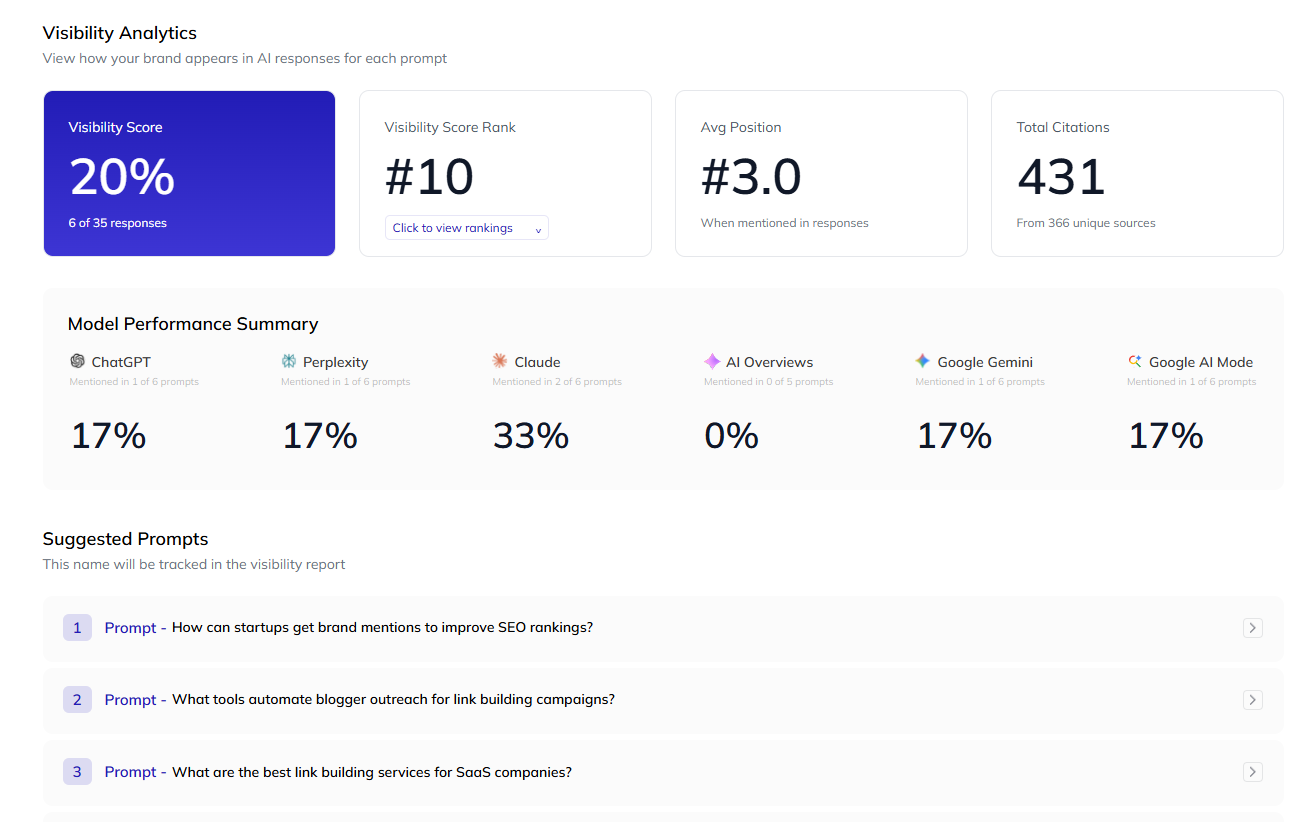
It tracks your visibility across commercial queries in major AI platforms and shows you which sources are getting cited. Then it turns that into an action plan so you can get placements on those same types of articles.
So you’re not guessing where to build links. You’re targeting what’s already influencing the results.
This turns search intent optimization into a repeatable system instead of guesswork.
Transactional Search Intent
Transactional search intent is when someone is ready to take action.
They’ve done the research. They’ve compared options. Now they want to buy, sign up, book a demo, or get started.
You’ll see queries like:
- “buy SEO software”
- “link building services pricing”
- “Respona pricing”
- “best outreach tool free trial”
These are all examples of transactional keywords.
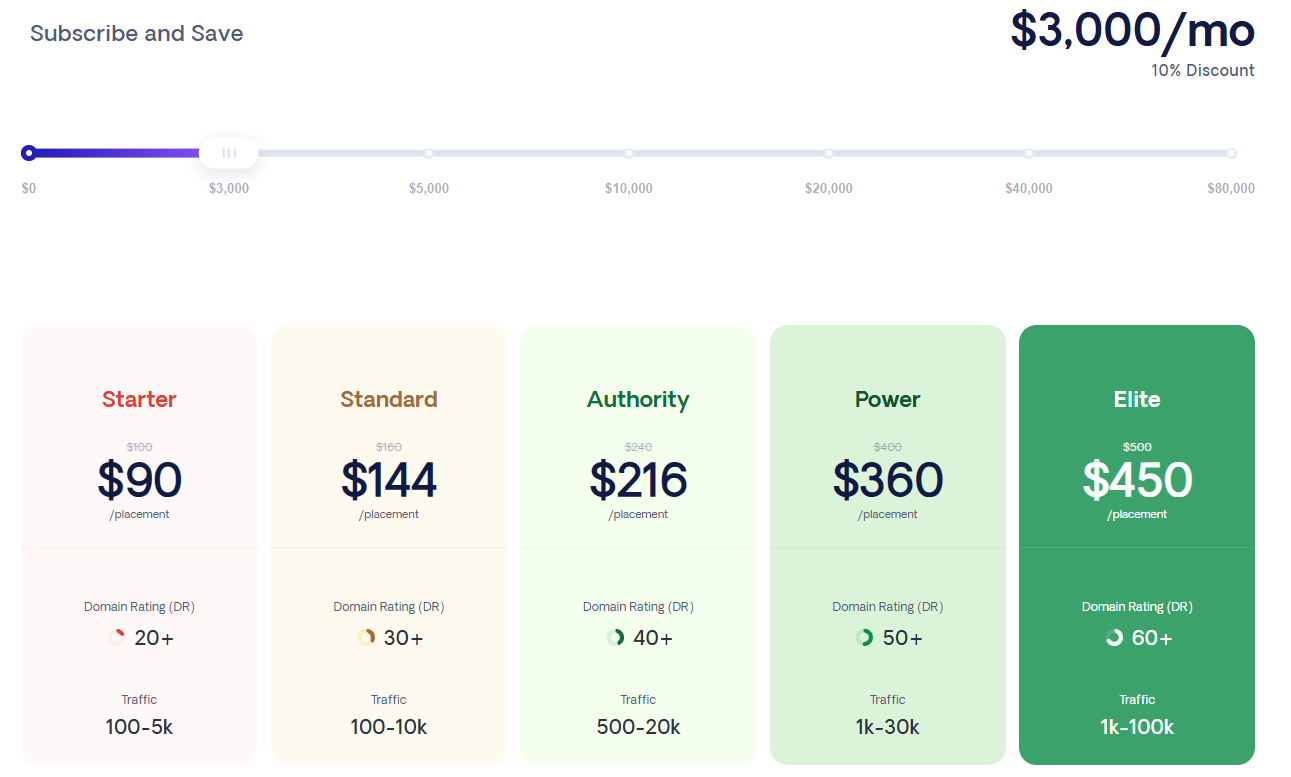
At this point, the intent is clear. They don’t want a guide or a comparison. They want a page that helps them convert – usually a product page or a focused landing page.
And if you look at the search results, that’s exactly what shows up. Product pages, landing pages, pricing pages.
What Works for Transactional Intent
This is where a lot of sites get it wrong.
They try to rank a blog post for a transactional keyword. Or they over-explain instead of making it easy to take action.
For transactional intent, simplicity wins.
The pages that perform best usually:
- Clearly explain the offer
- Highlight pricing or next steps
- Remove friction from the decision
- Make it obvious what to do next
No fluff. No long intros. Just get to the point.
Things like a clear meta description, fast load time, and strong user experience all play a role here.
Navigational Search Intent
Navigational intent is when someone is trying to get to a specific page or brand.
They already know where they want to go. They’re just using a search engine to get there faster.
Queries look like:
- “Respona pricing”
- “Ahrefs login”
- “HubSpot blog”
These are examples of a navigational query.
In these cases, Google is not trying to show options. It’s trying to take the user exactly where they intended to go.
That’s why the search results are usually dominated by one brand.
From an SEO perspective, there’s not much to “optimize” here in the traditional sense.
If it’s your brand, you want to make sure your key pages are properly indexed, easy to find, and clearly structured so search engines can surface them.
If it’s not your brand, you’re probably not going to rank there anyway.
Link building cheat sheet
Gain access to the 3-step strategy we use to earn over 86 high-quality backlinks each month.
Now Over To You
Most issues come down to mismatched keyword intent and content.
The keyword is fine, the content is decent, but the page just doesn’t match what the user is trying to do.
Once you start aligning content with intent, things get a lot easier. Blog posts for informational queries. Listicles and comparisons for commercial intent. Landing pages for transactional keywords. It’s not complicated, but it has to match.
The part most people still overlook is commercial intent.
That’s where a lot of decisions happen now, and increasingly, that research is happening inside AI tools. Those tools pull heavily from third-party content like listicles and comparison pages.
So if you want to show up there, you need to be included in those sources.
That’s exactly what our done-for-you link building focuses on.
We help you get featured on the types of articles that already rank and already get cited. Not random links, but placements that actually influence both search results and AI responses.
Frequently Asked Questions (FAQ)
What is search intent in SEO?
Search intent refers to the purpose behind a search query in a search engine. It explains what the user is trying to do, whether that’s learning something, comparing options, making a purchase, or finding a specific page.
What are the 4 types of search intent?
The four main types of search intent types are:
- Informational intent
- Commercial intent
- Transactional intent
- Navigational intent
Each one requires a different type of content to match what the user expects.
How do you identify search intent?
The easiest way is to search the keyword in Google and look at the results. This process is a simple form of SERP analysis.
If you see blog posts, it’s informational. Listicles or comparisons, it’s commercial. Product or pricing pages, it’s transactional. If one brand dominates, it’s navigational.
You can also use keyword research tools like Ahrefs that label keyword intent directly.
Why is search intent important for SEO?
Because search engines rank pages that best match user intent and query intent.
If your content doesn’t align with what users expect, it won’t perform well, even if the keyword targeting is correct.
Can one keyword have multiple intents?
Sometimes, yes.
But usually one intent dominates the search results. That’s the one you should prioritize when creating content.
![Pay for Performance SEO: Top 30 Companies [2026]](https://mgrowtech.com/wp-content/uploads/2026/03/pay-for-performance-seo-350x250.png)