We’re all trying to figure out the future of content marketing.
Thanks to generative AI, every part of our discipline is in flux: the tactics and strategies that yield great results, the tools and processes we use to achieve them, even the unit economics that justify it.
One suggestion put forward by Josh Spilker at AirOps and Loreal Lynch at Jasper is that companies should hire a new role, the content engineer. Here’s my understanding of the role:
The content engineer
A content engineer is an AI-native content role with a focus on systems thinking, using AI to scale content output and increase quality.
Instead of creating content, they build automated systems to create content at scale. It’s a hybrid role that incorporates elements of content strategy, workflow automation, SEO, and prompt engineering.
The primary goals of the content engineer include:
- Bridging the gap between creative content marketing and technical AI implementation
- Scaling written content production and automating content repurposing, distribution, and personalization
- Safeguarding brand guidelines, legal and regulatory compliance, and editorial standards
- Iterating to improve content quality over time
Sidenote.
I think this is a fair representation, but please read the original articles and decide for yourself.
I’m extremely bullish on generative AI (you can read about my AI content process here). It is transforming our industry in previously unthinkable ways, and we have to adapt.
But as I think about hiring for this new era, the content engineer is almost diametrically opposed to the skills and abilities I believe we need. I think the content engineer is the wrong skill set for the future of marketing.
Here’s why.
The content engineer’s remit is automation, taking content strategies that work well and scaling them to the Nth degree using AI. But the golden era of scaled content is already behind us.
Ahrefs is a great case study in scaled content. We have 2,161 articles published across half a dozen languages. We have multiple programmatic content strategies, peaking at around 34,000 automatically-generated pages and millions of pageviews.
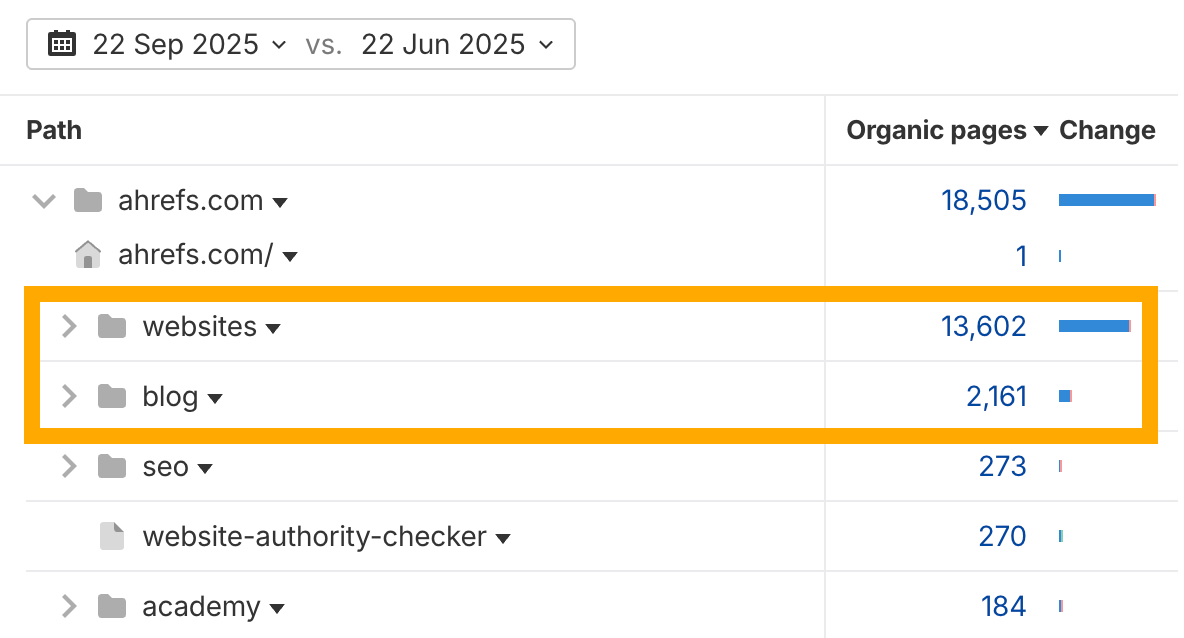
But at the time of writing, the Ahrefs blog receives a fraction of the clicks from Google Search that it did at its peak. And just a few weeks ago, we chose to move our most successful programmatic content strategy away from our main website and to a separate domain.
Scaled content creation is the most accessible it has ever been. It’s also the least effective it has ever been. Indexing new pages is difficult. Google has repeatedly penalized and demoted websites for “scaled content abuse”. Many successful programmatic strategies are only a few clicks away from being copied wholesale, in their own version of the SEO heist. And thanks to AI Overviews and AI Mode, the unit economics of large-scale content production just don’t work like they used to.
This is not a coincidence. The ability to automate something and the diminishing of its returns are fundamentally linked. Any part of content marketing that can be fully automated by AI is destined to become virtually worthless.
If you can publish 1,000 programmatic landing pages per week, your competitors are incentivised to do the same. Thanks to the democratisation of generative AI, it’s cheap and easy to do so. Soon, every competitor is forced into the same course of action, and the tactic is rendered useless.
(How many automated pitches do you get from AI SDRs each week? And how quickly did their novelty wear off?)
The useful half-life of “scaling” content with generative AI is currently measured in months, and will soon be measured in weeks or days. Hiring a content engineer to oversee content automation may make sense in the short term, but it risks diverting limited energy and resources to dying strategies, rather than new content strategies with the potential to offer outsized returns.
There are many content strategies still yielding growth, but they require effort and experimentation, and not automation and scale. I feel headwinds for programmatic and top-of-funnel content, and tailwinds for original research and data content, platform-native thought leadership content, short-form and long-form video content.
Generative AI has crucial roles to play in each of these areas, but the content engineer is not the skillset for the job.
In a world drowning in AI slop, publishing quality content matters more than ever. But there is a vast difference between gradual, incremental improvements to consistency and output, and actually creating content that anyone cares about.
AI has undeniably raised the floor of content marketing. For a few dollars and a few minutes of time, any company can generate passable, functional written content. The baseline quality of content marketing is the highest it has ever been.
But at the same time, AI has completely failed to raise the ceiling of content marketing. We are not swimming in new and exciting forms of content marketing on the back of AI innovation. Most companies adopting generative AI in content are cost-motivated: efficiency, productivity, doing more with less, these are the recurring themes that characterise AI adoption in content marketing.
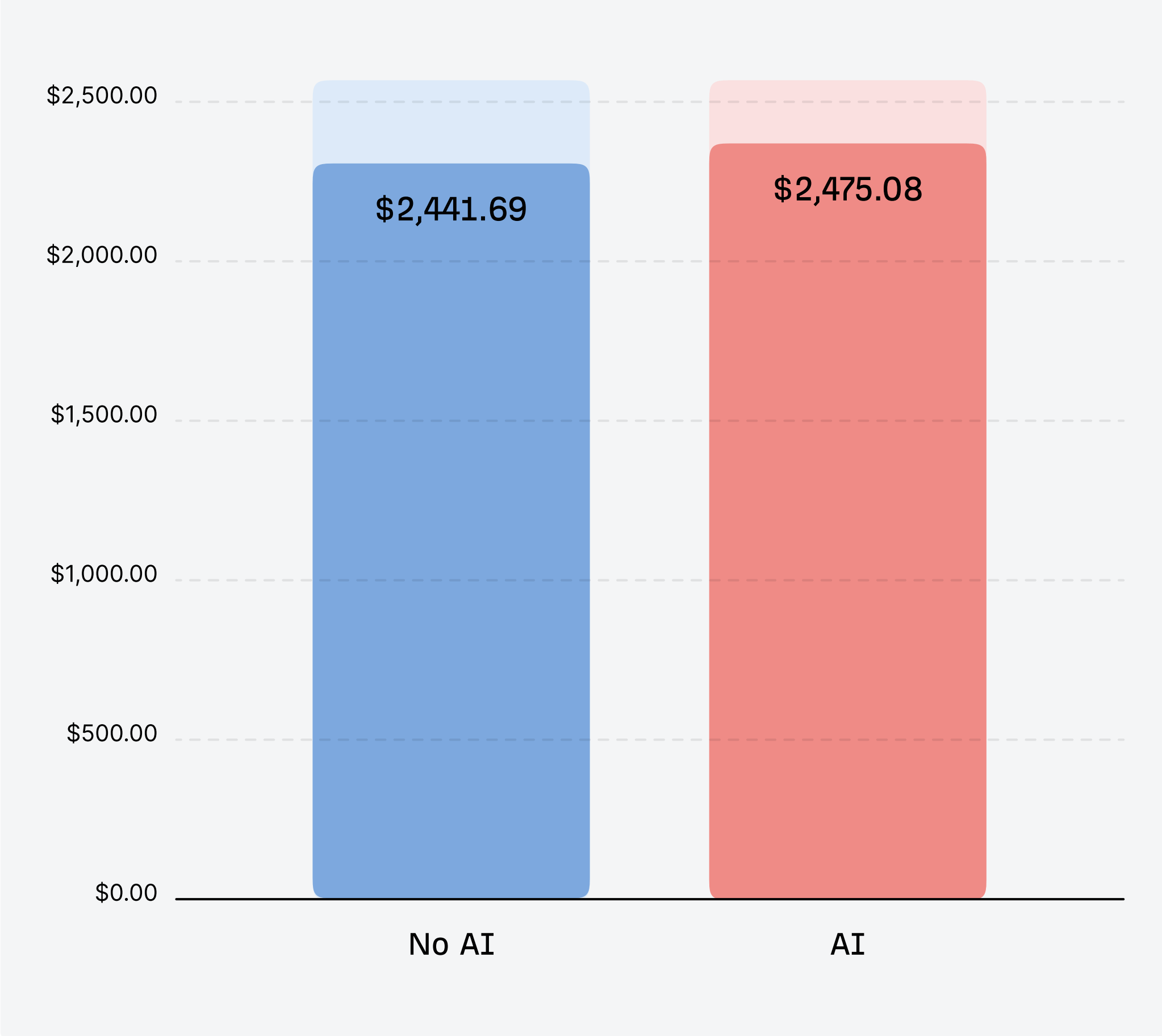
Monthly content marketing spend remains the same regardless of AI use. AI is being used to stretch the same budget farther, not unlock new and exciting forms of customer acquisition.
This is not a limit of AI. It is a fantastic creative sparring partner, a tool for learning new skills and challenging preconceived ideas. Quality is well within generative AI’s remit, but instead, most companies choose to focus it on automation and scale, like paying Picasso to paint your fence.
Hiring content engineers would perpetuate this problem. The content engineer is fundamentally a quality assurance role, designed to reduce errors and mistakes, to increase uniformity and brand consistency. It is not a role concerned with actual quality: creating remarkable things that deliver outsized results.
We don’t need more consistency in content marketing: we need weirdness and irregularity. We don’t need brand voice as much as we need real, unique, individual voices. We don’t need engineers to productize content like so many widgets on an assembly line; we need to use AI to amplify the best traits of craftspeople and obsessives, and embrace a definition of quality that is messy and unexpected.
Content engineers act as a bridge between creative content marketing and technical AI implementation. But I think this bridge is already unnecessary.
Generative AI models are barrelling headfirst towards massive consumer adoption, with the aim of democratizing access to writing, coding, and design. Virtually every day, model providers find new ways to make their AI easier to use: creating new and opinionated workflows, releasing new guardrails, and learning from the successes of their current users in order to nudge future users towards better outcomes.
I‘ve spent this week using Google’s latest image model, Nano Banana, to generate images for my talk at Ahrefs Evolve. The model creates the highest quality images I have ever generated, and it does it with a single line prompt.

Zero prompt engineering skill required.
We see the same trajectory in other generative models. Deep research has compressed dozens of back-and-forth prompt exchanges into two quick messages. Most AI tools now automatically select the best possible model to execute your prompt. MCP servers make accessing APIs a matter of writing plain text requests.
The barrier to using AI is becoming lower and lower. With each passing day, great outputs become easier to achieve, requiring less finessing, less tweaking, and fewer technical skills. Generative AI is easy to learn; it has to be, or the entire industry crumbles. Great marketing, and great writing, are far harder skills to master.
Much like prompt engineers, the content engineer feels like a stopgap role, a short-term fix for problems that are being solved by the tools themselves. (And how many companies do you know with full-time prompt engineers?).
AI can already write novels and build software—in the grand scheme of things, getting your product’s technical details correct and using en dashes in appropriate places are trivial problems to solve, and not worth hiring against.
In some ways, hiring a content engineer is to understate the importance of generative AI. AI fluency is something to be expected of us all, in the same way that internet fluency is. It is not something to be constrained to a dedicated role.
Final thoughts
To reiterate: we’re all trying to figure out the future of content marketing. Content marketing has to evolve to accommodate generative AI, and it’s far better to posit a solution than to carry on as though nothing has changed.
But from my perspective, the role of the content engineer carries the insidious risk of hiring for skills we won’t need for long, at the expense of those we really will.
At the extreme, this decision to index hiring on AI skills risks creating a team of n8n jockeys who spend their time scaling unremarkable content strategies that don’t help the business. Worse, it increases the risk of missing out on the new and emerging marketing opportunities that will define the success stories of tomorrow.
At Ahrefs, I want my content team to index heavily on marketing and writing skills. I trust that great marketers can learn AI, but I do not trust that AI experts can become great marketers. Give me a choice between hiring a great writer with no understanding of generative AI, and a middling writer with fluency in n8n and MCP servers, and I will take the great writer every day.