
Managing multiple social media accounts isn’t easy. It often means juggling dozens (sometimes hundreds) of accounts across regions, brands, and teams.
Good news: with the right strategies (and the right tools), your social team can stay organized, on-brand, and even ahead of schedule.
In this guide, we’ll walk through our top strategies for managing multiple social media accounts effectively, with tips from experts who do it every day.
Key takeaways
- Start with strategy, not random posting. Every account should have a clear goal, target audience, and purpose.
- Plan and schedule your content in advance. Posting live every day leads to burnout. Aim to schedule core campaign content 2–4 weeks ahead of time.
- Use a social media management tool. Platforms like Hootsuite bring scheduling, analytics, social listening, and inbox management into one place, which means fewer tabs and way more control.
Multi-account social media management is the practice of running multiple social profiles — across brands, regions, or audiences — through one centralized system.
For enterprises, this typically includes:
- Dozens of social accounts
- Regional teams
- Cross-functional stakeholders (marketing, PR, support, legal)
- Approval workflows
Without a unified platform, things unravel fast. Messaging becomes inconsistent, compliance risks increase, customer messages go unanswered, and teams burn out trying to keep up.
Bonus: Get a free guide that shows you 8 Ways to Use Hootsuite to Help Your Work-Life Balance. Find out how to spend more time offline by automating many of your daily social media work tasks.
The best way to manage multiple social media accounts is to build a clear, repeatable system for planning, publishing, engaging, and reporting.
Here are 9 practical steps to put that system in place:
- Define a clear purpose and goals for each account
- Choose the right platforms for your brand
- Use a social media management tool to keep everything in one place
- Create reusable content templates
- Schedule posts ahead of time
- Streamline inbox management
- Review performance regularly and adjust
- Dedicate time for social listening and engagement
- Make social impact visible
1. Define a clear purpose and goals for each account
When you’re managing multiple brands, a lack of clarity can lead to overlap and mixed messaging. That’s why each account needs a clear purpose.
For each account, clarify:
- What is this account designed to achieve? (Brand awareness, customer support, demand generation, recruiting?)
- Which audience segment does it serve?
- How does it support larger company objectives?
- What action should the audience take after engaging with the content?
When each account has a defined mission and goals, it’s easier to assign budget, avoid duplicate work, and measure performance.
2. Choose the right platforms for your brand
You don’t have to be on every single social media site. Focus on the platforms where your audience is and where your content fits best.
Quick tips and stats:
If you’re not seeing real results from a platform after a few months, it’s okay to rethink it. Managing fewer platforms well is better than managing all of them badly.
Use these social media stats below to guide your marketing strategy.

3. Use a social media management tool to keep everything in one place
When you’re managing dozens of accounts or clients, using a social media management tool is essential. A good platform pulls all your work into one dashboard, saving you time and helping you stay organized.
Enterprise teams, in particular, rely on social media management tools to:
- Plan and schedule content in advance
- Respond to customer inquiries
- Build approval workflows for legal or compliance review
- Archive posts for compliance
- Consolidate reporting into one clear dashboard
This is where a tool like Hootsuite comes in. It lets your team:
- Plan and schedule content across all your social media profiles (including at your personalized best time to publish!).
- Tap into what people are saying about your brand online with state-of-the-art AI social listening tools.
- Respond to direct messages and comments across multiple social accounts right inside your dashboard.
- View performance in context with detailed analytics across all your accounts together.
- Save time with AI content creation boosters like OwlyWriter AI to draft posts, repurpose content, and recommend hashtags.
- Create and manage ad campaigns with social advertising features, including auto-boosting.
Jose-Andres Camacho, Social Media Strategist at Intuit Mailchimp, says connecting all your accounts to a dashboard like Hootsuite can literally “save your sanity.”
Other tips for automating your social media workflow:
4. Create reusable content templates
Templates are a secret weapon for busy social teams. They help you post new content faster while making sure every account still looks and sounds right.
Instead of starting from scratch every time, build templates for the most common types of posts you make. Then, tweak them slightly for each brand or campaign.
Need a fresh look? We’ve got 250+ free social media templates for planning your success, as well as these content-strategy-focused templates you can use with or without Hootsuite:
Pro tip 💡: Create a basic set of templates for each brand you manage. Save them somewhere easy to access (like Canva folders, Dropbox, or your social media tool’s media library). This keeps your team consistent, and speeds up approvals too.
5. Schedule posts ahead of time
If your team manages multiple social media accounts, posting live every day is a fast track to burnout. An easy solution: use a social media scheduler.
Scheduling posts ahead of time gives your team space to plan better content — and a little more breathing room during the day.
Our research recommends posting 16 to 24 posts per week. Here’s how that breaks down across social channels:

That’s a lot of content. But have no fear: here’s a roundup of our best practices for scheduling:
- Plan major posts (like campaigns, announcements, and seasonal content) 2–4 weeks out.
- Keep about 20-30% of your content calendar open for real-time opportunities (like viral trends or important news).
- Use Hootsuite’s Planner to drag and drop posts across different accounts, move things around easily, and fill gaps quickly.
- Leverage Hootsuite’s bulk scheduler to queue up to 350 social media posts at once, freeing up time to focus on other work.
Keep in mind: Scheduling ahead doesn’t mean you can “set it and forget it.” Always stay alert to what’s happening in the world. You’ll want to pause or pivot posts if something unexpected changes the conversation.
6. Streamline inbox management
Managing multiple social media accounts means staying on top of comments and messages. But if you’re not careful, it can overwhelm your team.
For enterprise organizations, the complexity multiplies. Conversations are often assigned to different teams, such as customer support, PR, or regional marketing managers. A unified inbox ensures every message is assigned, tracked, and resolved.
For day-to-day execution, set specific response windows to keep teams focused and prevent constant context switching.
Try this simple schedule:
- Morning check-in: Answer urgent DMs and mentions.
- Midday session: Engage with comments and conversations.
- End-of-day wrap-up: Clear anything outstanding and flag important follow-ups.
A tool like Hootsuite Inbox 2.0 pulls all your accounts into one place, making it faster and easier to reply across platforms. No more endless app switching or missed messages.

Plus, you can easily automate your DMs, so your audience gets instant replies to their most pressing questions.

Pro tip 💡: If you’re managing multiple brands or a big target audience, assign conversations to different teammates. When the right people handle the right messages, everything runs smoother — and your community feels heard.
8. Review performance regularly and adjust
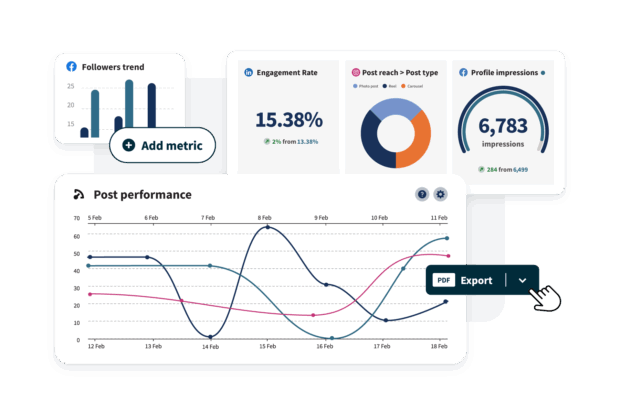
The only way to manage multiple social media accounts successfully is to know what’s working and what’s not. Regularly checking your analytics lets you double down on what’s driving results and tweak what isn’t.
Key metrics to watch:
- Engagement rate (bookmark our free engagement rate calculator)
- Follower growth on each platform
- Click-through rates on your links
- Average customer service response time on social
Camacho says pulling cross-account reports helps social media managers catch problems before they spiral. Small dips in engagement or slow audience growth are easier to fix when you spot them right away.
Use a social media analytics tool like Hootsuite to track performance across platforms in one place.
9. Dedicate time for listening and engagement
A good engagement rate generally falls between 1% and 5%, depending on your industry.
How do you get that level of engagement? Some unfortunate news: you have to work for it. Daily.
Engaging with others builds relationships, attracts new followers, and can even result in new corporate or influencer partnerships.
One way to massively speed this up (and boost your engagement in the process) is to use social listening to spot posts to comment on, see what people are saying about you, and uncover new opportunities to grow.
Enter Hootsuite Listening.
Hootsuite Listening helps you:
- Find out what people are saying about your company or products (and your competitors) across social media, websites, blog posts, forums, and more.
- Analyze and track brand sentiment over time.
- Identify when you’ve gone viral or have a potential PR crisis on the horizon.
- Discover new partnership opportunities.

10. Make social impact visible
Reporting isn’t optional, it’s how social earns its seat at the table.
Managing multiple accounts requires significant investment. Which is why leadership needs clear visibility into performance, impact, and ROI. But if you’re not communicating results, your social efforts may not be seen as a real growth driver.
Effective reporting should:
- Tie social performance directly to business goals (revenue, pipeline, brand health, customer retention)
- Show how social supports cross-functional priorities
- Surface insights that inform smarter budget decisions
Here are practical ways to elevate your social reporting:
- Create a monthly or quarterly social media report focused on trends and takeaways, not just dashboards.
- Break performance down by region, brand, or business unit to make impact undeniable.
- Visualize data with dashboards and benchmarks to make trends immediately obvious.
- Tell a story. Tie your numbers back to real business goals (like website traffic, sales, or brand sentiment). Learn social media best practices to land these early and often!
We asked Jose-Andres Camacho, Social Media Strategist at Intuit Mailchimp, to share his top tips for staying organized, creative, and (mostly) stress-free while juggling multiple social media accounts at once.
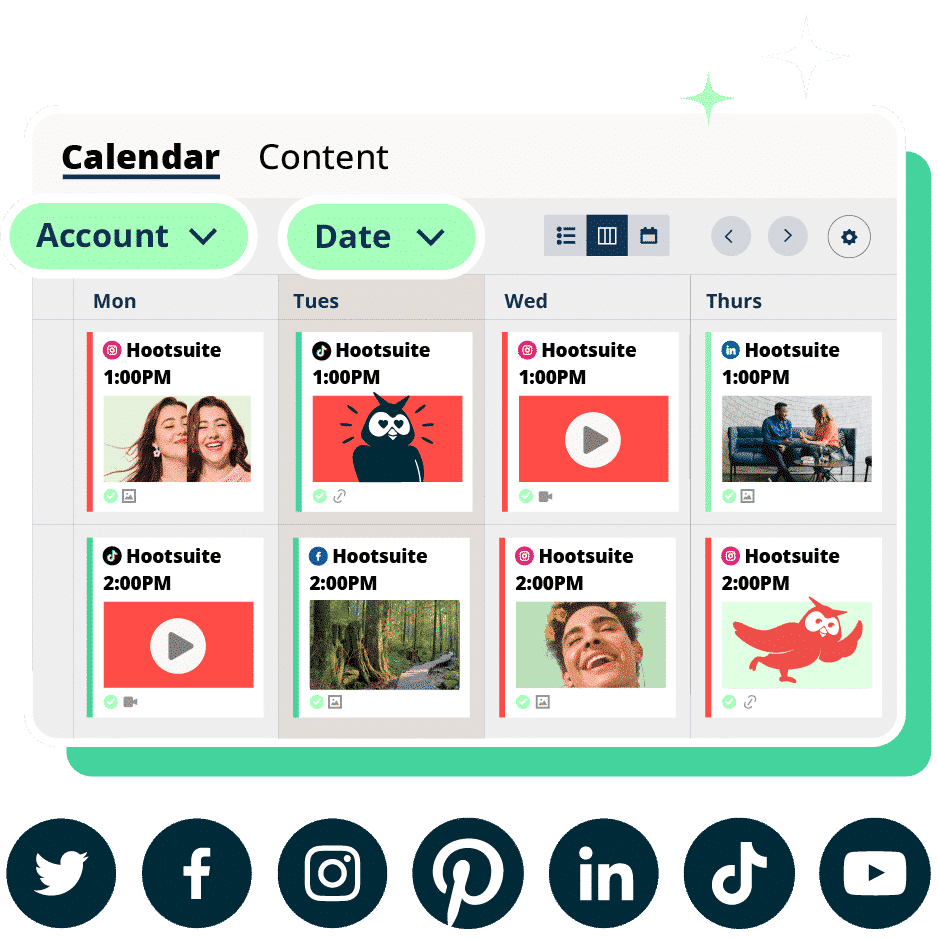
1. Bring all of your accounts under one tool
The first step to managing multiple social media accounts without losing your mind? Stop jumping between tabs and apps all day.
“To start, try to gather [all your social media accounts] in one place,” Camacho says.
Then, unify them under one tool.
“This makes it easier to streamline workflows, pull cross-brand and cross-account reports, and benchmark performance across multiple accounts,” he adds. “Trust — this alone can save your sanity.”
At the enterprise level, a centralized tool is critical for reducing social media risks and staying compliant. For instance, Hootsuite lets you assign custom access levels to every team member, set up built-in approval workflows, and archive content.

2. Get used to context switching
When you manage multiple brands, you’re constantly switching gears. This makes it easy to mix up your tones or worse, lose your audience.
“Context switching can humble you real quick,” Camacho shares. “One minute you’re deep in ghostwriting mode for a business author, the next you’re reviewing upcoming content for a Fortune 500 martech brand — and your brain’s like, ‘Wait, who are we right now?’”
To stay sharp, he recommends time-boxing between clients, and giving yourself a true mental reset between shifts. Before creating content, skim your brand’s tone guide, review their best past posts, and check competitor accounts for a quick recalibration.
3. Batch content creation to work smarter
Juggling too many small tasks at once is a fast way to burn out. Instead, Camacho stresses the power of batching: grouping similar work together to maximize focus and flow.
To start, “Task batch your social media content creation, scheduling, and publishing work by account,” he says.
There’s no wrong approach here. Popular options include the Pomodoro Technique, the Eisenhower Matrix, and 90-minute focus sessions.
“Use whatever approach you’d like! The goal is to group similar tasks and knock them out as efficiently as possible — and not go insane in the process,” Camacho adds.
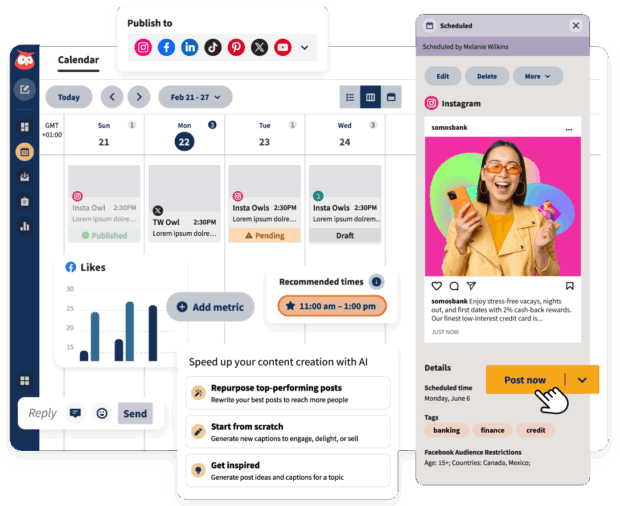
4. Use calendars to stay organized
Once goals are set and content is planned, staying organized day-to-day becomes critical. Camacho recommends weekly check-ins to help teams stay aligned and proactive.
“Start the week (usually on Monday mornings) with a quick, 20-minute social editorial review of the week ahead,” he says. These meetings are a chance to review calendars, surface any blockers, and make adjustments.
Pairing social media calendars with regular team syncs makes it easier to manage schedules, plan around campaigns, and keep your workflow steady, especially when managing multiple accounts across clients or regions.
5. Build a personal library of inspiration
Creating (and scaling) content across multiple platforms means you can’t wait for inspiration to strike.
For Camacho, one of the easiest ways to stay creative is to use the “Save” features on Instagram, X, Threads, and LinkedIn to stash away any social posts that make you pause, whether it’s a clever hook, a strong visual, or a trend done well.
“Get strategic with your ‘Saves,’” he says. “When the ‘this & _______’ trend was going viral, I saved multiple B2C and B2B examples to reference later. This comes in handy if you need to include examples in a creative brief or concept approval from your higher-ups.”
Spending just a few minutes each week saving and organizing content inspiration pays off big when you’re looking for quick ideas or ready-to-go examples. Or, check out these 40 social media post ideas.
Pro tip 💡: On Instagram, organize Saves by brand or theme so you’re not digging through memes when it’s time to pitch a post.
6. Keep your team connected
If your team consists of designers, copywriters, strategists, or freelancers, staying connected is critical for success.
Camacho recommends keeping regular, short check-ins with your creative teams. “Get your social and creative teams in the same ‘room’ together regularly, whether it be virtual or IRL. Schedule a couple of 15-minute stand-ups per week,” he says.
“Review your project tracker and get a status update together.”
To keep the energy fresh, he suggests asking team members to share social content ideas they’ve seen out in the wild. Fresh perspectives keep the creative process lively — and help you stay ahead of trends across accounts.
7. Get yourself an AI assistant
If you want to stay competitive in 2026, you should be using artificial intelligence (AI).
Camacho is direct about it: “If you’re not using AI, you’re already behind. AI is a free, always-on intern that doesn’t sleep and actually gets stuff done.”

He recommends training AI-powered tools like ChatGPT, ClaudeAI, Jasper, Grammarly, Copy.ai, Adobe Express, Canva Magic Design, Sprout Social, and Hootsuite to assist with brainstorming, trend-spotting, caption writing, and design.
“Stop sleeping on AI,” he urges. “Start training it.”
Here are the best social media management tools we recommend for streamlining your workflows, building better content, and publishing across multiple accounts.
1. Hootsuite
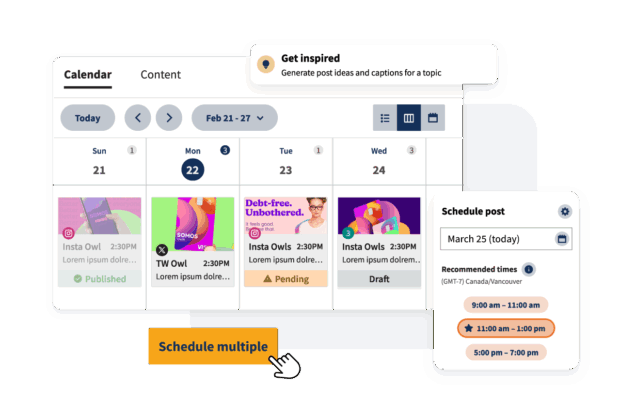
Hootsuite is an all-in-one social media management platform designed with busy social media teams in mind. You can plan, post, listen, and measure content, all without losing track of what’s happening across your accounts.
Hootsuite also gives you the flexibility, tools, and integrations to scale, making it a solid option for enterprises.
- Who is this for? Brands looking to manage and scale their social media presence.
- Pricing: Starts at $199/month.
- SMM star rating: ⭐⭐⭐⭐⭐ (5/5)
- My favorite features:
- Best Time to Publish: Hootsuite crunches your account data and tells you when your audience is most active. The recommendations are tuned to what you’re trying to achieve (more reach, more engagement, more clicks), which means you can post smarter without overthinking it.
- Social listening: Access powerful social listening tools directly into your Hootsuite dashboard and instantly see what people are saying about your brand and competitors. It automatically scans more than 2 billion sources each month so you never miss a conversation that matters.
- What’s lacking/missing? There’s a bit of a learning curve if it’s your first time using a full-scale social media management platform, but Hootsuite has tons of tutorials and guides to get you set up fast.
- Customer review:

Source: G2
2. Planable

Source: Planable
If you need social media management software that keeps content approvals organized and easy to track, Planable has you covered.
That said, if you’re looking for deeper analytics, publishing tools, or social listening features, you might find Planable a bit on the light side.
- Who is this for? Agencies, freelancers, and social media managers that mainly need a smooth approval workflow across multiple brands or clients.
- Pricing: Free plan available for 50 total posts. Paid plans start at $33 per workspace (client), per month.
- SMM star rating: ⭐⭐⭐⭐ (4/5)
- My favorite features:
- Approval workflows: Planable makes it simple to move content through multiple review stages — a must-have if you’re working with industries like healthcare, finance, or government that require strict sign-offs.
- Feed previews: You can easily scroll through a visual mockup of your planned posts, helping you catch mistakes or awkward layouts before anything goes live.
- What’s lacking/missing?
- Pricing can add up quickly if you manage a lot of accounts, since it charges per workspace.
- Lacks full publishing, analytics, and engagement features compared to more comprehensive platforms.
- Customer review:
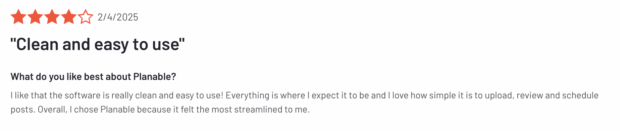
Source: G2
3. Buffer

Source: Buffer
Buffer is a simple, budget-friendly tool for managing multiple social media accounts.
Buffer focuses on doing the basics really well: publishing, planning, and light reporting. It’s especially handy if you’re just starting out or managing a few small channels without the need for heavy analytics or social listening.
- Who is this for? Freelancers, startups, and small businesses who want a simple, low-cost way to plan and schedule social content across a few social platforms.
- Pricing: Free plan available (up to 3 channels, 10 scheduled posts per channel). Paid plans start at $6/month.
- SMM star rating: ⭐⭐⭐ (3/5)
- My favorite features:
- Clean, simple scheduling: Buffer keeps post planning stress-free. It’s perfect if you just need to queue up posts across a few core platforms — no extra bells and whistles to learn.
- Basic team collaboration: You can assign posts to team members and set simple approval steps. It’s enough for small teams, but if you need complex workflows or detailed permissions, you’ll probably outgrow it.
- What’s lacking/missing?
- No social listening tools, which can make it harder to track conversations around your brand.
- Analytics are pretty basic. Fine for quick updates, but if you’re managing campaigns across multiple brands and need deep insights, you’ll probably want a more advanced tool.
- Customer review:
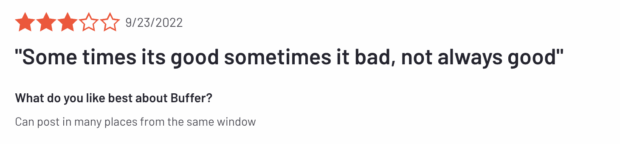
Source: G2
How do businesses manage multiple social media accounts efficiently?
Businesses manage multiple social media accounts efficiently by getting organized first, then automating where they can. Each account should have a clear goal, defined audience, and distinct content plan. Most teams use scheduling tools to plan posts in advance and avoid last-minute scrambling. They also block time to respond to messages and review performance instead of reacting around the clock.
What is the best tool to manage multiple social media accounts in one place?
The best tool to manage multiple social media accounts in one place is Hootsuite. It allows you to schedule content, manage DMs and comments, monitor brand mentions, identify the best times to post, and analyze performance, all from a single dashboard. It’s especially powerful for teams juggling multiple brands or global accounts.
How can enterprises manage multiple social media accounts across teams?
What are the challenges of managing multiple social media accounts, and how can they be solved?
The biggest challenges of managing multiple social media accounts include missed messages, inconsistent voice, and burnout. To solve these challenges, teams should schedule posts ahead of time, set specific times to respond to messages, batch content creation, and use a social media management platform like Hootsuite.
What are the best practices for managing multiple social media accounts at scale?
Save time managing your social media presence with Hootsuite. Publish and schedule posts, find relevant conversions, engage your audience, measure results, and more — all from one dashboard. Try it free today.

![What are the latest Hootsuite product features? [Jan 2026]](https://mgrowtech.com/wp-content/uploads/2026/02/Hootsuite-features-jan-2026-350x250.png)