
Search engine optimization has a reputation for being unpredictable.
Algorithms change. SERPs shift overnight. Website traffic graphs spike and dip for reasons that are not always obvious. So when someone says they can forecast SEO, the natural reaction is skepticism.
I get it. I was skeptical too.
But SEO forecasting is not about predicting the exact number of sessions you will get next quarter. It is about understanding direction, scale, and probability. It is about replacing gut feeling with data-backed projections.
You cannot control every algorithm update. You cannot model every variable. But you can make educated projections that are good enough to plan your content marketing, set targets, and justify seo investment.
In this article, I am going to show you how to forecast SEO using just eight core metrics. No complex attribution models. No black-box assumptions. Just the inputs that actually move SEO growth and explain why it happens.

Link building cheat sheet
Gain access to the 3-step strategy we use to earn over 86 high-quality backlinks each month.
Can You Really Forecast SEO?
The short answer is yes. With caveats.
SEO is not like Google ads, where you turn a dial and get an immediate response. It is a system influenced by Google algorithm changes, competitors, content quality, authority, and time. Some of those variables are measurable. Others are not.
Google updates alone make accurate seo forecasting forecasting impossible. Rankings can shift because of core updates, SERP layout changes, or new competitors entering the space. Even when you do everything right, external factors can still move the goalposts.
That does not mean SEO forecasting is useless. It just means it has to be done correctly.
A good SEO forecast is not a promise. It is a range.
You are not trying to predict an exact traffic number three or six months from now. You are estimating what is likely to happen if you keep doing what you’re doing right now.
Pick an SEO Reporting Tool
For effective SEO forecasting, you’ll need the right mix of tools. No single platform gives you everything you need, which is why SEO projections always rely on both first-party and third-party data.
Also, Google only provides you with data for your own site, so you need a third-party tool to do competitor analysis either way.
Here are the core SEO tools I rely on and what each one is actually good for.
1. Google Search Console
This is the most important tool in any SEO forecast.
Google Search Console shows you how Google sees your site. You get impressions, clicks, average position, and CTR for real queries and real pages. This is is first-party data straight from the search engine.
It is used to understand current keyword coverage, ranking trends, and CTR by position. It is also the best way to measure seo performance over time and validate whether a forecast is moving in the right direction.
If I had to pick one tool only, this would be it.
2. Google Analytics

Search Console tells you what happens in the SERPs. Google Analytics tells you what happens after the click.
This is where you’ll find data on organic sessions, engagement, and conversions that impact SEO revenue.
3. Ahrefs

Ahrefs gives you keyword search volumes, ranking difficulty, backlink profiles, and competitor visibility. None of this data is perfect, but it gives you a directional view of opportunity and competition that first-party forecasting tools simply cannot provide.
I use Ahrefs to check content gaps, estimate ranking effort, and understand how fast competitors are growing.
4. Other Third-Party SEO Tools
Semrush, Moz, SE Ranking, and similar platforms serve a similar purpose.
The specific tool matters less than what you use it for. Keyword forecasting, competitive analysis, and link data. These forecasting tools help you answer questions like how big the opportunity is and who you are up against.
It’s just that my favorite is Ahrefs.
Keep Competitors in Mind
SEO does not happen in a vacuum.
Every keyword you want to rank for already belongs to someone else. And while you are publishing content, earning links, and improving pages, your competitors are doing the same.
This is where a lot of SEO projections fall apart.
They assume your site is the only one moving.
In reality, rankings are relative. You do not rank higher because your site improves in isolation. You rank higher because your SEO improvements outpace everyone else targeting the same keywords.
That is why competitor data needs to be part of your SEO strategy from the start. Your actual business competitors – not sites from a completely different niche that you happen to have some keyword overlap with.
For us, for example, it’s other link building agencies.

I always look at how visible competitors are today and how fast that visibility is changing.
Are they publishing aggressively? Are they earning links at a steady pace? Are new players entering the space?
All of that affects how realistic your projections are.
SEO Forecasting Metrics
Share of Voice
Share of voice measures how visible your site is in organic search compared to competitors. Instead of focusing on individual keyword rankings, it shows how much of the total search demand you are capturing across a defined keyword set.
This matters for forecasting because SEO growth is relative. Rankings only improve if you gain visibility faster than everyone else.
When share of voice increases, organic traffic usually follows. When it does not, competitors are absorbing that demand.
The easiest way to check share of voice is with a tool like Ahrefs.
Inside Ahrefs, go to Rank Tracker, create a project for your site, and add the keywords you want to track. Once the keywords are set up, open the Overview or Competitors report. Ahrefs will display a visibility or share of voice metric that estimates how much organic traffic each site earns based on rankings and search volume.
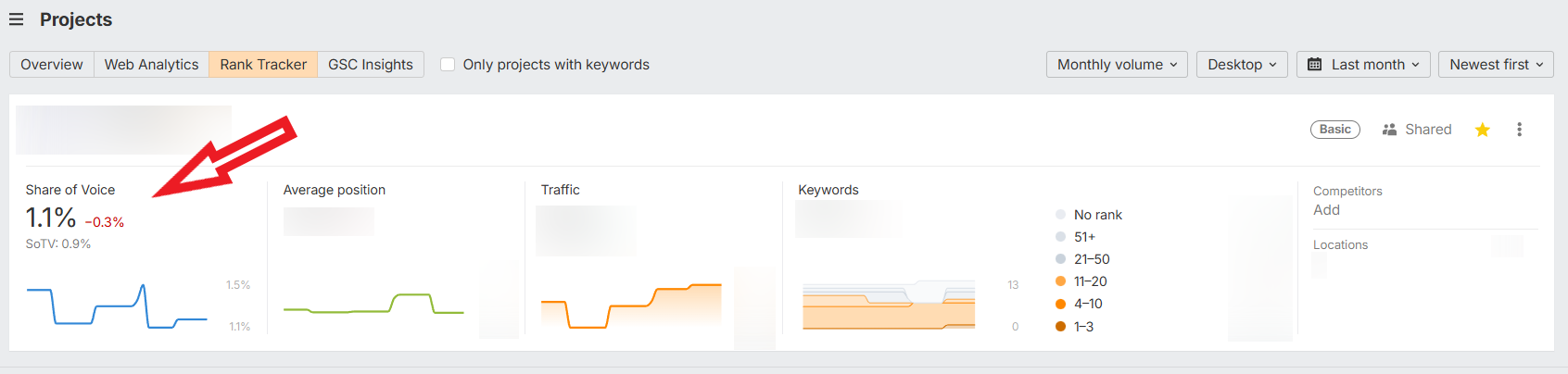
The key is consistency. Use the same keyword list over time so changes reflect real movement, not tracking noise.
If you want to calculate share of voice yourself, the math is simple.
First, estimate clicks for each keyword using:
Estimated Clicks = Search Volume × CTR by Ranking Position
Then calculate share of voice using:
Share of Voice (%) = (Your Total Estimated Clicks ÷ Total Estimated Clicks Across All Competitors) × 100
The exact percentage will vary depending on the CTR model you use, which is why different tools show slightly different numbers.
Keyword Rankings & Coverage
Keyword rankings and keyword coverage are the foundation of any SEO projection.
If you do not know what you rank for today and how much ground you already cover, it is impossible to project future performance.
Rankings show how visible your pages are right now. Coverage shows how many relevant queries you are competing for at all.
To check your current keyword rankings using first-party data, start with Google Search Console. Open the Performance report, switch to the Queries tab, and sort by impressions.
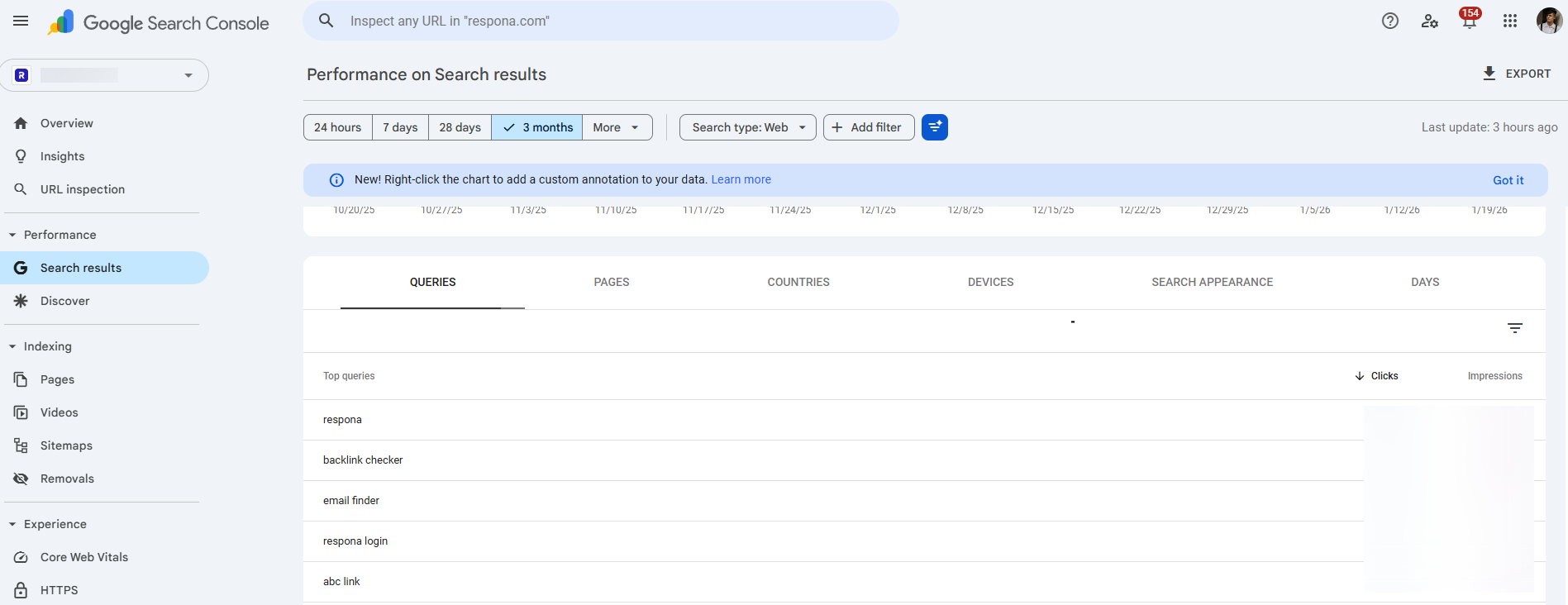
This shows you the keywords your site already appears for and their average positions. You can filter by page, country, or time range to isolate specific sections of your site. This data is real and comes directly from Google.
For broader coverage and tracking over time, I use Ahrefs.
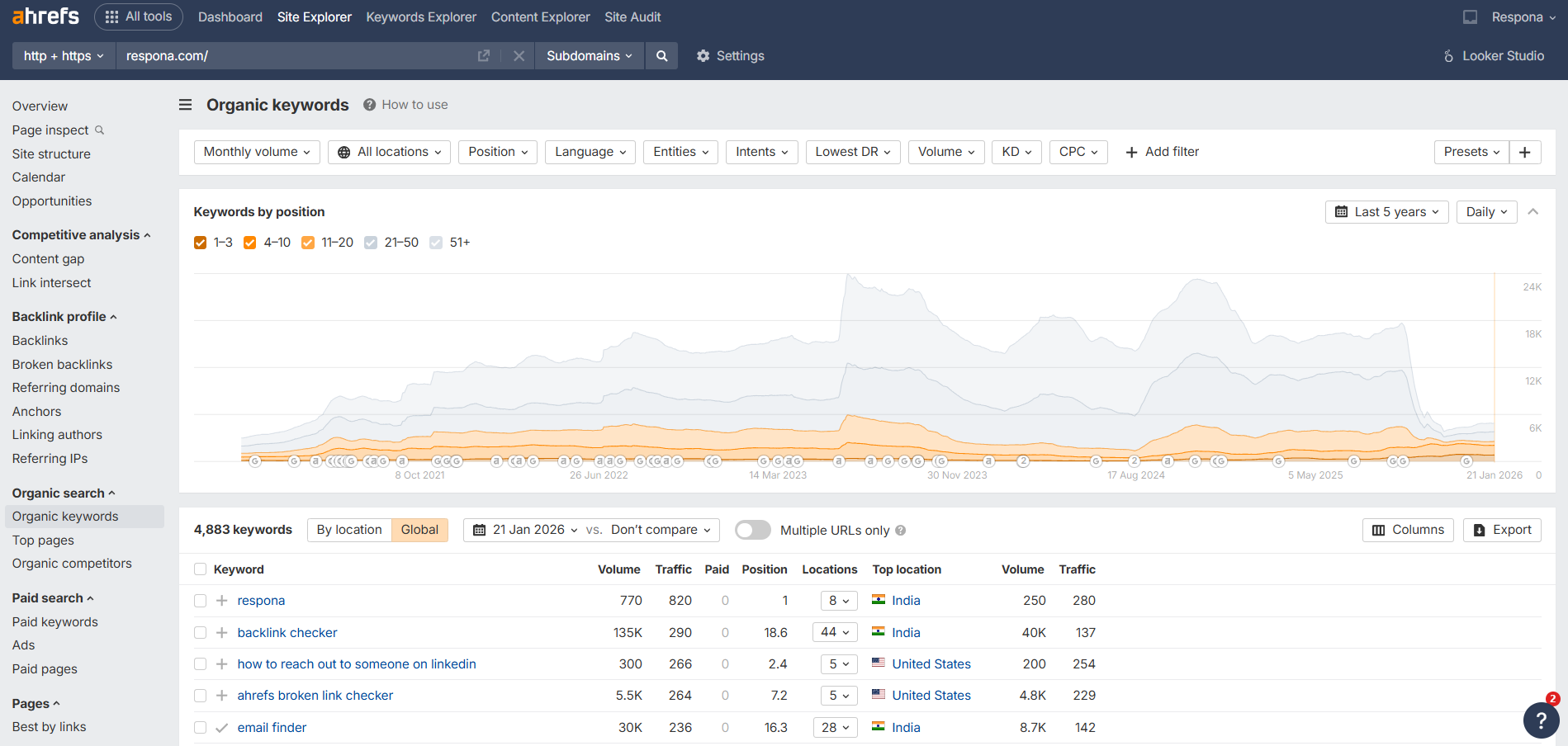
Go to Site Explorer and enter your domain.
Open the Organic Keywords report to see all keywords the tool estimates you rank for, along with positions, search volume, and traffic estimates.
Search Volume
Search volume defines how much organic demand exists for a keyword. It sets the upper limit for any SEO forecasting projections. If the demand is not there, rankings alone will not drive meaningful website traffic.
To check search volume for each individual keyword, use Ahrefs or its equivalent.
Open Keywords Explorer, enter your target keyword, and you will see the estimated average monthly search volume.
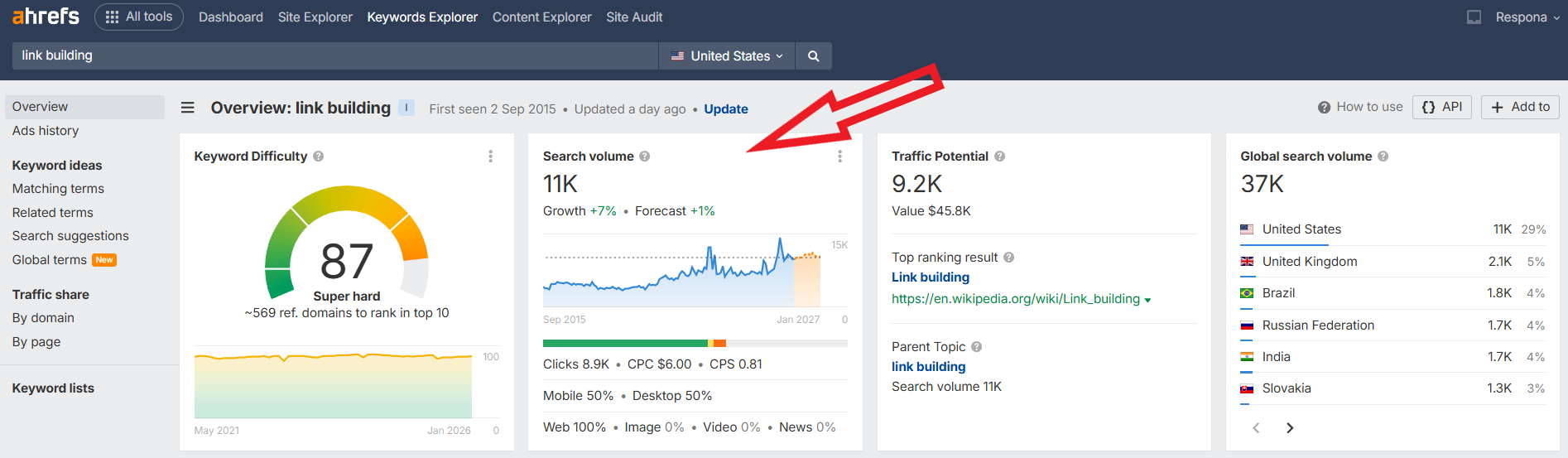
You can also upload a keyword list to view combined volume and identify which terms have enough demand to justify content creation.
This data is an estimate, not a promise.
Search volume varies by location, device, and time of year. That is why it is important to look at trends and seasonality, not just a single monthly number.
Google Trends can help you identify seasonal trends and shifts in search demand over time.
In Ahrefs, the trend graph shows whether demand is growing, declining, or spiking at specific times.
Click-Through Rate (CTR) By Position
Ranking position alone does not determine traffic. Click through rate is what translates rankings into actual visits.
CTR by position shows the percentage of users who click a result based on where it appears in the SERPs. A keyword ranking in position three can drive several times more traffic than the same keyword in position eight, even though both are on page one.
For forecasting, this metric is critical. Search volume tells you how much demand exists. CTR by position tells you how much of that demand you can realistically capture.
To estimate CTR by position, start with your own first-party data.
In Google Search Console, open the Performance report and switch to the Queries or Pages tab.
Enable the Average CTR report. You’ll then find exact CTR for each query along with its clicks and impressions:
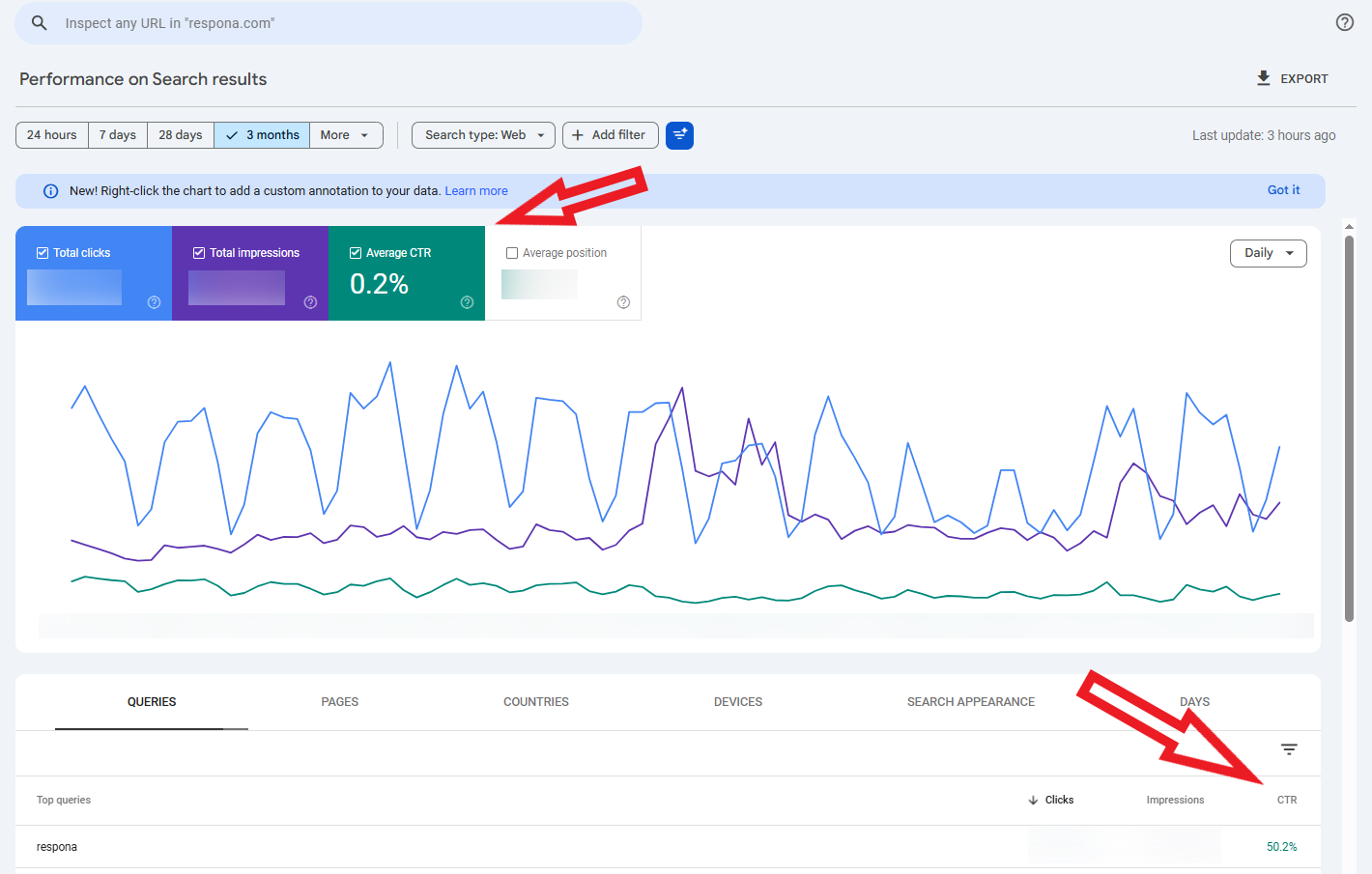
For keywords you do not rank for yet, use industry CTR curves as a starting point. Most SEO tools and studies provide average CTR benchmarks by position. These are not universal, but they are useful for modeling expected traffic before rankings improve.
Content Velocity
Content velocity is how much content you publish over a given period of time. Pages per month. Articles per quarter.
It is one of the most important inputs in any SEO campaign because it directly controls how many opportunities you create.
If rankings and traffic are the output, content velocity is one of the main levers.
Content velocity also needs to be realistic. It should reflect your actual production capacity, not an ideal scenario. If your team can reliably publish four high-quality pages per month, that is the number your projections should be built on.
Whether you’re focused on technical seo, local seo, or content marketing, your publishing pace will impact future traffic projections.
Time to Rank & Content Success Rate
SEO does not work instantly. That delay is one of the biggest reasons forecasts fail.
Time to rank is the amount of time it takes for a page to start ranking meaningfully after it is published. In most cases, new content does not drive noticeable traffic for weeks or even months. Any forecast that assumes immediate returns is already wrong.
To estimate time to rank, use your own historical data. In Google Search Console, open the Performance report, filter by a specific page, and compare impressions over time starting from the publish date.
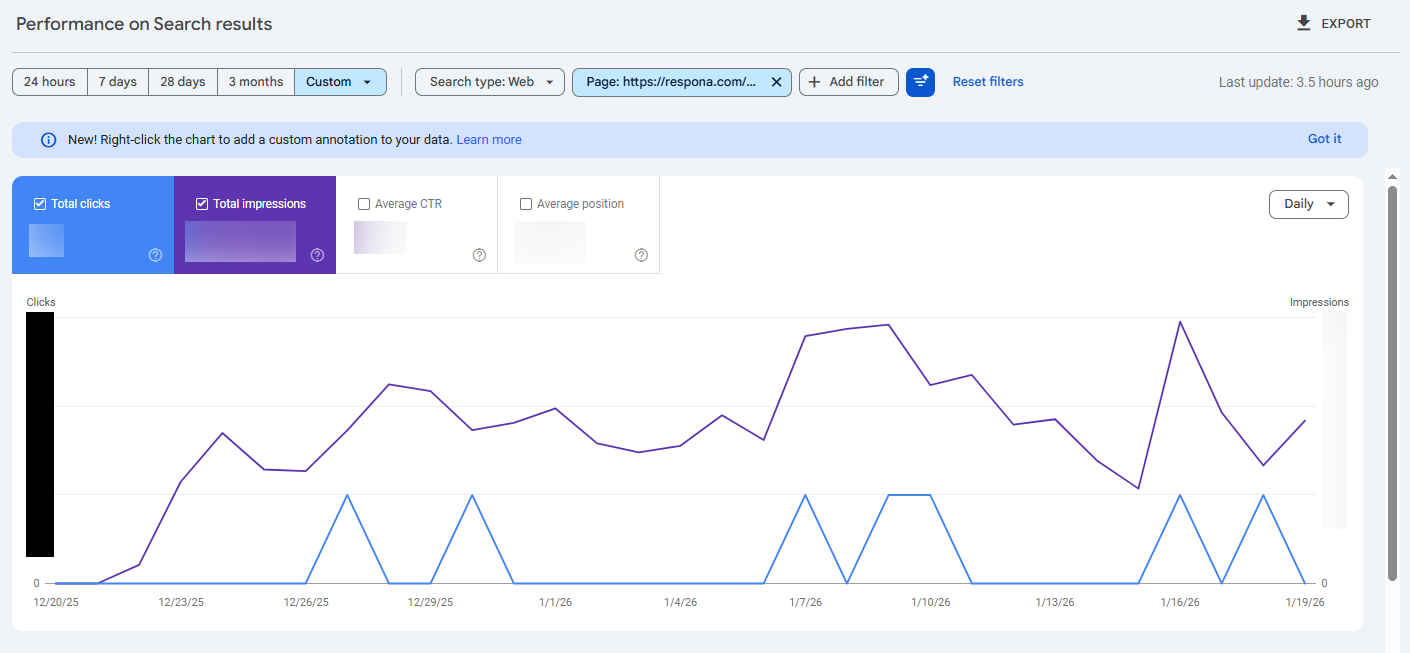
This shows when the page first appeared in search and when it began to gain traction. Patterns repeat more often than SEO professionals.
Content success rate adds another layer of realism to your projections.
Not every page you publish will perform. Some will rank well. Some will barely move.
Content success rate measures the percentage of pages that reach a meaningful threshold, such as top ten rankings or consistent organic traffic.
To calculate it, take a group of pages published in the past, define a success benchmark, and divide the number of pages that met that benchmark by the total number published.
Link Velocity
Link velocity is the rate at which your site earns new backlinks over time.
For forecasting, link velocity sets expectations around future performance. If your site earns two quality links per month today, a forecast that assumes traffic and rankings will suddenly double is unrealistic unless something changes in your seo strategy.
To measure link velocity, use Ahrefs or another backlink tracker. Go to Site Explorer, enter your domain, and open the Backlinks or Referring Domains report.
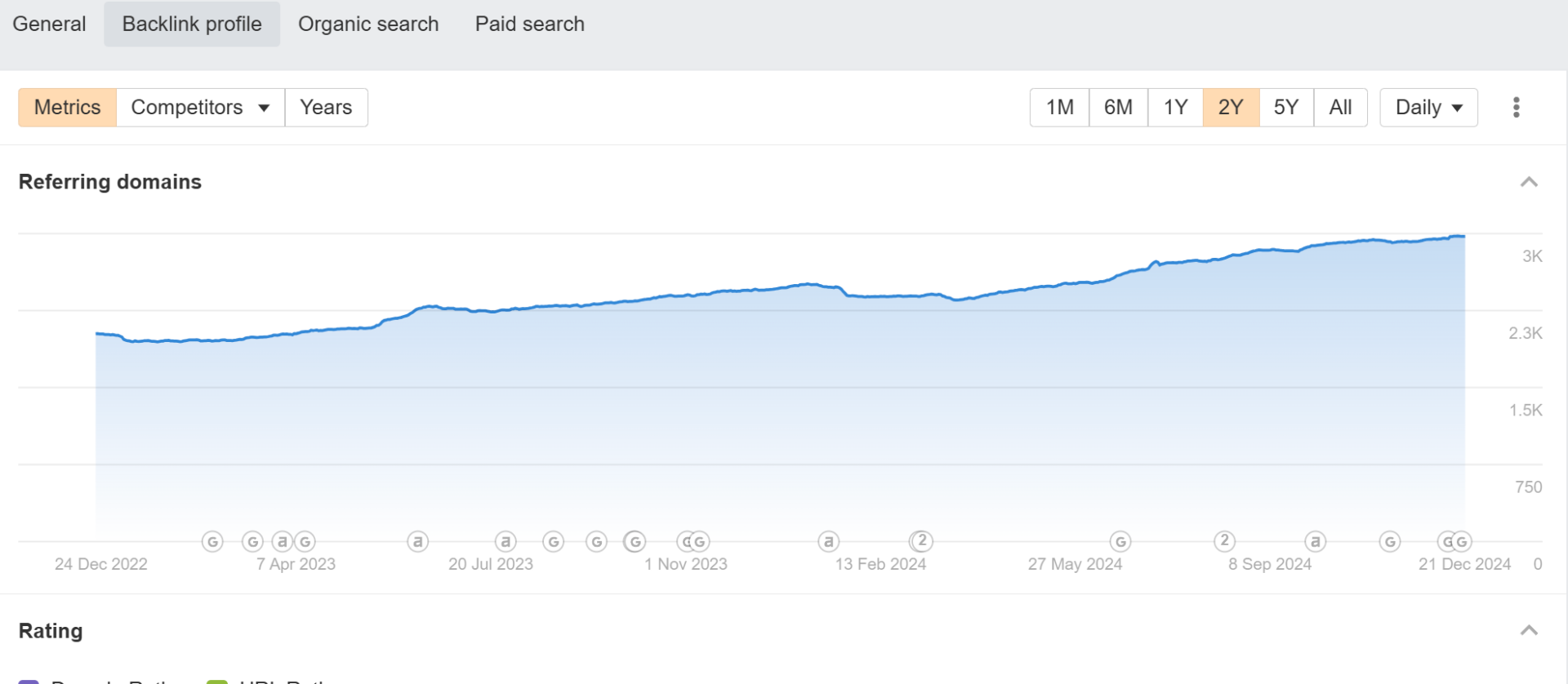
Set the date range to monthly and track how many new referring domains are acquired over time.
Conversion Rate
Conversion rate is what turns an SEO forecast from a traffic estimate into a business forecast.
You can project rankings, clicks, and sessions all day, but none of it matters if organic traffic does not convert.
Conversion rate shows how often organic visitors complete a meaningful action, whether that is a signup, demo request, purchase, or lead.
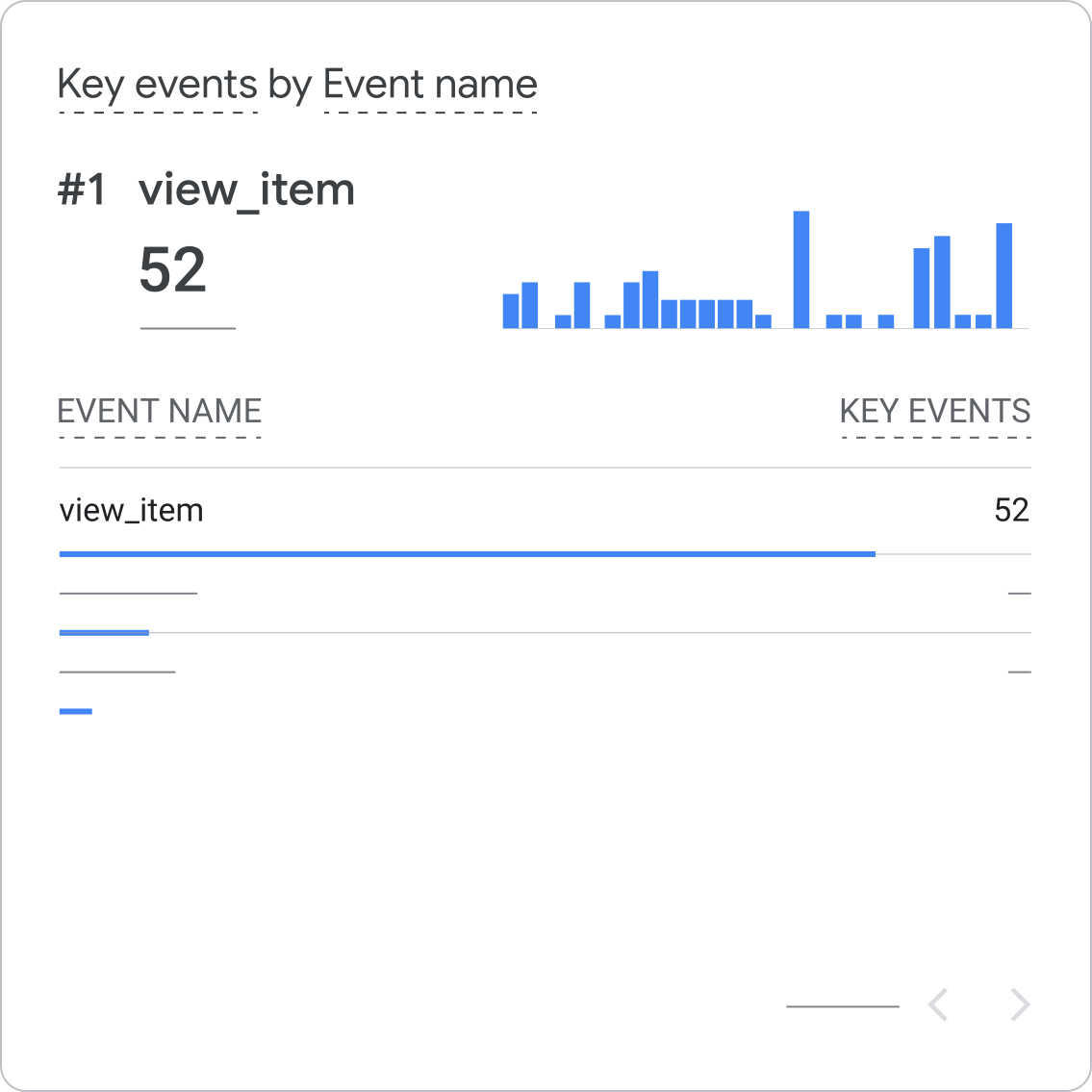
Google Analytics lets you set up conversion tracking for all these types of actions, and each entails a separate report.
Use Years Worth of Data
SEO trends do not reveal themselves in a few weeks or even a few months. That is why short timeframes lead to bad forecasts.
Whenever possible, use multiple years of historical data. This allows you to see seasonality, long-term growth patterns, and how your site responds to algorithm updates. One strong quarter can be misleading. One weak month can be an outlier.
The longer the historical window, the better your projections will reflect reality instead of short-term fluctuations.
Make Sense of the Data with an SEO Forecasting Tool
Once you have all the inputs, the challenge is turning them into projections that actually make sense.
You can do this manually. Many teams do. Export data from Google Search Console, layer in keyword and CTR assumptions, and model outcomes in a spreadsheet using Google Sheets or Excel. An seo forecasting template can help standardize this process.
It works, but it takes time and it is easy to break when assumptions change.
This is where a lightweight SEO forecasting tool can help.
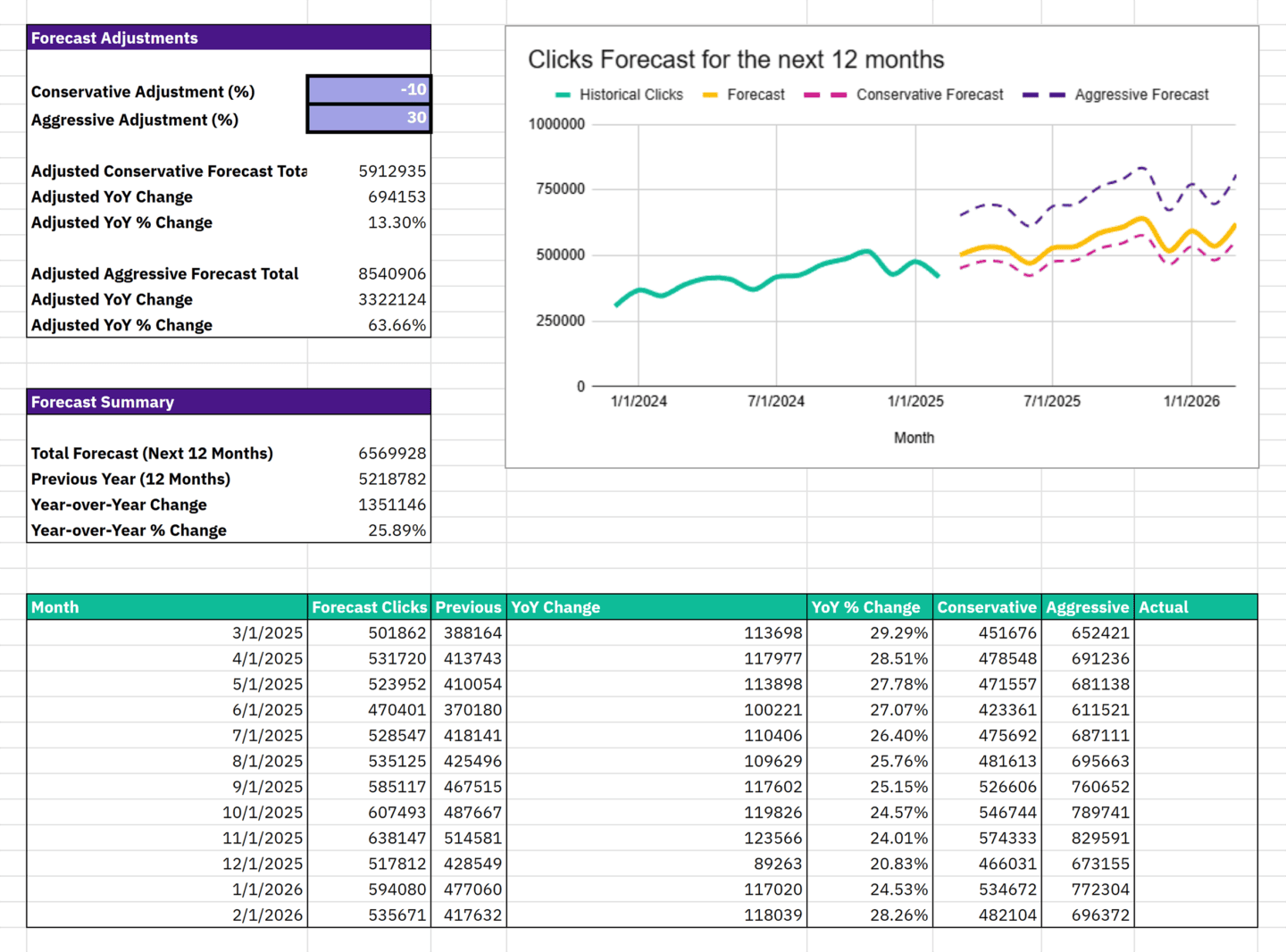
One good example is Backlinko’s free SEO forecasting tool. It is essentially a pre-built model that takes your historical organic performance and projects future traffic based on trend data. It does not try to be overly complex or hide the logic.
That is what makes it useful for digital marketers and seo specialists. You can see how the forecast is generated and adjust expectations without rebuilding everything from scratch.
Link building cheat sheet
Gain access to the 3-step strategy we use to earn over 86 high-quality backlinks each month.
Now Over To You
SEO forecasting does not need to be complicated to be useful.
When you focus on the handful of metrics that actually move SEO growth, forecasting becomes a planning tool instead of a guessing game. You understand what levers matter, what timelines are realistic, and what needs to happen for growth to materialize.
One thing should be clear by now, though.
Content alone is rarely enough.
Rankings, share of voice, and time to rank are all dependent on a competitive link profile. If link velocity does not keep pace with your goals or your competitors, forecasts stay theoretical.
That is where we can help.
Our done-for-you link building service is built to support predictable SEO growth. We handle prospecting, outreach, relationship building, and placement so you can increase authority without cutting corners or risking penalties.
If you want your SEO forecasts to turn into actual results, this is the missing piece.
Frequently Asked Questions (FAQ)
Can SEO really be forecasted accurately?
SEO cannot be forecasted with absolute precision, but it can be forecasted directionally. A good forecast shows likely ranges based on consistent inputs like content production, rankings, and authority growth. The goal is better decision-making and a stronger SEO strategy, not perfect prediction.
How far into the future should you forecast SEO?
Most SEO projections work best over a 6 to 12-month window. Shorter timelines ignore time to rank, while longer timelines introduce too many unknowns. Forecasts should be revisited and adjusted regularly as new data comes in to maintain accurate projections.
What is the biggest mistake people make with SEO forecasting?
The most common mistake is assuming linear growth. SEO rarely grows in straight lines. Rankings stall, content underperforms, competitors improve, and algorithm updates happen. Ignoring those realities leads to inflated projections and unrealistic expectations about seo performance.
Should SEO forecasts focus on traffic or revenue?
Traffic is useful, but seo revenue or conversions are what matter most. A strong seo forecast connects rankings and clicks to conversion rate so expectations are tied to business outcomes, not vanity metrics. This helps you demonstrate true seo investment returns.
How often should you update an SEO forecast?
SEO forecasts should be reviewed monthly and recalibrated quarterly. As content is published, links are earned, and rankings change, assumptions need to be updated to stay realistic and reflect current seo performance.