
Key takeaways:
- Real estate property management software development in Australia typically ranges between AUD 70,000 and AUD 700,000+.
- Compliance with the Privacy Act 1988, Australian Consumer Law, and state tenancy frameworks must be designed into the system architecture from day one.
- AI-driven capabilities such as tenant screening, predictive maintenance, and rent forecasting are increasingly shaping modern PropTech platforms.
- Automation of lease renewals and maintenance workflows typically results in a measurable gain in operational efficiency.
Australia’s real estate industry is moving through a steady digital transition. Property managers today handle thousands of leases, inspections, rent payments, and maintenance requests across distributed property portfolios. However, as these portfolios grow, so does the target on their back.
In 2024, the average cost of a data breach for an Australian mid-market agency has surged to over AUD 4 million, driven by rigorous new enforcement of the Privacy Act and the sophisticated nature of AI-driven phishing.
For modern businesses, moving toward custom property management system development in Australia isn’t just an operational upgrade. It’s the construction of a risk-mitigation vault.
Many agencies still rely on a mixture of spreadsheets, accounting tools, listing platforms, and legacy property management software that were not designed for modern digital operations. These fragmented systems create visibility gaps, operational friction, and compliance risks.
By owning their technical infrastructure, leadership teams gain the “Privacy by Design” necessary to protect sensitive 100-point ID checks and financial ledgers while automating the complex multi-state workflows of the Australian market.
The focus is no longer simply on software adoption; it is a sovereign platform strategy. This is the reason that many businesses now ask how to develop real estate property management software in Australia that can support compliance obligations and scale alongside growing property portfolios.
Planning a Property Management Platform for Australia?
Our 10+ years of APAC delivery experience and a team of 1600+ tech architects will help you design platforms aligned with Australian tenancy regulations.

Why Real Estate Companies in Australia Are Building Custom Property Management Platforms
The Australian property landscape is uniquely complex. With the national rental vacancy rate hitting historic lows, the pressure on property managers to perform is immense. Standard software often lacks the flexibility to handle the specific reporting requirements of different states. Therefore, opting for custom solutions has been the need of the hour for Aussie innovators.
Let’s get a quick view of how custom real estate property management software development in Australia helps businesses:
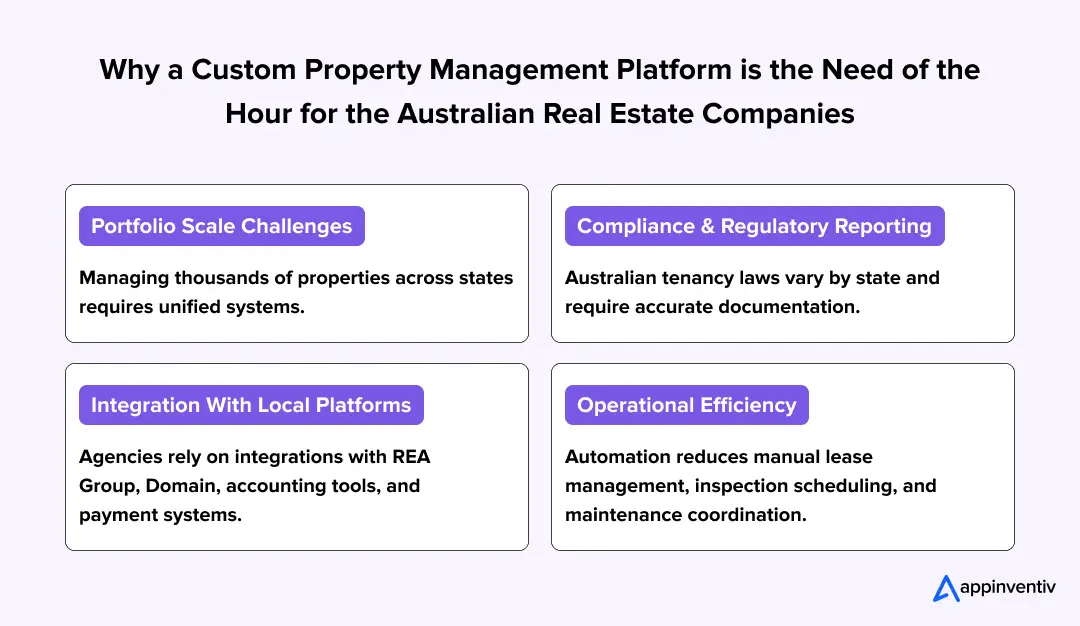
Portfolio Scale and Multi-State Complexity
Managing thousands of assets across New South Wales, Victoria, and Queensland involves navigating three distinct sets of residential tenancies acts. A custom property management software Australia solution allows for “compliance by design,” where the system automatically updates workflows, notice periods, and document templates based on the property’s geo-location.
This mitigates the risk of costly administrative errors that occur when using generic global platforms that do not account for the subtle differences between a “Form 12” in QLD and a “Notice to Vacate” in VIC.
Data Sovereignty and Governance
Board-level accountability regarding cybersecurity has reached an all-time high in Australia following recent high-profile breaches. By pursuing custom property management system development in Australia, firms ensure that sensitive tenant PII (Personally Identifiable Information), including 100-point ID checks and financial statements, remains within Australian borders.
This is a critical factor for CIOs who must answer to stringent audit requirements and ensure that their tech stack is not a liability. With the AML/CTF Tranche Two reforms now in effect as of 2026, custom platforms provide the necessary “Know Your Customer” (KYC) automation that generic tools simply cannot offer at scale.
Disruption of the SaaS Monopoly
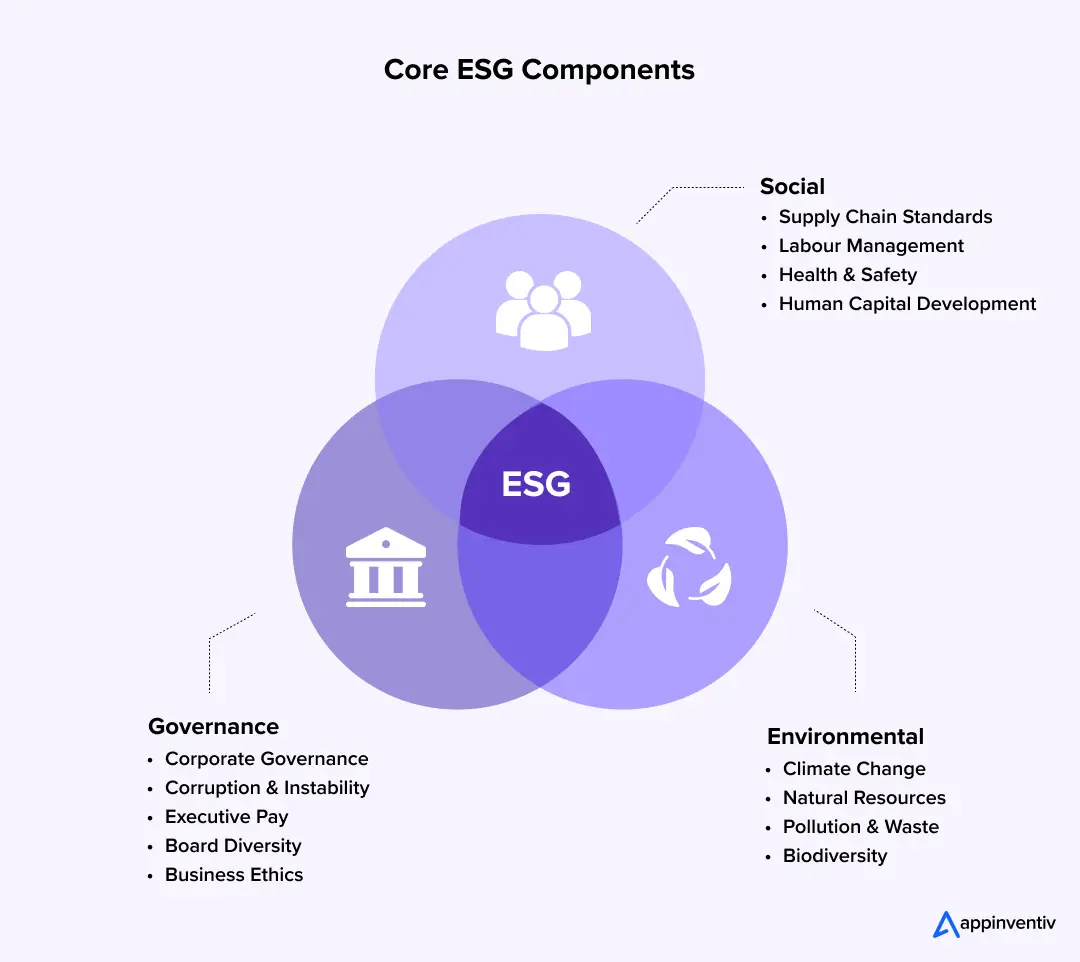
Many Australian agencies are moving away from per-seat or per-property SaaS pricing models, which scale poorly as portfolios grow. Owning the IP of your platform fixes long-term costs and allows for the development of proprietary features such as custom AI tenant screening or automated ESG (Environmental, Social, and Governance) reporting, that provides a competitive edge.
In a market where margins are squeezed by rising operational costs, owning the underlying technology is a hedge against vendor lock-in and unpredictable subscription hikes.
Integration With Australian Property Ecosystems
Real estate agencies rarely operate in isolation. Platforms must connect to REA Group, Domain listings, accounting practice management software, identity verification systems, and payment infrastructure.
Without seamless integrations, property managers revert to manual reconciliation across multiple systems. That introduces both operational risk and financial errors.
Operational Efficiency and Automation
Manual lease tracking, rent reminders, and maintenance coordination consume a significant portion of a property manager’s time.
Custom systems automate these workflows. Over time, automation reduces administrative overhead and improves tenant experience.
How to Develop Real Estate Property Management Software in Australia: Step-by-Step Process
Real estate platforms rarely succeed without careful planning. The development journey requires clear operational mapping, strong architecture, and careful integration planning.
The property management system software development process in Australia typically unfolds through several structured stages. Let’s unveil them:
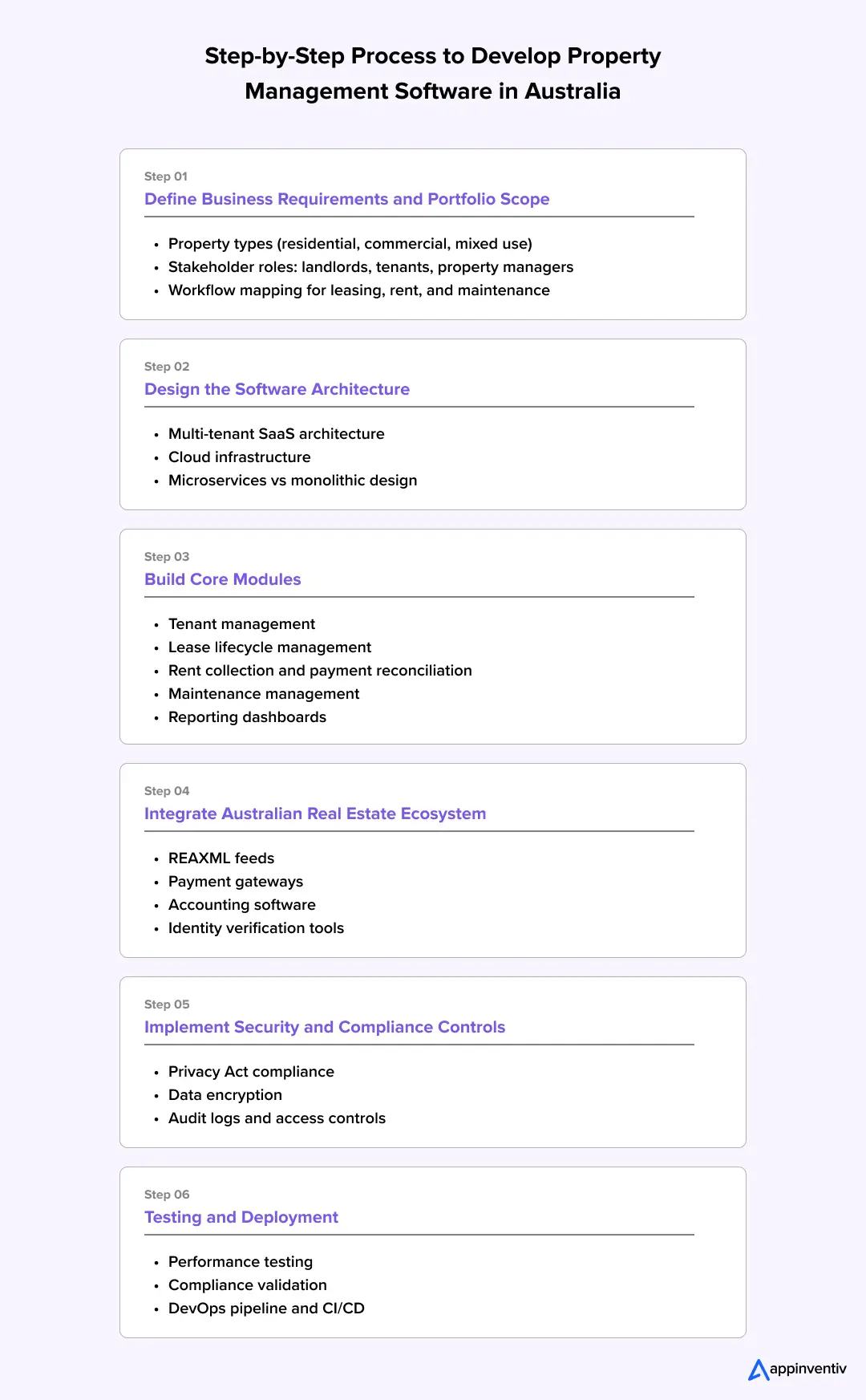
1. Define Business Requirements and Portfolio Scope
Development begins with operational clarity. Thus, the initial phase involves mapping the specific needs of residential, commercial, or Build-to-Rent (BTR) portfolios. Because residential portfolios operate differently from commercial or mixed-use developments.
This stage identifies the user roles (landlords, tenants, and property managers) and defines the workflow for high-stakes tasks like trust accounting and bond lodgements.
Aligning these requirements early prevents costly architectural pivots during the build phase.
2. Design the Software Architecture
Architecture decisions determine long-term scalability.
Most modern platforms adopt multi-tenant SaaS architecture supported by cloud infrastructure. This approach allows agencies to manage multiple property portfolios within a single platform environment.
Thus, teams must also evaluate whether a microservices architecture or a monolithic application structure is appropriate.
3. Develop Core Platform Modules
Once architecture is established, development teams build the operational core of the system. Development focuses on five pillars:
- Tenant Management: Automated onboarding and digital identity verification.
- Lease Lifecycle: Logic-driven renewals and bond lodgement automation
- Financial Engines: Automated rent arrears tracking and distribution of funds to landlords.
- Maintenance Workflows: Contractor portals that allow for quote comparisons and work order tracking.
- Reporting and Dashboards: High-fidelity data visualisations providing real-time visibility into portfolio yields, vacancy rates, and legislative compliance statuses.
These modules represent the foundational features of properties management software used by real estate teams on a daily basis.
4. Integrate the Australian Property Ecosystem
A property platform that cannot connect with the broader real estate ecosystem rarely survives long in production.
Essential integrations include:
These integrations form the core of the real estate and property management software implementation process in Australia.
Without integration planning, operational adoption becomes extremely difficult.
5. Implement Security and Compliance Controls
With the Cyber Security (Security Standards for Smart Devices) Rules 2025 now active, “Privacy by Design” is essential. This includes AES-256 encryption for tenant PII and automated compliance tracking for any IoT assets. All data must reside in Australian-based AWS or Azure regions to satisfy data sovereignty expectations.
These controls support regulatory expectations while protecting tenant data.
6. Testing, Validation and Deployment
The final phase involves rigorous stress testing and compliance validation. Automated CI/CD pipelines ensure that every update is vetted against the Privacy Act 1988.
Testing typically includes:
- performance testing
- compliance verification
- integration testing
- security assessments
Modern teams also deploy CI/CD pipelines to maintain stable updates following launch.
Challenges in Real Estate Property Management Software Development & Mitigation Strategies
Developing property platforms involves operational and technical complexities. During the development process in Australia, organisations must account for integration challenges, regulatory variations, and scalability requirements.
Identifying and figuring out these risks early helps leadership teams design systems that remain reliable, compliant, and capable of supporting growing property portfolios.
| Major Challenges | Solutions |
|---|---|
| Legacy System Modernisation | Many agencies still maintain property records in spreadsheets or outdated platforms.
Migration or modernisation requires structured data mapping, cleansing, and validation processes to ensure accurate transfer of tenant, lease, and financial records into the new platform. |
| Integration Complexity | Property platforms must integrate with listing portals, accounting systems, and payment gateways.
Using robust API frameworks, middleware layers, and integration monitoring tools helps maintain stable connections as external platforms evolve. |
| Multi-State Compliance Requirements | Tenancy regulations differ across Australian states.
Platforms should support configurable compliance workflows, region-specific lease templates, and automated documentation to ensure agencies remain aligned with local legal frameworks. |
| Scalability and Performance | Property portfolios can expand rapidly through acquisitions or new developments.
Cloud-native architecture, modular services, and scalable databases help ensure platforms maintain performance as user activity and property data increase. |
Avoid Costly Mistakes in Property Platform Development
Integration failures, compliance risks, and poorly planned architectures often slow down property platform development.
Partner with PropTech engineers to overcome these barriers and build a scalable platform with confidence.

Core Features of Property Management Software
When firms hire software developers in Australia for AI property management, the goal is to transform “features” into strategic advantages that lower the total cost of ownership. Some key features of real estate proptech solutions include:
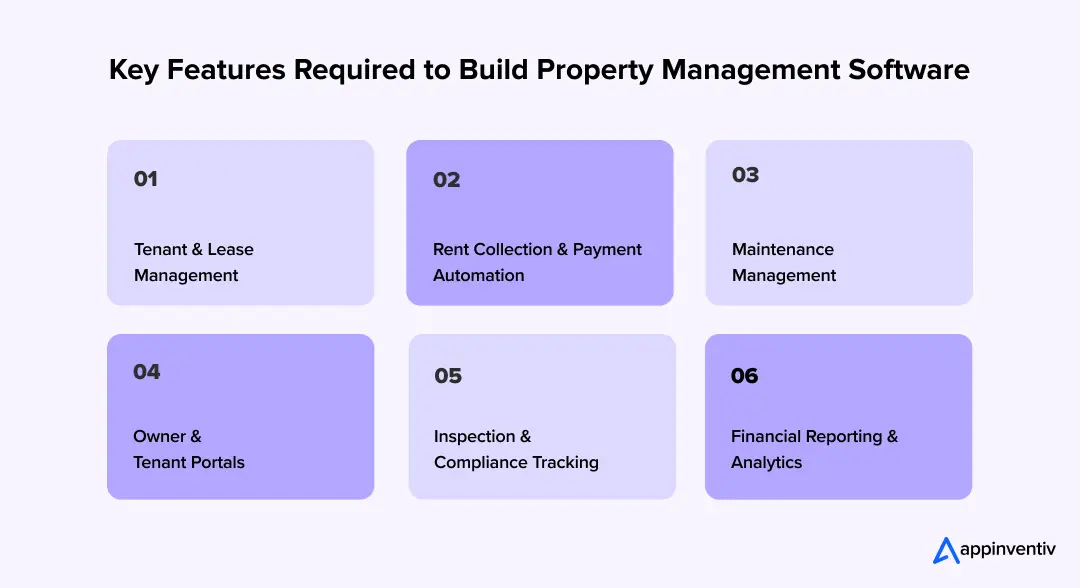
Tenant & Lease Management
Modern platforms automate the entire lifecycle, from digital 100-point ID checks to automated lease generation. The system handles the nuances of fixed-term versus periodic tenancies across different states, ensuring that all legal notices are issued within the mandatory timeframes required by local authorities.
Rent Collection & Payment Automation
Manual bank reconciliation is eliminated by integrating with Australian open banking APIs. The software automatically identifies incoming rent, matches it to the correct ledger, and triggers immediate arrears notices if payments are missed, adhering to the specific grace periods defined by each state’s residential tenancies act.
Maintenance & IoT Compliance Management
Maintenance workflows now include a compliance layer for the 2026 Smart Device Rules. The system tracks work orders while ensuring that any smart locks or sensors installed in the property meet federal security standards. This reduces the risk of liability for both the agency and the landlord.
Owner & Tenant Self-Service Portals
Digital self-service is a non-negotiable expectation for the modern Australian renter. These portals allow tenants to download rent receipts and log repairs 24/7, while landlords gain real-time visibility into their portfolio’s net yield and tax-ready financial statements, significantly reducing the volume of inbound administrative inquiries.
Inspection & ESG Tracking
Mobile-first inspection tools allow for real-time report generation during property walk-throughs. As of 2026, the integration of ESG tracking enables owners to monitor energy efficiency ratings and plan for mandatory upgrades required by upcoming 2027 minimum energy standards.
Financial Reporting and Portfolio Analytics
Financial dashboards allow agencies to evaluate rental income, expenses, and asset performance across property portfolios. AI powered advanced analytics tools help leadership teams assess occupancy trends, forecast revenue, and identify underperforming properties that require operational attention.
Advanced Technologies Powering Modern Property Management Platforms
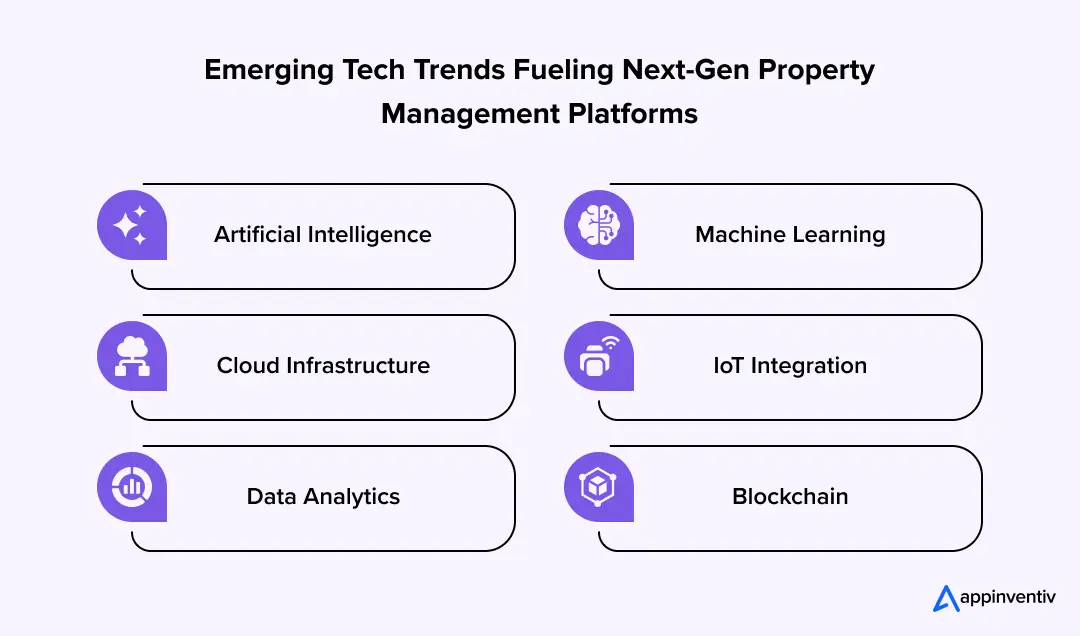
In 2026, the competitive advantage of a property platform is defined by its ability to convert raw data into predictive action. Integrating these technologies is no longer an experimental luxury but a core requirement for high-scale portfolio management.
Artificial Intelligence and Machine Learning
AI in the Australian real estate sector is shifting property management from a reactive to a proactive model. Predictive analytics allow for accurate rent forecasting and occupancy modelling, while Large Language Models (LLMs) power 24/7 virtual leasing assistants.
These tools automate initial tenant enquiries and lead qualification, ensuring that human property managers only step in for high-value negotiations.
Cloud Infrastructure and Data Residency
Modern platforms rely on a “Sovereign Cloud” approach, utilising Australian-based regions (AWS Sydney/Melbourne or Azure Central) to ensure data residency. This architecture supports the high availability required for real-time mobile access while providing the security telemetry needed to meet the Privacy Act 1988.
By 2026, industry-specific cloud services have become the standard for reducing latency in multi-state portfolios.
Also Read: Cloud Migration Strategy for Enterprises in Australia Guide
IoT and 2026 Compliance Hubs
The Internet of Things (IoT) now encompasses integrated building management, from smart locks to leak sensors. With the Cyber Security (Security Standards for Smart Devices) Rules 2025 now active, platforms must serve as a central governance hub.
These systems monitor hardware health and energy consumption while ensuring every connected device meets federal security mandates.
Blockchain and Smart Contracts
Blockchain is moving beyond the “hype” phase into practical application via smart contracts. These self-executing agreements are used to automate Agency Authority Agreements and rental bond transfers.
In 2026, the move toward portable rental bond schemes relies on the immutable ledger of a blockchain to provide a single source of truth for all parties, reducing the risk of fraud.
Data Analytics for ESG and Asset Growth
Sophisticated data engines now track more than just rental yields; they monitor ESG metrics. As Australia approaches the 2027 minimum energy efficiency standards, custom software provides the necessary dashboards to identify properties requiring thermal upgrades.
This level of granular reporting is essential for institutional investors and Build-to-Rent (BTR) operators who must report on portfolio sustainability to their boards and shareholders.
Cost of Developing Property Management Software in Australia
Typically, the cost to develop Australian property management software ranges between AUD 70,000 and AUD 700,000+. However, the actual budgeting requires a realistic understanding of several critical components.
The actual cost to develop software in Australia for property management varies significantly depending on system capabilities, integrations, and compliance requirements.
For example, enterprise platforms designed to manage large property portfolios often involve higher development investment due to architecture complexity and security requirements.
Cost Breakdown by Software Complexity
Investment levels are typically dictated by the volume of properties managed and the required level of automation.
| Software Type | Estimated Cost (AUD) | Typical Features |
|---|---|---|
| Basic MVP | 70,000 – 150,000 |
|
| Mid-Level Platform | 150,000 – 350,000 |
|
| Enterprise Platform | 350,000 – 700,000+ |
|
Formula to Estimate Development Costs
Organisations considering to build a custom platform for property management often apply a simple cost estimation model during planning phases:
| Total Cost = (Development Hours × Hourly Rate) + Infrastructure + Integrations + Compliance |
Typical development rates across Australia include:
- Local engineering teams: AUD 120 – AUD 180 per hour
- Hybrid delivery teams: AUD 60 – AUD 120 per hour
These cost differences explain why some organisations partner with distributed engineering teams while maintaining local project leadership and governance oversight.
On average, the cost to develop property management software for the Australian businesses ranges between AUD 70,000 and AUD 700,000+.
Discuss your project vision with us and get a more precise estimate for cost and timeline.

Technology Architecture for Property Management Platforms
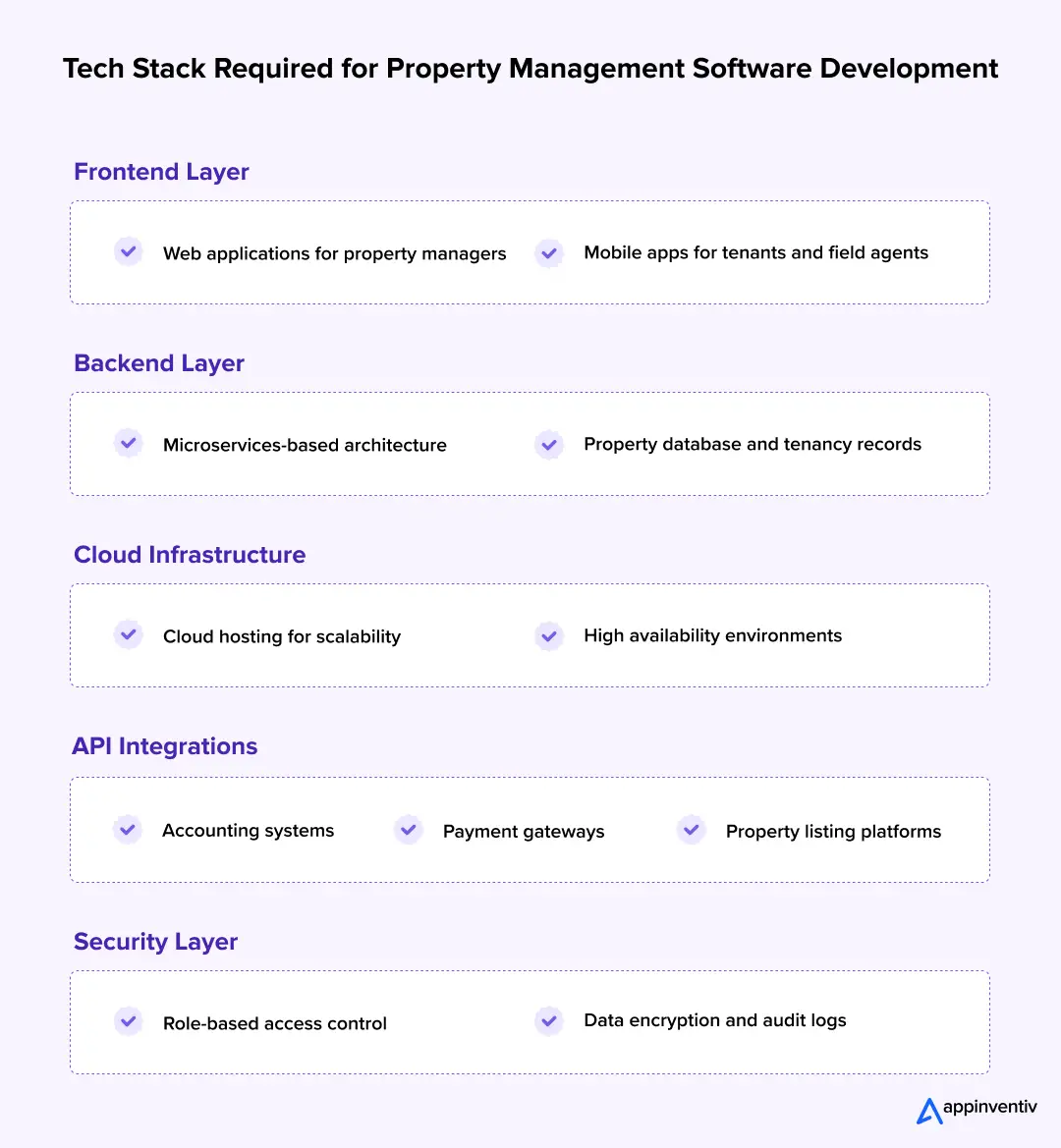
Building a resilient platform in 2026 requires a “Sovereign-First” architectural approach that prioritises security, data residency, and modularity. This includes:
Frontend Layer: Multi-Platform Accessibility
The user interface is typically built using React.js for web dashboards and Flutter or React Native for mobile applications. This ensures property managers in the field, tenants at home, and landlords on the move all have a consistent, high-performance experience.
The focus is on “zero-latency” data synchronisation across all devices.
Backend Layer: Microservices and API-First Design
A microservices architecture allows individual components such as the lease engine, the financial core, or the maintenance hub to be updated or scaled independently. This is crucial for navigating shifting state-based regulations in Australia.
Using Node.js or Python (Django), the backend acts as an orchestrator, connecting the internal database with a vast ecosystem of third-party APIs.
Cloud Infrastructure and Security Layer
Data is hosted in Australian-based cloud regions to ensure strict adherence to data sovereignty expectations and the Privacy Act 1988. Security is managed through Confidential Computing and Role-Based Access Control (RBAC), ensuring that sensitive tenant data is encrypted both at rest and in transit.
Integration Layer: The PropTech Ecosystem
The platform functions as a central hub, integrating seamlessly with:
- Property Listing Feeds: Real-time bi-directional syncing via REAXML.
- Financial Rail: Deep API hooks into Xero, MYOB, and local payment gateways.
- Compliance Engines: Automated identity verification and AML/CTF monitoring.
- IoT & Asset Management: Real-time monitoring of building vitals and energy efficiency.
Security Layer: Governance and Data Sovereignty
Enterprise property platforms manage sensitive tenant and financial data. Security architecture includes role-based access control, encryption protocols, and audit logging systems.
These measures support organisational governance requirements and protect sensitive information stored within the platform.
Real-World Use Cases and Examples of Property Management Software
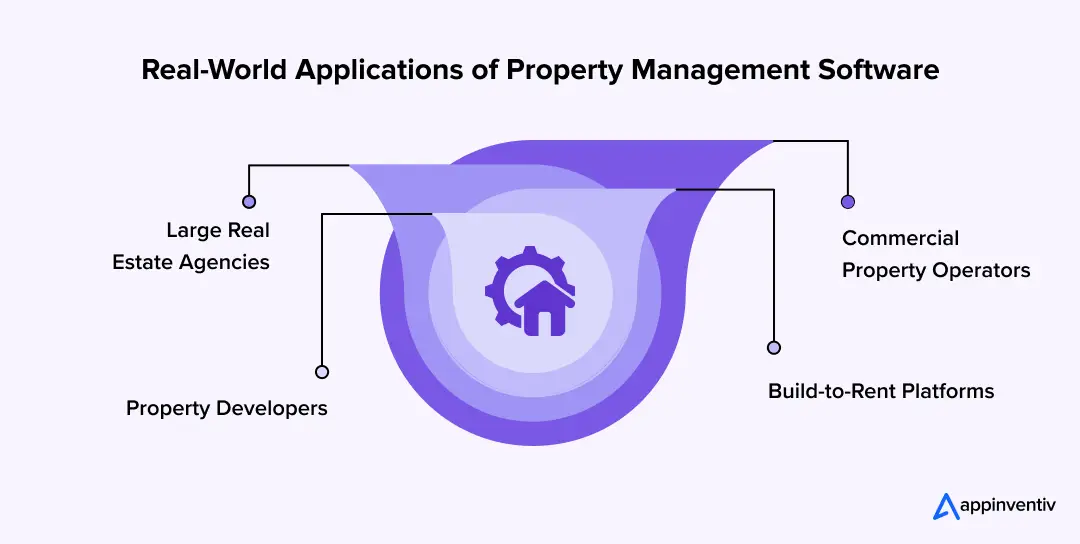
Property platforms support a wide range of real estate business models. These examples illustrate how property management software Australia wide is used across different segments of the property industry.
For Large Real Estate Agencies
Large agencies managing thousands of properties rely on centralised systems to coordinate leasing, inspections, tenant communication, and financial reporting. Platforms such as PropertyMe and PropertyTree demonstrate how digital tools streamline portfolio management across multiple offices.
For Property Developers
Developers managing leased properties require platforms that track tenant relationships, rental payments, and property performance across development projects. These systems help maintain operational visibility once properties transition from development to leasing.
For Commercial Property Operators
Commercial operators manage complex lease agreements and compliance documentation. Digital property systems allow teams to track lease terms, manage tenant obligations, and maintain financial reporting across commercial assets.
For Build-to-Rent Developments
Build-to-Rent developments are expanding across Australia. According to a study commissioned by the Property Council of Australia, the sector could reach 150,000 units by 2032, increasing demand for scalable property platforms capable of managing large residential communities.
How Appinventiv Can Help Build Property Management Software in Australia?
As a leading real estate app development company in Australia, Appinventiv does not just provide engineering resources; we provide a sovereign technology partnership designed for long-term ownership.
We bridge the gap between high-level executive vision and stable, 2026-compliant execution. This ensures your platform is built to handle the specific regulatory and commercial tensions of the Australian market.
Real-World Impact: Client Success Stories
Our expertise is reflected in the success of real estate platforms like Ility and HouseEazy, where we turned complex real estate challenges into high-performance digital assets:
- Ility: We architected a scalable, microservices-based SaaS platform for commercial property owners. This implementation led to a 40% increase in occupancy rates and a 2% boost in landlord ROI by automating infrastructure and tenant management across global portfolios.
- HouseEazy: For this resale marketplace, we developed a high-velocity platform featuring an AI-powered pricing engine that uses over 2 million data points for real-time valuations. The solution enabled transactions to close in weeks rather than months.
Why Australian Enterprises Partner With Us
Our delivery model is structured to provide the governance, transparency, and technical depth required by Australian boards and CIOs:
| Metric | Value in the Market |
|---|---|
| Digital Assets Deployed in Australia | 3000+ |
| Client Retention Rate | 78% |
| Years of APAC Delivery Experience | 10+ |
| Security Compliance (ISO, SOC2) | 99.50% SLA |
| Operational Efficiency Gains | 35% Average |
Our Structural Commitment to Australia
- Sovereign Tech Stack: As an experienced software development firm in Melbourne, Australia, we prioritise Australian data residency and “Privacy by Design,” ensuring your IP and tenant data are protected and audit-ready.
- High-Growth Recognition: Ranked as a leader in AI-first product engineering and recognised by Statista & FT as one of APAC’s high-growth companies for two consecutive years.
- Local Strategy & Governance: With 5+ Agile delivery centres across Australia, we ensure that your project is managed within your time zone and aligned with local compliance mandates. This includes but is not limited to:
| Regulation | Impact on Software Development | Appinventiv’s Compliance Approach |
|---|---|---|
| Privacy Act 1988 | PII Data protection & breach reporting. | AES-256 at-rest encryption; Local AWS Sydney/Melbourne hosting. |
| AML/CTF Tranche 2 | Mandatory KYC for real estate transactions. | Integrated digital ID verification (100-point check) APIs. |
| 2025 Smart Device Rules | IoT hardware security (locks/sensors). | Hardened firmware protocols and encrypted MQTT bridges. |
| 2027 Energy Standards | Mandatory ESG reporting for commercial/BTR. | Built-in telemetry for real-time energy efficiency tracking. |
Still evaluating how to develop real estate property management software in Australia? Let’s discuss your PropTech requirements now and bring your vision to life
FAQs
Q. What is property management software?
A. Property management software is a digital platform used by real estate agencies and property managers to handle leasing workflows, tenant communication, rent collection, maintenance coordination, and financial reporting across property portfolios.
Q. How much does it cost to develop property management systems in Australia?
A. The cost to develop Australian property management software typically ranges between:
- Basic platform: AUD 70,000 – AUD 150,000
- Mid-level platform: AUD 150,000 – AUD 350,000
- Enterprise platform: AUD 350,000 – AUD 700,000+
For businesses considering how to develop real estate property management software in Australia and how much it costs, the final costs depend on various factors like architecture complexity, integrations, and the chosen property software management tech stack and so on.
Q. How long does it take to build real estate property management software?
A. Development timelines generally range between 4 and 12+ months depending on feature scope, integrations, and platform complexity. Enterprise platforms with advanced analytics or AI features may require longer development cycles.
Q. What compliance requirements apply to property management software in Australia?
A. Key compliance considerations include:
- Privacy Act 1988 governing tenant data protection
- Australian Consumer Law for transparent rental agreements
- State-specific tenancy legislation
- Data residency expectations for enterprise organisations
Platforms must implement secure data storage, access controls, and audit logging to meet these requirements.
Q. What is the future of property management software development in Australia?
A. The future of the property management system software development process in Australia is shaped by AI-driven tenant analytics, predictive maintenance capabilities, and integrated PropTech ecosystems.
As property portfolios grow and regulatory oversight increases, platforms will continue evolving into full operational infrastructure for real estate organisations.
Q. What are the benefits of real estate management software?
A. Real estate management software helps agencies and property operators streamline operations, improve tenant experiences, and maintain financial visibility across property portfolios. Key benefits include:
- Operational efficiency: Automates leasing workflows, rent collection, maintenance requests, and inspection scheduling.
- Centralised portfolio management: Consolidates tenant records, property data, and financial reporting into a single platform.
- Improved tenant experience: Digital portals allow tenants to manage payments, submit maintenance requests, and access documents easily.
- Better financial visibility: Real-time dashboards track rental income, expenses, and portfolio performance.
- Regulatory compliance: Automated documentation and audit trails help agencies meet tenancy regulations and reporting requirements.