Landing paid partnerships as a creator doesn’t necessarily require a huge following — but it does require a professional influencer media kit.
Many brands and companies are happy to work with creators and influencers with smaller followings, but they’ll likely want to see some proof of your metrics and professionalism before sending you a contract or products. Enter: a media kit.
Media kits are essential for social media influencers looking to monetize their work, no matter their audience size, says Ayomi Samaraweera, former TikTok employee turned creator, now the founder of Canopy, an online community for creators. Ayomi would know — she landed her first deal with only 2,000 TikTok followers.
“It’s the industry standard for a professional creator to have a media kit readily available — it makes it a lot easier for the brand to quickly review the creator and understand their content, rates, engagement stats, and do a reference check if they include brand testimonials in the media kit.”
“It saves a lot of back-and-forth emailing if you’re able to share a media kit early on in the conversation. It helps you show your value with data, highlight past work experience, and make a good first impression on a brand.”
There are many influencer media kit templates you can use to simplify things, but there are drawbacks to just copy-pasting your numbers into a Canva template. For one thing, it’s likely influencer marketing teams have come across the more popular free templates already (and a quick copy-paste job is not the best way to make a good first impression).
You need your media kit to be accurate, professional, and most importantly, unique — just like your content. I spoke to content creators and influencer marketing team leaders to get their best advice for creating media kits that stand out.
Let’s dig in and help you land your dream social media collaboration. Whether you’re a full-time content creator, micro-influencer, nano-influencer, or just getting started, here’s how to create your own media kit.
A media kit (also called a press kit or collaborations kit) is a document or website creators or influencers will send to brands they’re looking to partner with on their social platforms. It’s usually a brief, well-designed kit that includes details about the creator, number of followers and engagement metrics, their audience demographics, the type of content they create, and examples of past campaigns.
Let’s start with a quick checklist — gather all this information before you even begin to think about the design of your media kit.
Influencer media kit checklist
Here’s an overview of what to include in your media kit:
- Key metrics from your main social media platforms
- Audience demographics
- Social media links
- An ‘about me’ section
- Testimonials from past brand collaborations
- Relevant content examples
- Contact details
Here’s a closer look at all of the above:
Key metrics from your main social media platforms
Include things like follower count, engagement rate, and click-through rate for all social media accounts. Bloggers will want to include website pageviews as well.
“Brands often make decisions based on data,” Ayomi says. “You want to keep the data high-level and visual, so if the brand just skim reads it, they can quickly pick up the key information — the more data-driven, the better.
A good question to answer here is: “Does this creator’s target audience trust them?” Ryan Prior, Head of Marketing at Modash (a platform marketers can use to track influencer marketing campaigns), says.
“Engagement rate is a good start. Average views, too. Comment quality is another strong indicator. Consider showing examples of highly engaged conversations and things like DMs and Story replies that a brand might not see otherwise,” he adds.
Audience demographics
Think gender, location, age, and more — whatever you have access to. “These are insights I always look out for to ensure we have strong brand partnerships,” explains Amanjit Heer, founder of social media marketing and influencer agency We Heer You.
“For example, there’s no point collaborating with an influencer whose audience is majority in the U.S. if the brand only sells in the U.K. Having this on the media kit gives clarity.”
Potential collaborators need to know how many people you reach in their target locations and demographics, Ryan says. “The brand would not run Meta ads without first selecting the country, ages, interests, etc. to target — the smart brands won’t run influencer collabs like that either. If you know the brand’s ideal customer profile, reassure them that you reach those people.”
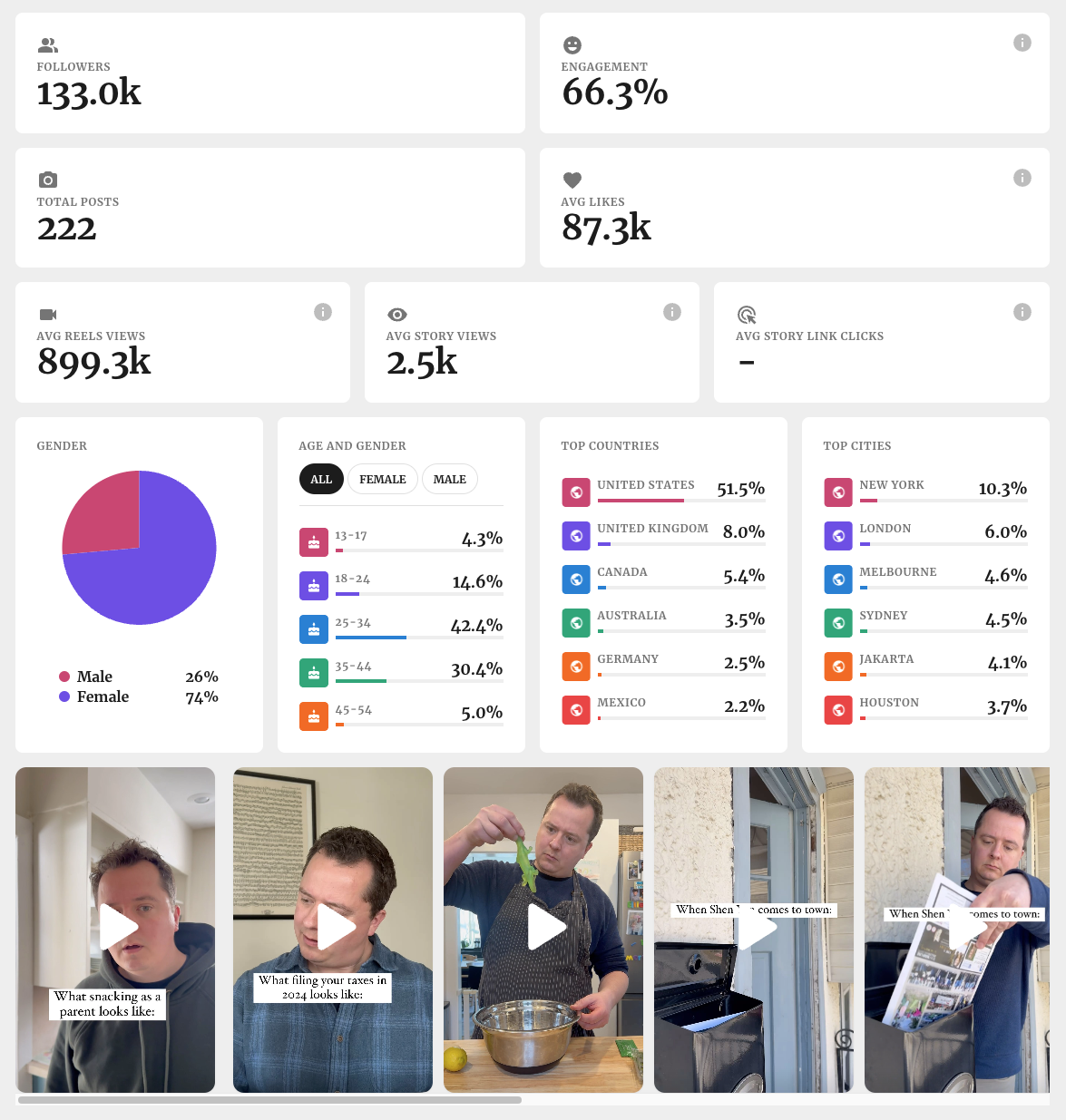
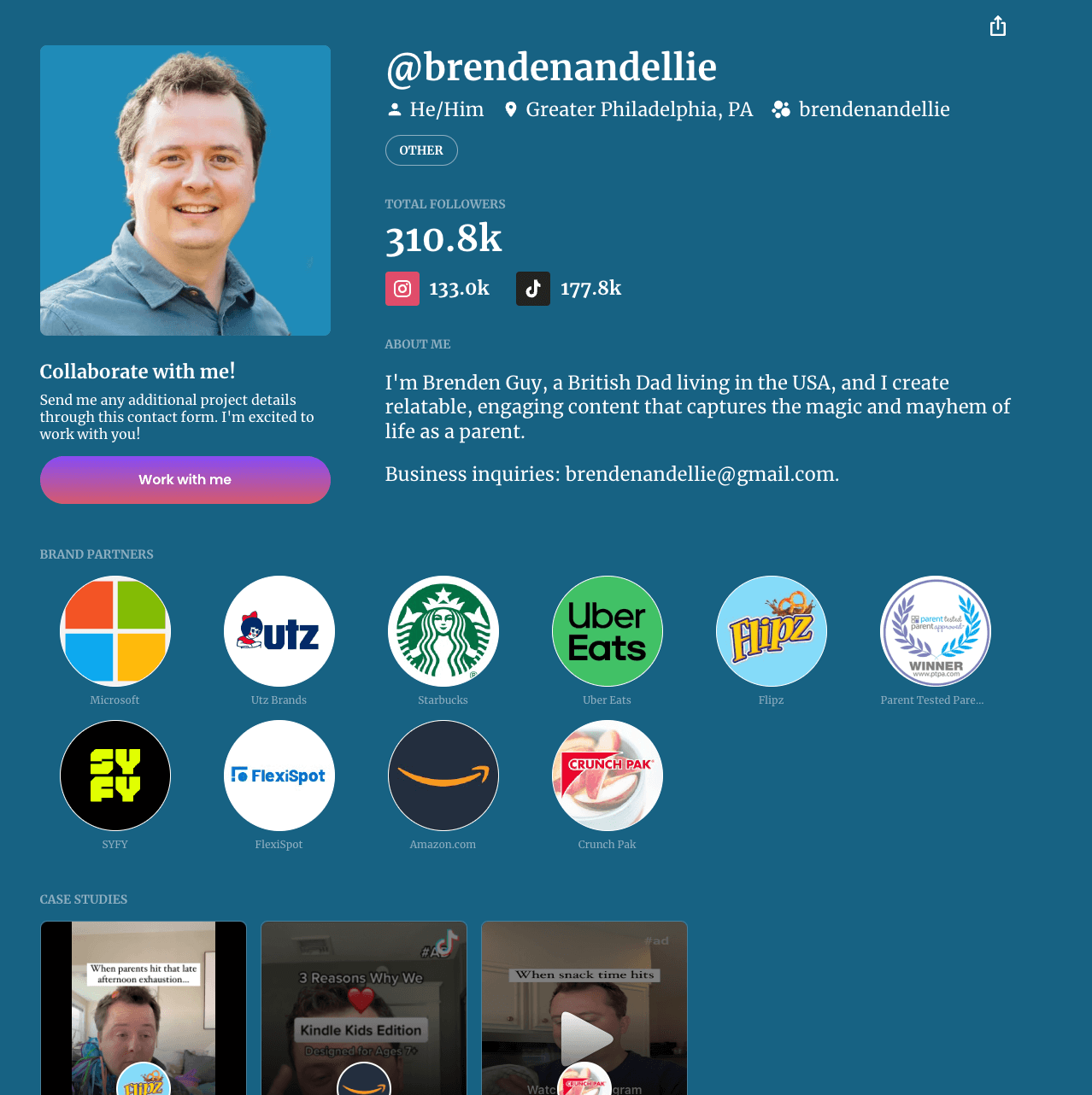
Here’s a closer look at @brendenandellie‘s audience demographics for Instagram, surfaced by a tool called Beacons.ai, a paid service creators can use to showcase their data. (You’ll find more from his kit below.)
Andreea Moise, founder of Hype Maven, suggests going a little deeper here. “Keep in mind that section does need to be kept up to date depending on how fast the accounts grow. Don’t include random numbers; keep it to locations and age segments. An even better thing is to include the audience’s main interests and content preferences — why are people following you, and what do they get out of your content?”
Social media links
You might think this one goes without saying, but Andreea has seen “a ridiculous amount of cold emails from creators that don’t include social links.”
Include your social media links everywhere to make it as easy as possible for potential clients to review your work. That means including links in both your outreach email and your media kit. “Even better if they add it to their signature along with their social media channels,” Andreea says.
An ‘about me’ section
Along with a high-quality photograph of yourself, be sure to include a brief bio about your personal brand and your social media mission. Why did you start creating content? Who are you creating for? What do you hope to help your audience achieve or feel?
“Start off by thinking about what you stand for as a creator and create a short bio,” Amanjit says. “This is where you can sell yourself so the brand can buy into you and see if you’re a good fit with their brand values.”
Karlis Adamsons, Community and Influencer Manager at Supliful, has seen a “ton of influencer kits,” he says. One of the things that makes them stand out to him is personality. “A creator who infuses their kit with their unique voice and style instantly grabs my attention. It shows they’re not ‘just a stat sheet’ but a creative partner.”
Ayomi adds, “This should help the brand can get a sense of who you are as a person/creator,” “This is your opportunity to shine!”
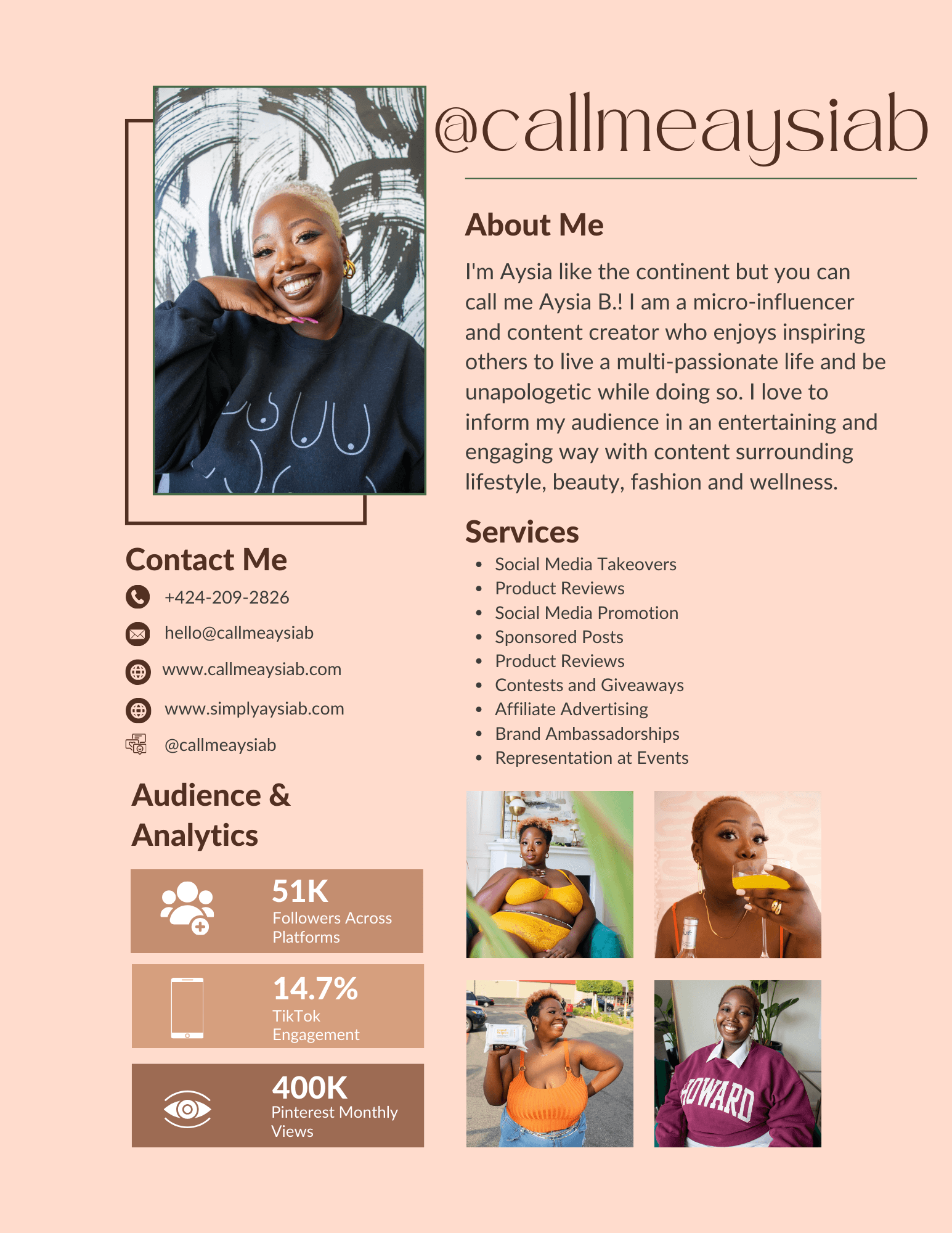
@callmeaysiab certainly does on her about me page:
Testimonials from brands you’ve worked with
After working with a brand, it’s a great idea to get feedback from your point of contact and the company on what it was like to work with you. Follow up with them after the campaign and ask for metrics and the return on investment (ROI) of your work.
Past performance data on brand partnerships can be a powerful dealmaker, Andreea says. “Very few creators include this, but the ones who do are usually top one percent.”
Karlis agrees that showcasing impact is a must. “Concrete examples like case studies of past brand wins or impressive engagement metrics with clear results (increased sales, website traffic) prove their value. Show how you can move the needle for brands. In my opinion, that’s the golden ticket to a resounding ‘yes’!”
Pro tip: If you can’t get data from the brand, your own metrics — reach, engagement rate, click-through rate, etc. — will work fine, too.
If you’ve adhered to your contract, been professional, and met all deadlines, they should be happy to oblige! While this is not essential (and not always possible if you’re just starting out), praise from brands can help seal the deal with new ones.
Content examples
Some screenshots of and links to your best work can also be helpful. Make sure these social media posts are relevant to the kind of content you hope to create for the brand in question. If you have them, it’s also a good idea to include links to past collaborations or partnerships with brands.
Here’s a great client case study example from @itsgigirobinson‘s media kit:
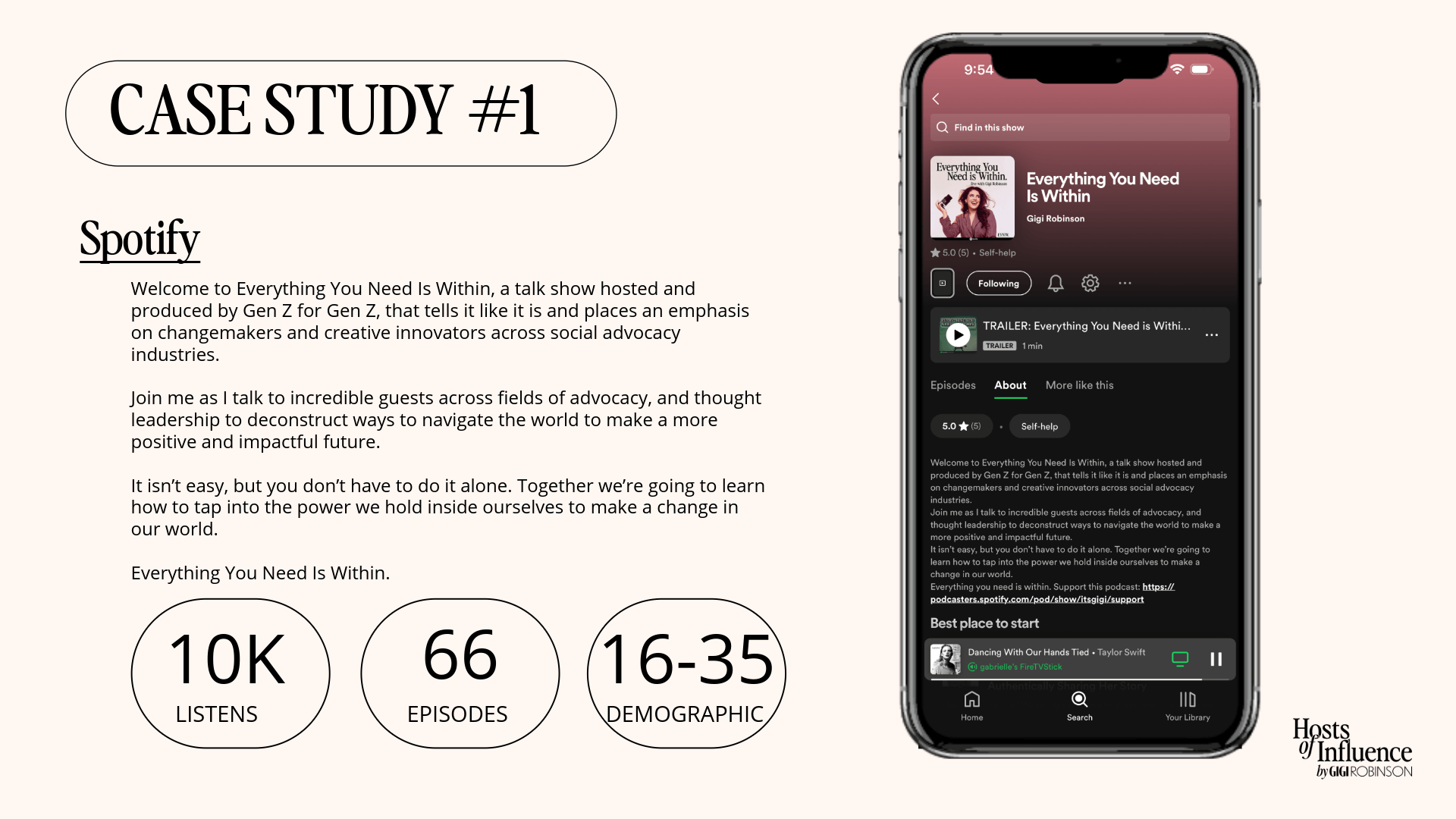
“Make sure you include clickable links, as brands don’t want to have to spend time copying and pasting links or trying to figure out broken links,” Ayomi says.
Contact information
Don’t expect potential brand partners to slide into your DMs. Set up a professional email address tied to your social media handle, which you can use to manage all communication with brands.
Be sure to include this email address in your media kit, and use it whenever you have any contact with brands.
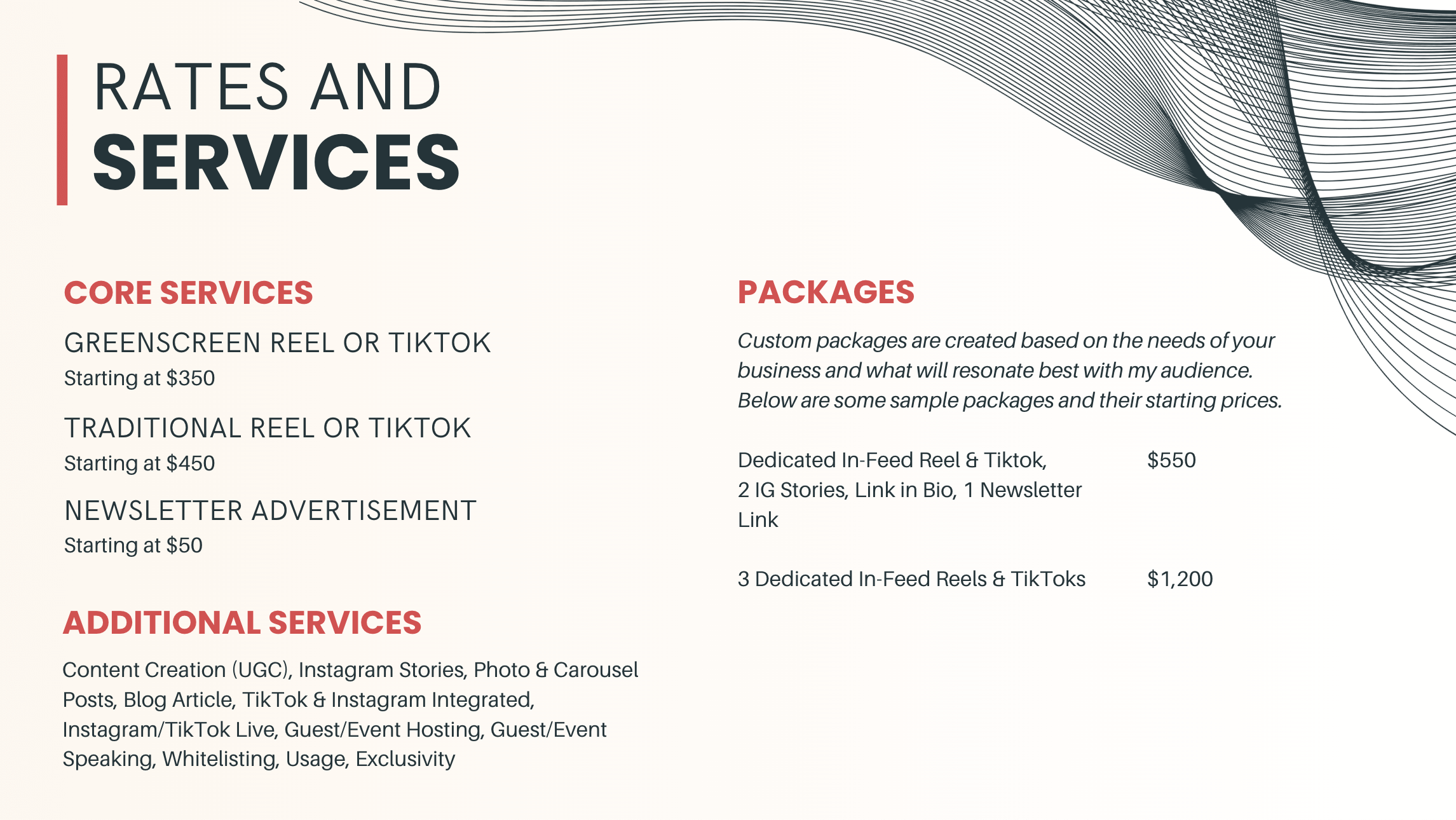
Fees and rates
Including pricing for posts, videos, and stories on each platform can be helpful. Some creators opt not to include these from the get-go in the hope of negotiating the best brand deal, choosing to have separate rate cards, but busy influencer marketers and agencies prefer to have everything upfront.
“Including your fees on media kits is super helpful to avoid going back and forth on emails and ensures everything the brand or agency needs is in one place,” Amanjit says. When there are various threads of communication going on with the creator asking for insights, fees, etc., it can get a bit confusing, so having everything in one document is ideal!”
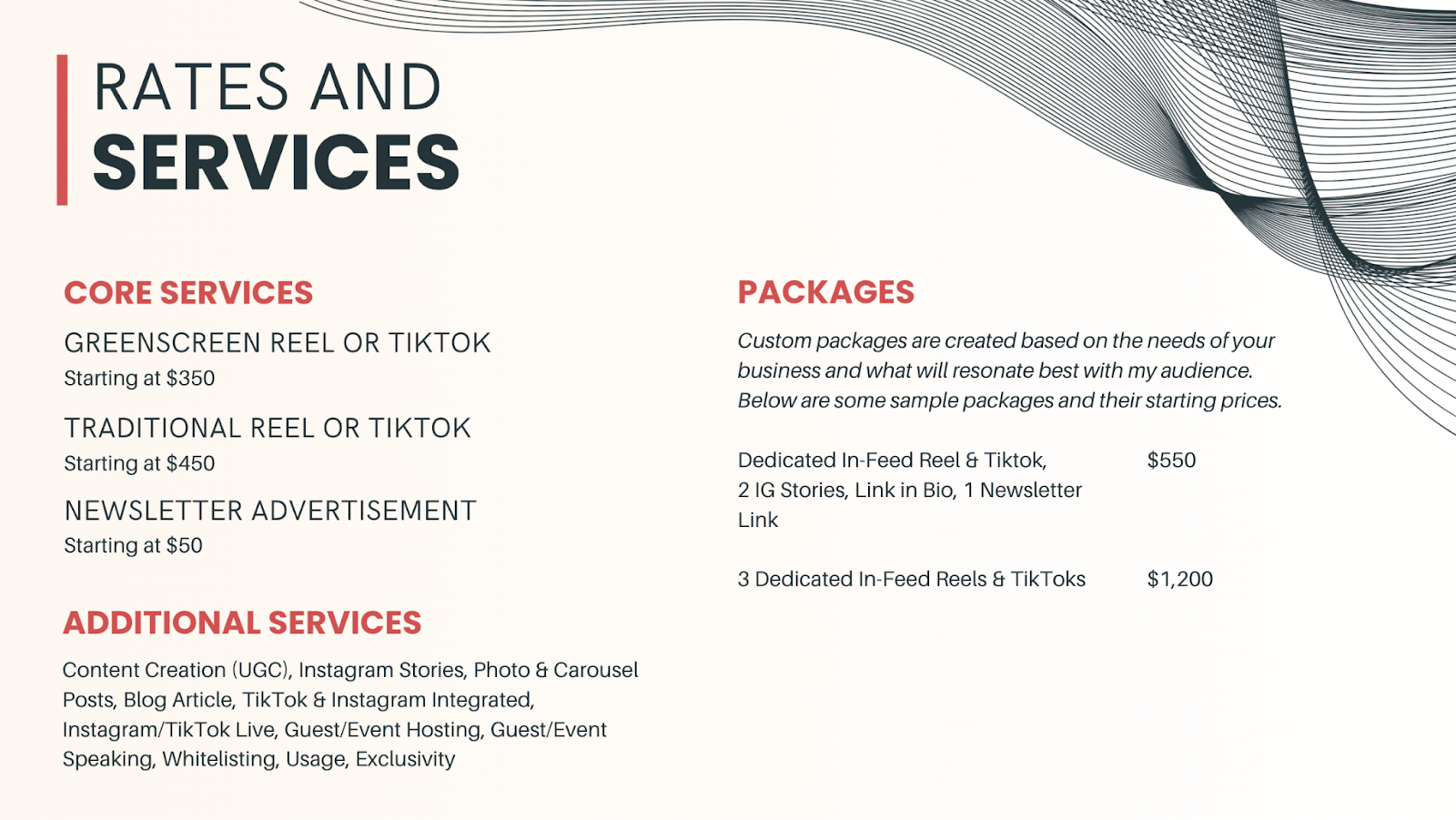
Here’s how @notboredindc clearly lays out her pre-set pricing:
Now that you have all that information handy, avoid the urge to create an entire PowerPoint presentation.
“You want to keep your media kit concise and visual,” Ayomi says. Aim for a maximum of two pages — there is no need to share an entire presentation deck because, most likely, the brand won’t have time to review it all.”
So, what should you use to create it? A PDF, Google Slide, or Canva page will work just fine. You could also opt to create a simple one-page website and send a link to the brand, rather than a document.
As a creator, this is my preferred route. I don’t like to have multiple versions of a PDF file that I need to update constantly. My media kit lives in Buffer’s Start Page — I love that it pulls through playable videos from YouTube and podcast episodes from Spotify. It’s also really easy to edit and keep up to date. (Bonus: it’s free to use, too!)
⚡
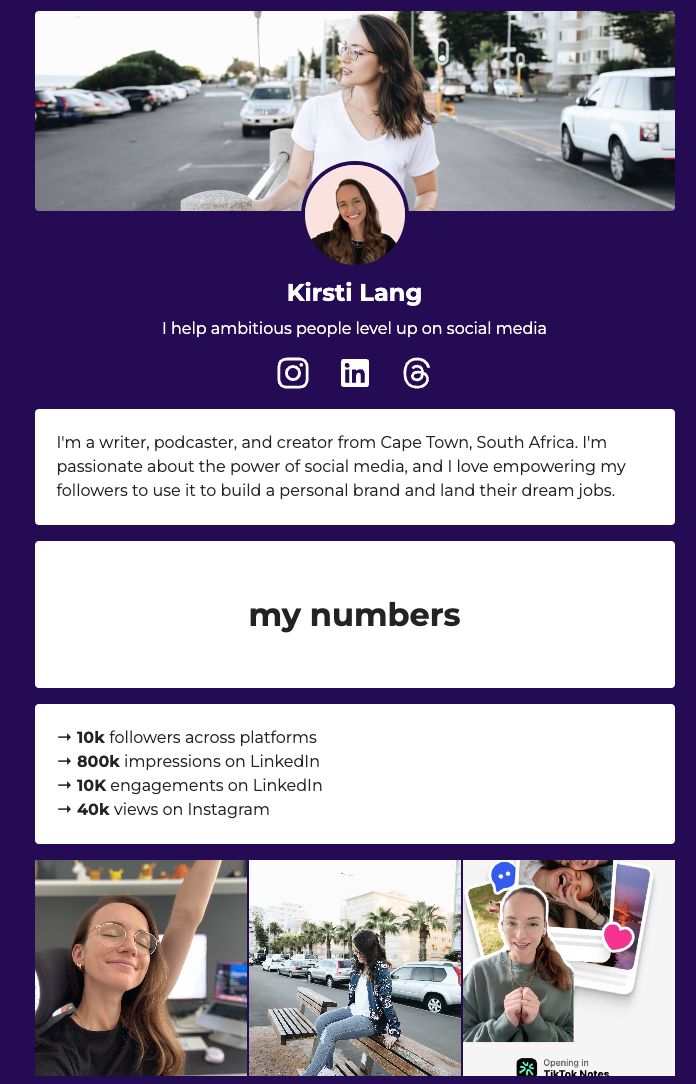
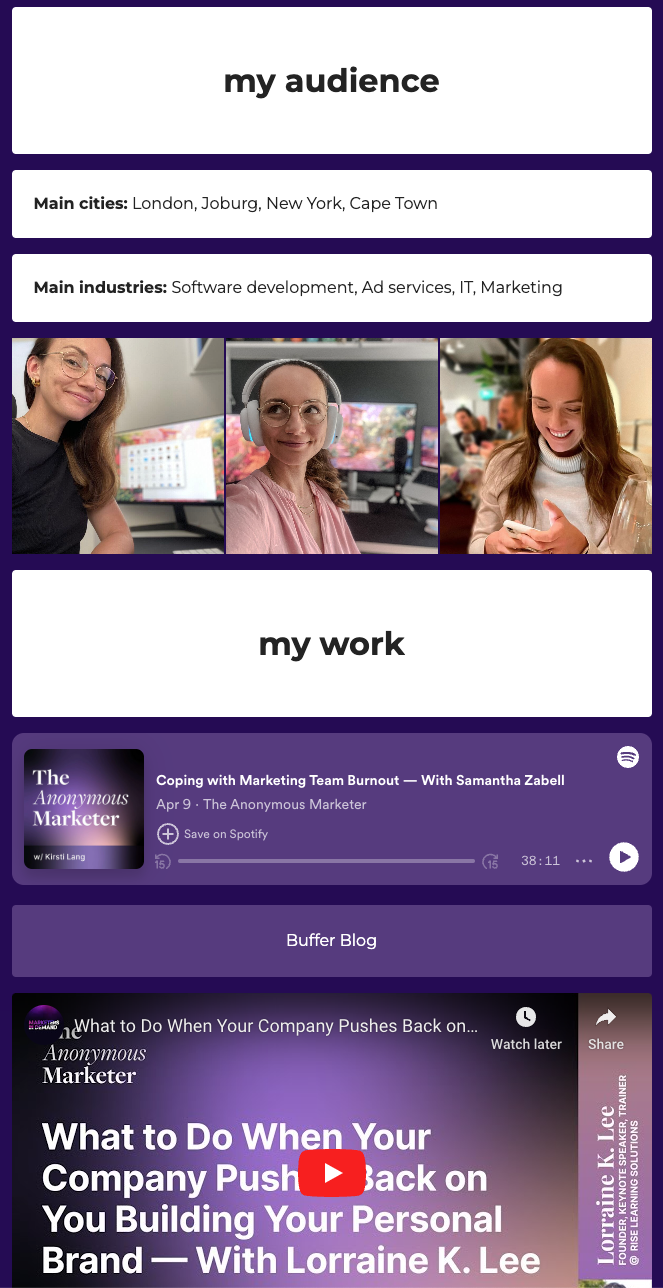
Whatever option you choose here, be sure to make it easy to tweak and change. Your metrics will likely change pretty regularly, and it’s a great idea to personalize your media kit when pitching brands you’re really excited about working with (more on this below).
Andreea says the length of your media kit is far more important than format. “I don’t have a format preference as long as it’s short and relevant,” she says.
Now that you’ve created the perfect media kit, how do you actually get it in front of brands?
If you don’t already have a relationship with them, your best bet is a cold pitch or email.
There are a number of ways to find the email addresses of brands and agencies — explore their websites for contact details, find their influencer marketing teams on LinkedIn, or join platforms like Canopy, where you can connect with influencers who have already worked with the brand.
All the experts I spoke to for this article said to make sure you persionalize your pitches as much as possible, rather than emailing en masse. When it comes to pitching influencer partnerships, go for quality over quantity.
“Brands get hundreds of emails from creators, so the more personal you can be, the better,” Ayomi says. “It’s important to demonstrate why you’re a fan of the brand and want to work with them, how your audience and content aligns with their brand and product, and to highlight your creativity.”
Andreea suggests answering these questions in your outreach:
- “Why are you approaching that specific brand?
- What’s the reason behind your pitch?
- What is your vision for the partnership that you want to propose?
- Is there something that you noticed the brand could do better that you have the skills to do?”
The best cold pitches should always contain a campaign idea, Ayomi adds. “This should be the hook you lead with, it shows that you’ve put thought into the pitch and understand the brand’s positioning. It is more important to lead with creativity than with your media kit.”
In other words, the goal of your email should not be, “Hey, here’s my media kit,” but rather, “Hey, here’s an amazing idea for a campaign we could partner on. Also, my media kit is here if you’d like more information.”
Andreea’s last piece of advice is to keep it short and concise and always include relevant links.
If you’re new to creating your media kit, it can be really helpful to see what format other creators have used. Luckily, some great creators I spoke to were happy to oblige:
Aysia B Ross
@callmeaysiab, a plus-size fashion and beauty creator, has gone for a more traditional route with a two-page PDF. Note how the look and feel of the pages reflect Aysia’s joyful, inspiring brand personality.
Gigi Robinson
Creator economy educator, speaker, and chronic illness advocate @itsgigirobinson has opted for a slightly longer media kit, though all of her pages are highly visual and easy to digest at a glance. Here’s a look at a few of them. Note how she includes case studies, too.
See Gigi’s full media kit here.
Brenden Guy
Parenting creator @brendenandellie uses paid online service from Beacons.ai. “You connect your socials, and it automatically updates the various analytics,” he says. “I personally prefer this so you aren’t constantly updating your own digital version manually every time you need to send it to a brand.”
See Brenden’s full media kit here.
Valerie Moore
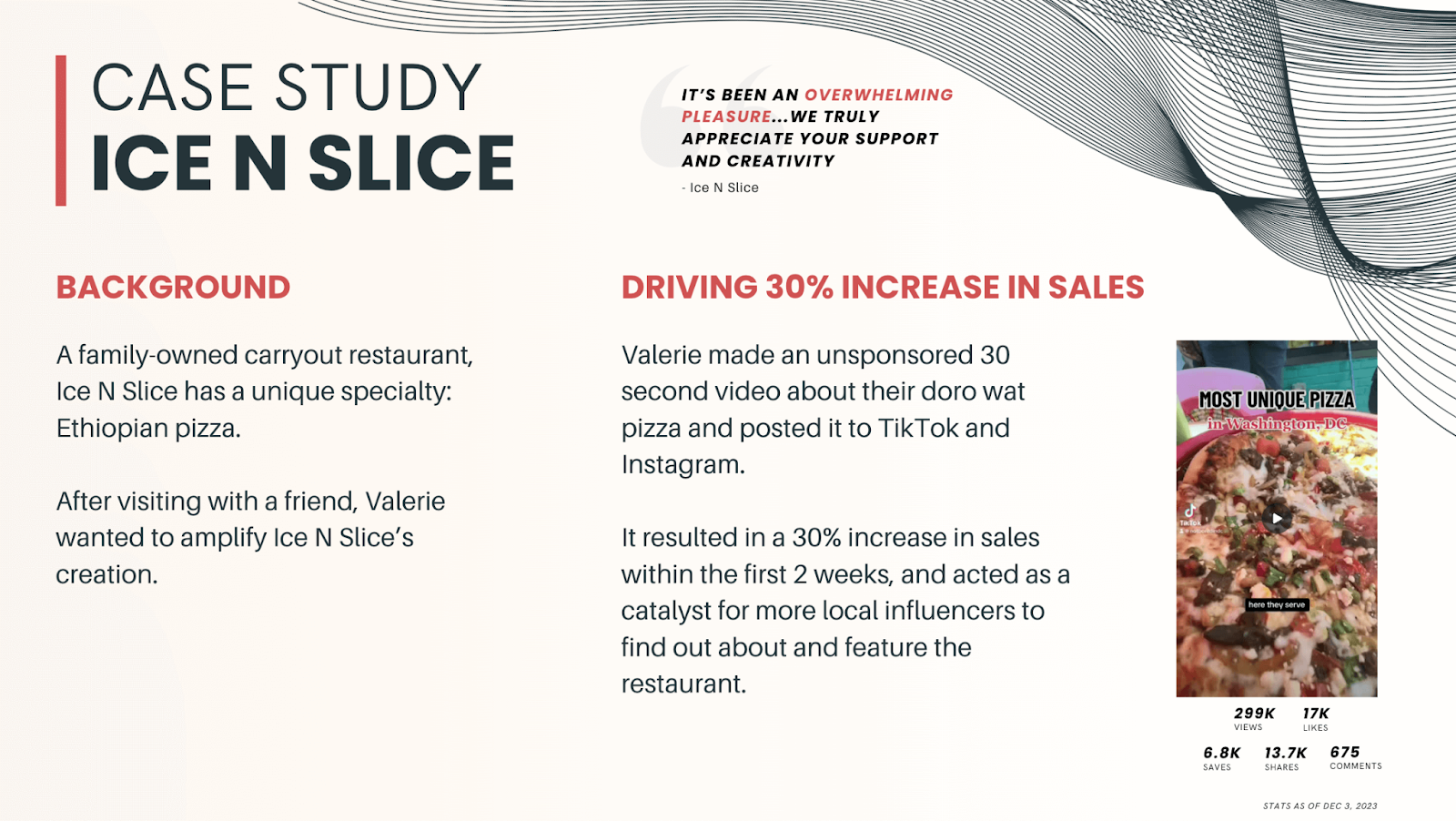
Valerie started @notboredindc a little over a year ago and has since grown to more than 30K followers across TikTok and Instagram. She also regularly partners with brands, thanks to her impressive content skills (and her short and sweet media kit).
She hosts the kit in Canva and shares the link with brands, rather than a PDF. She has also opted to include all the costs upfront.
View Valerie’s full media kit here.
Kambria Hall
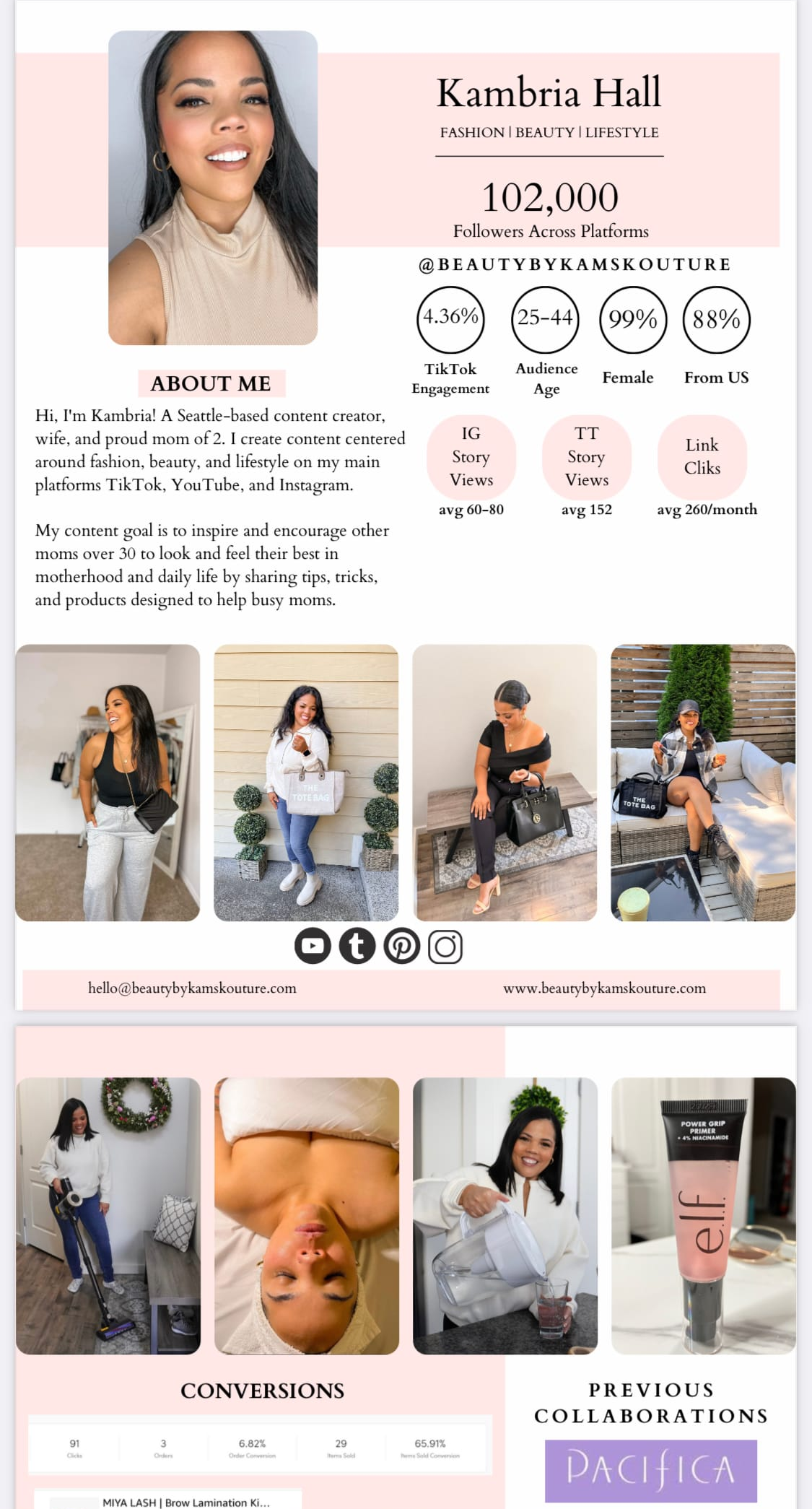
Make up-artist and mid-size fashion creator @beautybykamskouture uses a template designed in Canva, along with a Beacons.ai link. Unlike Valerie, she prefers to keep her rates off her media kit.
“Save your rates for the negotiation stage, once you have a full understanding of the campaign details and deliverables,” she says. “It’s crucial to know the full scope of what you’re being asked to do before providing your rates.”
As you can see, all of these creators have very different approaches, proving that it’s important to take all the pieces of the puzzle I’ve outlined above and figure out what works for you.
Do you have any great media kit tips and tricks to share? We’d love to hear them! Reach out via @buffer or @bufferapp on social media, or leave us a comment below.