I don’t rank in a competitive niche because I have the best content.
I rank because my brand keeps getting mentioned, especially in listicles.
“Best tools” and “top platforms” articles that rank do more than send referral traffic. Google’s AI overviews pull from them. ChatGPT and other answer engines reference them when recommending tools.
And the best thing about them is that they don’t even have to be your own pages.
In this article, I will break down how I use brand mentions and listicle placements to rank in a crowded niche and get my business talked about by AI search results.

Link building cheat sheet
Gain access to the 3-step strategy we use to earn over 86 high-quality backlinks each month.
How Do You Stand Out in a Competitive Niche?
Backlinks are still the core of Google’s ranking algorithm. That has not changed.
What has changed is how those backlinks create visibility.
Before AI overviews, you had to rank your own page in the top 10 to get meaningful exposure. If your page was not there, you were invisible.
Now, that is no longer the case.
Google AI overviews and answer engines like ChatGPT pull information from pages that rank in the top search results. If your brand is mentioned on those pages, the AI can quote and recommend your business even if your own site does not rank anywhere near the top 10.
That means you no longer need to win the SERP yourself.
You just need your backlinks and brand mentions to win it.
Listicles are the best example of this.
“Best tools” and “top platforms” articles already rank for competitive keywords. When your brand is included, you’re no longer only getting the link juice.
Google’s AI and ChatGPT use those pages as sources and reference them when recommending solutions, which is arguably even more important.
Backlinks still matter. Brand mentions still matter. In fact, they matter more now because in addition to good old rankings, they influence what AI systems choose to talk about.
That is how you stand out in a competitive niche today. While your competitors focus solely on their own domain authority and technical SEO, you can gain visibility through strategic brand placement on authoritative niche websites.
First, Focus on Low-Difficulty Keywords
Brand mentions and listicle placements can carry a lot of the load, but first things are still first.
If you neglect your site, you end up with a brand that gets mentioned, but nothing worth clicking through to. No strong product pages, no supporting guides, no topical authority, and no internal links for search engines to follow.
So while you are building mentions, you should also be stacking quick wins on your own domain.
That starts with low competition keywords.
These are the terms where you can get into the top 10 without a huge backlink push. In most niches, they are long-tail queries, specific questions, and narrow use cases. They do not look impressive on a keyword list, but they compound fast and help you establish authority in your niche market.
Like this one: low traffic, but very easy to rank for.
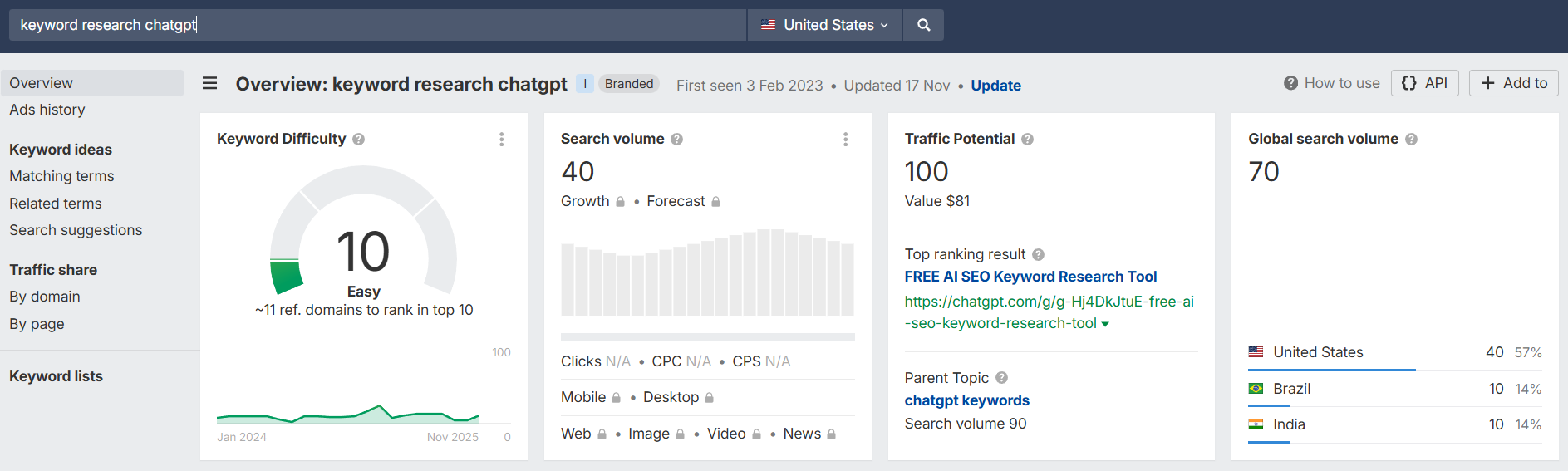
My rule of thumb is simple: prioritize keywords that have a difficulty score (often called a KD score) at least 20 points lower than our Domain Rating, the intent is clear, and the page you need to create is obvious.
Here is the process I use.
Start with seed topics, then go narrow
Pick a handful of core themes that describe what you do. Not the keywords you will rank for, just the general categories for now.
From there, go hunting for long-tail variations and questions. These are often the easiest rankings you will ever get because they are specific and underserved. Finding a profitable niche within your broader niche market is about identifying where the competition is weakest and where your target audience is actively searching.
If your seed topic is “link building outreach,” the low competition layer is usually stuff like:
- how to write a link building pitch
- link building outreach templates
- how to find blogger emails for outreach
- best follow up cadence for outreach
Not glamorous. Very winnable.
What I also like to do is have ChatGPT generate me some long-tail ideas instead of manually searching for them in Ahrefs. I also check Google Trends to validate whether these niche keywords are trending up or down before committing resources to them.
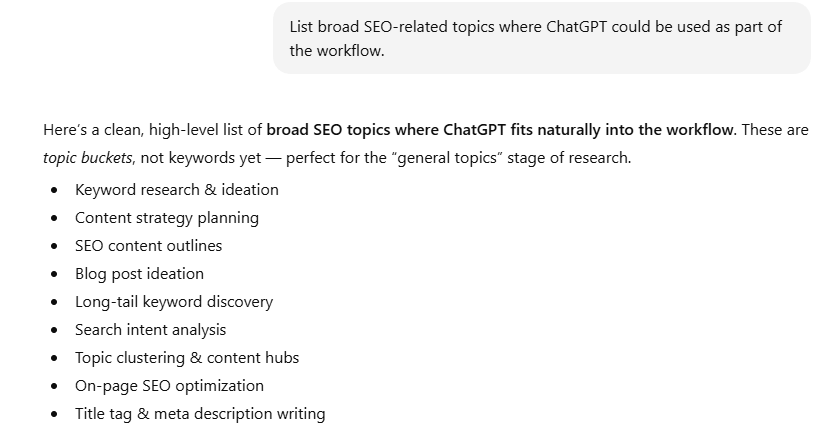
It can be hit or miss, but sometimes it comes up with real gems I wouldn’t have thought of on my own.
Use competitors for ideas, not as a benchmark to copy
Competitor research is the fastest way to find keywords that already work. Looking at what your competitors rank for gives you valuable insights into which specific keywords have proven demand in your niche.
If multiple competitors rank for the same long-tail topic, that is a strong signal that:
- the keyword has real demand
- the intent is clear
- Google already understands what should rank
I use Semrush or Ahrefs for this step, both tools have an awesome content gap tool. You can also use SEO PowerSuite or check Google Analytics to see which keywords are already driving traffic to your site and competitor sites.
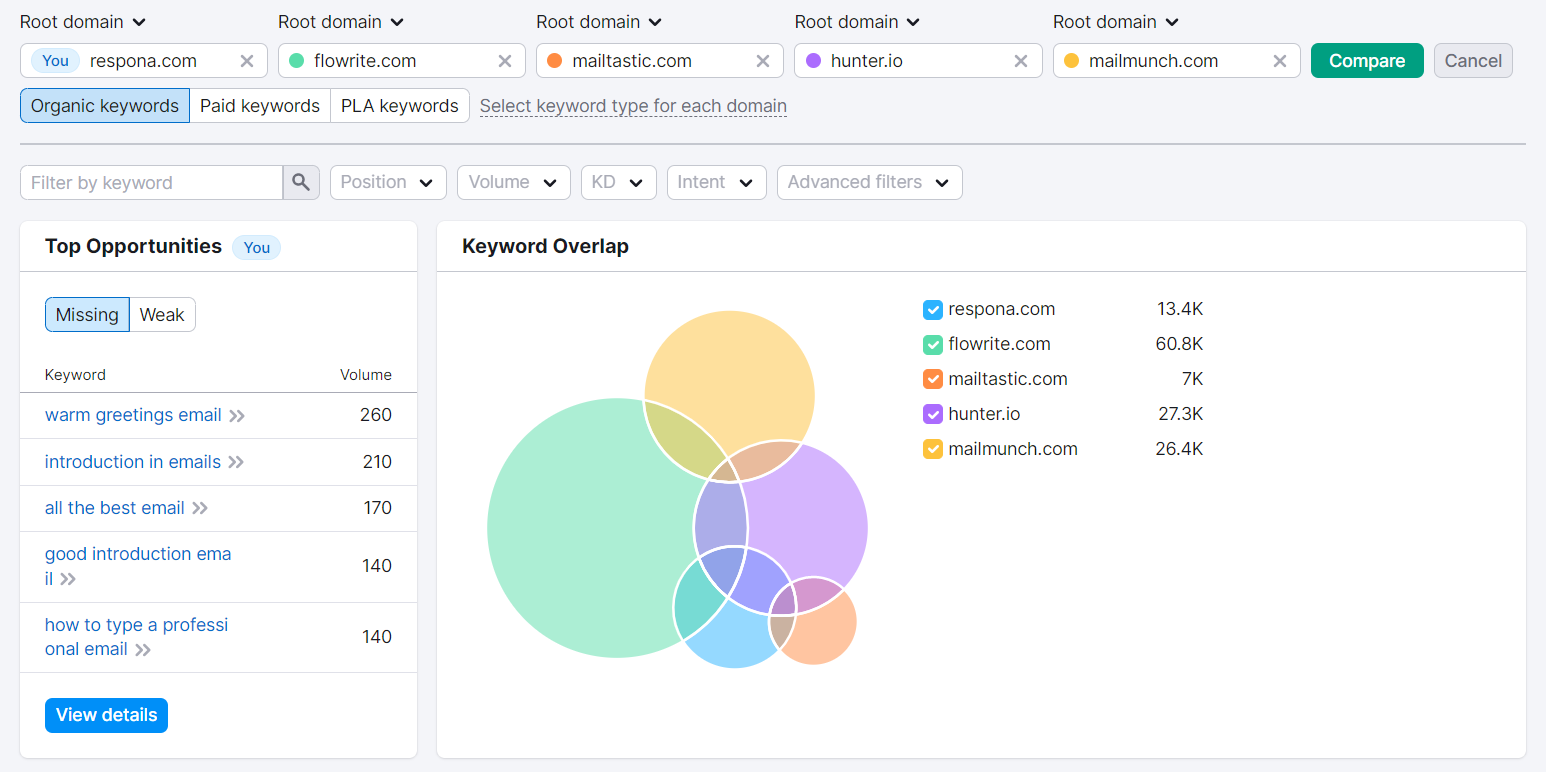
Just paste your URL and 1-3 competitors, filter by traffic volume + difficulty, export, and take your picks.
The goal is not to replicate their post. The goal is to find gaps where you can publish something cleaner, more specific, or more useful. This is where keyword research becomes crucial to your overall SEO strategy and content marketing approach.
Prioritize with a simple scoring approach
Once I have a messy list, I do not try to “feel” my way through it. I sort it.
In general, the best early targets have:
- low keyword difficulty
- enough traffic to be worth writing
- some commercial value, even if the query is informational
If you want a quick way to prioritize, roll difficulty, traffic potential, and CPC into a single number, then sort your list and work from the top. The exact formula matters less than having a consistent way to rank opportunities.
Here’s the formula I use:
(1/difficulty) * traffic potential * (CPC+1) = Opportunity Score
Get Placements on Listicles
Listicles are one of the fastest ways to get visibility in a competitive niche.
I can’t even describe how HUGE this placement was for our business back when it happened on Backlinko:
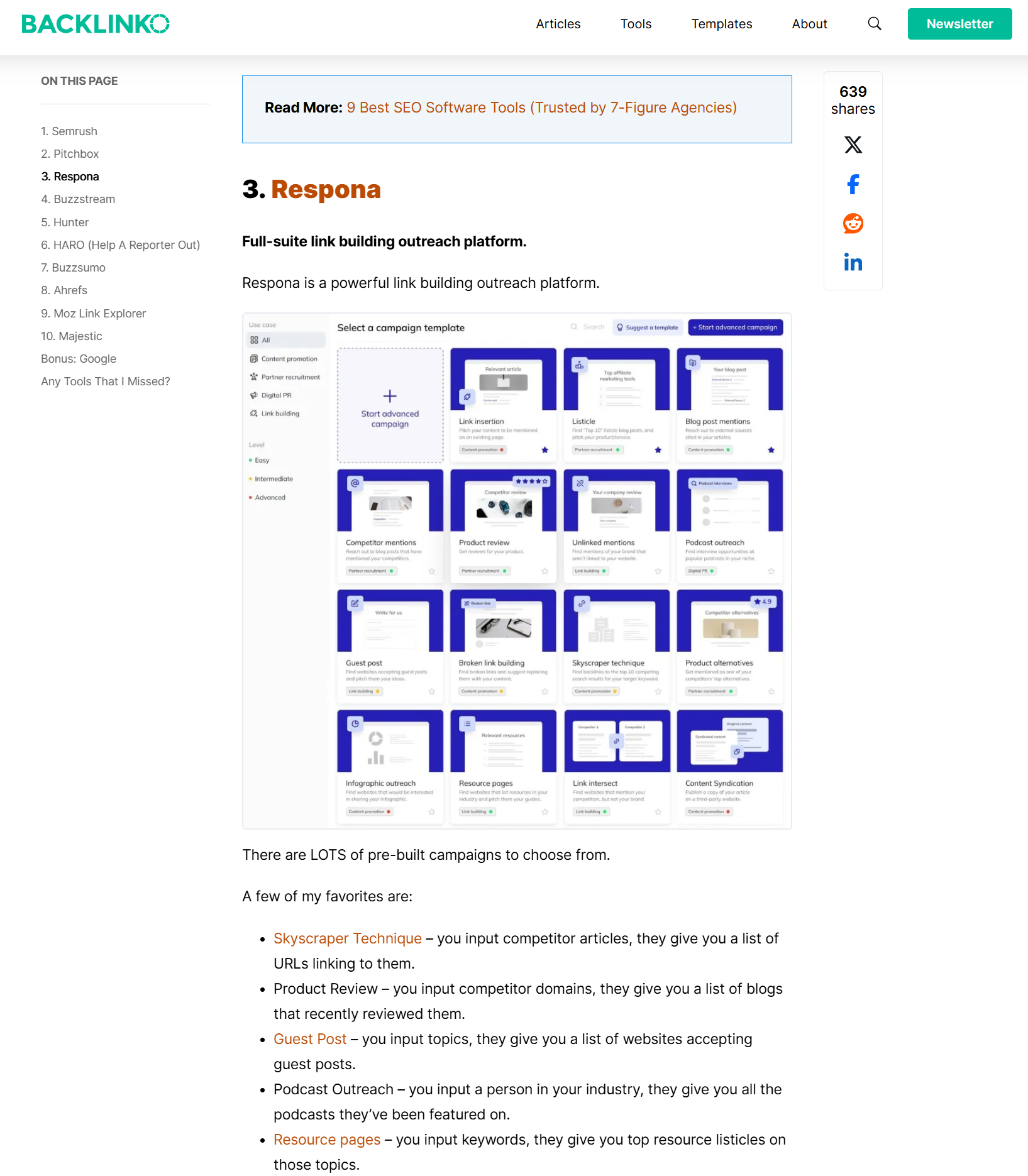
Thanks, Brian!
The catch is that getting placed is hard.
You need to find listicles that actually rank, not junk pages. You need to reach the right person, not a generic inbox. You need to justify why your brand belongs on the list. And in most cases, you need to give the publisher something in return.
That process is manual, time-consuming, and easy to get wrong.
This is exactly why we offer done-for-you link building at Respona.
We secure brand mentions and listicle placements on relevant sites that already have authority. You do not have to prospect, pitch, follow up, or negotiate. We handle everything and you pay for results.
Optimize for AI Overviews
If you want brand mentions and listicle placements to actually translate into visibility, your content still needs to be usable by Google’s AI.
AI overviews are built by scanning the top search results and pulling the clearest answers from them. The system is not looking for clever writing. It is looking for answers it can extract with confidence.
That changes how you should structure your pages. Getting featured in AI overviews is now one of the most important SEO factors for long-term SEO success, according to recent analysis from Search Engine Land.
Write for extraction, not just rankings
Every important section on your page should answer one specific question.
Ideally, the heading is the question itself, and the first paragraph directly answers it in plain language. No buildup, no storytelling, no filler.
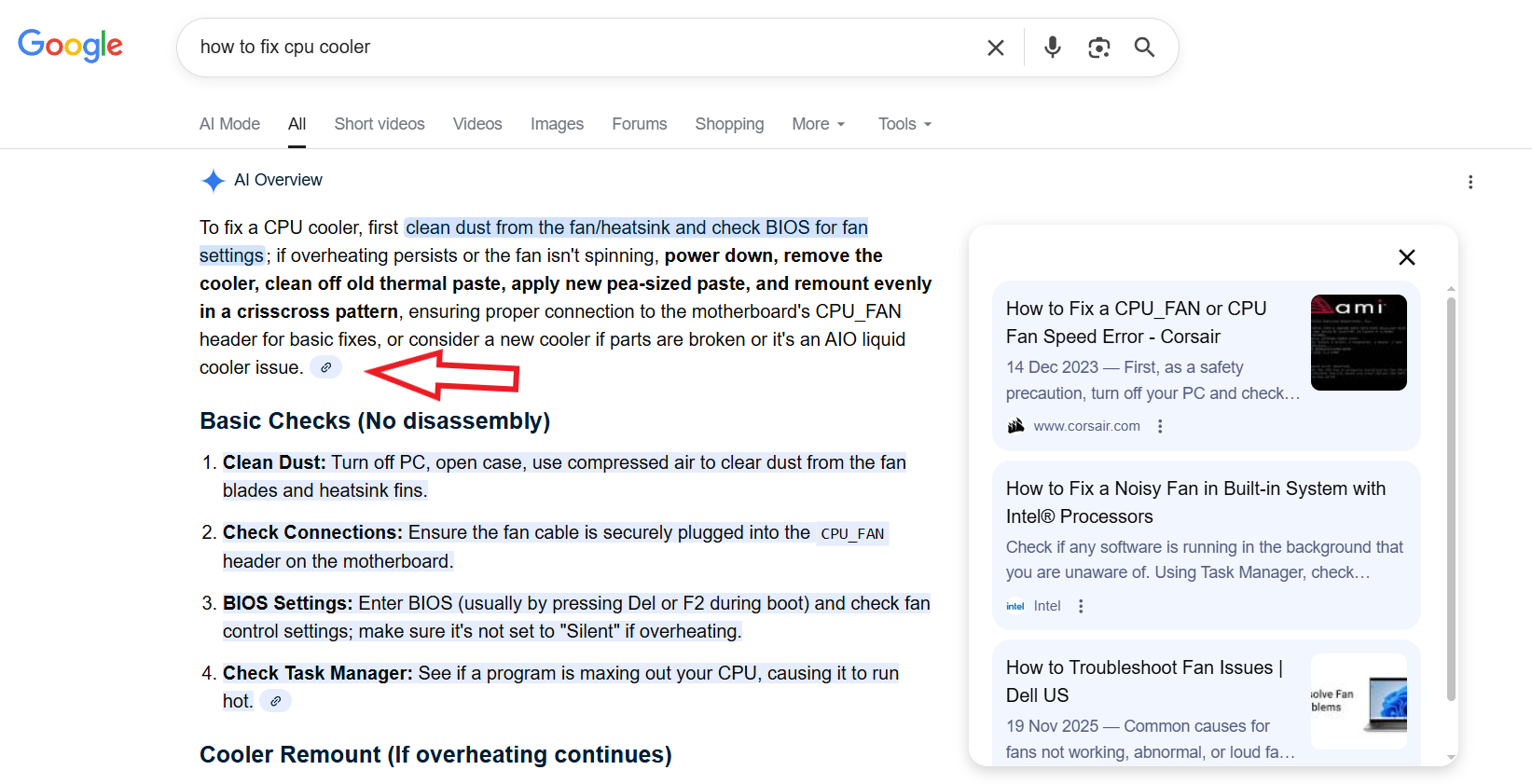
Short paragraphs work best here. Around 40 to 60 words is usually enough. If Google can lift that paragraph and drop it into an AI overview without rewriting it, you are doing it right.
You might even get a link along with the quote:
Use lists and tables when the query calls for them
AI overviews lean heavily on structured formats.
If the search intent implies steps, options, or rankings, a short list placed immediately after a clear heading works extremely well. Keep list items tight and avoid unnecessary explanations inside the list itself.
For comparisons, tables are even better. If the query involves pricing, features, or specs, Google would rather show a table than summarize it.
Just make sure it is a real HTML table. If Google cannot extract the data cleanly, it will not use it.
Keep the language human
This part matters more than most people realize.
Over-polished or obviously AI-written text might rank, but it rarely gets pulled into AI overviews. The language needs to sound like something a human would say when answering a question out loud.
Clear. Direct. No fluff. No em dashes ever.
If a human can read your answer and immediately understand it, the AI usually can too.
Video still helps
Text snippets often get summarized away. Video does not.
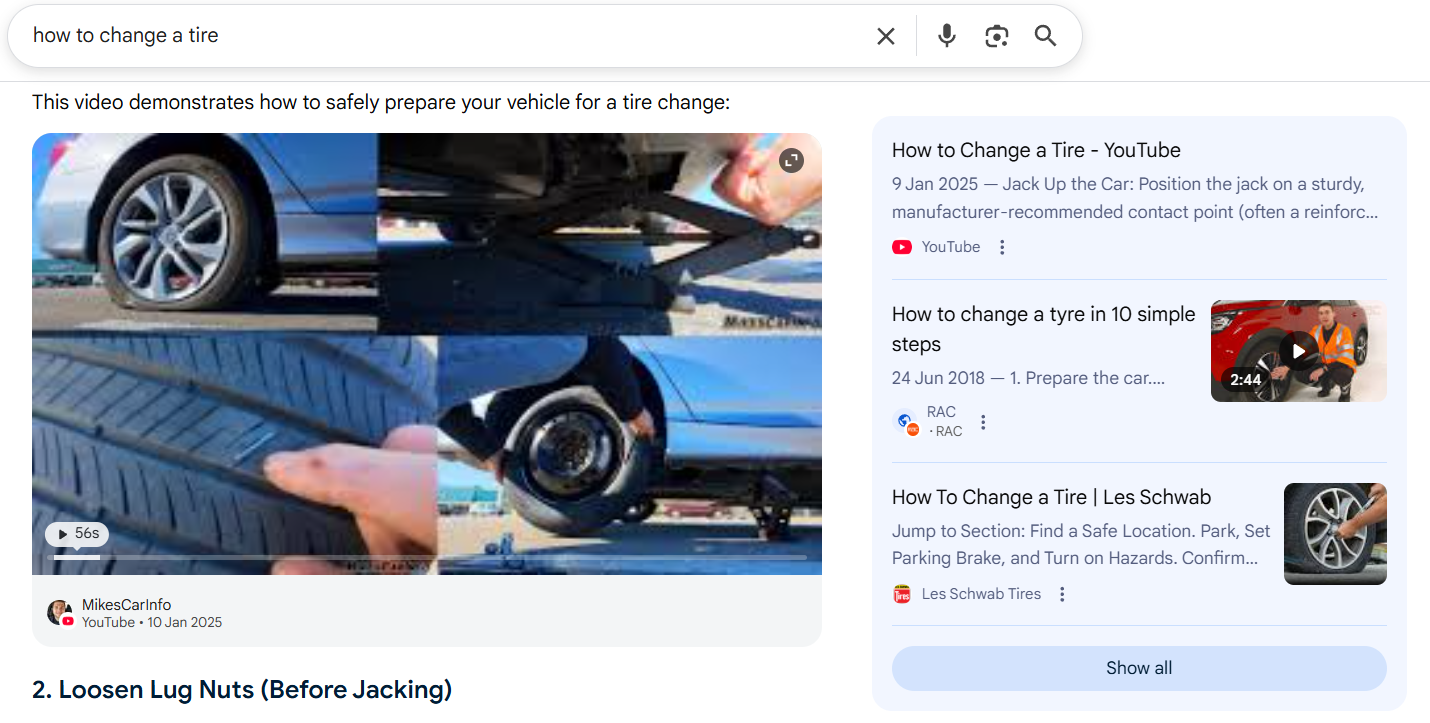
If you are covering how-to topics, walkthroughs, or demonstrations, video increases your chances of showing up in AI-driven results and still earning clicks. Google highlights specific moments and sends users to watch instead of fully summarizing the content.
Link Juice still decides who gets quoted
AI overviews still pull from pages that rank well, and rankings still depend heavily on backlinks and brand mentions. You do not need to rank first, but you do need to be in the top 10. Or at least be on someone else’s page that does rank in the top 10.
That is why everything ties together. True niche SEO in action.
Low-difficulty content gets your pages into the top results. Listicle placements and brand mentions build trust and domain authority. Clean structure makes your content easy to extract.
A solid understanding of technical SEO ensures search engines can properly crawl and index your pages. Using a rank tracker helps you monitor progress and adjust your strategy based on what is actually working.
When all three are in place, you can finally rank in a competitive niche, even in the age of AI. Whether you are trying to identify a niche idea worth pursuing or scale an existing low competition niche into something bigger, this combination of tactics gives you a realistic path to compete against established players in any niche market.
Link building cheat sheet
Gain access to the 3-step strategy we use to earn over 86 high-quality backlinks each month.
Now Over to You
Ranking in a competitive niche is no longer just about winning the SERP with your own pages.
Today, visibility comes from being present where Google and AI systems already look. High-quality brand mentions. Listicle placements that rank. Content that is easy for AI overviews to extract and reuse.
Doing all of that consistently is hard. It takes prospecting, outreach, follow-ups, negotiations, and relationship management. Most teams simply do not have the time.
That is exactly why our done-for-you link building service exists.
We earn brand mentions and listicle placements on relevant, authoritative sites so your business gets visibility where it actually matters. If you want Google AI overviews and tools like ChatGPT to start talking about your brand, this is the fastest way to get there.
Frequently Asked Questions (FAQ)
What does it take to rank in a competitive niche today?
Ranking in a competitive niche requires authority signals, not just good content. Backlinks, brand mentions, and placements on pages that already rank are what drive visibility in both Google and AI-powered search results.
Can you rank in a competitive niche without ranking page one yourself?
Yes. Your brand can be surfaced through mentions on high-ranking pages like listicles. Google AI overviews and tools like ChatGPT often recommend brands based on those pages, even if your own site does not rank in the top results.
Why is content alone not enough to rank in a competitive niche?
In competitive niches, top-ranking pages already have strong link profiles and brand trust. Publishing better content rarely closes that gap without external authority signals to support it.
How do brand mentions help you rank in a competitive niche?
Brand mentions teach Google and AI systems which companies are associated with a topic. Repeated mentions on authoritative pages increase trust and make your brand more likely to be quoted or recommended.
Are listicles important if you want to rank in a competitive niche?
Yes. Listicles already rank for competitive keywords and are heavily used by AI overviews as source material. A single strong listicle placement can outperform dozens of smaller backlinks.
Is Technical SEO and Domain Authority still relevant?
While brand mentions drive visibility, your technical SEO foundation still matters. Search engines evaluate domain authority signals alongside content quality. A site with poor technical SEO will struggle to convert brand mentions into higher rankings, no matter how many listicle placements you earn.