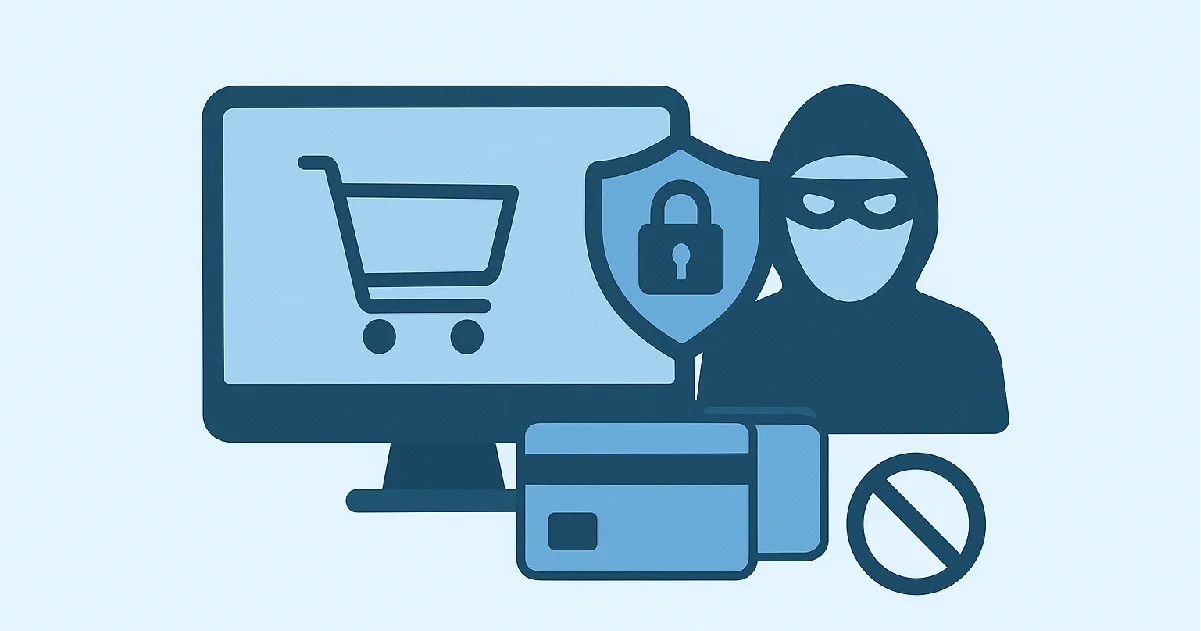
Is online shopping safe nowadays? As a customer, every buyer takes responsibility for their own personal data and quality verification, but as an e-commerce business, what are you doing to stay safe in today’s world so your business can stay safe from fraud? As an e-commerce business, you are relying on digital data, which can be easily stolen, manipulated, or faked. And as a result, fraudulent transactions are becoming one of the biggest risks for online sellers, which can range from stolen credit card payments to false refund claims. The worst part is that if your business is defrauded, the customer doesn’t lose money, but the business does, because banks refund the card owner, and the store is forced to bear the loss of both the product and the payment, so you can’t question the customer in such cases.
You have to give it extra attention if you are running a small or mid-sized online business, as they are at higher risk, as they usually lack strong fraud-prevention systems and rely heavily on third-party payment platforms. Fraud is not just about financial loss; it’s more about reducing customer trust, increasing chargeback penalties, and damaging brand reputation, and it can even get a business blocklisted by payment processors. In this blog, we will discuss how E-Commerce Businesses Can Prevent Fraudulent Transactions
Types of Fraud in E-Commerce

1. Stolen Credit/Debit Card Transactions
The most common and easy fraud that can actually cost you a loss is the use of stolen card details to make purchases online. After the fraudsters make a payment with the real cardholder’s card, the cardholder notices the unauthorised transaction and files a complaint. After this, the cardholder files a complaint against it, and the bank refunds the cardholder, and now you have neither the money nor the product. And the whole loss includes product, shipping cost, and payment processing fee. There are a few signs from which you can detect it, or at least can pay more attention: multiple attempts from the same device/IP, different billing & shipping addresses, and high-value orders in a short time.
2. Chargeback Fraud
This type of fraud is so friendly and unpredictable that a customer buys a product, receives it, and then falsely claims they didn’t order it or didn’t receive it. Even after receiving a perfect product, they report to the bank and get a refund through a chargeback. Then the business loses money even though the product was delivered legitimately. This fraud costs you more than just the product cost and shipping charge because it puts businesses at risk of higher chargeback fees and even account suspension by payment processors.
3. Account Takeover
In this kind of fraud, hackers steal login credentials of customers through leaked databases, phishing, or weak passwords. They access saved cards, addresses, and payment info to place fraudulent orders. The worst part is that for a long time, victims usually don’t notice until money is gone or they see strange orders in their account. This fraud affects customer trust and brand reputation, because customers blame the business, and they don’t care about hacking and all.
4. Promo Code & Discount Abuse
Using promo codes & discounts is not fraud, but sometimes users exploit welcome coupons, referral bonuses, first-time offers, or recurring discount loopholes. They create fake accounts using new phone numbers, emails, or temporary numbers to get a first-time buyer coupon or use the same coupon on multiple accounts. It’s not always “illegal,” but this behavior leads to major profit leaks, especially for small e-commerce brands relying on discounts to acquire customers. You have to be more aware of this fraud during festivals, flash sales, or app launches.
How E-Commerce Businesses Can Prevent Fraud

1. Use Multi-Layer Customer Verification
For better safety, it’s important not to rely on just email login; implement OTP-based phone verification, especially during checkout. Check all billing & shipping address verification for first-time users or high-value orders. If you are getting bulk orders, do check the document proof or manual approval. Because multi-layer checks make it harder for fraudsters to complete a purchase unnoticed.
2. Install Fraud Detection & Risk Analysis Tools
The technology is evolving very fast, so we have a few genuine fraud detection tools in the market. These types of tools analyze IP addresses, device fingerprints, behavioral patterns, and transaction history. These tools automatically reject high-risk payments before processing. These tools pay attention to unusual things you may ignore, like multiple cards used on the same device, mismatched locations, or abnormal order frequency. Some of the best tools are Stripe Radar, Signifyd, Riskified, Sift, and Bolt.
3. Strengthen Refund & Return Policies
Set tight boundaries for refunds in case of wrong or damaged product cases. Ask for photo/video proof for damage complaints before approving refunds. Try to track serial return abusers using customer ID, phone, IP, and address history. And if you are seeing something fishy, don’t allow instant refunds for risky buyers; move them to manual approval.
4. Protect Accounts with Strong Security Policies
Protect each account with strong security, and provide strong passwords & multi-factor authentication (MFA) for customer accounts. And enable alerts for suspicious login attempts or logins from a new device/location every time. If you suspect something fishy, don’t forget to auto-logout inactive sessions and block brute-force login attempts.
5. Train Employees to Spot Fraud
The best way to stop fraud is to gain knowledge about it because prevention is the best cure. So train your teams to verify every sensitive request properly, to never share customer data without authentication, and to give training on how to identify fake emails or phishing attempts.
Conclusion
Fraud in e-commerce is something that’s not temporary, but it’s a long-term risk that grows with every new payment method, technology upgrade, and expansion in customer base. And if, as an e-commerce company, you only depend on basic payment gateways or one-step security checks, you are inviting hackers to hack your business. Fraud prevention is a must-do thing when you set up your business, just like marketing, inventory management, or logistics.
Suppose your business is planning to scale with better platforms and checkout systems. In that case, you should consider advanced security integrations during e-commerce website development, especially when working with agencies offering e-commerce website development in Bangalore or professional teams specializing in e-commerce website design in Bangalore.