
Google AI overviews didn’t replace search.
It just started answering the query for you.
When you Google something now, there’s a good chance you’ll see an AI overview sitting at the top. It pulls from multiple pages, summarizes them, and gives you a straight answer before you even look at the results.
Google AI overviews don’t come from some separate system. They’re built directly on top of the same search results you see.
It’s the same fundamentals, just applied differently.
In this article, we’ll break down exactly how AI overviews work, what actually influences inclusion, and six things you can do to start showing up in them consistently.
Key Takeaways:
- Google AI overviews optimization is about getting included in AI summaries, not just ranking in Google search
- Google AI overviews pull directly from existing search results, not a separate index
- If you’re not ranking in Google search results, you won’t be included in an AI overview
- Clear, structured content increases your chances of AI overview inclusion
- Long-tail and informational queries are more likely to trigger AI overviews
- Off-page signals like links and mentions improve AI overview citations and visibility
- AI overview visibility depends on both rankings and presence across multiple sources

Link building cheat sheet
Gain access to the 3-step strategy we use to earn over 86 high-quality backlinks each month.
How do Google AI Overviews Work?
At a basic level, Google AI overviews just summarize what’s already ranking.
When someone searches, Google looks at the top results, pulls key points from multiple pages, and turns that into an AI-generated summary.
That’s it.
There’s no separate crawler. No hidden index. No “AI-only” ranking system.
It’s the same Google search results, just processed differently by Google’s AI system.
The model scans those pages, looks for overlapping information, and builds a response based on what it sees most often. If five different sources say roughly the same thing, that’s what ends up in the overview.
The sites that show up in AI overviews are usually already ranking. Not always #1, but almost always somewhere in the top results.
So if you’re not there, you’re not getting pulled in.
Another thing to understand is how it chooses what to include.
Google’s AI isn’t reading your entire page. It’s looking for small sections it can extract. A paragraph, a list, a definition. Something clean it can turn into an AI-generated answer.
That’s also why different queries behave differently.
For informational queries, the overview usually pulls from blog content and guides.
For more commercial queries like “best tools” or “top agencies,” it leans more on list-style pages and third-party sites.
In both cases, the logic is the same.
Google search provides the sources. The AI model turns them into a single overview.
Provide Clear, Concise Answers to Questions
If you want to show up in a Google AI overview, you need to make things easy to extract.
That usually means answering the question immediately under a heading, without any buildup.
There’s a good reason for that.
The first part of most AI overviews is basically an evolved version of the old featured snippet. Same idea, just expanded. Google still looks for a clean paragraph it can lift and use as the starting point.
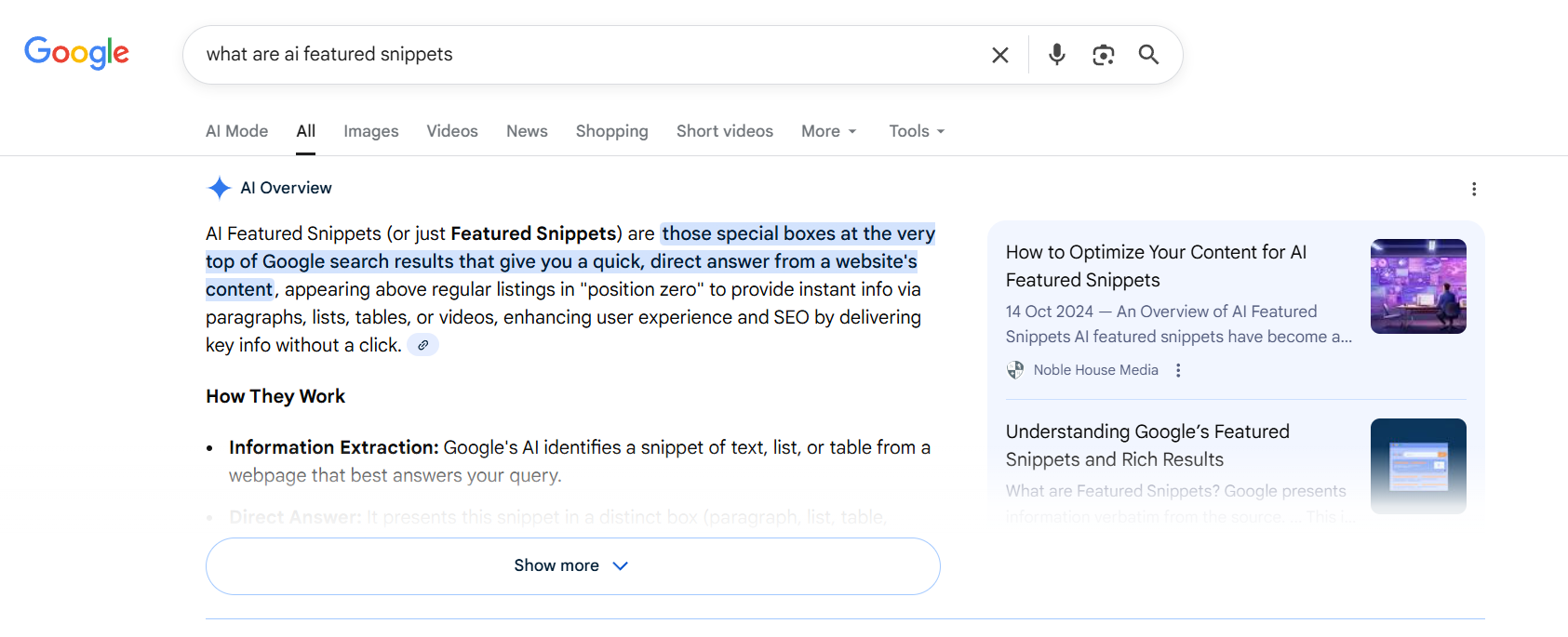
And there’s a sweet spot.
Roughly 40 to 60 words tends to work best. Long enough to fully answer the question, short enough to be used as-is.
Anything shorter feels incomplete. Anything longer gets trimmed or ignored.
So instead of easing into the answer, just give it upfront.
Define the thing. Answer the question. Then expand below if you need to.
Your page should have at least one section where the answer is obvious, direct, and ready to be pulled into an AI overview without editing.
Add Key Takeaways & Faq Sections
If you look at how a Google AI overview is structured, it’s not random.
It’s usually a mix of short summaries, bullet points, and direct answers pulled from different pages.
That’s exactly why sections like key takeaways and FAQs work so well.
They already match the format Google is trying to build.
A key takeaways section gives you a bunch of clean, standalone points. Each one is easy to scan, easy to extract, and easy to drop into an AI overview without much editing.
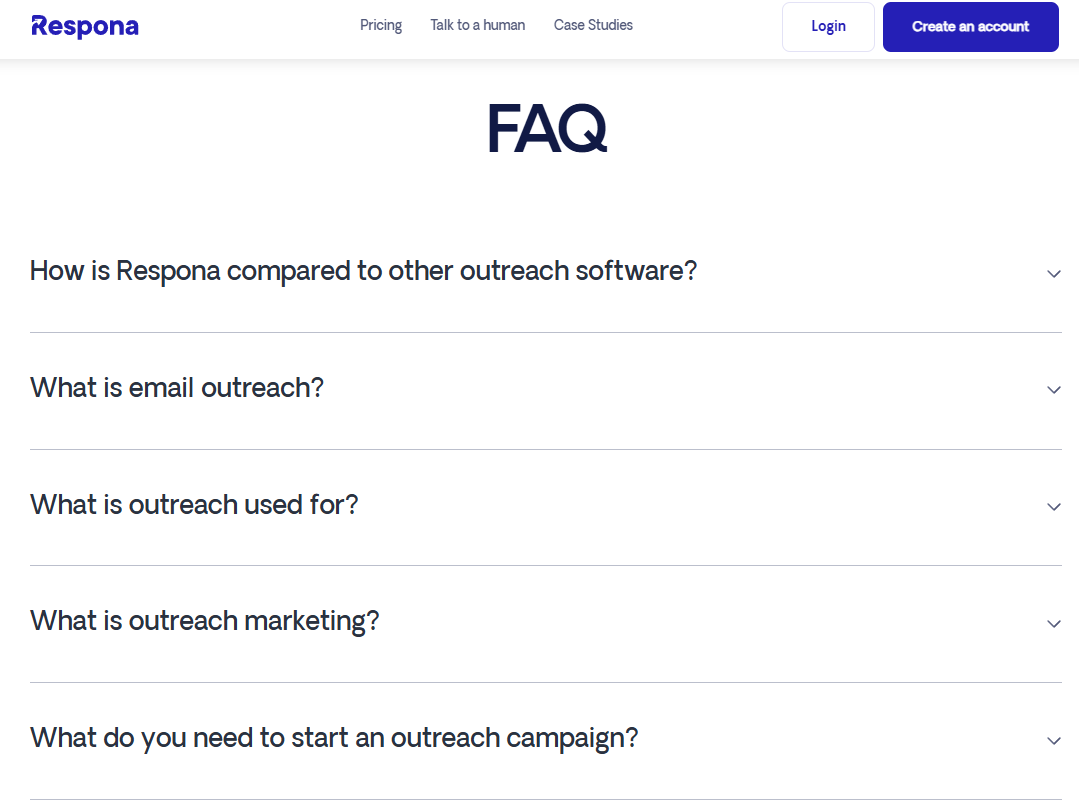
Same thing with FAQ sections.
Each question creates a clear intent, and each answer gives Google something it can lift directly into AI-generated responses. You’re basically pre-packaging your content in a way that fits how the system works.
It also increases your chances of getting multiple citations from the same page.
One section might get pulled into the main summary, while another answer shows up lower in the overview.
So instead of thinking of these sections as “extra,” think of them as structure.
You’re making it easier for Google AI to understand your content, break it apart, and include it wherever it fits.
Use Lists and Bullet Points
AI overviews love lists.
Not because they look nice, but because they’re easy to break apart.
When Google builds an overview, it’s pulling pieces from different pages and stitching them together. Bullet points and numbered lists make that job easier. Each item is already a clean, standalone unit.
Compare that to a paragraph.
A paragraph has to be interpreted, shortened, and sometimes rewritten. A list item can often be used as-is.
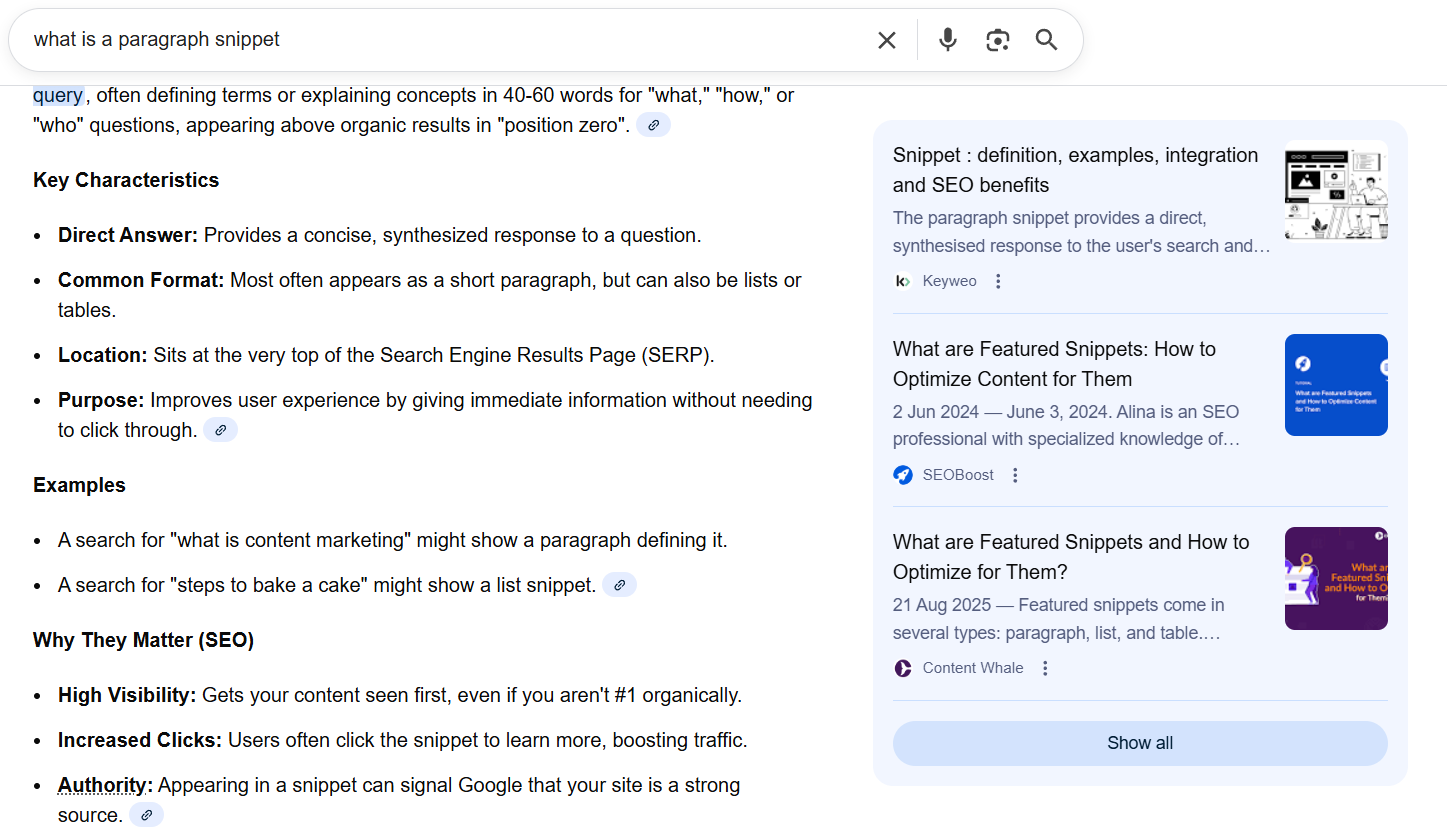
That’s why list-based content shows up so often in AI-generated summaries.
So when it makes sense, use them.
Break down steps. List features. Compare options. Summarize key points.
You’re not writing for style here. You’re writing for extraction.
Target Long-Tail Keywords and Questions
Not every query triggers a Google AI overview.
Short, broad keywords often just return normal search results. But longer, more specific queries are much more likely to trigger AI overviews.
That’s where long-tail keywords come in.
A long-tail keyword is just a more detailed version of a search. Instead of “keyword research,” it’s something like “how long can keywords be?” or “best keyword research strategies”
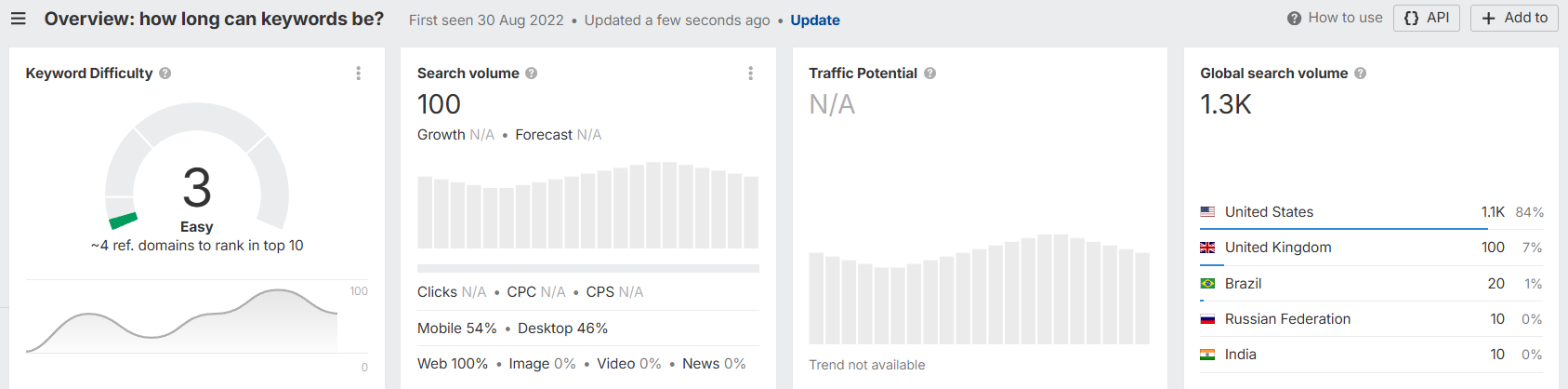
These are easier to rank for, and more importantly, they match how people actually search.
They also map much better to AI-generated answers.
Because they’re specific, Google can confidently generate a summary instead of just showing a list of links.
There are two easy ways to find these.
First, you can use ChatGPT to generate ideas. Ask it to list questions, comparisons, and variations around your main topic. You’ll get dozens of angles in seconds.
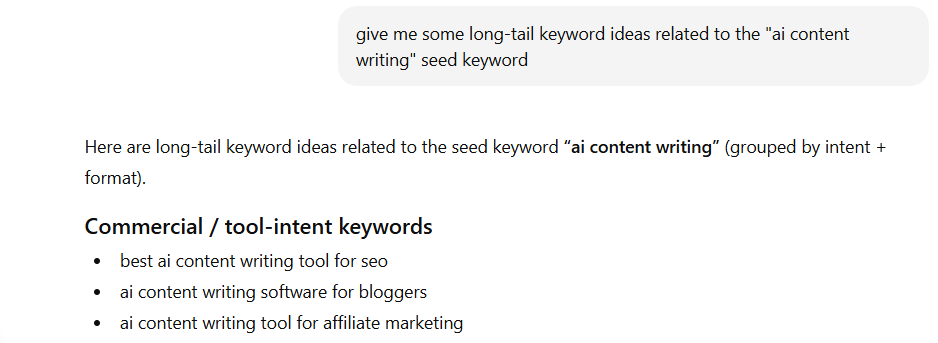
Then take those into Ahrefs (or any keyword research tool) and validate them.
You could also use its Keyword Explorer to get question ideas, and other relevant keywords. ChatGPT just speeds up the idea generation process.
Look for:
- search volume
- keyword difficulty
- whether they already trigger AI overviews
Ideally, you want high volume, low difficulty to start ranking and getting traffic with minimal competition.
That last part matters.
If a query already triggers an AI overview, you know Google is comfortable generating answers for it. That’s your opportunity
Add Structured Data
Structured data helps Google understand your content faster.
You’re not changing the content. You’re labeling it.
Schema tells Google what’s a question, what’s an answer, what’s a list. That makes it easier for Google AI overviews to pull exact sections instead of guessing.
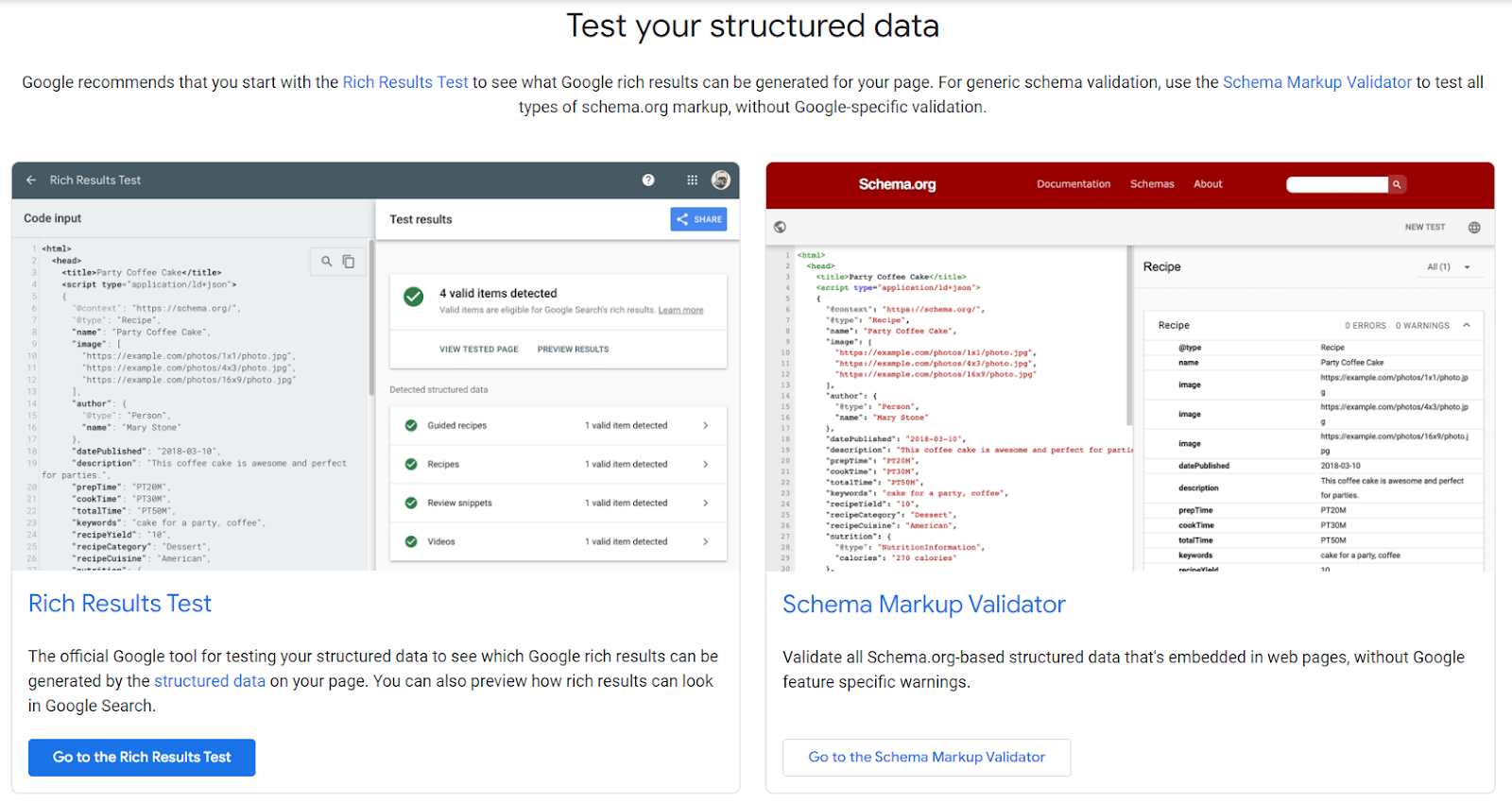
Start with:
- FAQ schema
- HowTo schema
- Article schema
These match the formats Google already uses in AI-generated summaries.
This is part of technical SEO.
Link Building & Brand Mentions
You still need to rank.
If you’re not somewhere in the top search results, Google AI overviews won’t pull from your content. It all starts there.
But for certain queries, especially commercial ones like “best tools” or “top services,” ranking your own page isn’t enough.
Google looks at third-party sources.
Listicles, comparisons, roundups. That’s where a lot of AI overview citations come from.
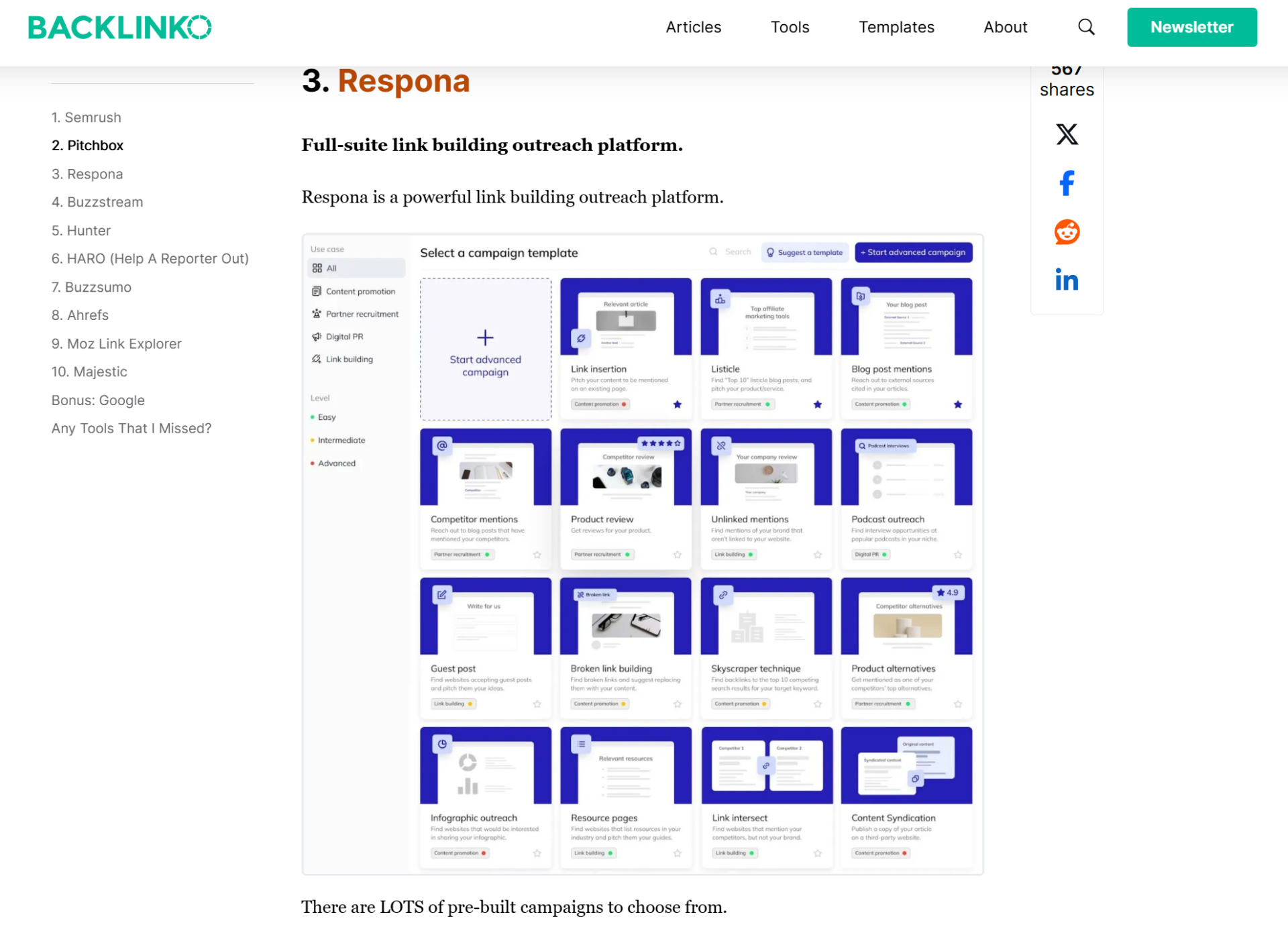
So if your brand isn’t showing up across those pages, you’re missing out.
This is where link building and brand mentions matter more than usual.
It’s not just about authority anymore. It’s about presence.
The more your brand shows up across relevant pages, the more likely Google is to include you in an AI overview. Especially when those pages already rank and already get pulled into AI-generated results.
Listicles are the biggest lever here.
They clearly outline options, features, and use cases, which makes them perfect for extraction. If your brand appears in enough of them, your chances of showing up increase fast.
And if those mentions come with links, you get both rankings and AI overview visibility.
That’s exactly what we focus on with Respona.
We help you get placements on pages that already rank, already get traffic, and are already being used in AI overviews.
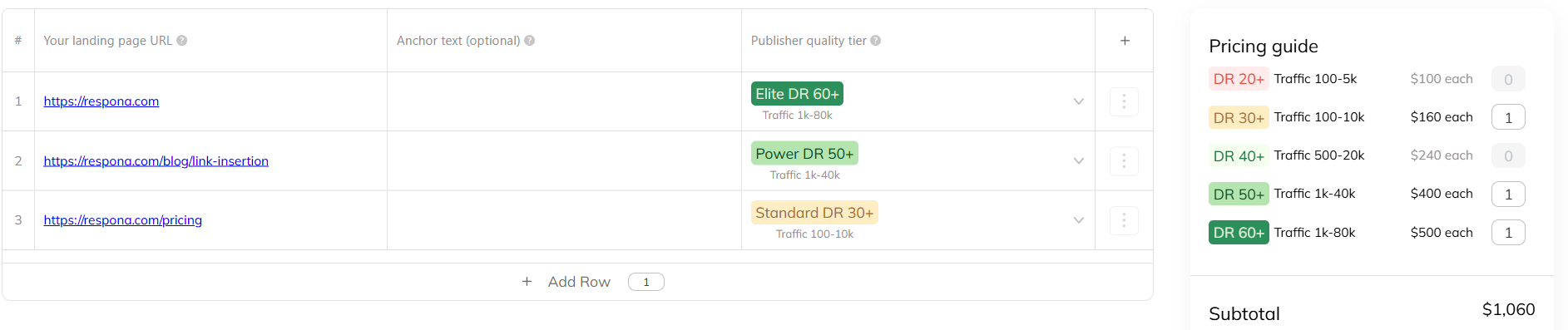
All you have to do is place an order with your target page, requirements, and guidelines – and we’ll handle the rest.
On top of that, our Campaigns feature shows you where your brand is being cited and where competitors are getting coverage that you’re not.
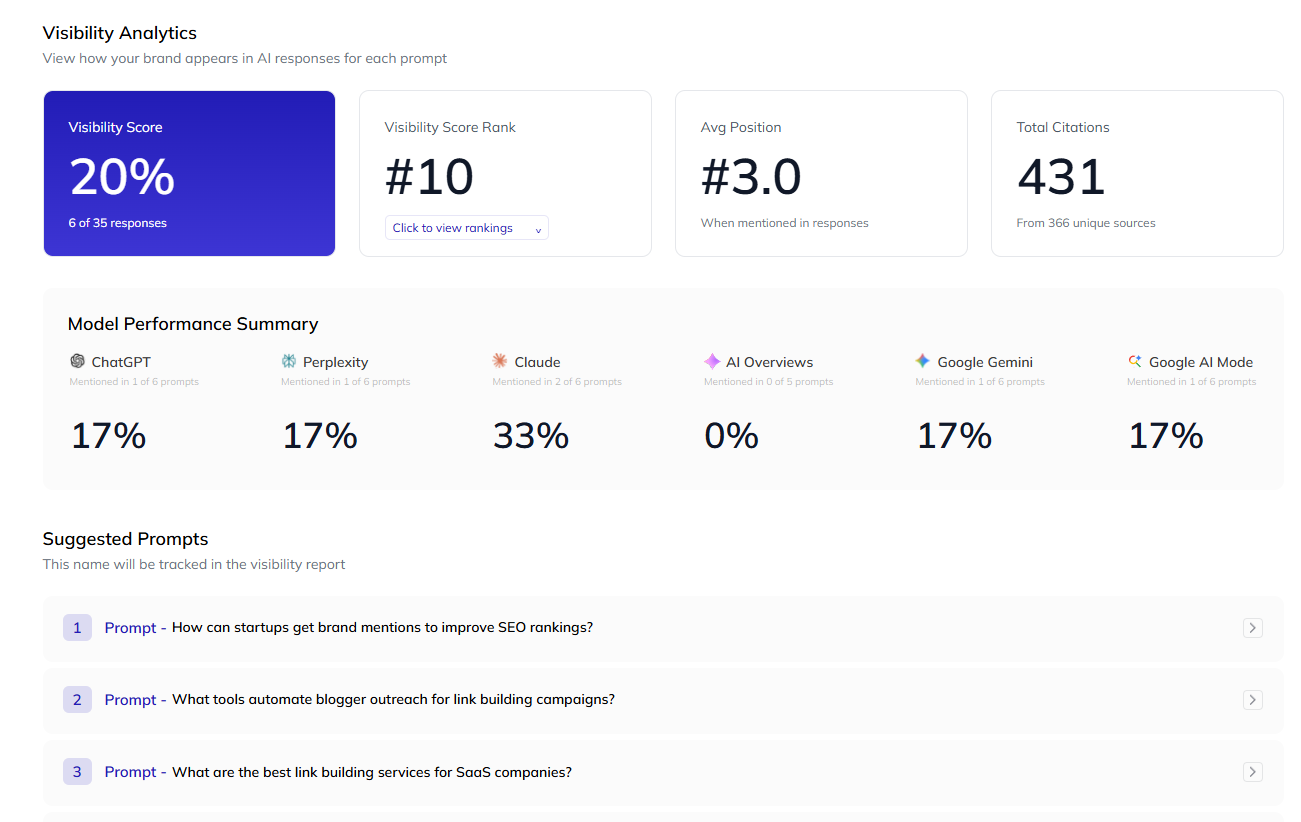
It also helps you find articles that are actively being cited for queries that are relevant to you specifically.
So instead of guessing, you know exactly what to fix, and where to get links that actually move the needle – both in organic search and AI.
Link building cheat sheet
Gain access to the 3-step strategy we use to earn over 86 high-quality backlinks each month.
Now Over To You
Google AI overviews aren’t random.
They pull from pages that rank, extract content that’s easy to use, and favor brands that keep showing up across multiple sources.
So the play is pretty simple.
Make your content easy to extract. Target queries that actually trigger AI overviews. And make sure your brand is present on the pages Google already trusts.
If you do all three, your chances of showing up go up fast.
If you want to shortcut the hardest part, off-page is where to focus.
That’s what we built Respona for.
We help you get placements on pages that already rank in Google search and already get pulled into AI overviews. On top of that, our Campaigns feature lets you track your AI overview visibility and see exactly where you’re missing coverage.
So instead of guessing, you know where to show up next.
Frequently Asked Questions (FAQ)
What is Google AI overviews optimization?
Google AI overviews optimization is the process of improving your chances of being included in AI overviews and AI-generated summaries that appear at the top of Google search.
How do Google AI overviews work?
Google AI overviews use Google’s AI system and AI model to analyze top search results and generate an AI-generated summary based on multiple sources. This is part of the broader shift toward AI search and generative AI.
What is the difference between a Google AI overview and traditional results?
A Google AI overview combines multiple sources into a single overview, while traditional search engines show individual links. This shift is part of generative engine optimization and answer engine optimization.
What is Google AI mode?
Google AI mode refers to how Google AI presents AI-generated responses directly in search results instead of just listing pages.
Do you need to rank to be included in AI overviews?
Yes. You need to rank in Google search results to be considered. AI overview optimization still depends on traditional SEO and strong technical SEO foundations.
How do you trigger AI overviews?
AI overviews are more likely to appear for informational queries. If a query already triggers AI overviews, it’s a strong signal that Google can generate an AI-generated answer for it.
What type of content gets included?
Content that is easy to extract, clearly structured, and aligned with search intent performs best. This includes sections designed to optimize content for AI-generated responses.
Do backlinks and mentions still matter?
Yes. Links, citations, and brand mentions help improve AI overview visibility and increase your chances of appearing across AI platforms and AI engines.
Can I track AI overview visibility?
You can track performance using tools like Google Search Console and compare your presence in AI-generated results against competitors.
How does Google Gemini relate to AI overviews?
Google Gemini powers many of Google’s AI features, including AI overviews, by using an advanced AI model to generate responses from search data.
What resources should I follow for updates?
Sites like Search Engine Land and Search Engine Journal often cover updates related to Google AI overviews, Google Search Central, and Google Search Essentials.
Does local SEO or Google Business Profile matter?
Yes. For local queries, signals like Google Business Profile listings can influence visibility in AI overviews.
What is AI overview optimization in practice?
AI overview optimization focuses on structuring content, improving authority, and ensuring your site is included in AI overview citations and AI overview inclusion opportunities.
What role do AI features play?
AI features like AI-generated responses and summaries are becoming a core part of search engines, changing how visibility works.
What should my SEO strategy look like going forward?
Your SEO strategy should combine traditional SEO, technical SEO, and off-page work with a focus on AI overview visibility and information gain across multiple sources.







![Google releases colorful rope wrist straps for Pixel phones [Gallery]](https://mgrowtech.com/wp-content/uploads/2025/09/Google-Rope-Wristlet-120x86.jpg)