Across Europe, Germany and the Benelux countries, like the Netherlands and Belgium, present a fascinating contrast within this broader European momentum. While all three markets operate in mature retail and digital environments, their data reveals different levels of confidence, consumer expectations, and AI readiness. For marketers and CRM leaders, understanding these nuances is critical to designing loyalty programs that deliver not just enrollment, but sustained value.
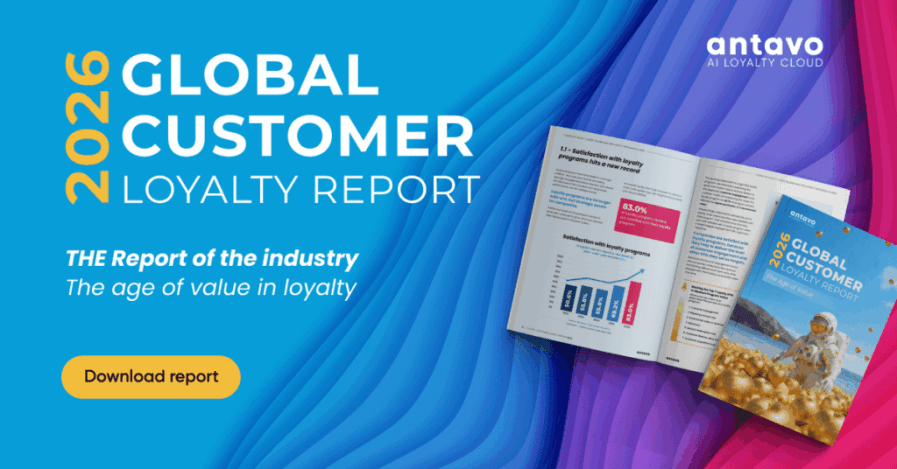
All the statistics in this article are from Antavo’s Global Customer Loyalty Report 2026. Make sure to download it for more regional, global and industry-based findings on loyalty and AI.
Germany: pragmatic participation, measured expectations
Germany stands out as a market where loyalty is embedded in everyday life, but approached with rational expectations. For the country, motivation remains highly transactional: 72% of German consumers join for money-saving benefits, closely aligned with the global 70.8%. However, only 29% are motivated by personalized offers, significantly below the global 41.6%. This suggests that personalization, while widely discussed, is not yet perceived as a primary driver of value in Germany.
The perception gap is also visible. While globally 82.6% of marketers believe loyalty programs make customers feel valued, only 56.2% of consumers agree. In Germany, that consumer sentiment is even lower: just 48% feel valued, compared to 56% globally. Similarly, 60% of German consumers say loyalty is part of their life, below the global 65.9%.
In short, German consumers recognize financial benefits but are less emotionally engaged.
Disappointment patterns reinforce this. While globally the biggest frustration is the time it takes to earn rewards, in Germany 45% cite unattractive rewards as a top disappointment, higher than the global 38.9%. Technical errors are also more frequently mentioned in Germany at 30% versus 23.7% globally, highlighting the importance of seamless execution.
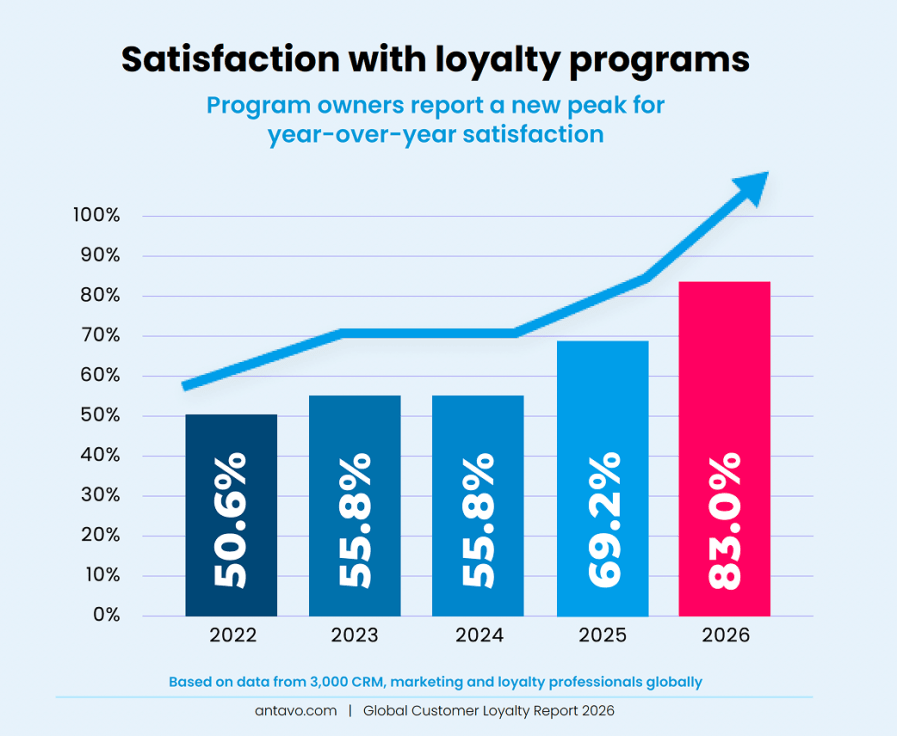
On the marketer side, Germany shows slightly lower confidence compared to the global peak. 83% of German program owners are satisfied, closely aligned with the global 83%, yet AI-driven personalization is currently offered by 44% in Germany versus 51% globally. At the same time, 47% are planning to introduce it, signaling strong future intent.
Interestingly, when analyzing performance data, German marketers report fewer data fragmentation challenges than the global average, but face greater pressure from leadership expectations. This suggests that loyalty is strategically important, yet teams may be under scrutiny to prove incremental impact.

For German brands, the takeaway is clear: loyalty must be practical, transparent, and technically flawless. Financial value wins enrollment, but emotional value remains an untapped growth lever.
Netherlands: Data-driven, yet cautious optimism
The Netherlands presents a mature, analytical loyalty environment. Dutch marketers report high satisfaction levels at 82%, nearly identical to the global average. However, their strategic priorities reveal subtle differences.
When asked why they are satisfied, Dutch marketers are less likely than the global average to cite engagement and ROI. Only 47% attribute satisfaction to deeper engagement, compared to 65% globally, and just 37% mention positive ROI, versus 57% globally. This does not necessarily mean performance is weaker. Instead, it may reflect higher standards or more conservative evaluation.
Dutch loyalty teams are also slightly less confident that loyalty drives unique value. 83% express confidence versus 89% globally, and a higher share remains unsure. This cautious tone aligns with the Netherlands’ reputation for data-driven decision-making.
On the technology front, Dutch programs are relatively advanced in mobile enablement. 67% currently offer mobile wallets or loyalty apps, above the global 62%. AI adoption is also progressing: while 39% currently use AI tools in loyalty management, lower than the global 51%, a significant 56% are planning or open to using AI, indicating rapid upcoming expansion.
From a consumer perspective, the Netherlands shows slower growth in enthusiasm. Only 23.1% of Dutch consumers say they are more likely to join a loyalty program than last year, compared to 43.2% globally. This shouldn’t necessarily mean bad things, and instead suggests market maturity where most customers have found the membership programs they need.
For Dutch brands, the opportunity lies in moving from efficient execution to emotional differentiation. The infrastructure is largely in place. The next competitive edge will come from leveraging AI and personalization to elevate perceived value, not just optimize ROI.
Belgium: High confidence, lower emotional resonance
Belgium stands out for its strong marketer confidence, yet more cautious consumer sentiment.
On the marketer side, 90% of Belgian program owners are satisfied, well above the global 83%. However, the drivers of satisfaction are notably weaker than the global average. Only 45% cite deeper engagement versus 65% globally, 47% mention incremental sales versus 62%, and just 38% point to positive ROI compared to 57% globally. Belgian teams are confident, but less emphatic about measurable impact.
Investment levels are strong. Belgian brands allocate on average 55.6% of their marketing budget to CRM and loyalty, above the global 51.5%. AI momentum is also building: 46% already offer AI-driven personalization, slightly below the global 51%, while 48% plan to introduce it, exceeding global intent.
Consumers, however, are more reserved. Belgians belong to 4.16 programs on average, above the global 3.68, yet only 45% feel valued, compared to 56% globally. Just 70% say loyalty helped them save money, versus 79% globally.
Belgium’s opportunity lies in converting strong internal belief and investment into clearer, more tangible consumer value. To close the perception gap, brands should focus on making rewards easier to earn and redeem, communicating benefits more transparently, and using AI-driven personalization to demonstrate relevance in every interaction rather than relying solely on budget allocation and program scale.
In conclusion
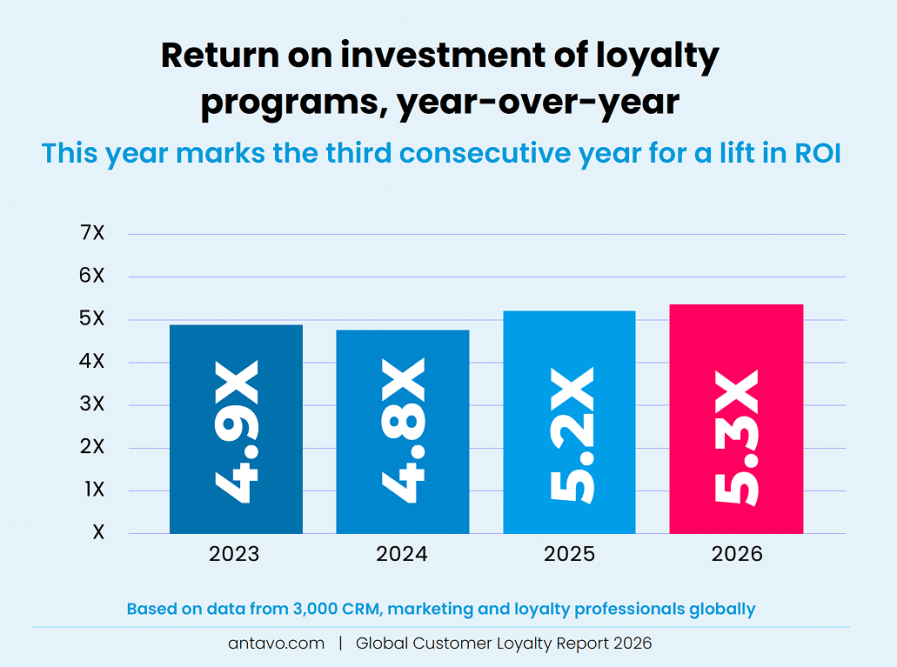
Germany, the Netherlands, and Belgium each demonstrate that loyalty in Europe is mature, measurable, and strategically important. Marketers are largely satisfied, ROI is strong, and AI adoption is accelerating. Yet, the winners will be those who combine seamless technology, smart data usage, and AI-driven adaptability with rewards that feel attainable, relevant, and meaningful.
If you’re exploring how ways to launch or revamp a loyalty program with a next-gen loyalty technology, book a call with Antavo’s loyalty experts. And don’t forget to download our report!