
If you’ve been in SEO long enough, you’ve probably heard someone say, “Just delete half your site. It’ll boost rankings.”
That’s not how this works.
Content pruning SEO isn’t about randomly deleting old content because it didn’t rank as fast as you hoped. It’s not about going into Google Search Console, seeing a few pages with low traffic, and hitting delete.
Content pruning is strategic. Surgical. Intentional.
When done correctly, pruning can improve user experience, clean up crawl budget issues, consolidate internal links, and help search engines focus on your most important pages. When done emotionally, it can tank organic traffic and wipe out years of content marketing effort.
Most websites don’t need aggressive pruning.
They need smarter pruning.
In this article, I’ll break down what content pruning actually means, when it makes sense, and when you should absolutely leave your existing content alone.
Key Takeaways:
- Content pruning SEO is about improving SEO performance, not deleting pages out of frustration.
- Use Google Search Console, Google Analytics, and a proper content audit before you prune content.
- Pruning helps when you have thin content, duplicate content, mixed search intent, or outdated information.
- Strategic pruning improves crawl budget allocation and strengthens topical authority.

Link building cheat sheet
Gain access to the 3-step strategy we use to earn over 86 high-quality backlinks each month.
What is Content Pruning?
Content pruning is the process of evaluating your existing content and deciding what to keep, improve, merge, redirect, or remove.
That’s it.
It’s not mass deletion. It’s not “my traffic dipped so I’m going to start pruning everything.” And it’s definitely not something you do just because a blog post didn’t rank in Google search after three weeks.
You don’t prune content when you’re impatient.
You prune when it’s actually hurting your SEO performance.
That usually means one of three things:
- The page is low performing content with zero organic traffic and no strategic value.
- It’s creating duplicate content or cannibalizing stronger pages.
- It’s thin content that adds nothing to your topical relevance or user experience.
Content pruning should always start with a proper content audit.
I’ll usually pull data from Google Search Console and Google Analytics to look at impressions, clicks, traffic, bounce rate, and internal links.
Sometimes I’ll crawl the site with Screaming Frog and export everything into a Google Sheet to get a clear picture of what’s actually happening.
Only then do I decide whether to:
- Update and improve the content
- Merge it into a stronger page
- Redirect it
- Or remove it entirely
The goal of content pruning SEO isn’t to reduce page count.
It’s to improve clarity.
If the content still supports your website content, contributes to internal linking, and aligns with your goals, leave it alone.
If it’s actively dragging things down, that’s when you step in.
Content Pruning Use Cases
Cannibalized Content
This is probably the most common reason content pruning actually makes sense.
Cannibalization happens when you have multiple pages targeting the same or very similar keywords.
Instead of one strong page ranking well in Google search, you end up with two or three underperforming content pieces splitting impressions, clicks, and internal links.

You’ll usually spot this in Google Search Console.
Multiple URLs showing impressions for the same query. Rankings bouncing around. Organic traffic that never really takes off.
Instead of keeping five low performing content pieces alive, you:
- Merge overlapping pages into one comprehensive, high quality content piece
- Redirect the weaker URLs
- Consolidate internal links so authority flows to one primary page
This strengthens topical relevance and improves user experience because visitors land on one complete resource instead of fragmented blog posts.
It also helps crawl budget. Search engines no longer have to crawl multiple pages competing for the same topic.
Mixed up Intent
Sometimes the content itself isn’t bad.
It’s just wrong for the keyword.
Let’s say you published a long informational blog post.
You did your keyword research. You optimized it. You built internal links. And it still won’t rank.
Then you look at Google search and realize something obvious.
Every page ranking is a product page. Or a comparison listicle. Or a “best tools” article.
That’s mixed up intent.
If user intent is transactional and you’re serving informational content, search engines aren’t going to reward you. You’re not matching what the user actually wants.
This is where content pruning or restructuring comes in.
Instead of trying to force that blog post to rank, you might:
- Replace it with a product page
- Turn it into a comparison listicle with your product as the #1 option
- Or completely shift the angle to align with buying intent
You can check search intent in two easy ways.
First, in Ahrefs. Keyword Explorer will usually tell you the dominant intent for a keyword. Informational, commercial, transactional. It’s right there.
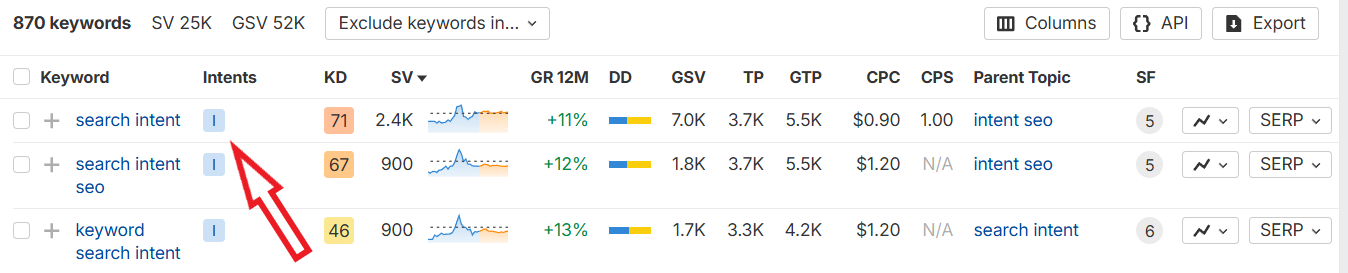
Second, and honestly more important, just look at what’s ranking in Google search. Open the search results and scan the top pages.
Are they blog posts?
Product pages?
Landing pages?
Category pages?
You’ll know the intent within seconds.
If your content doesn’t match that pattern, you’re fighting the algorithm.
After a Business Pivot
This one is huge, and people don’t talk about it enough.
Let’s say you used to offer a SaaS tool.
You built a ton of content around it. Tutorials. Feature breakdowns. Comparisons. Landing pages. Maybe even pricing guides.
Then you pivot.
Now you’re an agency. The product is deprecated. It doesn’t exist anymore.
But all that old content is still live.
Here’s the problem.
That traffic isn’t aligned with your business anymore.
Yes, you might still get organic traffic from Google search. Yes, search engines are still crawling it. But if users land on a page promoting a product that no longer exists, the user experience suffers.
And that traffic isn’t converting.
You don’t necessarily delete everything.
Some informational content might still support your broader content marketing or digital marketing goals. But product-specific pages? Outdated pricing pages? Deprecated feature breakdowns?
Those probably need to be:
- Removed and redirected
- Rewritten to reflect your new offer
- Or consolidated into more relevant content
Outdated or Thin Content
Not all content ages well.
Sometimes it’s thin content. Sometimes it’s outdated content. Sometimes it’s both.
Maybe you wrote a 600-word blog post five years ago that barely scratches the surface of the topic. Maybe it’s full of outdated information. Maybe it was rushed just to hit a publishing schedule.
At the time, it felt productive.
Today, it’s just sitting there.
Stuff like this:

Thin content and low quality content don’t always tank your rankings overnight. But over time, they dilute your overall SEO performance. Search engines crawl everything. If a large portion of your site is shallow or outdated, that affects crawl budget and overall perceived quality.
During a proper content audit, this is where tools like Google Search Console, Screaming Frog, or even a simple Google Sheet export become useful. You’ll usually see:
- Pages with little to no organic traffic
- Low impressions
- No internal links pointing to them
- No backlinks
- No real contribution to topical authority
Now here’s the important part.
Not every low-traffic page needs to be deleted.
Sometimes the better move is to upgrade it into high quality content. Expand it. Refresh the outdated information. Improve internal linking. Turn it into something actually useful.
But if it truly adds no value, doesn’t support your topical relevance, and only exists as filler content, that’s when pruning makes sense.
Link building cheat sheet
Gain access to the 3-step strategy we use to earn over 86 high-quality backlinks each month.
Now Over to You
Content pruning SEO isn’t about deleting pages for the sake of it.
It’s about clarity.
Cleaner structure. Stronger internal links. Better user experience. Smarter crawl budget allocation. More focused topical authority.
When you prune strategically, you help search engines understand what your site is actually about. You remove noise..
But here’s the part people forget.
Pruning alone doesn’t create authority.
You can clean up thin content, merge duplicate content, and align search intent perfectly… but if you don’t have strong links pointing to your most important pages, you’ll still struggle in competitive search results.
That’s where our done-for-you link building comes in.
We secure high-quality placements that amplify your strongest content, consolidate authority where it matters, and turn a clean structure into real rankings.
First, prune strategically.
Then, build authority behind what remains.
That’s how you turn a messy site into one that actually performs.
Frequently Asked Questions (FAQ)
What is content pruning in SEO?
Content pruning is the process of evaluating existing content and deciding whether to update, merge, redirect, or remove it. The goal of content pruning SEO is to improve SEO performance, strengthen topical authority, and help search engines focus on your most valuable pages.
Does content pruning improve organic traffic?
It can, but only when done strategically. Removing thin content, duplicate content, or outdated content can improve crawl budget allocation and consolidate internal links, which may lead to stronger organic traffic over time.
How do I know which pages to prune?
Start with a content audit. Use Google Search Console and Google Analytics to identify low performing content, pages with no traffic, or URLs competing for the same keywords. Look at impressions, clicks, internal links, and overall SEO performance before making decisions.
Should I delete old content that gets no traffic?
Not automatically. Some old content may support internal linking, topical relevance, or future growth. Only prune content if it’s low quality, misaligned with search intent, or actively hurting user experience.
How often should you do content pruning?
Regular content pruning once or twice a year is usually enough for most sites. It doesn’t need to be constant. The key is to make it part of your long-term content marketing strategy, not a reaction to short-term traffic drops.