Reading Time: 6 minutes
E-commerce in India isn’t “booming”—that already happened. What we’re witnessing now is a reset. What was once a slow climb has now become a rocket launch: E-commerce penetration jumped from just 3.4% before the pandemic to 8.3% by 2023.
But here’s what most people don’t talk about—this isn’t just a startup story anymore. Legacy brands, some with decades of consumer trust under their belt, are rewriting the rules.
At our recent #GROWTH Summit, when leaders from Tata Neu, Havells India Ltd., and TTK Prestige sat down for an honest conversation, it wasn’t just about campaigns or metrics. It was about navigating a fundamental shift: how do traditional giants move from retail shelves to digital screens without losing what made them iconic in the first place?
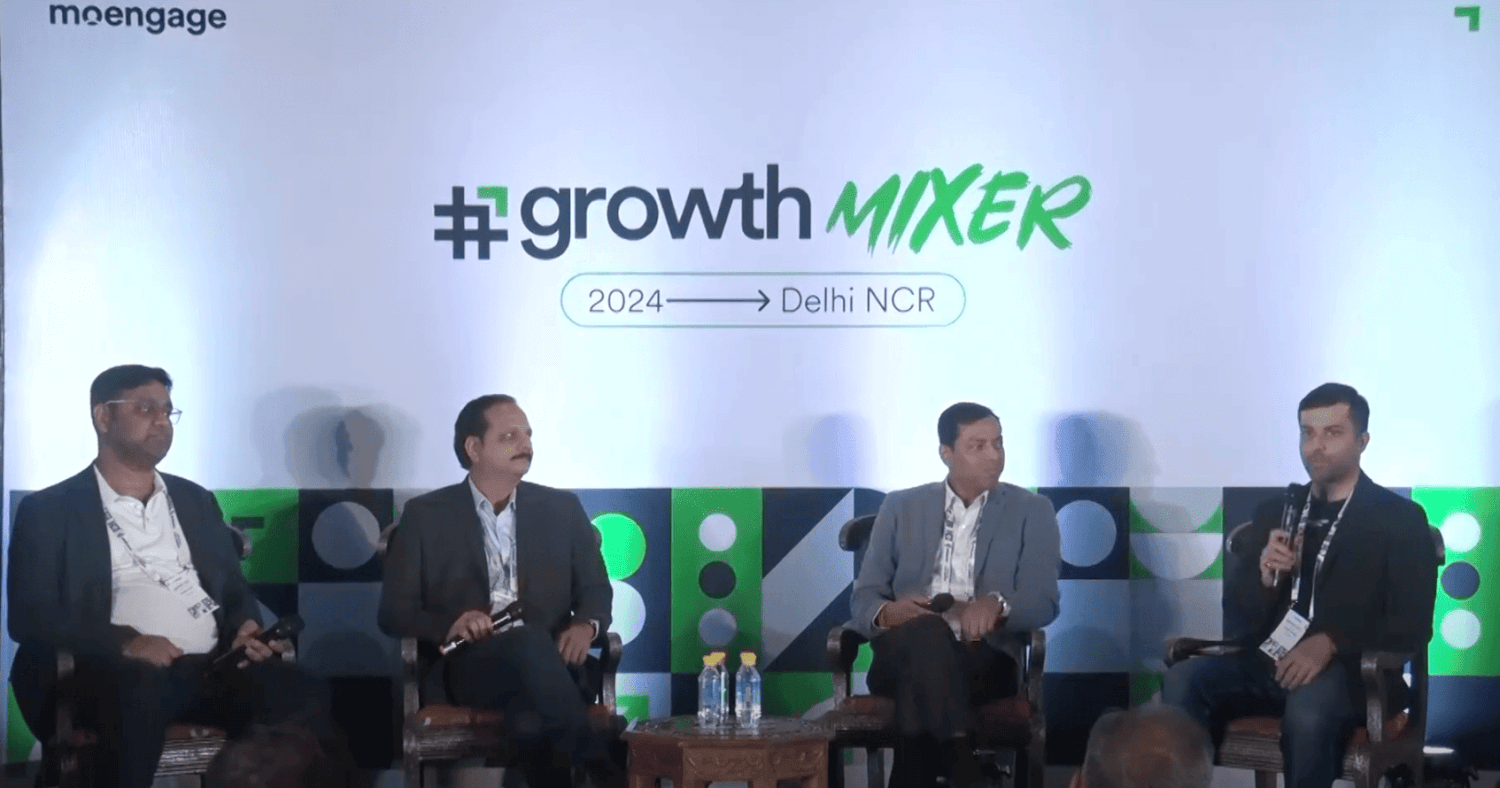
This blog dives into what these seasoned brands are doing differently. We’re talking about more than just omnichannel strategies or AI adoption. This is about legacy meeting agility. About building with data and emotion. About turning decades of offline trust into digital loyalty.
In today’s India, the winner won’t be the one with the best product. It’ll be the one who gets the customer on every channel, at every moment.
The Evolution of Brand-Customer Relationships: Blending Physical with Digital
Let’s be clear: COVID didn’t change consumer behavior—it just hit fast-forward. What should’ve unfolded over a decade happened in under two years. That kind of acceleration doesn’t give brands time to adapt slowly. You either evolve or you lose relevance.
Why Legacy Brands Had the Toughest Challenge
For digital-first startups, pivoting online was the norm. But legacy brands? Their biggest strength—decades of trust built through face-to-face interactions—suddenly became their biggest hurdle. How do you maintain that deep, human connection when the store door closes and the only entry point is a screen?
This was the question on everyone’s mind at the MarTech Summit when leaders from Tata Neu, Havells, and TTK Prestige took the stage.
Omnichannel Is the New Standard
For brands like Havells, TTK Prestige, and Tata, going digital wasn’t the hard part. The real challenge was delivering a unified experience across online and offline channels, without losing the personal touch.
“The bigger problem to solve is how do we combine, how do we integrate, how do we assimilate the physical touch and feel experiences delivered at our stores with a very digital experience?”— Sourabh, Havells
Consumers don’t think in terms of “channels.” They expect consistency, whether they’re browsing a mobile app or standing in a retail aisle. The brands that crack this are the ones that win. In fact, omnichannel shoppers spend 4% more than single-channel ones. But pulling it off? It demands tight data integration, smarter platforms, and cross-channel coordination.
From Channel-Centric to Customer-First
Brands that thrived didn’t just add tech — they reimagined the customer journey.
TTK Prestige is a prime example. Pre-COVID, service meant customers traveling to centers. But lockdowns made that model obsolete — fast.
“During COVID, people could not come out, so we used to bring in vans to do the service,” said Mr. Ram. “That worked out very well… so we changed from service center-based services to home services.”
That wasn’t a temporary fix. It was a turning point. Instead of expecting customers to fit into legacy workflows, they flipped the script and met consumers where they were—literally.
This is the real essence of customer-centric transformation: not digitizing existing systems, but rethinking them entirely based on customer behavior.
Tech Isn’t the Barrier. Silos Is.
If there’s one thing that came through loud and clear, it’s that tech isn’t the hardest part of digital transformation. Silos are.
Too many brands still treat digital, marketing, and customer service as different departments, each with their own data, systems, and KPIs. That’s exactly how great customer experiences fall apart.
“If you asked some of our organization members to have a meeting through collaborative platforms like Teams or Zoom around 7–8 years back, it was a little hard to convince them,” said Mr. Ram. “But today, I can’t imagine existing without such platforms—it has become basic hygiene.”
The pandemic forced internal alignment. Cross-functional collaboration wasn’t a nice-to-have—it was the only way to survive.
The Real Digital Mandate: Don’t Lose What Made You Great
The panel made one thing crystal clear: digital transformation doesn’t mean erasing your identity. It means scaling it.
Brands like Tata and Havells aren’t chasing flashy tech trends. They’re using digital to do what they’ve always done — just more efficiently and at scale:
- Build trust
- Offer real service
- Show up consistently across touchpoints
But this only works if digital isn’t treated like a department. It has to be embedded into how the business operates, end-to-end.
Data as the Bridge Between Trust and Transformation
Legacy brands aren’t just sitting on decades of sales records. They’re sitting on relationships— deep, contextual, historically rich data that digital-first brands can only dream of.
But here’s the twist: That same data is both their biggest asset and their hardest challenge.
The Shift: From Product-Centric to Customer-Centric Data
Traditionally, brands used data to measure what sold. Today, the smartest ones use it to understand who’s buying — and why.
“Data has been used for a long time… but mostly to drive sales. Now, consumer-centric data consumption is increasing, bringing intelligence about customers and their behavior.” — Mr. Ram, TTK Prestige
This shift represents a philosophical reorientation:
|
Then |
Now |
|
Track product sales |
Track customer journeys |
|
Focus on macro trends |
Unlock micro-segmentation |
|
Inform quarterly strategy |
Drive real-time decisions |
For legacy brands like TTK Prestige, this means combining their 70+ years of relationship capital with modern data intelligence.
Bridging the Offline-Online Divide
But making that shift isn’t simple, especially for brands with deep offline roots.
Unlike digital-first players, legacy companies must connect physical and digital touchpoints to create a unified customer view. And that’s no small feat.
“A major benefit of MarTech for legacy brands like ours is the ability to integrate offline and online behavior to stitch a complete customer profile.” — Sourabh, Havells
The challenge is multi-layered:
- Fragmented touchpoints: retail stores, distributors, call centers, websites, apps
- Diverse identifiers: loyalty cards, phone numbers, device IDs
- Inconsistent data formats: rich in-store histories vs. sparse digital behavior
This stitching process is critical. Without it, even the most advanced tech stack will fail to deliver the personalized, contextual experiences today’s customers expect.
When More Data Becomes the Problem
And even after solving the stitching puzzle, there’s another trap: data overload.
“For me, data is a problem… because I have too many data points now.” — Antriksh, Tata Neu
He shared real stories that highlight how too much data — without the right filters — can actually undermine customer trust:
- Offering a low-value loan to a wealthy film actor
- Sending promos to deceased customers
These aren’t just embarrassing—they erode trust. In the age of hyper-personalization, irrelevance feels disrespectful. Legacy brands must not just collect and connect data—they must contextualize it with empathy and precision.
Turning Intelligence Into Impact
Once brands move beyond volume and start prioritizing value, data becomes a true growth engine.
“Can we predict when an AC needs a filter change? Or when a water purifier needs servicing? That’s the level where data starts solving real consumer problems.” — Sourabh, Havells
The panelists outlined a clear roadmap for brands looking to drive smarter engagement:
- Purchase intelligence – Understand what customers buy and when
- Usage intelligence – Monitor how customers interact with products
- Service anticipation – Predict and act before issues arise
This is where legacy brands truly shine — using data not to push more sales, but to elevate ownership experiences and build lasting relationships.
The bottom line is that legacy brands are undergoing a data-driven reinvention. The journey isn’t just about upgrading tools—it’s about redefining how they understand and serve their customers. By transforming data from a static asset into an active enabler of experience, these brands are building the bridge between long-standing trust and future-proof transformation.
The AI Opportunity: From Experimentation to Implementation
If data is the foundation, AI is the accelerator.
Legacy brands have spent years collecting, connecting, and contextualizing customer data. Now, they’re poised to unlock its full value through AI-driven intelligence, not just to optimize processes, but to elevate how they think, decide, and serve.
Unlike past tech waves that focused on operational shifts, AI is reshaping how these companies imagine the future, merging decades of domain knowledge with predictive power that was once unimaginable.
Practical AI, Real Impact
Generative AI may dominate today’s headlines, but for legacy brands, AI isn’t about hype. It’s about purposeful application.
“When I look at AI right now, it’s a soul. It is up to us marketers to put a body around it, and we can use it in any way.” — Antriksh, Tata Neu
This sentiment echoed across the panel: AI is a flexible enabler, not a plug-and-play solution. And the most forward-looking brands are focusing their AI efforts where they matter most — on clear business use cases and critical customer moments.
The post Digital Transformation Lessons from Tata Neu, Havells India and TTK Prestige: Balancing Trust with Technology appeared first on MoEngage.