If there was ever any doubt about whether the $9 billion Omnicom/Interpublic Group deal was an acquisition, not a merger, events of the last week have left no one in any doubt.
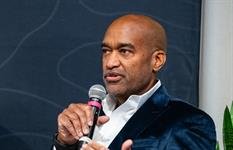
This is very much an Omnicom takeover and the narrative is being 100% directed by CEO John Wren and his newly formed, principally male, senior management team.
See all Omnicom-IPG acquisition coverage
Omnicom’s “Collected Capabilities” leadership group includes nine executives — including PR lead Chris Foster — eight from Omnicom and one from Interpublic (the latter being the only female of the nine, Dana Maiman, who will oversee Omnicom Health.) One jokester dubbed the new organization a “bro-lding company.”
Jobs have been shed at both companies over the previous few months and some deckchairs had already been rearranged, such as IPG saying goodbye to its R&CPMK subsidiary, but not before it diverted the firm’s McDonald’s and Mastercard work elsewhere in the group.
Elimination of duplicate roles is one obvious place to save money, and the new group is saying goodbye to the well-regarded former global head of comms at IPG, Tom Cunningham, after a 20-plus-year run at the firm. Omnicom’s Joanne Trout will manage comms across the whole of the new holdco.
Monday this week was a particularly bloody day for layoffs, with at least 4,000 staffers across the businesses logging in to work and receiving messages that their jobs would no longer exist and they’d be leaving, sometimes before the end of the day. Even veterans of two or more decades received a standard payout package that was the equivalent of three months salary. Cold comfort after devoting a big chunk of your life to one company.
There’s no easy way to make layoffs, and the newly formed Omnicom holding company has committed to making savings of $750 million per year moving forward. The enlarged group’s total headcount will be about 105,000, a reduction of almost 18% compared to the 128,000 across Omnicom and IPG at the end of 2024. Revenues across the new group are around $25 billion.
Such savings have to be accompanied by swingeing cost cuts, but the tone set by Wren in Omnicom’s Q3 earnings when he said the holdco would probably save more than the initial $750 million in year one was pretty brutal. Monday saw the biggest indication of those savings in practice so far.
The CEO was complimentary about comms in his interview with PRWeek’s executive editor Frank Washkuch, saying he was “very happy” with the group’s PR services and didn’t expect as much disruption in them as was seen in Omnicom’s other networks. Storied ad brands such as DDB, FCB and MullenLowe are no more, and Omnicom’s ad and creative shops will now exist under the TBWA, BBDO and McCann.
There was no specific communication regarding the PR brands in Monday’s release about the structure and senior management teams, beyond the fact that Chris Foster will, as expected, be CEO of Omnicom Public Relations (the “Group” nomenclature has been dropped from all operating segments). Foster’s remit, which makes up about 9% of the new Omnicom’s overall revenues, stands at around $2.5 billion across agencies including Weber Shandwick, FleishmanHillard, Ketchum, Golin and Porter Novelli.
Everyone is being completely buttoned up about what changes are in the wings for PR, but there are continued rumors in the marketplace about the structure of the division, especially in terms of agency combinations. Wren told Washkuch that acquisitions, disposals or agency combinations are always a possibility, but contended Omnicom will “have the strongest PR capability far and away in the globe.”
He described a PR arm with a combination of global agency brands and specialty shops such as public affairs and corporate firm Portland in the U.K. and public affairs agencies based in Washington, DC. It was surprising that he didn’t specifically refer to the former IPG PR firms Weber Shandwick and Golin in the context of the increased strength of the portfolio, given they have been the two most successful firms in the industry in recent years. That may simply have been an oversight. Or just another indication of Omnicom leading the way in the acquisition.
“We’re very happy with the PR group, I would dare say, more than any other group, looking at the practices of each of the major brands and networks,” said Wren. He added that there has been “a lot of internal learning and improvement” as the holding company brings together firms from Omnicom and the former Interpublic Group.
Again, this bullishness was slightly surprising in the context of Omnicom PR’s year-over-year financial performance, with the group declining 7.5% in revenue in Q3, compared to IPG’s PR “low single-digit growth” in the same period.
One voice that hasn’t been heard much is that of Omnicom’s clients, the people without whom the whole construct wouldn’t exist. PRWeek spoke to some clients this week and attempted to speak to others. More than a dozen CCOs declined to speak to our reporter Chris Daniels.
Joe Evangelisti, legendary MD of corporate communications at JPMorgan Chase, told PRWeek that the transition, while still in its early days, has been smooth.
“Fleishman[Hillard] has been outstanding throughout the process, keeping us informed of developments and making sure service and coverage is seamless,” he said.
The markets have thus far been singularly unimpressed with the Omincom acquisition of Interpublic. Its share price is down from $103.14 on December 4, 2024, to $70.60 as I write this one year on. Since Monday’s announcement, the shares have dropped from $71.62.
At the end of the day, the client cohort is the most important stakeholder group in this matrix. I sense there is still a lot of work to do to convince Omnicom’s clients that its revolutionary acquisition and attempt to layer economies of scale onto a pressurized agency model is going to add greater value for their brands.
Communications across the whole group will be vital in translating the benefits of this new narrative.