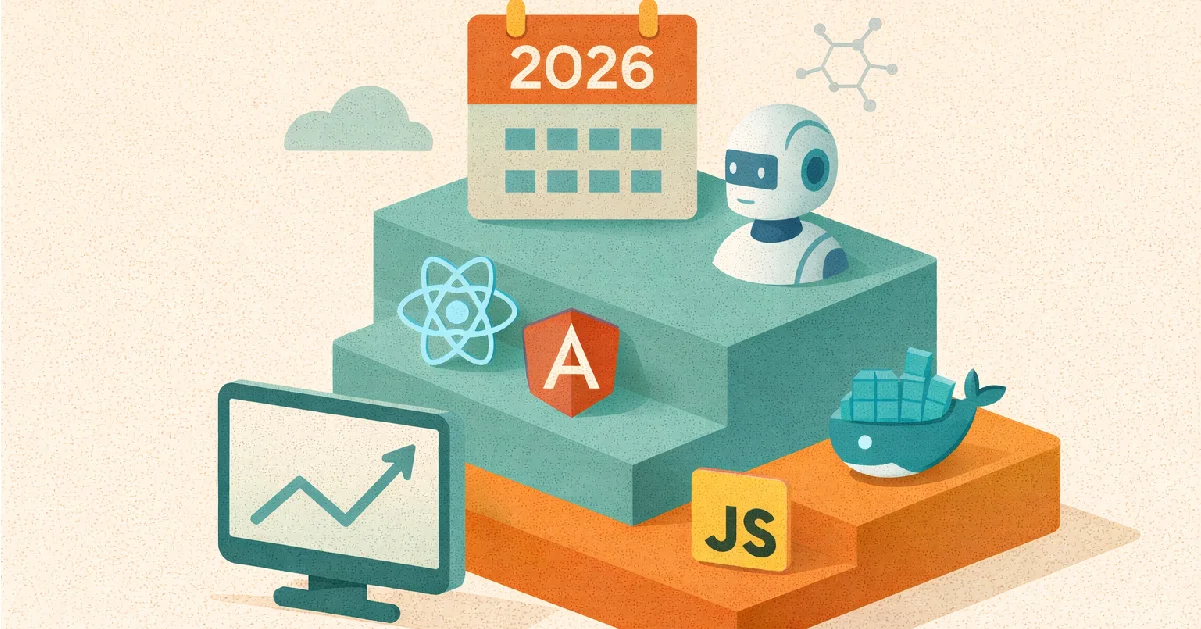
In every business, tech stacks directly impact cost, scalability, hiring, performance, and long-term survival of any digital product. In 2026, the market will be filled with frameworks and tools, but most teams will still waste time chasing trends rather than focusing on what actually aligns with their business goals. But how can we identify the best tech among the pool of tech stacks? Firstly, every tech stack works well in its place, but personally, the right one depends on product complexity, budget, team expertise, security requirements, and how fast you need to ship.
Current stacks are going towards cloud-native, AI-integrated, and modular architectures, meaning older one-size-fits-all approaches are now outdated and slow, and the future will also follow this trend. Tech stacks are important for startups and enterprises because one needs speed and flexibility, while the other needs stability and security. So let’s talk about the best tech stats for 2026 in this blog.
Why Choosing the Right Tech Stack Matters in 2026

Direct Impact on Performance and Scalability
Tech stack decides the loading speed and server load, and it directly affects user experience; a bad decision of tech stack can slow down loading speed and increase server load. Modern apps need real-time updates, AI-driven personalization, and high concurrency, so to fully meet these basic needs, you have to choose a good tech stack because not every stack can handle that without breaking. In 2026, the main focus will be on scalability, and businesses that can’t scale smoothly end up spending 3–5x more on emergency fixes and infrastructure patches.
Hiring and Team Productivity
Many tech stacks come with huge developer communities, like React or Node.js, so hiring is easier and cheaper. And in this condition, if you go with rare or outdated tech, it makes hiring slow, expensive, and painful. So, going with a familiar, popular stack helps your team work faster because everyone already understands the tools. Because less training is equal to faster development cycles.
Long-Term Cost and Maintenance
With the wrong stack, teams had to rewrite modules, migrate to new tools, or rebuild the product entirely within 1–2 years. So ultimately it becomes expensive because you end up rebuilding parts of the product later. In this situation, if you had chosen a weak stack, it would die quickly, leaving you stuck with bugs and no updates. Instead, if you choose a to stick with technology that follows current standards and best practices, maintenance becomes cheaper.
Security and Compliance Requirements
Frauds and cyberattacks are growing rapidly in 2026, so you must choose a tech stack that is secure by default. And if you own businesses in finance, health, or e-commerce by any chance, you have to take care of these safety rules even more seriously because the wrong stack makes compliance difficult and risky. A secure stack reduces vulnerabilities, audit failures, and compliance-related penalties.
How to Choose the Best Tech Stack

Understand Your Project
The first and very important step is just to understand your project, about objectives, goals, and needs. Simple apps, with only landing pages and basic dashboards, don’t need heavy frameworks, so you can go with lightweight options to save time and cost. Medium-complexity apps with marketplaces, booking systems, and CRMs require stable, scalable stacks with strong backend support. And if your projects are highly complex with AI-driven apps, real-time platforms, and fintech tools, they demand advanced frameworks, strong security, and high performance. If you have a more complex product, the more carefully you have to choose backend, frontend, database, and cloud services.
Evaluate Your Team’s Skills
Before choosing your tech stack, see your team’s potential. And always pick tools your team can actually work with, because if you force them to learn new tech, it slows down progress. If your team is strong in JavaScript, a JS-based stack, like React + Node.js, keeps productivity high. If your app needs AI-heavy features, then go with Python-focused stacks, which work better. The more familiar the team is with the stack, the fewer bugs, delays, and rewrites you’ll face.
Consider Scalability Needs
Most of the businesses make this mistake: they just evaluate the current traffic and audience and select the stack according to it, but your stack must handle growth, like more users, more data, and more traffic. If you are thinking of going for the long-term expansion, choose cloud-native and microservice-friendly tools. If you choose poor scalability, it will cost you higher costs and constant system failures later.
Check Security Requirements
Before finalizing your tech stack, do check the security level. Because apps handling personal or financial data need strong, battle-tested frameworks. Choose the one with frequent security updates to reduce the risk of breaches. Industries like fintech, healthcare, and e-commerce have strict compliance rules, so choose a stack that supports encryption, authentication, and secure APIs. If you choose the stack with low security, it may cut costs for now, but it will always become expensive later.
Best Tech Stacks for 2026

React
React is the most popular choice for modern websites. It’s fast and reliable, so you can find developers easily for it. This tool is best for dashboards, e-commerce, SaaS, or, you can just say, basically, anything. It comes with TypeScript, and it helps reduce bugs and keep the code clean.
Next.js
This tool is built on top of React but is faster and more SEO-friendly. It’s perfect for your website if your objective is speed and a strong Google ranking. It’ great for blogs, landing pages, SaaS, and multi-page apps.
Vue.js
This tool is very easy to learn and best suited for beginners and small teams. It gives you a clean structure, so it ultimately builds UI smoother and less confusing than other frameworks. Vue 4 (2026) offers better speed, better reactivity, and more stability for mid-size projects.
Node.js + Express/NestJS
This tool is best for building the backend, like APIs and server logic. It also handles real-time features like chat, notifications, and live dashboards. It would be a great choice for you if your team already uses JavaScript on the frontend.
Conclusion
If you want to choose the right tech stack, just don’t follow trends. Stick to your objectives and needs, and just start comparing with different stacks to see which one is well-suited for you. If you are a business owner who is investing in website development in Bangalore or anywhere else, you should focus on stacks that offer high performance, easy hiring, and long-term stability. For online stores and digital brands, smart stack decisions directly affect conversions, especially in e-commerce website design in India, where speed and smooth user experience decide whether users buy or bounce.