Web development in 2026 looks very different from a few years back. Websites are expected to load instantly now. Users don’t wait. Search engines don’t either. Traditional server-heavy systems are starting to feel slow and outdated.
This is one of the main reasons Jamstack is rising so fast. It is not new anymore, but adoption has clearly accelerated. Companies want speed. Developers want simpler workflows. Businesses want systems that scale without wasting money.
Jamstack changes how websites are built and delivered. Instead of hitting a backend server on every request, pages are prebuilt and served through CDNs. Dynamic features run only when needed, through APIs. This reduces complexity and improves stability, though it also demands better planning.
In 2026, Jamstack is no longer limited to basic static websites. Large marketing platforms, SaaS products, ecommerce frontends, and content-heavy sites are using Jamstack principles. The ecosystem has matured. Frameworks are stable. Tooling feels production-ready now.
Jamstack is still not for everything. It works extremely well in some cases and poorly in others. Understanding its benefits, structure, and real use cases matters before adopting it blindly.
This article explains what Jamstack really is, why it is rising now, and where it actually delivers value in real-world projects.
What Is Jamstack
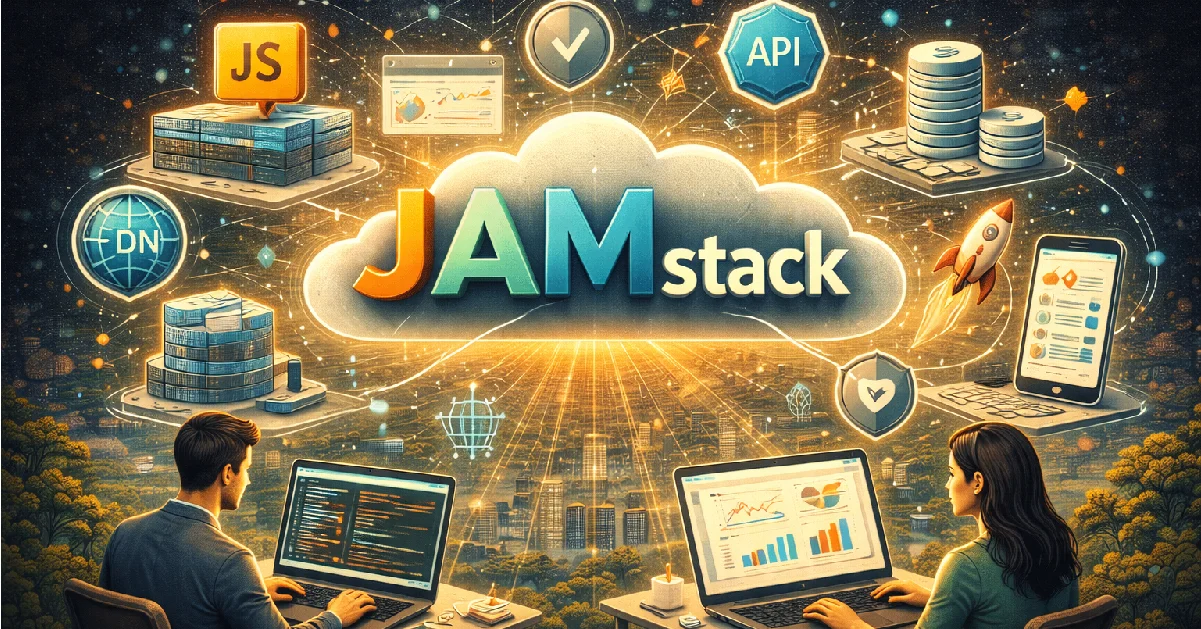
Jamstack is a web development architecture, not a framework or tool. The term comes from JavaScript, APIs, and Markup. But in 2026, the meaning is broader than that definition.
Jamstack focuses on prebuilt pages instead of server-rendered ones. Pages are generated at build time and served through a CDN. This removes the need for a traditional backend server on every request, which is where most performance issues usually start.
JavaScript handles interactions in the browser. APIs take care of backend tasks like authentication, payments, search, or forms. These APIs can be third-party services or serverless functions. The frontend and backend stay decoupled.
Markup refers to pre-rendered HTML files. These files are static, fast, and secure by default. Content often comes from a headless CMS or external data source and is pulled during build or fetched dynamically when required.
In 2026, Jamstack supports hybrid rendering, on-demand builds, serverless logic, and edge functions. This makes it flexible enough for complex products, while keeping the core principles intact.
The biggest difference from traditional architecture is control. Developers decide what should stay static and what needs to be dynamic. This cuts unnecessary server work and improves reliability at scale.
Jamstack is not about removing the backend completely. It is about restructuring how the web is delivered.
Benefits of Jamstack

Better Performance by Default
Jamstack sites are built before users arrive. Pages are already generated and cached on CDNs. There is no server processing during request time. This keeps load times low, even during traffic spikes. Faster sites keep users engaged longer.
Stronger Security
Traditional systems expose servers and databases constantly. Jamstack removes most of that risk. There is no always-on backend to attack. Sensitive actions happen through controlled APIs. Fewer exposed layers means fewer vulnerabilities.
Easy Scalability
Scaling happens automatically through CDNs. Traffic spikes do not overload a single server. Whether there are hundreds of users or millions, performance stays consistent. This makes Jamstack reliable during launches and campaigns.
Lower Infrastructure Costs
Jamstack avoids expensive servers running all the time. Static assets are cheap to host. Serverless functions run only when needed. Costs stay predictable, which helps startups and growing businesses a lot.
Better Developer Experience
Codebases stay cleaner. Everything is version-controlled. Deployments are fast and repeatable. Rollbacks are simple. Developers spend less time fixing production issues and more time shipping updates.
Improved SEO and Core Web Vitals
Search engines prefer fast and stable sites. Jamstack delivers clean HTML and faster rendering. Metrics like LCP and CLS improve naturally. SEO becomes easier to maintain over time.
Flexible and Decoupled Architecture
Frontend and backend stay independent. APIs can be changed without touching the frontend. CMS platforms can be replaced when business needs evolve. This flexibility prevents long-term lock-in mistakes.
Real Use Cases of Jamstack

Marketing and Business Websites
Jamstack works extremely well for marketing sites. Content changes often, but layout stays stable. Pages load fast and remain consistent during traffic spikes. Campaign pages perform better without server slowdowns.
Content-Heavy Blogs and Media Platforms
logs, documentation sites, and publishing platforms fit Jamstack naturally. Content is pre-rendered and cached globally. Readers get instant access. Editors manage content through headless CMS tools. Build times can increase, but modern tooling handles it well.
Ecommerce Frontends
Jamstack is widely used for ecommerce frontends in 2026. Product and category pages are prebuilt. Dynamic actions like cart and checkout run through APIs. This improves speed and stability, especially during sales events.
SaaS Marketing Sites and Dashboards
Public-facing SaaS sites benefit heavily from Jamstack. Pricing pages, documentation, and onboarding flows load fast. Dashboards use Jamstack on the frontend, with APIs handling live data. This split keeps systems scalable.
Enterprise and Large-Scale Websites
Large organisations use Jamstack for reliability and performance. Global CDN delivery ensures speed across regions. Security risks are lower. Teams work independently without blocking each other.
Conclusion
Jamstack is not a shortcut. It is a practical response to how the modern web works—faster delivery. Better security. Easier scaling. Lower long-term cost. These are no longer optional benefits.
In 2026, Jamstack fits teams that care about performance and reliability. It works best when architecture decisions are clear from the start, when the static and dynamic parts are separated properly. When APIs are chosen carefully. Blind adoption still fails. Planning does not.
For businesses aiming to improve speed, SEO, and user experience, Jamstack deserves serious consideration, especially in competitive markets where modern web design bangalore businesses are moving fast and demanding performance-first websites.
A reliable website development company in Bangalore understands when Jamstack makes sense and when it does not. The real value lies not in using Jamstack, but in using it correctly. That is what defines successful websites in the future.