When most marketers think about SEO, they jump straight to keywords like “best running shoes” or “how to do [whatever]”. Non-branded, high-intent, top-of-funnel stuff.
But our latest study might surprise you:
Nearly half of all Google searches (45.7%) are branded searches—meaning people are actively seeking out specific companies and products they already know.
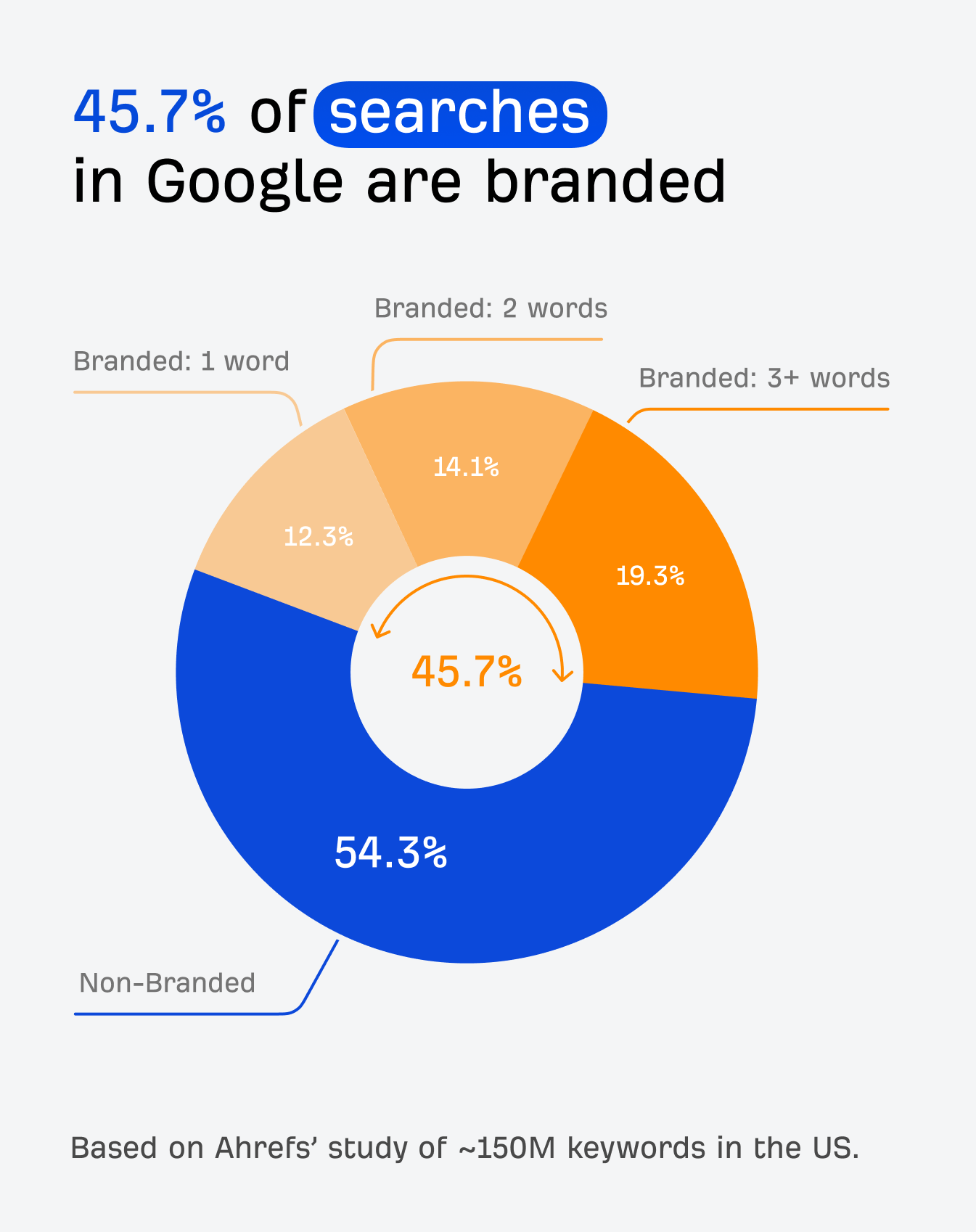
Yep, nearly half of what people type into Google includes a brand name or a product name.
It’s based on a massive Ahrefs study of ~150 million U.S. keywords. We’re talking hard data.
So, if you’re not actively considering brand marketing and branded search in your marketing strategy, you might be missing out on a huge piece of the pie.
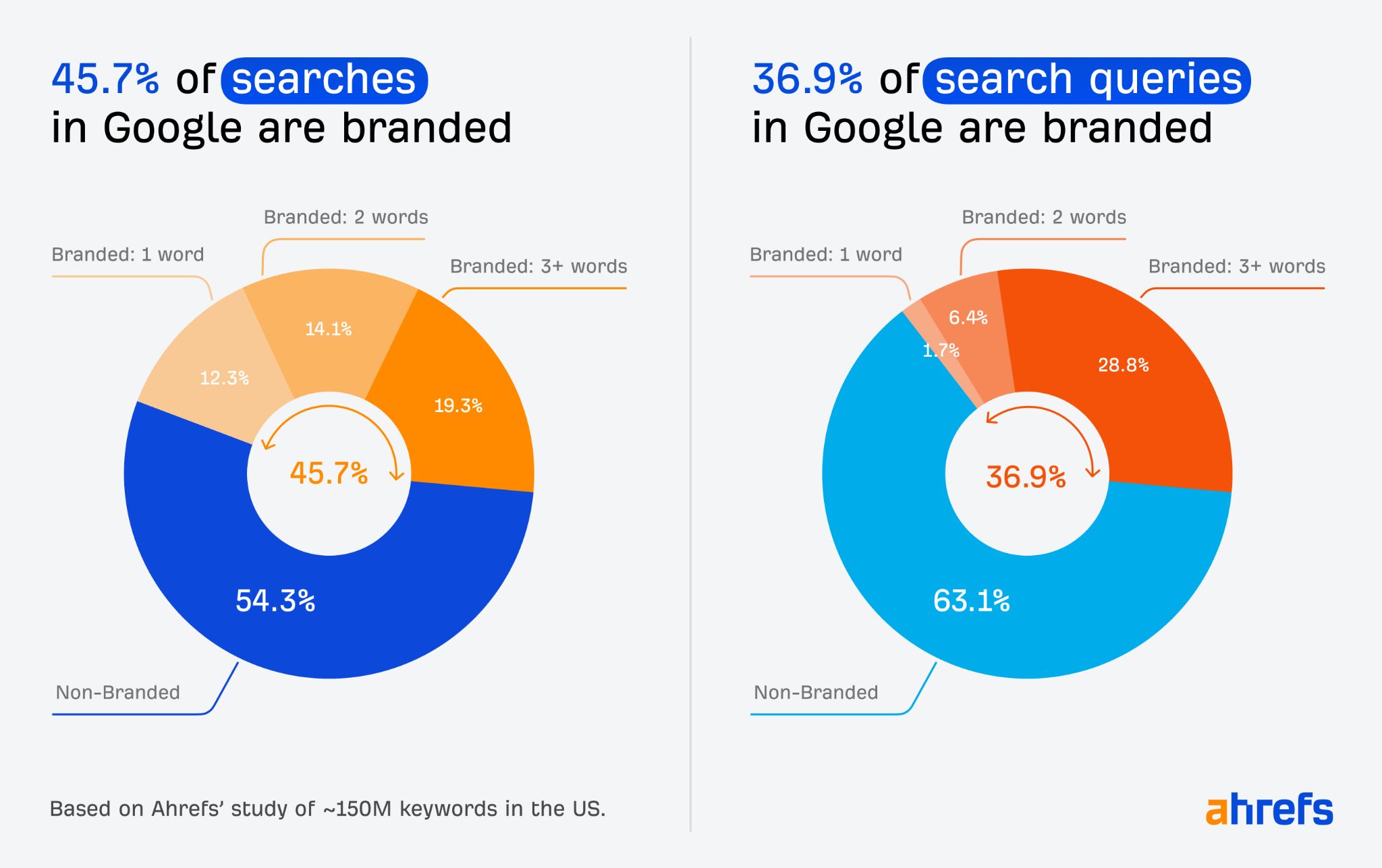
We studied branded queries from two angles: how many unique keywords are branded, and how often those keywords are searched.
Turns out, 36.9% of search queries are branded, but when you factor in volume, branded searches make up 45.7% of all Google searches.
(Shout out to Rand Fishkin for encouraging us to dig deeper on this.)
Basically, anything that includes a brand name, product name or trademarked term (we didn’t include celebrity names in the study, though). Here are a few real examples from our dataset:
- 1-word branded queries: youtube, amazon, facebook.
2-word branded queries: google translate, bank of america. - 3+ word branded queries: inside out 2 showtimes, iphone 15 pro max.
There are three big reasons you should care.
1. Brand matters more than you may think
People aren’t just searching for categories like “running shoes” or “best coffee.” They’re typing in “nike shoes” or “starbucks near me”. That suggests users often already know what they want—and which brand they associate with it.
Furthermore, searches with 3+ words have the biggest slice of the branded search pie. To me, this suggests that most branded search isn’t people typing quick brand names, it’s people doing deeper research with longer queries like “macbook pro vs air”.
Brand awareness isn’t just your typical “top of the funnel” awareness. It’s search demand generation that turns every brand impression into a future branded search.
Brand awareness transforms search intent and creates your competitive moat. Unknown brands fight for generic termswhere they compete with everyone. Known brands get searched directly.
2. SEO tools should treat branded queries differently
You won’t rank well for “facebook” or “youtube”, unless you’re Facebook or YouTube. So when you’re estimating keyword difficulty, search potential, or forecasting traffic, it’s essential to filter out branded keywords. They’re not “winnable” in the same way non-branded ones are.
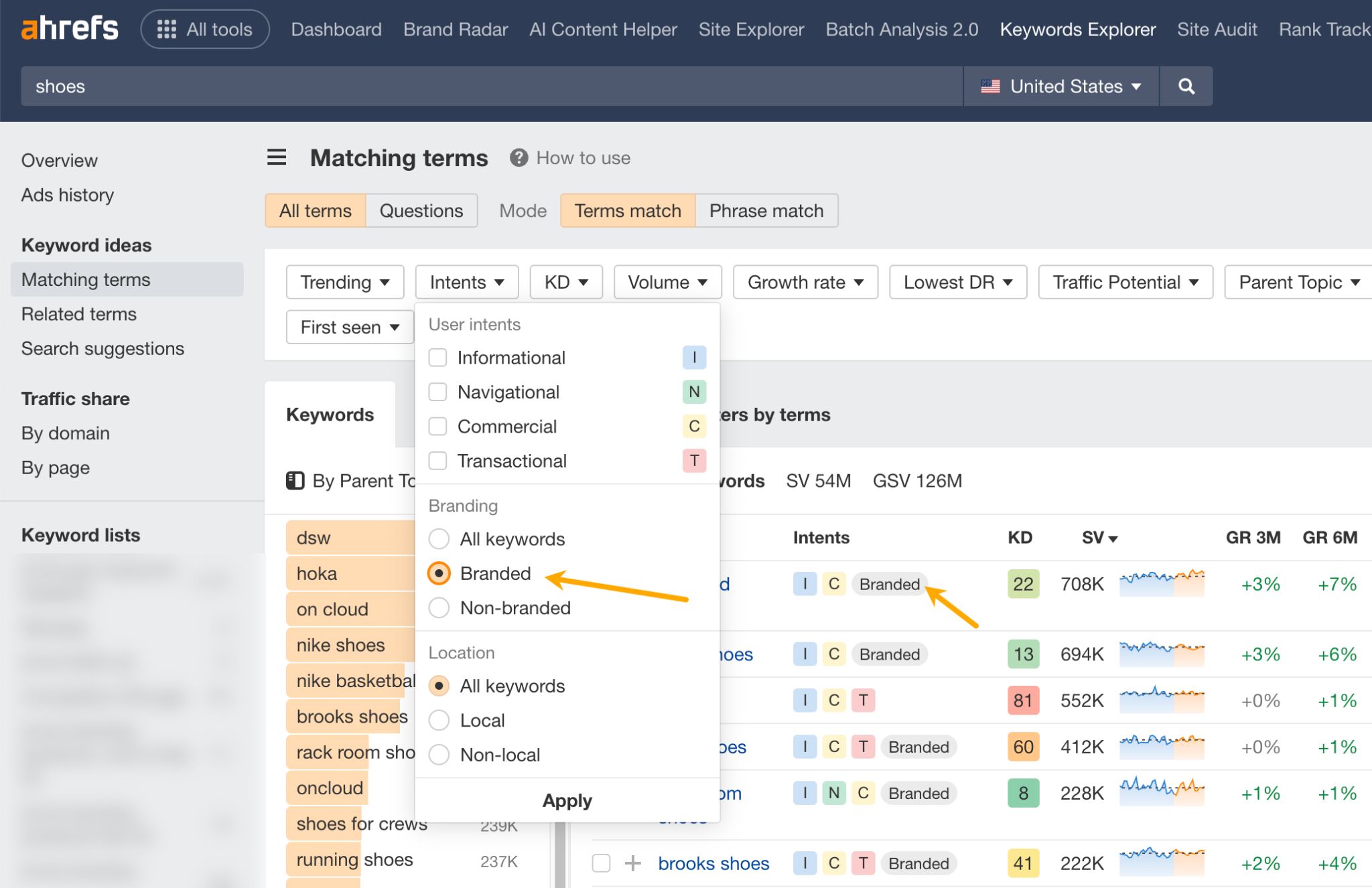
That’s exactly why we added a “Search Intent” filter to Ahrefs’ Keywords Explorer and Site Explorer. It lets you segment branded vs. non-branded keywords so you avoid keywords where you’re already in a lost position, or see if there are gaps in your own branded search optimization.
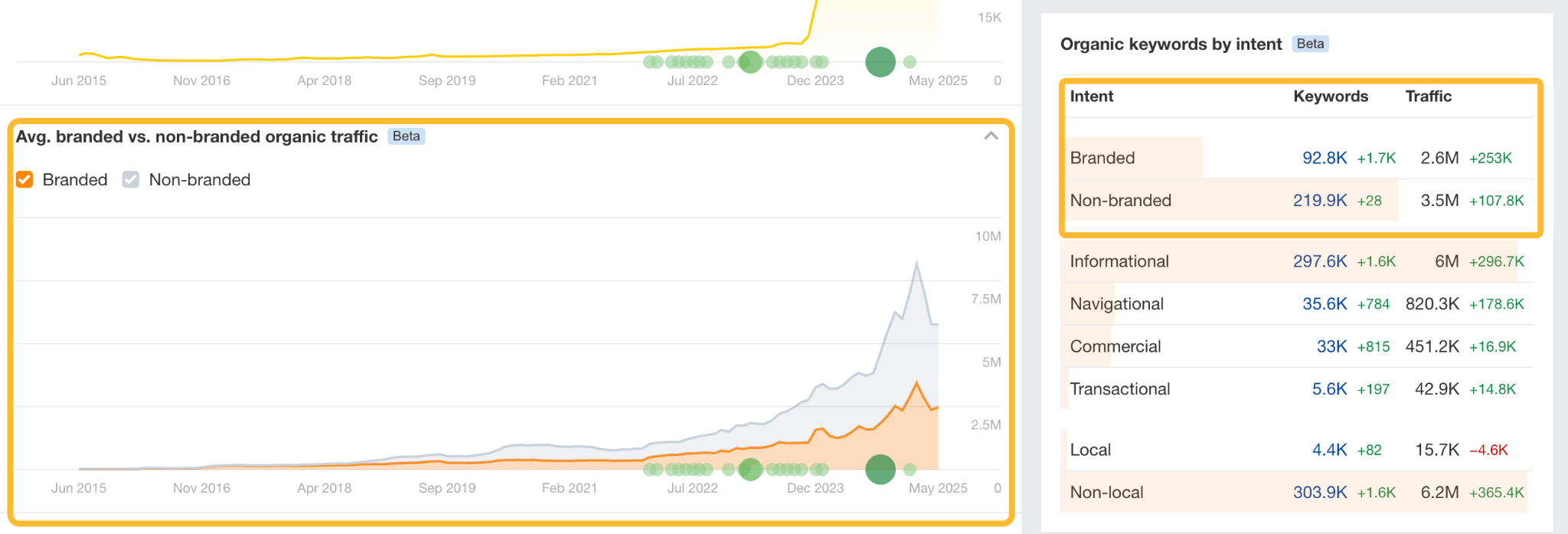
This also enables you to easily track branded vs. non-branded traffic performance in Site Explorer (Overview report).
3. You can (and should) optimize for branded search
The homepage isn’t the only result page searchers might be looking for. They could be looking for support pages, specific products, reviews, or local listings.
That’s why it’s worth auditing how your branded queries perform and making sure you control the full branded SERP with helpful, relevant content. Think of it as owning your reputation, not just your homepage.
Let me give you two examples from our turf.
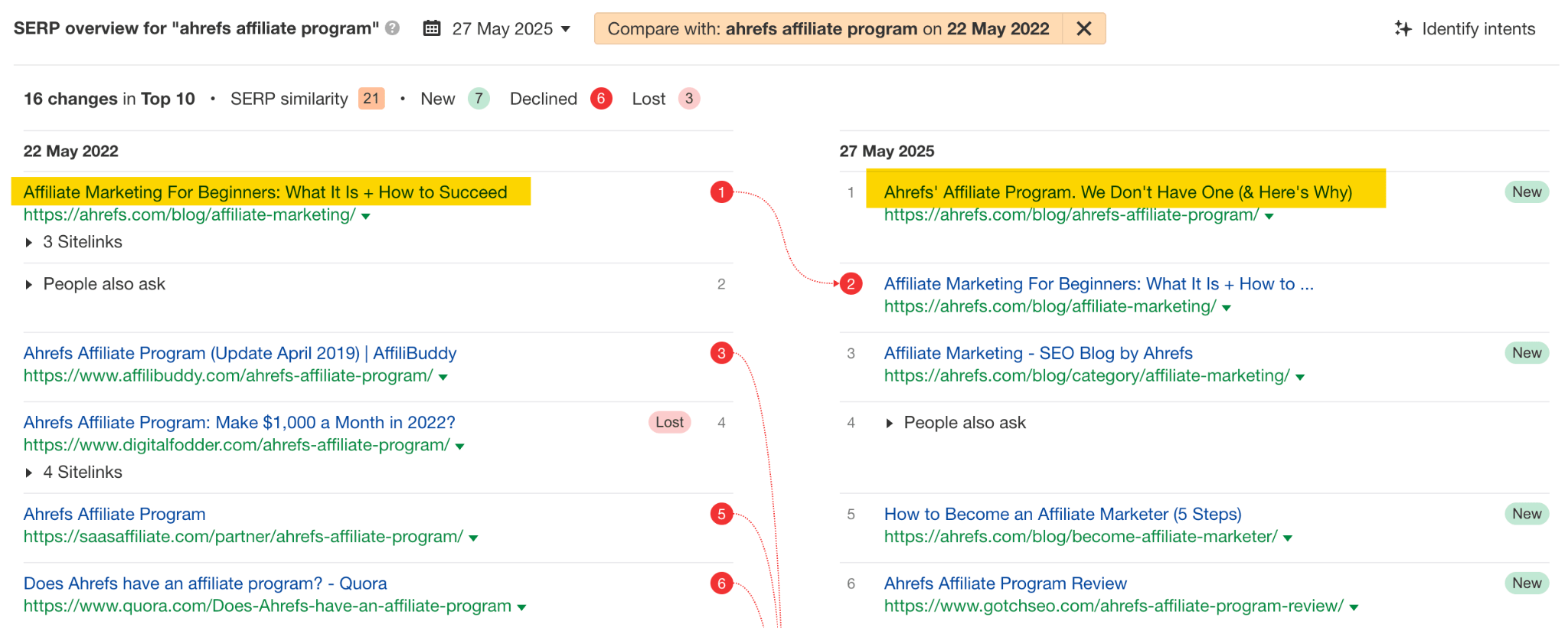
People were asking Google whether we had a program for affiliates, and since we didn’t have a page that answered that, Google tried “its best” pulling up a page that contained the words “ahrefs” and “affiliate”. Not the best experience, and this was our fault. We fixed that with a quick blog post.
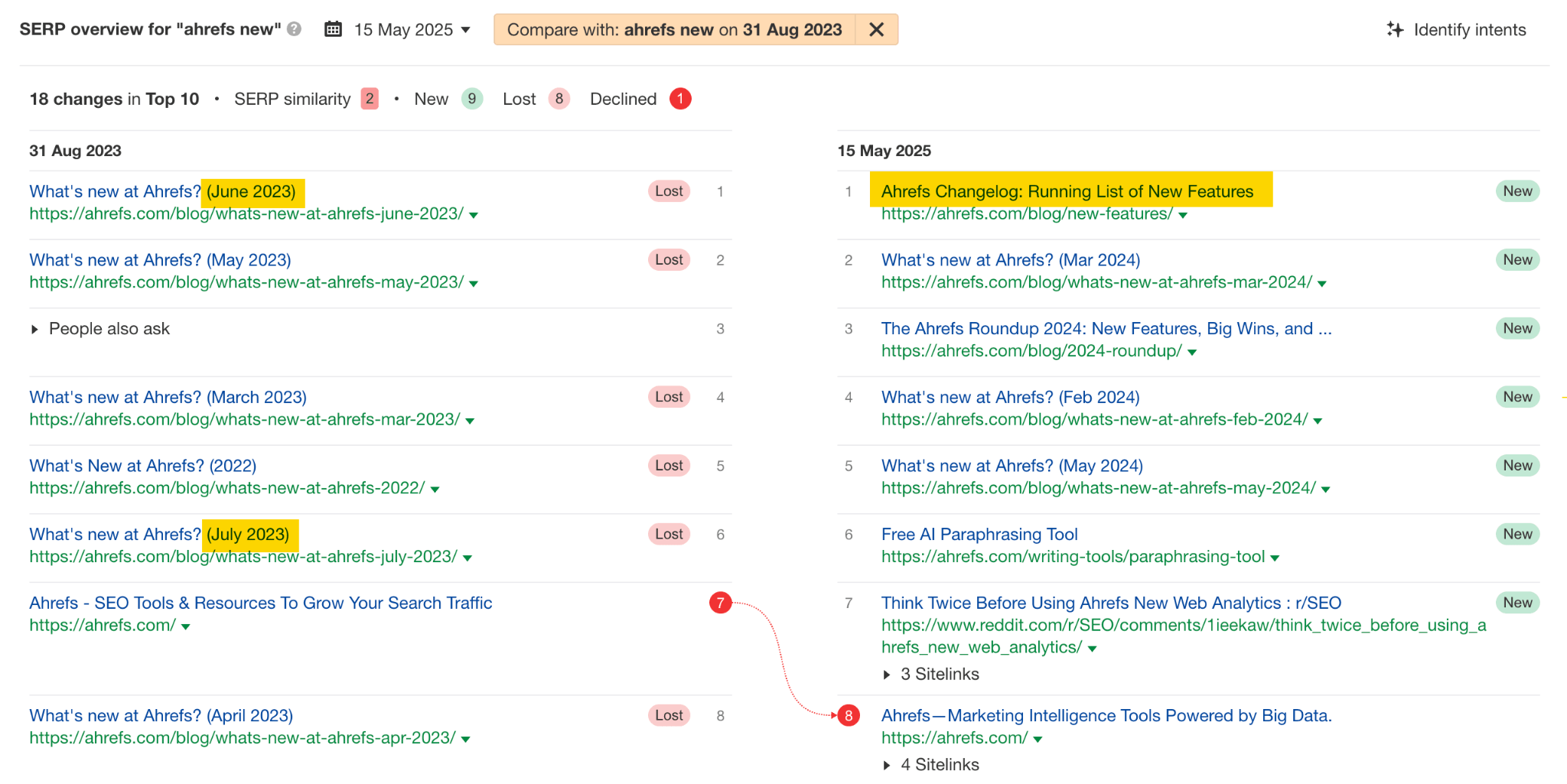
Another example. Some people like to see what’s new in Ahrefs by searching for something like “ahrefs new”. Before we introduced a changelog that consolidated all product updates, the SERP was chaos.
The data sparked plenty of comments on LinkedIn (here and here). These are my personal favorites:
- Hugo H. Macedo argued that many branded searches are just navigational: people typing a brand into their browser bar and hitting enter. It’s not always brand awareness—sometimes it’s just habit. Or as Alek Asaduryan suggested, Google has become a default navigational tool, not just a research engine.
- Stefan Repin pointed out that demand is now often created outside of Google—on social media, podcasts, and other platforms—and Google serves more as the place people go once interest is sparked.
- Isabel Hughes and Shawn Busse highlighted the murky waters of attribution. Just because someone typed your brand into Google doesn’t mean search was their first touchpoint.
- John Emoavwodua emphasized that branded search is often a sign of people moving further down the funnel—seeking more info after discovering your brand elsewhere.
- Mike Escott made the case that a declining brand leads to fewer branded searches, and generic search performance will eventually suffer too (this is something that deserves a study on its own).
- Joshua Squires raised a great point about retailers who don’t own the brands they sell—what does branded search mean for them?
- Michael Fertman pointed out that offline channels (like billboards) can drive branded search volume too. It’s not just digital.
- Marcel Nanning summed it up well: strong branding makes everything else easier.
Final thoughts
This study is one more reminder that brand matters—a lot. Even as the search landscape shifts with things like AI Overviews, brand still stands out as a key driver of visibility in the SERPs.
In fact, I’d argue brand marketing is the most underappreciated SEO strategy. When I analyzed SEO tactics of Nasdaq-listed companies, brand strength kept showing up as an entity within Google’s knowledge graph that can win SERPS.
I also found that companies that have a branded version of an unbranded keyword, like “mortgage calculator” versus “NerdWallet mortgage calculator”, tend to rank higher for the generic term, too. Again, brand marketing has an impact on SEO.
So if you’re investing in SEO, don’t overlook brand. It’s doing more of the work than most people realize.
Got questions or comments? Let me or Tim know, or drop a comment in the discussion on LinkedIn.