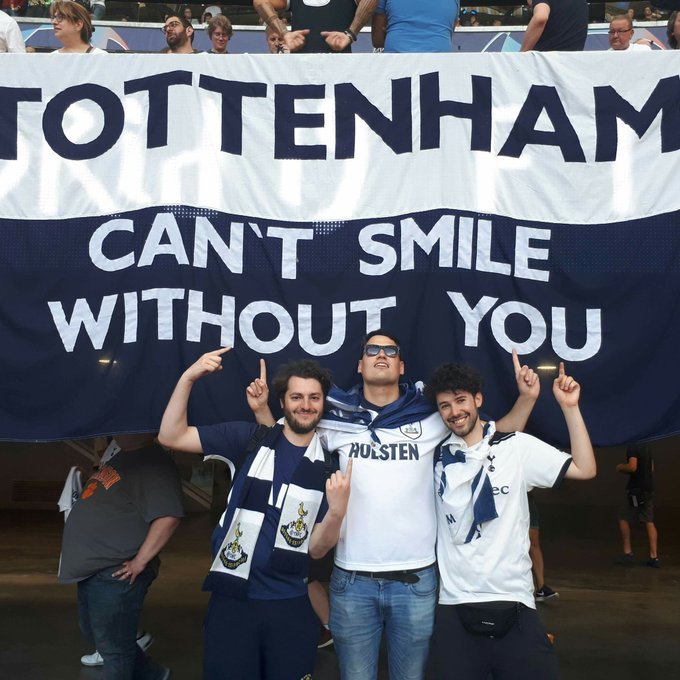
A recent furor over Tottenham Hotspur’s use of “Can’t Smile Without You” is, on the surface, an easy story. A songwriter, who happens to support Arsenal, objects to Spurs playing ‘his’ song. Lawyers mutter about licenses. Fans roll their eyes. Tabloids sharpen the rivalry angle.
Case closed.
Except it isn’t. Because beneath the banter sits a far more interesting and unresolved question: when does licensed use become cultural appropriation, and when does a brand’s legal right fall short of moral legitimacy?
The tabloid framing of this dispute centers on rivalry and royalties. That framing obscures the real issue at stake.
This article is part of Branding Strategy Insider’s newsletter. Join the world’s smartest marketers and subscribe here for actionable insights delivered directly to your inbox.
The Legal Defence Is Easy And Largely Beside The Point
From a technical standpoint, Tottenham is almost certainly in the clear. Premier League clubs operate under comprehensive PRS and PPL licenses covering the public performance of recorded music in stadiums. Those licenses exist precisely to avoid one-off negotiations with rights holders every Saturday afternoon.
In other words, Spurs aren’t stealing the song. They’re paying, indirectly, collectively and impersonally, for the right to play it, along with any number of other songs.
But legality isn’t the same as legitimacy. And brands that rely solely on legal cover often miss the deeper reputational cost.
A Love Song Turned Into Brand Property
“Can’t Smile Without You” wasn’t written as a football anthem. It was a sentimental pop song, later immortalized by Barry Manilow. Its transformation into a Tottenham staple wasn’t planned, commissioned, or curated. It emerged organically, through fan adoption over decades.
That matters.
Because what Spurs now benefit from isn’t the song itself, but the meaning layered onto it:
In brand terms, the song now functions as a mnemonic anchor, a repeated sensory cue that collapses memory, emotion, and identity into a single, instantly recognizable signal of “Tottenham-ness”. That isn’t IP in the narrow sense. That’s cultural equity.
And Spurs didn’t create it.
When Scale And Value Change The Moral Calculus
This is where context matters.
Tottenham Hotspur aren’t a plucky local club operating on goodwill and thin margins. They’re a global sports brand of immense scale and commercial sophistication.
According to Brand Finance, Tottenham’s brand alone was valued at approximately €798 million in 2025, just under £700 million. This figure represents the value of the Spurs name, trademarks, commercial appeal, and global recognition. It excludes physical assets, infrastructure, and operating revenue.
Zoom out further, and the imbalance becomes starker still. Forbes values the club’s total enterprise value at around $3.3 billion, or roughly £2.6 billion.
Yet they continue to trade rhetorically on community, heritage, and local identity, as though those weren’t the very assets being abstracted into a global entertainment product.
Against that backdrop, the debate is no longer about whether Spurs can legally play a song. Of course they can. It’s about whether a brand of this scale should behave as though cultural meaning is a free raw material, endlessly extractable under a blanket license.
When a multi-billion-pound enterprise extracts emotional value from a creative work while offering only minimum legal compliance in return, the result may be lawful, but it isn’t just.
The Quiet Extraction Of Fan And Creator Value
Football clubs are exceptionally good at absorbing value created elsewhere:
- songs become chants;
- chants become rituals;
- rituals become “club DNA”;
- club DNA becomes a monetizable atmosphere, broadcast value, and brand distinctiveness.
This isn’t unlawful. But it’s certainly extractive.
In this case, the club leverages:
- the emotional labor of supporters who turned a pop song into a collective signal;
- the creative labor of songwriters whose work now underpins that ritual;
- without any relationship, recognition, or reciprocity beyond a generic licensing framework.
Extraction without reciprocity is, by definition, parasitic. A brand that feeds on cultural meaning without nourishing its sources eventually cannibalizes the very authenticity it depends on to sell belonging.
So when a £700 million brand draws cultural power from a work whose creators have no meaningful voice in how it’s used, the imbalance isn’t theoretical. It’s structural.
Why This Story Hits A Nerve
This dispute feels different because one of the creators is visible, vocal, and inconvenient. He’s alive. He’s speaking. He supports Arsenal. He punctures the comforting illusion that these cultural artifacts are somehow free, floating beyond ownership or authorship.
What further sharpens this is that football culture is full of mismatches between creator identity and fan adoption.
Elton John is a lifelong Watford supporter, even serving as chairman, yet “I’m Still Standing” is sung at grounds across England by fans of clubs he’d never support.
Rod Stewart is a passionate Celtic supporter, but “Sailing” became associated with various English clubs in the 1970s and 1980s, including teams Celtic supporters would consider rivals.
Ian Broudie of The Lightning Seeds supports Liverpool, yet “Three Lions” is now a national ritual, belted out by England fans of Manchester United, Everton, and other Liverpool rivals.
Even “You’ll Never Walk Alone”, written and performed by Liverpool supporter Gerry Marsden, has been adopted by Celtic fans, creating the curious situation where it unites two clubs culturally while dividing them when they meet in European competition.
In other words, football has always been promiscuous with meaning. Songs escape their creators. Allegiances get overwritten. Cultural ownership becomes collective.
But scale changes responsibility. There’s a material difference between organic fan adoption and institutional brand extraction. When a multi-billion-pound organization formalizes that cultural borrowing as part of its official identity, the ethical bar rises.
The contrast with Arsenal’s approach is instructive. The Gunners agreed an ongoing usage arrangement for “The Angel (North London Forever)” with singer-songwriter Louis Dunford, recognizing that a song woven into matchday identity is not background noise, but a living part of culture. Dunford was later featured in the final episode of “All or Nothing: Arsenal”, a public acknowledgement of the creative source behind the ritual.
In brand terms, this isn’t sentimentality. It’s strategy. By anchoring its matchday ritual in a visible creative relationship, Arsenal turns culture into a competitive asset. Empathy becomes differentiation. Emotional legitimacy becomes something rivals can’t replicate through licensing alone.
In an era where brands talk relentlessly about purpose, stewardship, and community, how they treat the people who create their cultural touchpoints becomes part of the story they tell about themselves.
A modern, values-led organization would at least ask:
- should we acknowledge the creators of something so central to our matchday identity?
- should we treat this as more than background music?
- do we want to be seen as simply compliant, or culturally responsible?
Tottenham Hotspur’s reported response, ‘the license covers it’, may be legally sound. It’s also brand-deaf.
This Isn’t About Royalties, It’s About Respect
Let’s be clear: this isn’t a plea for football clubs to renegotiate every chant or song. That would be absurd.
Creators aren’t asking to control football culture. They’re asking not to be erased from it.
There’s a meaningful middle ground between:
- full commercial exploitation; and
- total indifference.
Symbolic gestures matter. Recognition matters. Narrative matters.
Cultural leadership doesn’t require complex legal structures. It could be as simple as permanent acknowledgement in the matchday program, a visible partnership with a music charity the creators support, or treating the song as a formal club asset with a shared history rather than an anonymous stadium filler.
Licensing answers the question “can we?”
Cultural leadership answers “should we?”
A club whose brand is valued at hundreds of millions can’t credibly claim that cultural meaning is incidental.
The Broader Implication For Sport And Brands
What this episode really exposes is a wider truth: sport has become one of the most aggressive aggregators of cultural capital in modern life, often without reflecting on where that capital comes from.
The logic is uncannily similar to the current debate around AI and intellectual property. Just as generative models scrape the work of millions of creators to produce a commercial product, football clubs increasingly scrape memory, atmosphere, and emotional labor to polish their brand. In this case, extraction is legal. In both cases, consent is ambiguous. And in both cases, the value flows overwhelmingly in one direction.
As clubs become global entertainment brands, with valuations in the billions, the expectations placed upon them change. The defense of “everyone does it” no longer suffices.
Because when a brand’s value is built on belonging, memory, and emotion, how it sources those things becomes part of the brand story.
As a marketer, your job is to compete. Compete differently with The Blake Project.
The Uncomfortable Conclusion
Tottenham Hotspur is most likely within its rights.
But it’s also, undeniably, within its power.
A club with:
- a £700 million brand;
- a £2.6 billion enterprise valuation;
- and a global audience;
doesn’t get to behave like a pub with a jukebox.
The law lets them.
Leadership asks more of them.
And that’s precisely why this feels wrong.
Not because a song’s being played without permission, but because a club of this scale has chosen the minimum legal position over cultural leadership.
It isn’t theft.
It isn’t illegal.
But it is a reminder that brands reveal their values most clearly in the things they don’t technically have to do, but choose to do anyway.
Author’s note
One of the co-writers of “Can’t Smile Without You” is a member of my immediate family. This article was written in a professional capacity, drawing on more than two decades of brand and cultural advisory experience. The views expressed would remain unchanged irrespective of that relationship.
Contributed to Branding Strategy Insider by Dan Dimmock, a UAE-based board advisor and non-executive director focused on strategic clarity, governance, and institutional transition. Through Firstwater Advisory, he works with executive teams globally to improve decision quality, alignment, and leadership effectiveness during growth, complexity, and change.
At The Blake Project, we help clients worldwide, in all stages of development, define and articulate what makes them competitive and valuable at pivotal moments of change. Please email us to learn how we can help you compete differently.
Branding Strategy Insider is a service of The Blake Project: A strategic brand consultancy specializing in Brand Research, Brand Strategy, Brand Growth, and Brand Education
Post Views: 9