For years, parents across the country have been calling on Congress to do something about social media’s harmful effects on children. And typically, when something does happen, it follows a familiar pattern.
The billionaire tech CEOs are summoned to Congress. The grieving parents of children who have self-harmed bring old photos of their children, some of whom are now deceased, and relive their experiences. Lawmakers confront the tech company leaders with horrific stories of exploitation, eating disorders, drug overdoses, and suicide. The CEOs apologize. They promise to do better and point to their latest parental controls. Congress introduces child-safety bills. And the bills get stalled.
Worried about a child or teen’s mental well-being? Here are some online resources to learn more about symptoms, treatment strategies, and how to help.
- Effective Child Therapy is a resource from the Society of Clinical Child and Adolescent Psychology. The website has information on the emotional concerns, symptoms, and disorders that commonly impact teens (divorce, bullying, body image, anxiety, depression, and more) — and the evidence-based therapies that can help.
- The American Academy of Child and Adolescent Psychiatry has information for parents on how to spot symptoms of mental health issues, and where to seek help.
- The Clay Center for Young Healthy Minds has educational articles on mental health issues, as well as many links for where to turn when searching for particular support groups, programs, and therapies.
- The Crisis Text Line is a text messaging-based service for people enduring “any type of crisis.” And the National Suicide Prevention Lifeline is a phone-based service.
- The Trevor Project is a crisis helpline for LGBTQ+ youth. It can be reached at 1-866-488-7386.
But since Congress has so far failed to regulate social media, parents and state attorneys general are trying a different tactic. They’re suing.
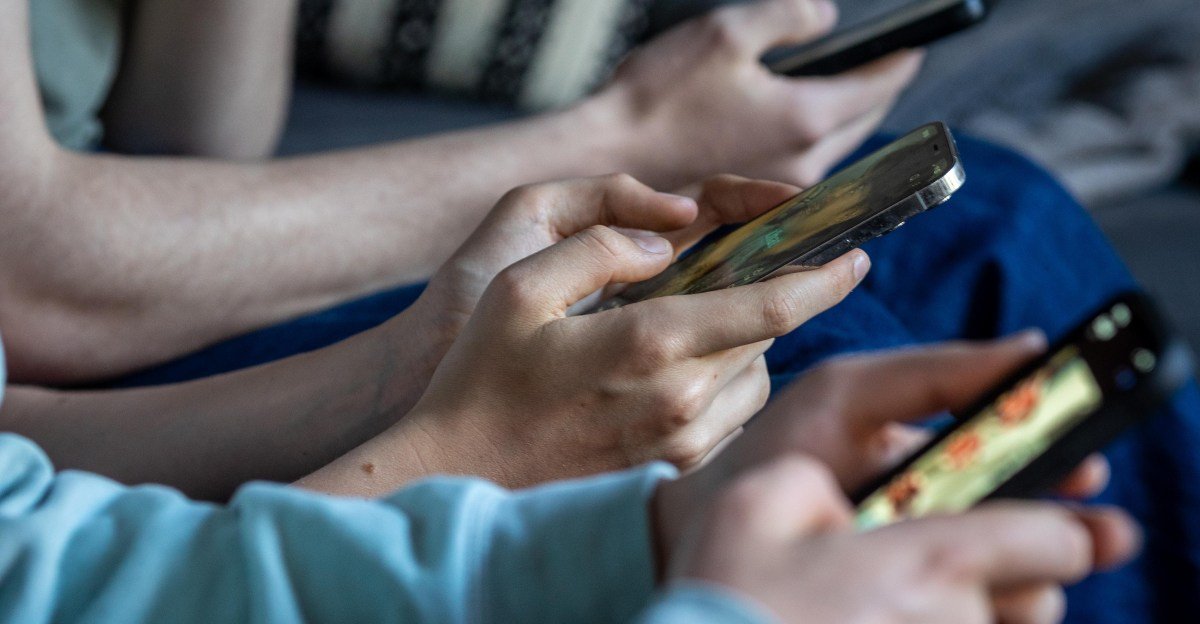
The lawsuits don’t target dangerous content on platforms, though. Instead, they go after the apps themselves: features like infinite scroll, constant notifications, and beauty filters that make it all but impossible for teens to put their phones down.
So far, the strategy is working. Last week, only a few days into a trial over whether Meta deliberately tried to make young users addicted to their apps, the company reached a landmark settlement with nearly every US state (and Washington, DC).
Then Meta did something strange. The company spun their punishment into an advertising campaign. They wrote a full-page “open letter” that presented the company as a leader in protecting teens and young people. They also challenged their competitors — Snap, TikTok, and YouTube — to adopt the rules Meta agreed to in its settlement, even though neither were involved in the lawsuit.
It seems that Meta is trying to turn its agreement into an industry standard. And with Congress still unable to regulate social media, the deal could become the closest thing the United States has to a federal rulebook for social media.
So what did Meta agree to? And why is it so eager to bring its competitors along?
Today, Explained co-host Sean Rameswaram spoke with Lauren Feiner, senior policy reporter at The Verge, about how Meta turned a historic settlement into a potential power move.
Below is an excerpt of their conversation, edited for length and clarity. There’s much more in the full podcast, so listen to Today, Explained wherever you get podcasts, including Apple Podcasts, Pandora, and Spotify.
Lauren, what did Meta just agree to? Because people are saying it’s a big deal.
There’s two parts of what Meta agreed to. First is the money. They agreed to pay about $17.1 billion to the states over 10 years, but $5 billion of that will only kick in if YouTube and TikTok agree to similar terms and their own payment to the states.
Then you have the actual business changes that they agreed to — things including a two-hour usage limit across its apps daily. That does exclude certain things like messaging and longform content. But that’s a pretty big deal. It changed nighttime and school-hours notifications for teens so that those are off by default. And it’s also going to let teens turn off the personalized algorithm in their feed and get a reverse chronological feed that the states might believe is less addictive.
Okay. Let’s break it down a little bit and just start with the money. Which states are getting billions of dollars? All of them? Most of them? DC’s one of them, even though it’s not a state, I heard.
Nearly every state is getting in on this money. It’s 47 states and DC and US territory. So it’s really almost the entire country that’s getting in on the action. One of the states that is not a part of this deal is New Mexico, which as you might remember, recently got its own deal.
And can you give us a sense of how meaningful $17 or $18 billion is to Meta?
As we know, Meta is a $1.4-ish trillion company. This is not a huge sum of money in the grand scheme of things for Meta, especially over the course of 10 years. That said, it’s not completely insignificant, especially at this time when having cash flow is really important to companies like Meta that are involved in the AI race.
But, like, did their stock price go up or down on the news?
It did go up on the news. Shareholders clearly saw this as a net positive of at least there’s some more stability here and this is not something that’s going to take down Meta as a business.
And part of the deal, as you mentioned, is that Meta’s going to hold up some of the settlement until other companies like YouTube, TikTok, Snap, follow its lead here. What is that about? Have we ever seen something quite like that before?
I’ve never really seen anything quite like that before. A settlement, in general, is something that can only be enforced between the parties. And in this case, it’s just Meta and the states who are signing onto this agreement. TikTok and YouTube had nothing to do with this, but they’re being roped in here.
I see that as a little bit of a power move on Meta’s part. Because on the one hand, if they’re the only ones who are having to enforce this usage limit across their apps, a teenager who finally hit their Instagram limit for the day might just go and spend some time on YouTube and TikTok and they might spend much more time there because they can’t get kicked off.
I think it is to Meta’s benefit to rope them in here. And by arranging this settlement like this, now Meta is almost incentivizing the state attorneys general to go even harder after its competitors.
Do you think this gamble on Meta’s part might pay off?
I think there’s a few signals in both directions. There are some pretty strong signals of why YouTube and TikTok might take a deal like this. One is that they could come to a similar calculation that Meta did, that taking a settlement like this, agreeing to some discrete terms of how they should change their apps, is actually for the better for them in the long run.
The alternative, for example, might be legislation that is much more ambiguous or confusing. One example of that is the Kids Online Safety Act, or KOSA, which is a very popular bill in Congress. [KOSA] would impose a duty of care onto social media companies, which means that they would have to take on this responsibility to protect kids in the way that they design their platforms. And that’s a lot more difficult for them to figure out how to comply with or worry about who’s going to enforce that in the future than agreeing to some discrete terms of what exactly they’re going to change to their apps.
On the other hand, they could say, “You know what? We’re really different from Meta. Our businesses are different. You know, the reason people come to TikTok or YouTube might be different from the reasons they come to Instagram and Facebook.”
YouTube in particular, I think would make an argument about being a place that people learn things — they come for the longer-form videos, and it’s more of an entertainment app. I think that’s language we’ve seen from them before. So I think we could see them take an argument like that a little bit further.
I’m glad you brought up Congress because Congress infamously refuses to regulate social media, though they certainly humor the idea every now and then. Does Meta’s settlement become some kind of de facto national policy now that it’s sort of broaching the issue before Congress manages to pass legislation?
I think it’s quite possible that it does. I think we have seen KOSA get fairly far in the last Congress and in this Congress, but it’s also become more complicated. The House and the Senate have different versions of the bill right now. That means that even if it passes in either chamber, they’re still going to have to reconcile the two in their worlds apart.
I think this is very likely going to be the major document that we have that’s changing social media regulation, social media norms, for the foreseeable future.
And remind us what might be dangerous about trusting Meta to self-regulate?
[With] the fact that Meta agreed to these terms, I think we can intuit that they believe this is something they can live with. That this isn’t going to be a death knell for their business. They’re going to be able to weather this storm.
You have to keep that in mind: Who is coming up with these terms? And of course, the state attorneys general played a significant role here, and I think they seem very happy with the settlement, but you have to keep in mind that this is not exactly the same as a court order or a regulation. It’s applying to one company and it’s terms that it felt it could live with.
And if we’re not going to be cynical for a second here, and Meta actually convinces Snap and YouTube and TikTok to go along with them and all four massive titans essentially adopt the same regulations for minors’ usage of their platforms, do we have a better society?
I think it depends on how this is all implemented. We have, first of all, the potential privacy issues with age verification that many people have raised already. And then you have the questions of how easy is all of this to just circumvent and how much do these defaults really do to change teens’ behaviors?
I think it’s certainly possible that these all have really long-lasting effects and that enough kids will not circumvent the protections and they will just take the defaults, and it’ll change just how teens interact with social media in general. But I think we really do have to see how this all plays out and if it lives up to the hopes that a lot of the AGs here really want it to.
And how long do we have to wait? Years? Years?!
Some of the provisions take effect relatively soon, but yeah, there are certain benchmarks within the next year, two years for certain standards that Meta has to reach in implementing these.
Okay. Well, we’ll have you back in years to find out how it went.