Black Friday and Cyber Monday still concentrate enormous demand into a very short window. But the hardest part of BFCM marketing is no longer generating traffic. It is recognizing intent quickly, helping shoppers make decisions, removing friction between channels, and giving first-time buyers a reason to return after the discounts end.
At Insider One, we believe winning BFCM strategies are built around the customer journey, not a bigger promotional calendar. Brands need a customer engagement operation that can adapt while the season is underway, using live data, AI-powered personalization, conversational commerce, and automated cross-channel journeys.
For BFCM 2026, we brought together eight practical use cases from Insider One and our technology ecosystem, including Amazon Web Services (AWS), AppsFlyer, Movable Ink, Snowflake, Antavo, and Infobip. Together, they show how marketers can turn peak-season intent into higher conversion, stronger customer relationships, and revenue that lasts beyond Cyber Week.
Shoppers are increasingly using conversational AI to explore products, compare options, and narrow broad questions into specific purchase decisions. A customer might ask for the best skincare gift under $100 or a pair of running shoes suited to winter conditions. For brands, the opportunity is not simply to appear in that conversation. It is to connect the resulting intent to the rest of the customer journey.
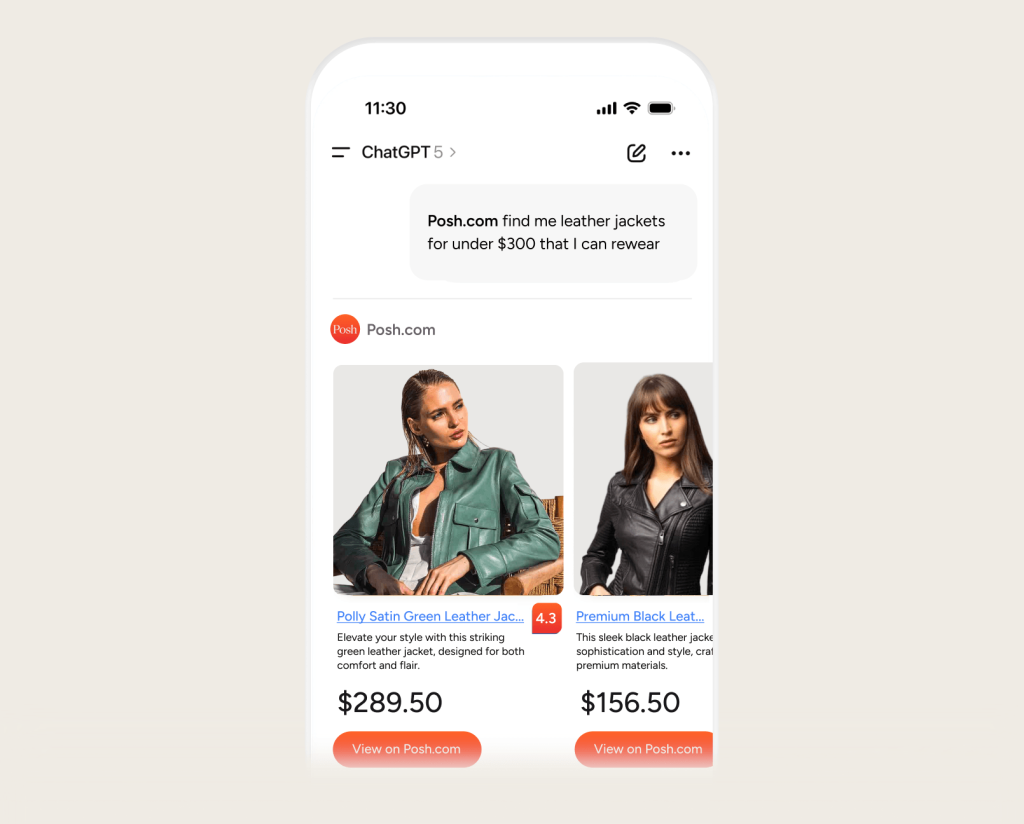
With Insider One’s native integration with ChatGPT Apps, brands can bring personalized recommendations, promotions, and interactive experiences into their own ChatGPT app. Campaigns can respond to what a shopper is actively asking, while conversational signals flow into Insider One profiles and can trigger journeys across email, push, web, and mobile. Purchases and outcomes originating from those interactions can also be measured, turning ChatGPT from an isolated discovery surface into a connected engagement channel.
Proof point: The Insider One ChatGPT Apps integration can display campaigns inside a brand’s ChatGPT app, track prompt and interface interactions, trigger campaigns from that behavior, connect signals to customer profiles, and attribute resulting purchases and conversions.
“BFCM discovery is no longer limited to a brand’s website or app. The opportunity is to meet shoppers inside AI conversations, respond to their immediate intent, and connect that interaction to everything the brand does next.”
Merve Nazlioglu, Chief Marketing Officer, Insider One
Gift guides are a familiar BFCM tactic, but they are usually built around rigid assumptions about price, recipient, or category. They can take weeks to produce and start becoming outdated as soon as inventory, pricing, or demand shifts.
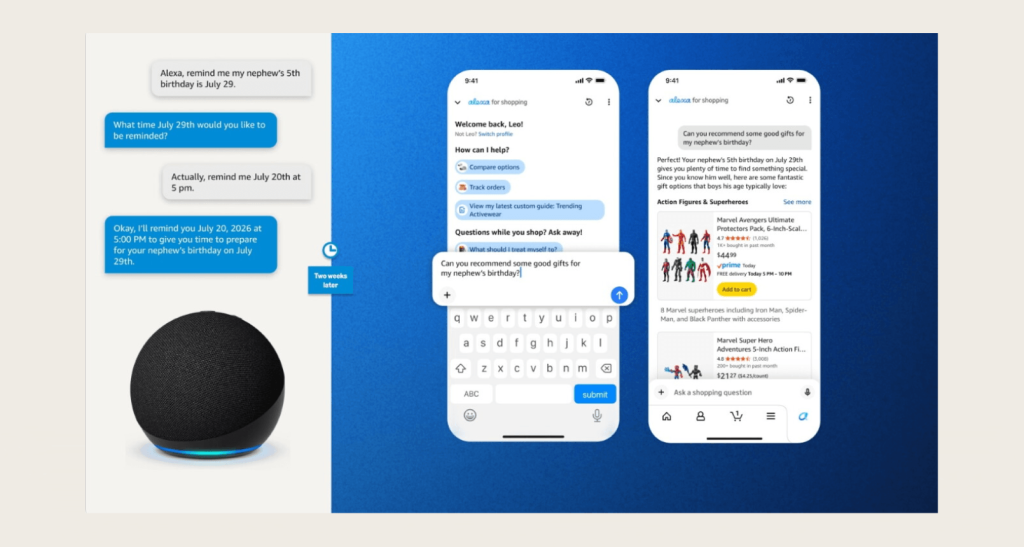
Conversational shopping gives customers a more flexible route. Instead of browsing a fixed page, shoppers can describe what they need in natural language, such as a kitchen gift under $75 or a present for someone who has just taken up running. An AI assistant can use product information, behavioral data, purchase history, preferences, and availability to guide the customer toward a relevant choice in real time.
Amazon has demonstrated this pattern at scale. The company brought Rufus and Alexa+ together as Alexa for Shopping, which can research and compare products, provide personalized guidance, track prices, build carts, and automate routine purchases. For other retailers, combining Insider One’s personalization capabilities with a conversational layer powered by Amazon Bedrock can bring the same guided-discovery model to their own digital properties.
Proof point: Amazon reports that Rufus helped more than 300 million customers research, compare, and purchase products in 2025, demonstrating the scale of demand for conversational product discovery.
“Three hundred million customers used Alexa for Shopping last year to find products by asking questions instead of typing keywords. That didn’t happen because we built better search. It happened because most shoppers, especially during the holidays, know roughly what they want but not exactly which product to pick. A conversation gets them there faster than any static page. Other retailers can build the same thing on their own properties with Insider One and AWS. The brands that do it before this holidays season will see it in their conversion numbers.”
Daniele Stroppa, WW Tech Lead, Retail Partners, Amazon Web Services
Source: Amazon
BFCM teams manage email, SMS, push, paid retargeting, and rapid campaign changes across web and app. Building and testing a different destination link for every device, product, and promotion adds operational work. It also creates a fragile handoff: a high-performing message can still lose the sale if the click opens a generic homepage, an app store listing, or the wrong product page.
With AppsFlyer’s Deep Linking Suite, a single dynamic link can send an existing app user directly to a specific product page, route a mobile web visitor to the appropriate app store, and continue working correctly when a campaign is reused for a flash sale. The suite is also available as a standalone offering, making it a natural fit for Insider One customers running CRM and lifecycle campaigns without requiring a full paid media attribution solution.
With AppsFlyer’s ESP integration for Insider One, brands can use these links within email campaigns while preserving both the journey and its measurement. Teams configure and QA the routing logic once, while real-time attribution helps identify issues before they affect more peak-season revenue.
Proof point: Using AppsFlyer’s Deep Linking Suite, Albertsons deployed QR codes across more than 2,000 stores and more than doubled mobile app traffic. AirAsia’s OneLink-powered email deep links contributed to more than 15% of total installs.
“Owned channels like email consistently punch above their weight during BFCM, but only when the click actually lands somewhere relevant. We’ve seen brands treat email as a retention tool for years while leaving real acquisition value on the table, simply because the handoff from inbox to app was broken. Reliable deep linking changes that by preserving intent from the inbox all the way to the destination.”
Dubi Furie, Director of Product, Deep Linking Suite, AppsFlyer
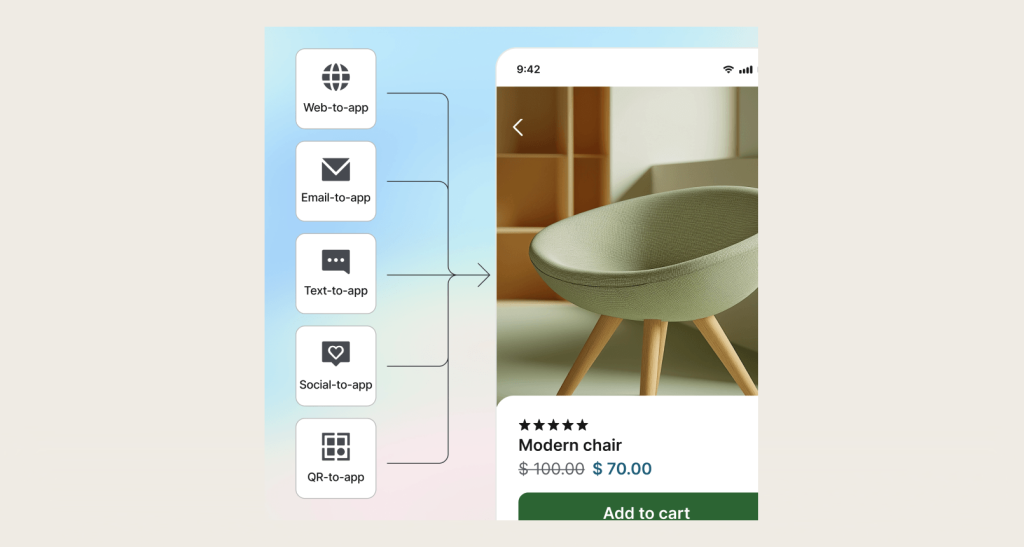
Source: AppsFlyer
Sitewide offers are designed to attract broad traffic, but showing every shopper the same categories can make even a strong promotion feel generic. Behaviorally targeted calls to action keep the offer broad while personalizing the route into it.
Using known affinities and recent browsing behavior, brands can dynamically feature the categories most likely to interest each customer. Someone browsing sneakers might see a ‘Shop Running Shoes’ CTA, while a shopper interested in accessories sees ‘Shop Handbags.’ The promotion remains consistent, but the next step becomes more relevant.
Flexible, evergreen content blocks also reduce the need to create separate campaign versions for every audience. During Cyber Week, when many brands are competing on similar discounts, that extra relevance can turn a generic traffic driver into a stronger revenue opportunity.
Proof point: As featured in Movable Ink’s Black Friday and Cyber Week research, DSW introduced behaviorally targeted CTA buttons that adapted to customer browsing habits and surfaced relevant product categories. The dynamic experience drove a 6.4% increase in revenue.
“As has been the case for several seasons, relevance and value will be the key to success for holiday 2026.”
Ron Hay, Director, Strategy, Movable Ink
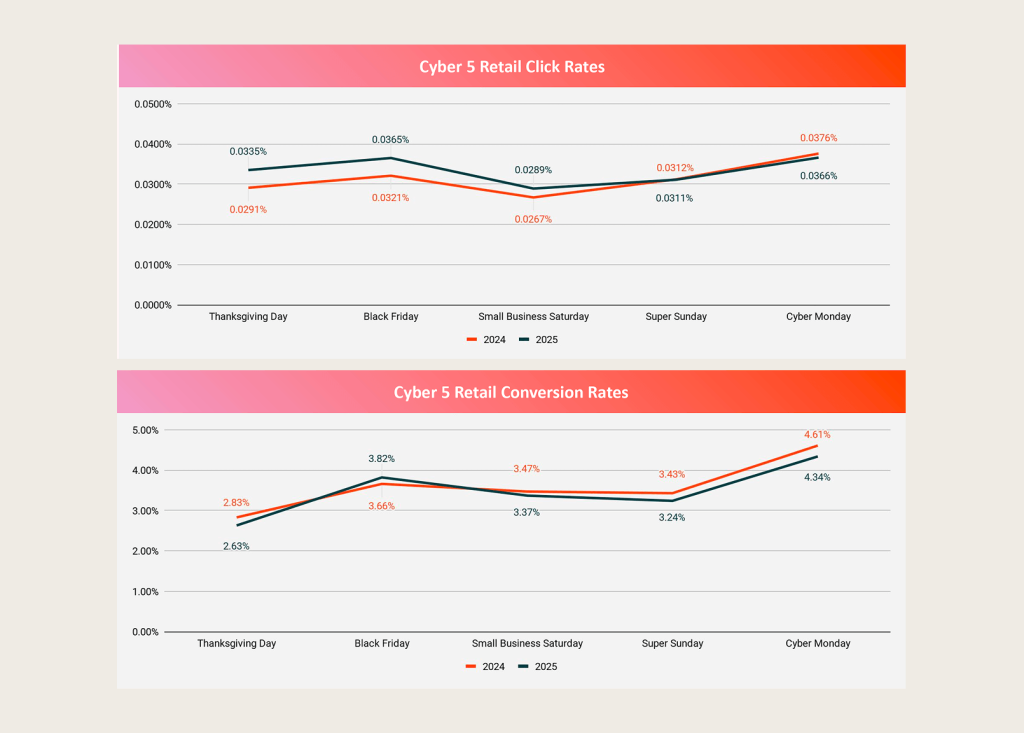
Source: Movable Ink
Insider One & Braun Shop: Turn choice overload into confident purchases
More products and promotions do not automatically produce more sales. When customers cannot identify the right item, compare options, or get an immediate answer, even a strong discount may not prevent abandonment.
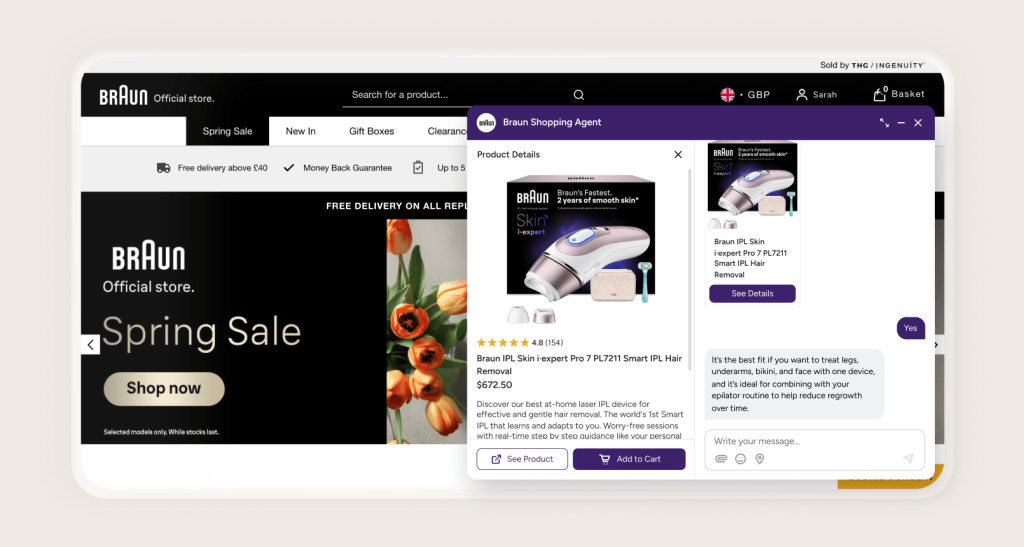
Insider One’s Shopping Agent brings the experience of a knowledgeable in-store assistant to digital commerce. It uses profile data, purchase history, real-time browsing behavior, and predicted intent to understand what each shopper needs. It can recommend products, answer detailed questions, compare alternatives, and suggest complementary items through a natural conversation.
During BFCM, that means every shopper can receive tailored guidance without marketing teams manually building journeys for every question or product combination. Each interaction also enriches the customer profile, improving future recommendations and cross-channel engagement.
Proof point: Within eight months, Braun Shop’s Shopping Agent influenced 18% of ecommerce revenue, increased conversion by 19% for new users and 28% for returning users, lifted new-customer average order value by approximately 22%, and reduced cart abandonment by roughly 17%. It required only one to two hours of team monitoring per week.
“Within just eight months of launching Insider One’s Shopping Agent, 18% of our ecommerce revenue has been directly influenced by it.”
Yigithan Polat, Ecommerce and Marketing Director, Braun Shop
BFCM rewards precision: the right offer, for the right shopper, at the right moment. But most teams cannot hand-build predictive audiences fast enough to match holiday demand. The more scalable approach is to apply model-driven signals such as repeat-purchase propensity, next-best action, or discount sensitivity to governed customer data and activate the resulting audiences directly.
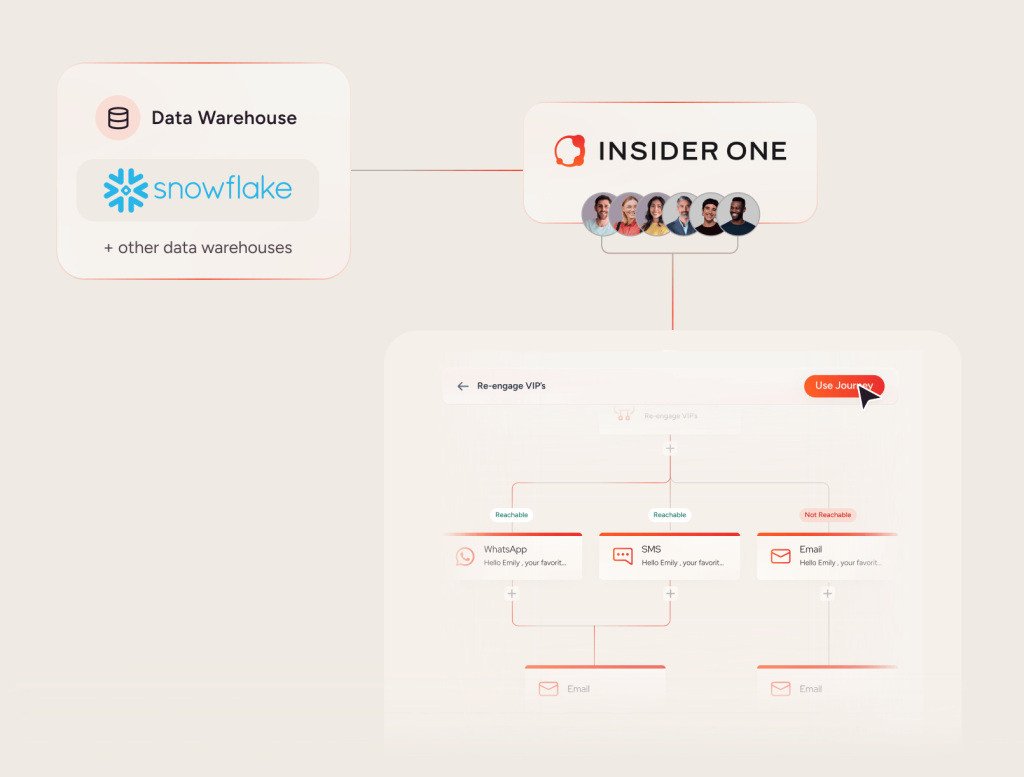
With Insider One’s Zero Copy Segmentation for Snowflake, segmentation queries run directly in Snowflake and only the resulting audience membership is used for activation. Customer data stays within Snowflake’s existing security and permission model. Marketers can describe audiences in plain language and use AI to generate the query, preview the results, and activate the segment across Insider One channels.
This reduces duplicated data, batch pipelines, and manual handoffs between analytics and marketing. It also allows teams to use current, governed information for customer engagement without expanding headcount or rebuilding audience logic in another tool.
Proof point: With Insider One’s Zero Copy Segmentation for Snowflake, audience queries run directly in Snowflake, raw records remain in the warehouse, and qualifying audiences become available for activation across email, SMS, push, web, and other channels.
“As organizations centralize their data in Snowflake, activating that data where it lives is critical to delivering real-time customer experiences.”
Patrick Crosby, MarTech Industry Principal, Snowflake
BFCM revenue has a decay problem. The traffic spike is real, but many customers convert once and disappear until the next major markdown. Time-boxed loyalty challenges give brands a reason to continue the relationship beyond the first purchase.
Instead of rewarding only the initial transaction, brands can create automated missions that encourage a second, third, or fourth action within a defined period. A BFCM version might ask customers to buy twice before December 24 or complete a look during Cyber Week to unlock bonus points.
Because the challenge follows a preconfigured rule, marketers front-load the work into setup. The program can then run throughout the holiday period without daily monitoring, manual segment building, or repeated sends to non-converters.
Proof point: Antavo’s work with Yeo Valley Organic’s Yeokens loyalty program generated 311,716 completed challenges and a 51% increase in redemption behavior. Active loyalty members purchased twice as much as non-members.
“BFCM 2026 will be won by brands that treat the holiday as the start of a habit, not the end of a discount. The opportunity for loyalty and CRM teams is to turn one Cyber Monday purchase into three January purchases, automatically, without adding a single manual step.”
Zsuzsa Kecsmar, Chief Strategy Officer and Co-founder, Antavo
Source: Antavo
The weeks after BFCM are a critical retention window. Yet many brands still treat post-purchase engagement as a collection of individual campaigns instead of one continuous journey.
A stronger approach begins as soon as the first order is placed. Order updates and delivery notifications can flow into personalized recommendations, replenishment reminders, and win-back messages for customers who become inactive. Once built, the journey runs for every new customer across the channels they prefer.
This allows brands to turn a seasonal acquisition spike into ongoing engagement while reducing reliance on additional discounts. It also shifts manual campaign work into an automated system that can recover carts, guide customers, and re-engage buyers throughout the season.
Proof point: In Infobip’s Kibon customer story, personalized WhatsApp messages targeting customers who had not purchased in 30 days generated more than 300x campaign ROI and a 10% conversion rate in three days without a discount. Petpetgo nearly doubled purchase frequency while reducing advertising spend by 10%.
“BFCM 2026 will be won by brands that treat conversational, AI-driven channels as core revenue infrastructure, not as a seasonal add-on. For marketing and customer engagement teams, the opportunity is to build the automation once, then use it to recover carts, guide shoppers, and re-engage buyers throughout the season, driving more revenue without adding more manual work. With the right technology partner, brands can combine best-in-class conversational infrastructure with advanced data and personalization to turn these automated journeys into seamless, high-impact customer experiences at scale.”
Ante Pamukovic, Chief Revenue Officer, Infobip
Build a BFCM customer journey that lasts beyond Cyber Week
These BFCM marketing use cases point to a broader change in peak-season customer engagement. The advantage no longer comes from running the largest number of campaigns. It comes from building a connected operation that can recognize intent, personalize the experience, guide the purchase, and continue the relationship without requiring a new manual workflow at every step.
For Insider One, that means helping brands connect the complete journey: extending discovery into ChatGPT, using AI Shopping Agents to reduce uncertainty, activating governed data from platforms such as Snowflake, protecting every click between channels, and designing the second purchase before the first one happens.
BFCM may still be a short promotional window. With the right data, AI, and customer engagement strategy, the revenue and relationships it creates do not have to be.
Ready to put these use cases into action? Book a personalized demo or explore the Insider One platform.
![Transparency in B2B Branding with Focus Lab’s Bill Kenney [Video]](https://mgrowtech.com/wp-content/uploads/2026/08/G2CM_FI1124_Learn_Article_Images-Professional_Spotlight_Bill_Kenney_V2a-350x250.png)