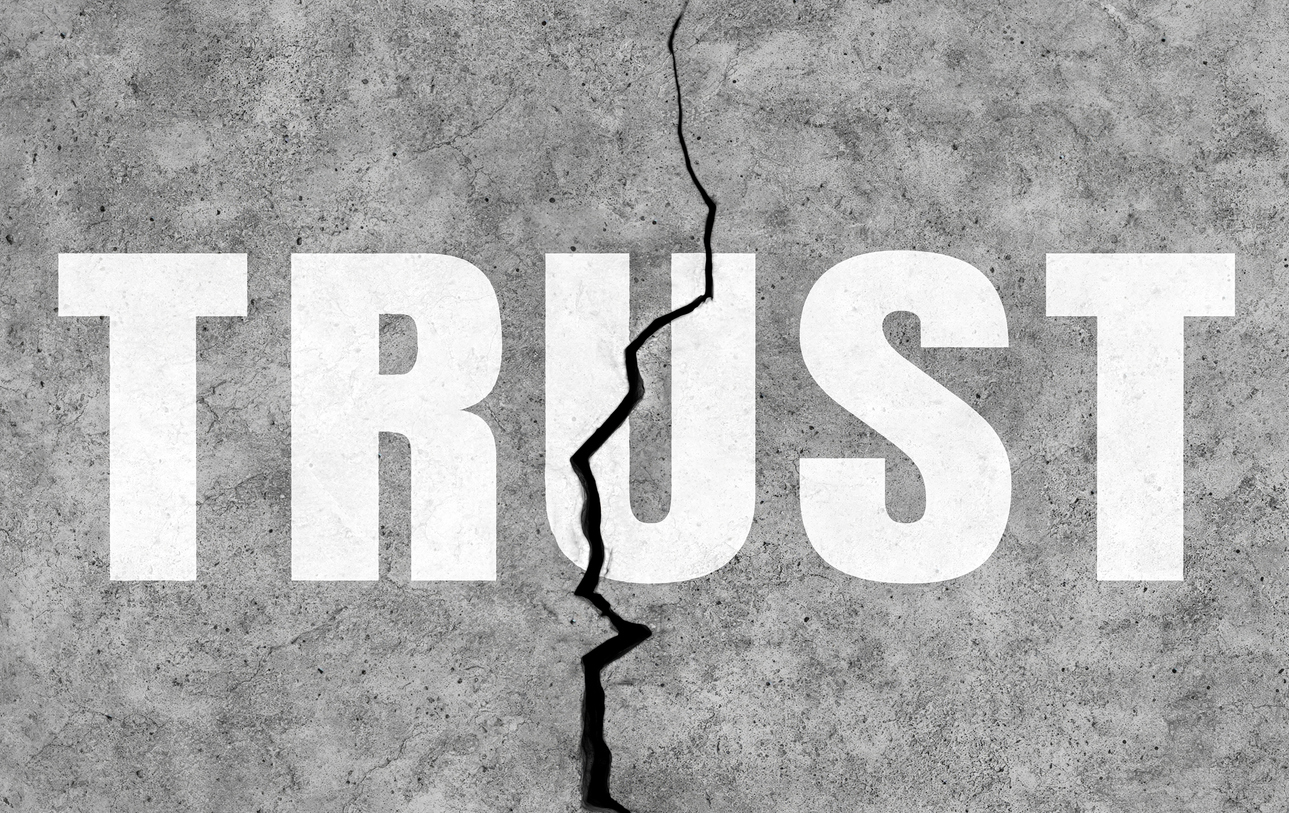
Organizations rarely lose credibility in a single moment. They borrow against it over years, a little at a time.
Shrita Hernandez is chief communications officer at the Urban Institute.
At 9:14 a.m., the statement went out. It was accurate, timely and approved by legal, communications and the CEO within two hours. The spokesperson was prepared. The media strategy anticipated the first five follow-up questions. By every internal measure, the response was close to textbook.
The public did not buy it.
The postmortem picked apart the wording, the timing and the spokesperson. No one examined the question that mattered most: What did stakeholders already believe about the organization at 9:00 a.m., before anyone said a word?
That unanswered question points to credibility debt: the accumulating gap between what an organization claims and the evidence, in conduct and proof, required to make belief reasonable. Organizations rarely lose credibility in a single moment. They borrow against it over years, a little at a time, and a crisis is often the point at which the debt comes due.
Each gap appears survivable on its own. A delayed commitment receives a plausible explanation. An unsupported claim seems close enough to true to let stand. Leaders normalize these inconsistencies because none is large enough, by itself, to trigger an internal alarm. Stakeholders may remember the pattern long after the organization considers each matter closed.
Credibility debt tends to take four recognizable forms.
1. Promise debt is the gap between a public commitment and what the organization has delivered. A cultural institution announces a community access initiative, features it in donor and grant materials and then allows it to stall without an update. No single moment necessarily involved deception. The commitment remains on the record, where any reporter, member or advocate can check its status.
The diagnostic question: Which public commitments would embarrass us if a reporter tracked their status today?
2. Proof debt accumulates when claims rest primarily on the organization’s own assertion. A hospital system describes itself as a leader in patient safety across its public materials but publishes no outcome data that an outside party can independently assess. The claim may be accurate. It simply cannot be verified by anyone outside the organization.
The diagnostic question: Which of our claims rest entirely on our own assertion?
3. Relationship debt is trust that was never built before it became necessary. A national nonprofit discovers during a crisis that it has never built meaningful relationships in its own headquarters city. Its programs recruit and convene from across the country, while the neighbors, officials and community leaders closest to it know the organization only by its building. Those stakeholders have little basis for extending confidence when the stakes rise.
The diagnostic question: Which stakeholders will we need during a crisis whom we have not meaningfully engaged in the past year?
4. Decision debt accumulates when leadership defers a difficult choice until an explanation is the only tool remaining. An organization has known for two years that a legacy program presents increasing reputational risk, but leaders repeatedly postpone action. When the issue becomes public, the language can be adjusted overnight. The condition can be changed only by the decision leadership has been postponing.
The diagnostic question: Where are we still treating a decision problem as a communication problem?
These debts rarely appear in a conventional media audit, which is why finding them requires a deliberate process. An annual claim-to-conduct audit can begin with every significant promise, position and proof point the organization has placed in public. For each one, communicators should ask what conduct supports it, what evidence an outside party could verify and whether the claim still reflects current practice. The exercise is not a copy review. It is a test of whether the organization’s words still match its record.
Credibility questions also belong inside existing enterprise risk reviews. Promise and proof debt may originate in operations, human resources, finance, program leadership or governance, long before communications is asked to assess the exposure. Embedding the questions into an established risk process gives leaders a way to see the pattern before an external event makes it visible.
The harder intervention is the conversation. When communications receives a request for better words for what is actually a decision problem, the counsel may need to be direct: We can message this, but the gap will remain visible. Closing it requires a leadership decision. That framing does not give communications veto power. It allows leaders to distinguish the reputational cost of the decision from the quality of the announcement and to proceed with a clearer understanding of both.
Paying down credibility debt is rarely dramatic. It means retiring claims the organization cannot support, building observable proof for the claims that remain, reporting candidly on commitments that have stalled and strengthening stakeholder relationships before they become essential. It also means resolving decisions while there is still time to change the underlying condition, rather than leaving communications to defend it after the fact.
A crisis plan tests the response. The crisis itself audits the conduct that preceded it. The organization that issued its statement at 9:14 a.m. did nearly everything right that morning; it simply could not change what stakeholders already believed. The organizations that hold up best in their worst moments are rarely the ones with the sharpest crisis plan. They are the ones that paid the debt down before it came due.
The post The credibility debt organizations accumulate before a crisis appeared first on PR Daily.