[ad_1]
Summary
- AI personalization strategies now sit at the center of growth planning, but scale without guardrails creates fatigue and regret that erodes return on investment.
- Behavioral, predictive, and contextual personalization each solve a different job in the customer journey, and mixing them without a plan is where most programs stall.
- A real-time personalization engine needs one shared data layer across email, app, web, and SMS, or next-best-action logic breaks the moment channels disagree.
- First-party data personalization is not optional anymore; it is the only defensible foundation as third-party identity signals get harder to stitch together.
- Retention and customer lifetime value, not click-through rate, are the metrics that prove an AI-powered customer experience is actually working.
We turned on real-time recommendations across every channel, and now customers tell us the brand feels like it is watching too closely. That tension sits at the heart of every serious AI personalization strategy today. Done well, artificial intelligence lets brands respond to intent in the moment instead of guessing at it weeks later through static segments.
This article is for customer experience (CX), lifecycle marketing, and martech leaders at mid-to-enterprise B2C brands who are past the pilot stage and now scaling AI personalization across channels.
You will learn where personalization creates real revenue lift, why it sometimes backfires into what analysts call the personalization paradox, and how to build a governed, cross-channel decisioning model that protects trust while it scales. The goal is not more personalization. It is personalization that customers actually want.
Why AI personalization is now a growth lever, not a nice-to-have
AI personalization has moved from a marketing add-on to a core revenue lever because static, rule-based segmentation cannot keep pace with how customers actually move across channels.
A shopper who browses on mobile, abandons a cart on desktop, and returns through an app three days later needs a response calibrated to that specific path, not a generic segment built on last quarter’s behavior.
Rule-based systems assign customers to fixed buckets and apply the same offer to everyone inside them. AI-driven decisioning replaces that static logic with continuous scoring, adjusting recommendations, timing, and channel choice as new signals arrive. This is the practical difference between an AI-powered customer experience and a personalization program that just swaps in dynamic content blocks.
For example, Philips increased average order value by 35% after shifting from static segmentation to AI-driven personalization across its digital properties.
That kind of gain comes from matching the tactic to the moment, which is exactly what a real-time personalization engine is built to do.
The personalization paradox: When AI backfires
Personalization built for scale without restraint can produce the opposite of loyalty: customer regret and decision overwhelm. Analysts have flagged a recurring pattern worth taking seriously.
Personalization that feels too accurate, too persistent, or too fast can read as surveillance rather than service, and customers respond by disengaging instead of converting.
The risk concentrates at specific task-switching moments in the journey. A shopper researching a gift does not want to be retargeted with items from their own browsing history in front of the recipient. A customer comparing prices across tabs does not want five channels firing at once with conflicting offers. These are not edge cases; they are the exact moments where over-personalization does measurable damage.
- A gift purchase gets re-personalized around the buyer’s own preferences instead of the recipient’s
- A shared device surfaces a partner’s or colleague’s browsing history in an ad or email
- A customer switching from research to purchase mode gets hit with urgency messaging that reads as pressure
- A single action, like one product view, triggers a disproportionate wave of follow-up messages across channels
Recognizing these moments is the difference between an AI personalization strategy that compounds trust and one that quietly erodes it, no matter how strong the underlying model is.
Core AI personalization strategies that balance scale and trust
The strongest programs pair the right personalization tactic with the right moment instead of running every tactic everywhere. Behavioral, predictive, and contextual personalization solve different problems, and treating them as interchangeable is where a lot of ambitious programs lose the plot.
Behavioral, predictive, and contextual personalization
Behavioral personalization reacts to what a customer just did: a product view, a cart addition, an abandoned checkout. It is fast and precise but backward-looking, so it works best for immediate reinforcement rather than long-range strategy.

Predictive personalization uses historical patterns to anticipate what a customer is likely to want next, powering recommendations, churn prevention, and next-best-offer logic before the customer signals intent directly, as covered in our guide to predictive personalization.
Contextual personalization adds situational signals, like device, location, weather, or time of day, so the same customer gets a different experience depending on the moment they are in.
Used together with clear boundaries on frequency and channel, these three approaches let a brand respond to intent without repeating the same message five different ways in five different places.
First-party data strategies and privacy-safe modeling
None of these tactics work without a reliable data foundation, and that foundation increasingly has to be first-party.
As third-party identifiers become less reliable, brands that invested early in zero-party and first-party data collection, meaning information customers share directly through preferences, purchases, and declared interests, have a real advantage.
A unified Customer Data Management layer turns that scattered information into a single customer view instead of five partial ones.
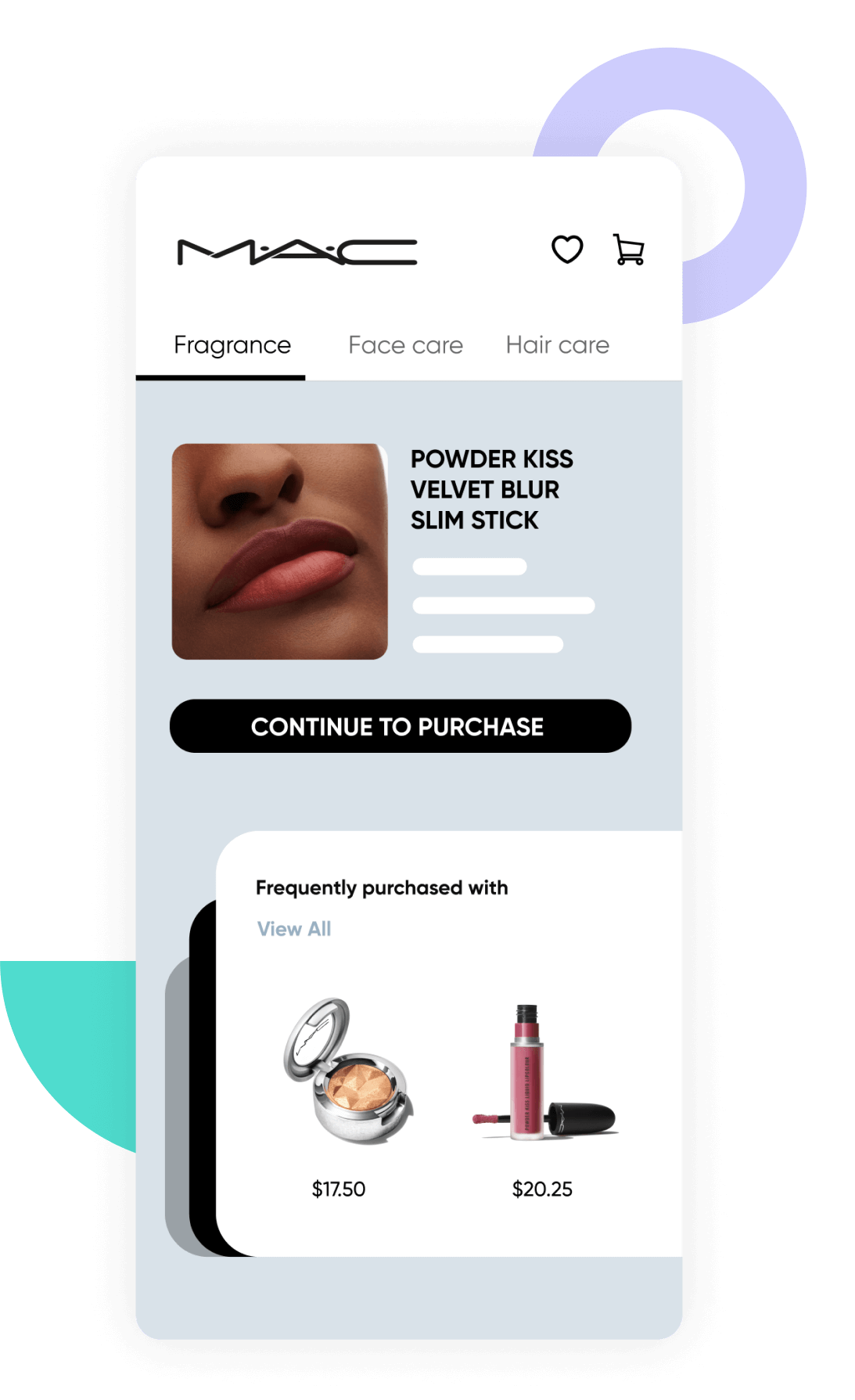
MAC Cosmetics achieved 17.2X ROI by centralizing data this way and building web personalization on top of it, rather than layering AI on top of fragmented records.
Building a cross-channel real-time personalization engine
A real-time personalization engine only works if every channel is reading from the same data and the same decision logic at the same moment.
Disconnected systems, where email, app, web, and SMS each run their own rules, are the most common reason personalization feels chaotic to customers even when each channel performs well in isolation.
Unify data across channels
Unifying data means every channel checks the same customer record before it acts, not five separate databases with five different views of the same person.
Without that unification, a customer who just purchased on the app can still get an abandoned-cart email for the same item, which is precisely the kind of contradiction that damages trust rather than building it.
Journey orchestration coordinates that logic across channels so decisions stay consistent as customers move between them, and this approach is built around that single-record principle.
Next-best-action logic and speed
Next-best-action logic decides, in the moment, whether the right response is an email, a push notification, an on-site message, or nothing at all.
Speed matters here as much as accuracy, since a recommendation that arrives 20 minutes after a customer has already moved on is functionally a rule-based system wearing a real-time label.
Brands running true AI decision engines score intent continuously, not on a batch schedule, which is what separates a genuinely real-time system from a fast-refreshing one.
Measuring, governing, and scaling AI personalization programs
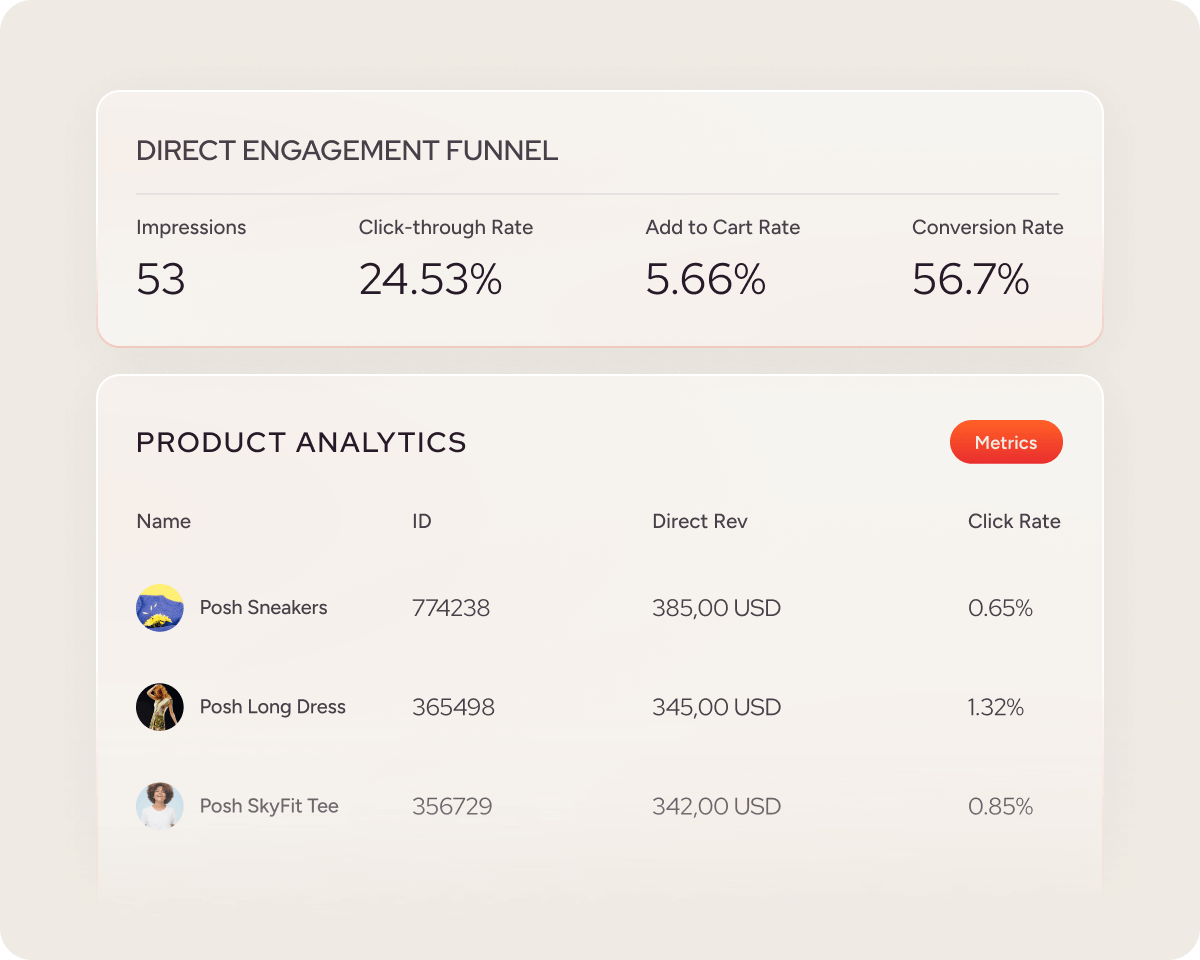
Proving that an AI personalization strategy works requires metrics that outlast the first click. Click-through rate tells you whether a message was interesting for a second; it says nothing about whether the relationship got stronger.
Retention, repeat purchase rate, and customer lifetime value are the metrics that reveal whether personalization is compounding or just generating short-term engagement spikes.
Key performance indicators beyond click-through rate
Shift KPI reporting toward outcomes that reflect sustained behavior change rather than momentary attention.
- Retention rate across cohorts exposed to AI personalization versus those on standard journeys
- Customer lifetime value trends by segment, tracked over multiple purchase cycles
- Repeat purchase rate and time between purchases
- Unsubscribe and opt-out rate as an early warning signal for fatigue
Our reporting and data tools connect these metrics back to specific campaigns and decisions, so leaders can see which tactics build long-term value instead of guessing from surface-level engagement.
Governance guardrails that prevent fatigue and regret
Guardrails should cap message frequency per customer per day, separate recipient-facing content from browsing-history-based content during gift purchases, and flag any single-action triggers that fire a disproportionate number of follow-up messages.
Samsung increased conversions by 275% in 20 days by combining aggressive personalization with tight targeting controls, proving that scale and restraint are not opposing goals when the governance layer is built in from the start.
Conclusion
AI personalization strategies succeed or fail on restraint, not reach. The brands winning right now are pairing behavioral, predictive, and contextual tactics with real governance, measuring retention and lifetime value instead of clicks, and building on first-party data foundations that will only matter more.
Scale without guardrails produces regret. Scale with them produces growth that compounds.
To evaluate the fit of our platform, journey orchestration, and customer data management capabilities for your use case, book a personalized demo to review your goals, data requirements, and implementation constraints with the Insider One team.
Frequently Asked Questions
It describes the tension where AI personalization drives real revenue gains while also risking customer regret and overwhelm if deployed without limits. The paradox shows up when personalization feels too fast, too persistent, or too accurate, especially at task-switching moments like gift purchases or shared-device browsing.
Rule-based segmentation places customers into fixed groups that update infrequently, while real-time personalization scores intent continuously and adjusts recommendations, timing, and channel as new behavior arrives. This lets brands respond to what a customer is doing right now instead of what a static segment assumed weeks earlier.
Start with behavioral personalization for immediate, high-confidence moments like cart abandonment, then layer in predictive personalization for anticipating future needs and contextual personalization for situational relevance. Sequencing this way avoids overwhelming customers with every tactic firing simultaneously on day one.
Track retention rate, repeat purchase rate, and customer lifetime value across cohorts exposed to AI personalization versus standard journeys. These metrics reveal whether personalization builds durable loyalty, while click-through rate only measures momentary interest that may not translate into long-term customer value.
First-party data, meaning information customers share directly through purchases and declared preferences, is the foundation for accurate, privacy-safe personalization as third-party identifiers weaken. A unified customer data layer turns that information into consistent, real-time decisioning instead of fragmented, channel-specific guesses.
[ad_2]
Source_link