[ad_1]
Summary
- Agentic commerce AI-powered shopping experiences only work when the underlying customer data and orchestration layer is unified, not when a chatbot is bolted onto a fragmented stack
- An AI shopping agent is only as good as the catalog, inventory, and consent data feeding it in real time
- Most agentic commerce failures trace back to coordination problems between teams, not to the artificial intelligence (AI) model itself
- Consent sync and orchestration rules determine whether an agentic AI marketplace feels coherent or contradictory across channels
- Evaluating a platform means testing its data layer and governance model, not just its chat interface
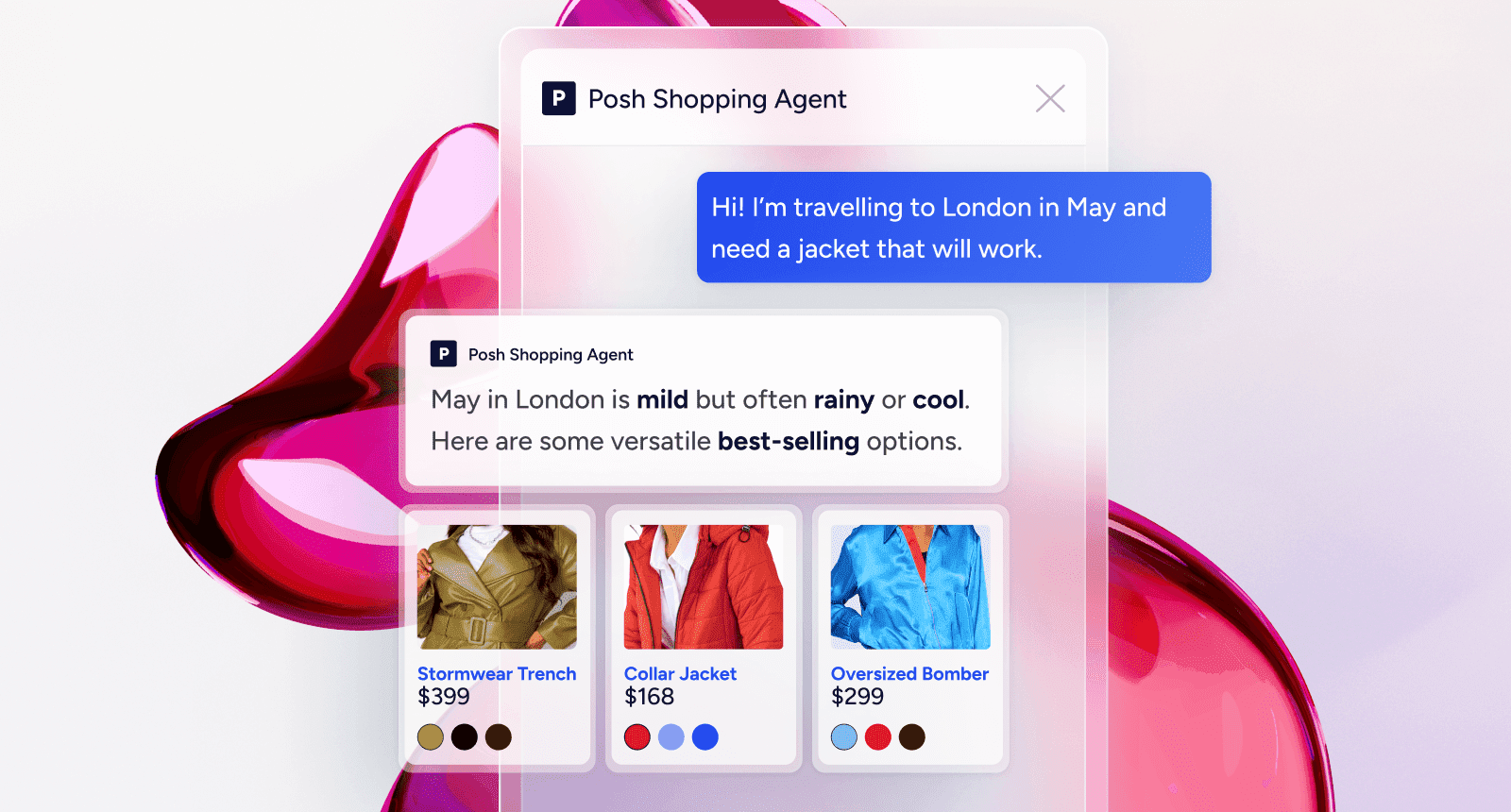
Agentic commerce AI-powered shopping experiences describe a shift where an AI shopping agent does more than answer questions. It discovers products, compares options, and moves a shopper toward a decision using live catalog and behavioral data.
This matters for enterprise marketers, ecommerce leaders, and customer experience (CX) teams evaluating whether their current stack can support this kind of autonomous decisioning.
Most teams already run some version of agentic AI in customer service: a chatbot answering order status questions or suggesting a replacement product.
The gap is between that surface-level automation and a shopping agent that reasons across inventory, pricing, and customer intent in real time.
This article breaks down what separates the two, where execution typically breaks down, and what to evaluate before you commit to a platform that promises more than it can coordinate.
A working agentic commerce experience means an AI shopping agent that reflects live inventory, current pricing, and a customer’s actual purchase history at the moment of the conversation, not a static script layered on top of disconnected systems.
The agent recommends what is actually in stock, in the customer’s size, at the correct regional price.
The execution standard is consistency across every touchpoint the customer uses. If a shopper starts a conversation on the website, continues it over WhatsApp, and finishes checkout on mobile, the agent should remember context and reflect the same offer and inventory state throughout.
That consistency depends on a shopping agent connected to a real product catalog, a recommendation engine, and search infrastructure rather than a chat widget running on cached data.
- The agent reflects real-time stock and pricing, not a snapshot from the last sync
- Recommendations stay consistent whether the customer arrives from an email, an ad, or a direct visit
- The agent escalates to a human when a request falls outside its confidence threshold
- Every interaction feeds back into the customer profile for the next conversation
When this works, agentic AI in customer service and agentic commerce stop being separate initiatives.
The same underlying data layer powers both, which is why brands running mature personalization programs already treat product discovery and support as one continuous experience rather than two systems that happen to share a logo.
Execution breaks down when the shopping agent sits on top of a fragmented data stack instead of a unified one.
Teams deploy an AI agent for ecommerce expecting it to reason intelligently, but the agent can only work with what it can see, and in most stacks it cannot see inventory, loyalty status, and consent all at once.
The complexity compounds as more channels get added. A brand adds an agent to the website, then WhatsApp, then a marketplace listing, and each integration pulls from a different data source with a different refresh rate.
The customer experiences this as an agent that recommends a product it just told them was out of stock, or one that repeats an offer they already declined on another channel.
This is not a model quality problem. It is a coordination problem. Competitor coverage of this topic tends to stay at the feature layer, framing failures as prompt design issues or model limitations.
In practice, the agent is often reasoning correctly against stale or partial data, which means the fix has to happen below the chat interface, not inside it.
Team incentives make this worse. When the commerce team owns the product feed, the CX team owns the chat interface, and the martech team owns the customer profile, nobody is accountable for the handoffs between them.
Each team optimizes its own layer while the customer experiences the seams between all three.
The data and orchestration layer teams usually miss
The dependency most teams underestimate is that an AI shopping agent needs a single, continuously updated view of the customer and the catalog, not a periodic export. Without that, the agent is guessing based on data that is already outdated by the time the conversation starts.
This is where a real customer data platform (CDP) matters more than the agent’s conversational polish. Customer Data Management unifies behavioral, transactional, and consent data so an agent draws that data from one profile instead of reconciling five.

Without that unification, every channel effectively runs its own version of the customer, and the agent inherits whichever version happened to sync last.
Orchestration rules matter just as much as the data itself. If a customer opts out of promotional messaging on email, that preference has to sync instantly to the shopping agent, or the agent risks recommending a discounted item the customer just declined elsewhere.
Consent sync is not a compliance afterthought here; it is part of whether the experience feels coherent. Journey Orchestration exists precisely to keep these rules consistent across every channel the agent touches, so the customer sees one brand decision, not five contradictory ones.

- A unified profile replaces separate data silos for catalog, behavior, and consent
- Consent preferences sync in real time across every channel the agent operates in
- Orchestration rules prevent conflicting offers between the agent and other campaigns
- Measurement connects agent conversations back to revenue, not just chat volume
Measurement is the piece most articles skip entirely. Teams can report chat engagement or resolution rate, but few connect an agent conversation to actual conversion, average order value, or retention.
Without that link, it is impossible to know whether the agentic AI marketplace investment is producing revenue or simply automating a support queue.
The fix is to unify the data and orchestration layer before adding another channel to the agent’s footprint, not after. Teams that add a new AI shopping agent integration to an already fragmented stack tend to multiply the coordination problem instead of solving it, because each new surface introduces another source of stale or conflicting data.
The root-cause approach starts with the customer profile. Before deploying or expanding a shopping agent, confirm that the profile it draws from includes real-time inventory, current consent status, and purchase history in one place.
Insider One’s platform is built around this sequencing: unify the data first, orchestrate the rules second, then layer conversational and agentic capabilities on top. That order determines whether the agent is reasoning against reality or against a snapshot.
The measurable outcome of getting this order right shows up in conversion and retention, not just chat metrics. For example, Samsung increased conversions by 275% in 20 days using AI-powered personalization, a result that depended on unified customer data feeding the recommendation layer in real time rather than a chatbot operating in isolation.
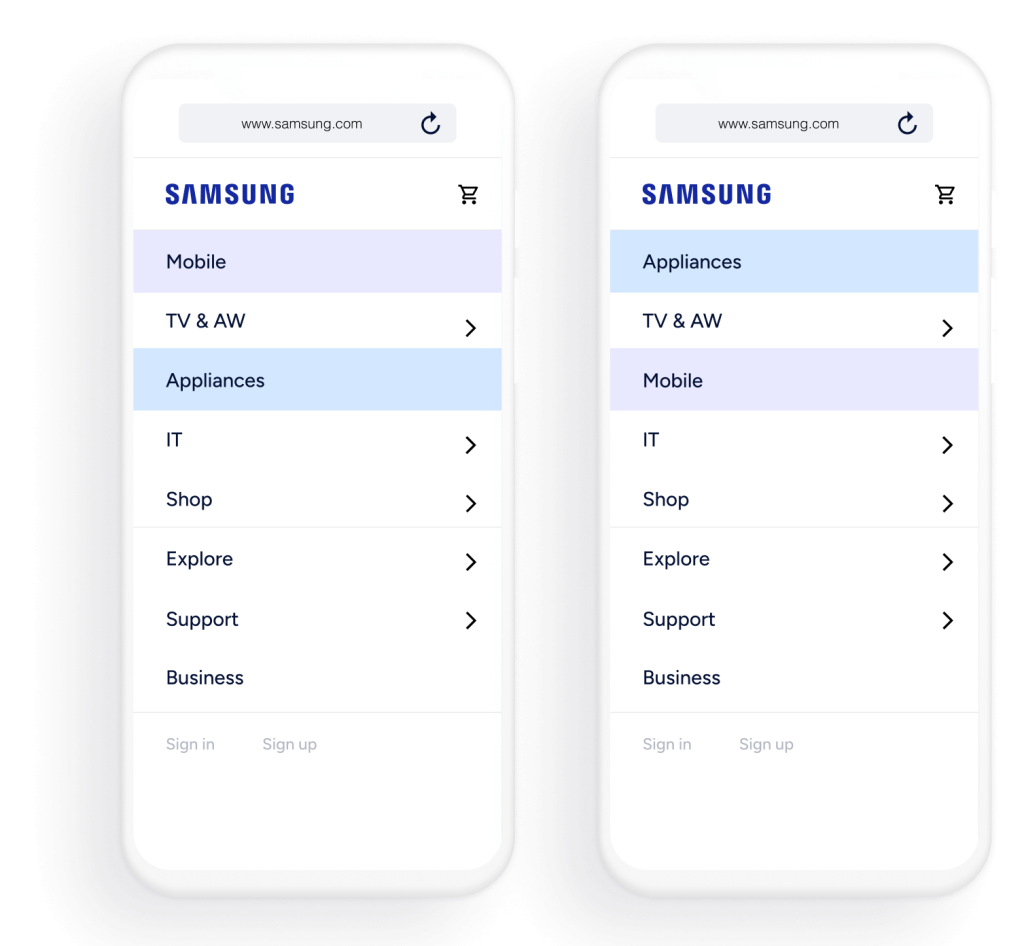
Similarly, Kiehl’s achieved a 25% CVR increase and 7X ROI by connecting product discovery to a single customer view instead of running discovery and retention as separate workstreams.

Tie every fix to a specific metric before rolling it out further. If the goal is reduced cart abandonment, measure whether agent-assisted sessions convert at a higher rate than unassisted ones. If the goal is support deflection, measure resolution quality, not just volume.
Agentic AI marketing use cases fail measurement scrutiny most often when teams cannot isolate what the agent actually changed. Our breakdown of agentic AI marketing use cases for enterprises walks through how to structure that measurement before scaling further.
What to evaluate before choosing a platform
The decision criteria for an agentic commerce platform should center on data unification and governance, not on how conversational the demo sounds.
A polished chat interface is easy to build; a system that keeps inventory, consent, and behavior synchronized across every channel in real time is the actual differentiator.
Ask any vendor how the shopping agent connects to your product catalog and how frequently that connection refreshes. Ask how consent changes propagate to the agent, and how quickly.
Ask whether the platform can report on agent-influenced revenue specifically, separate from overall chat volume, because that distinction determines whether you can prove return on investment (ROI) later.
- Does the platform unify customer data before layering on conversational features
- How does consent sync between the agent and every other channel
- Can the platform report agent-influenced conversion and average order value separately
- Does the vendor’s orchestration layer prevent conflicting offers across channels
- What is the actual implementation timeline for connecting the product catalog
Scale is where these criteria matter most. A shopping agent that works in a pilot with one product category often breaks down across a full catalog with regional pricing and multiple languages, unless the underlying data and orchestration layer was built for that scale from the start.
Why Insider One details how the platform’s architecture handles this at enterprise scale, and our piece on agentic personalization covers how these evaluation criteria apply to real-time decisioning specifically.
Conclusion
Agentic commerce works when the data and orchestration layer beneath the AI shopping agent is unified, governed, and measured, not when the chatbot itself gets more conversational.
The failures teams attribute to the AI model are usually coordination failures between systems and teams that were never fully connected. Fix the layer underneath, and the agent finally reasons against reality.
To evaluate the fit of Customer Data Management, AI personalization, and agentic AI capabilities for your use case, book a personalized demo to review your goals, data requirements, and implementation constraints with the Insider One team.
FAQs
Agentic commerce describes AI systems that autonomously discover, compare, and recommend products based on live customer and catalog data, moving beyond scripted chat to reasoning across inventory, pricing, and intent in real time. It depends on a unified data layer to function accurately at scale.
A standard chatbot follows scripted flows and answers predefined questions. An AI shopping agent reasons dynamically across live inventory, pricing, and customer history to guide product discovery and purchase decisions, adjusting its recommendations as conditions change rather than repeating fixed responses.
Most failures come from fragmented data rather than weak AI models. When the agent draws from stale catalog feeds or disconnected consent records, it produces contradictory recommendations. Unifying the customer profile and orchestration rules before scaling prevents this.
Consent determines what an agent can legally and appropriately recommend. If preference changes do not sync instantly across channels, the agent may repeat offers a customer already declined, undermining trust. Real-time consent sync is a core requirement, not an optional add-on.
Measure agent-influenced conversion, average order value, and resolution quality separately from raw chat volume. Volume alone does not indicate revenue impact. Connecting agent conversations to actual purchase and retention data is the only way to validate return on investment (ROI).
[ad_2]
Source_link