
GEO, or generative engine optimization, is the work of getting your brand into AI answers. And the market for GEO tools has exploded, because everyone from big agencies to solo founders now needs to know how they show up in AI search.
The tricky part is that these tools don’t all do the same job. Some handle AI visibility tracking. Some focus on content optimization. A few are built for enterprise analytics, and a handful are free. Pick the wrong one and you either overpay for a platform you don’t need or miss the one feature that mattered.
So this list sorts ten GEO tools by who they’re for and what they actually do, whether you’re an agency, a SaaS team, or a small business trying to earn your first AI citation. One of them even earns those citations for you.
Let’s get into it.

Link building cheat sheet
Gain access to the 3-step strategy we use to earn over 86 high-quality backlinks each month.
Respona
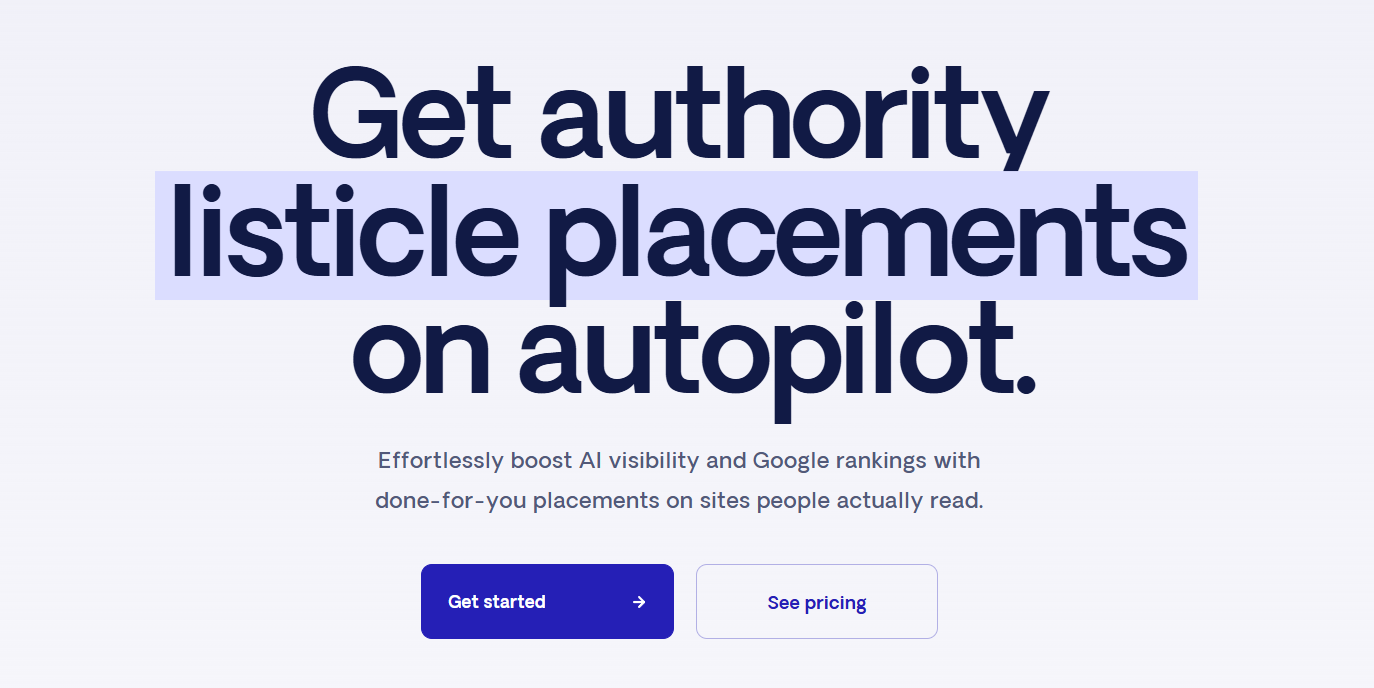
Here’s the thing almost every other tool on this list has in common: it tells you where you stand and then leaves the hard part to you. Respona is the one that does the hard part.
It doesn’t just measure your AI visibility, it goes and earns you the citations that improve it.
It still starts as a tool, though, and the tool is genuinely useful on its own.
You give Respona a target URL and the prompts you want to get cited for, something like “best project management software” or “best roofer in Denver.”
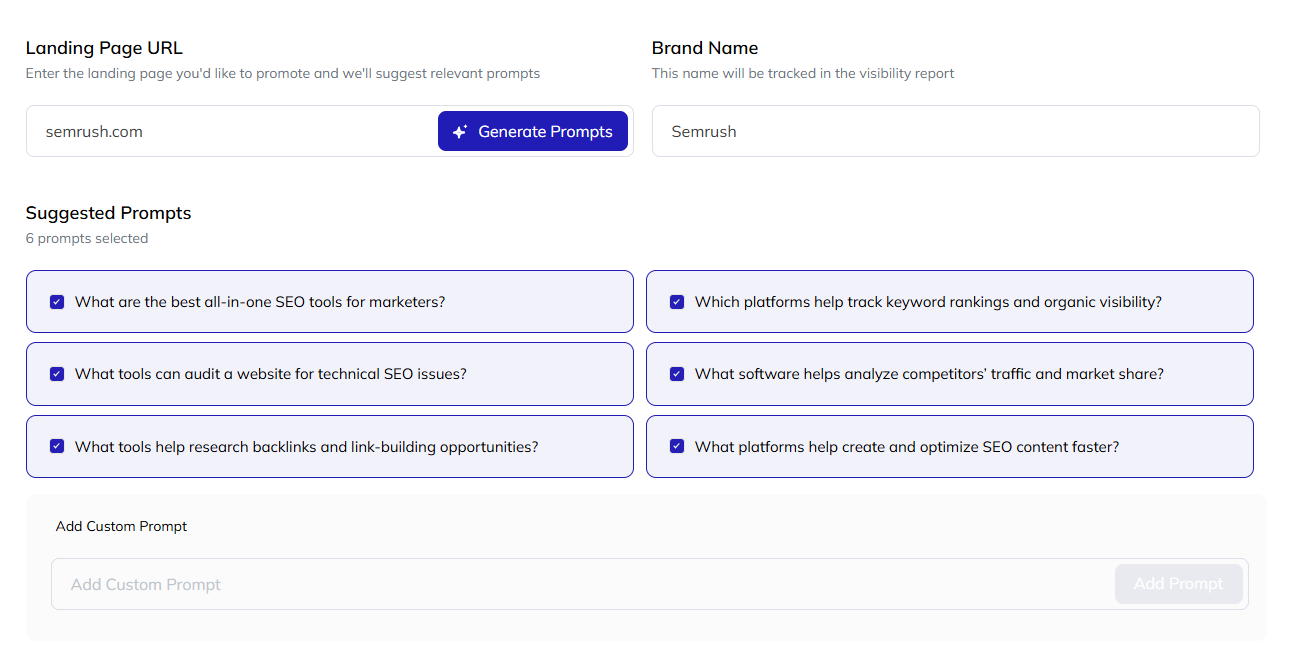
It runs each prompt across the AI engines, checks which articles are getting cited right now, and builds you a link building action plan off the back of it.
That plan isn’t just the handful of pages currently cited. It also pulls in similar publications with comparable metrics and keyword profiles, plus the article topics worth replicating.
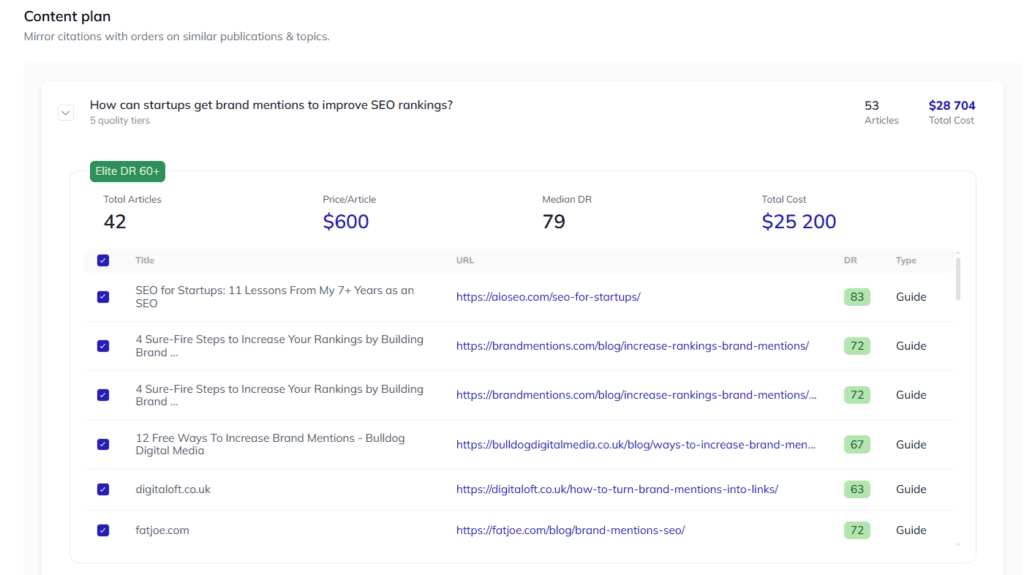
So instead of staring at a blank spreadsheet wondering where to pitch, you get a prioritized target list.
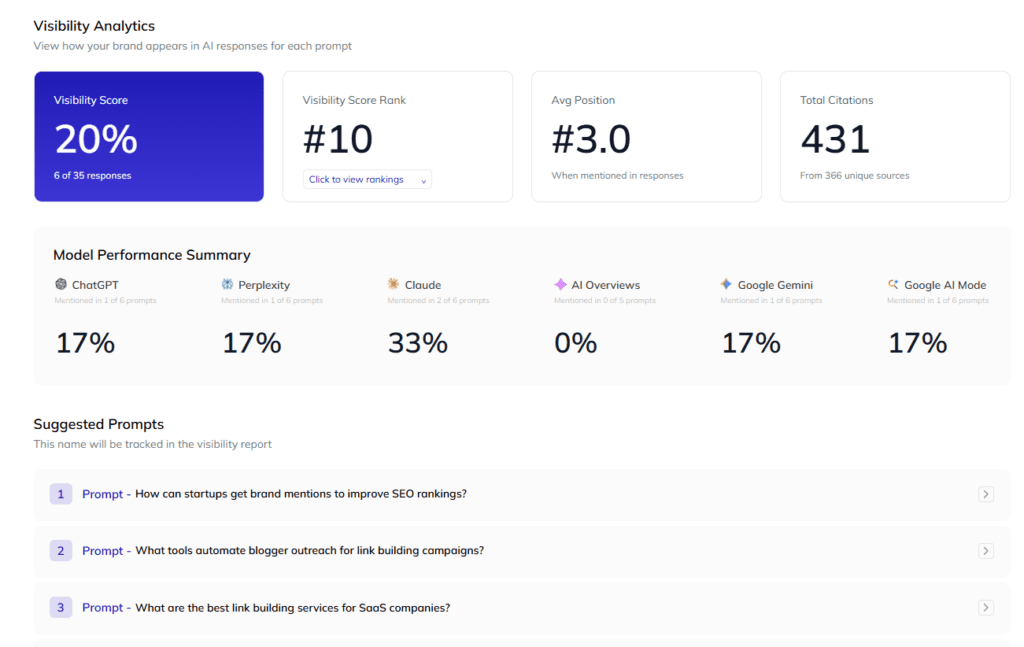
Alongside that, a built-in tracker handles the AI visibility side across six answer engines: ChatGPT, Perplexity, Google AI Overviews, Gemini, Claude, and Microsoft Copilot.
With citation tracking baked in, you can watch each citation land and see your AI search presence climb over time, rather than guessing.
Then comes the part no dashboard can do for you. Once your action plan is ready, Respona’s team runs the entire outreach effort: finding the right contact, pitching, following up, negotiating, and landing the placement.
Every mention is a real editorial link on a page with genuine traffic, not a paid post on some link farm. You approve the direction, and the work gets done for you.
On pricing, it’s refreshingly simple: pay-per-placement, from $100 per link (DR 20+) up to $500 (DR 60+), with no monthly retainer and no setup fee.
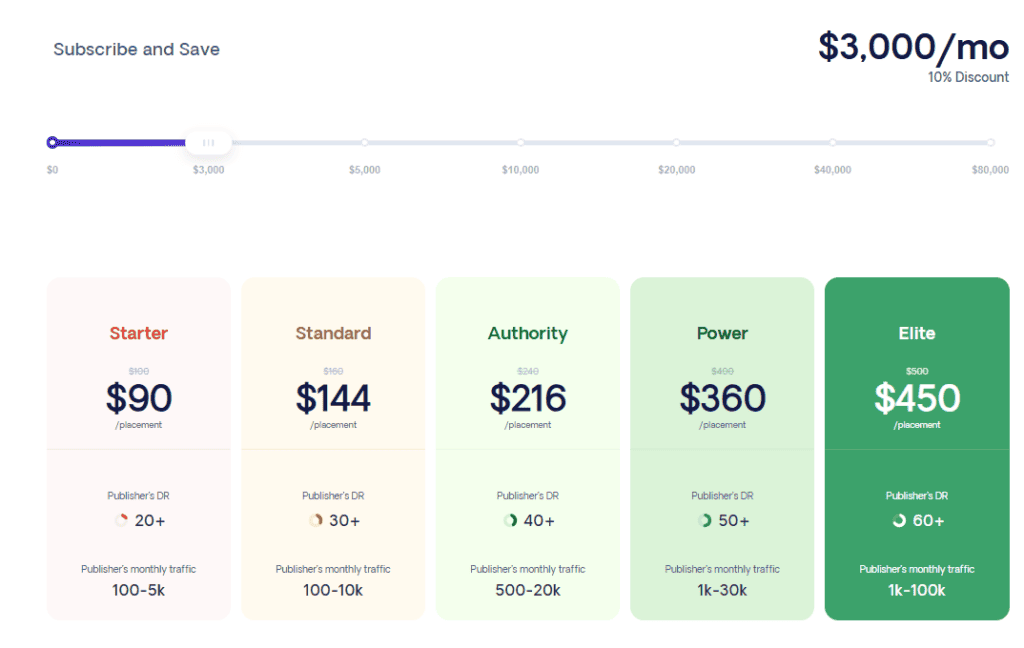
You pay for results, not access to a tool.
That model is a big reason around 80% of Respona’s customers are agencies who resell the whole service under their own brand, though it works just as well for a SaaS team or a small business that wants to punch above its weight in AI answers.
The short version: if the other geo tools here are the thermometer, Respona is the treatment.
If your goal is more AI citations rather than one more dashboard to check, this is the platform to start with.
Rankscale
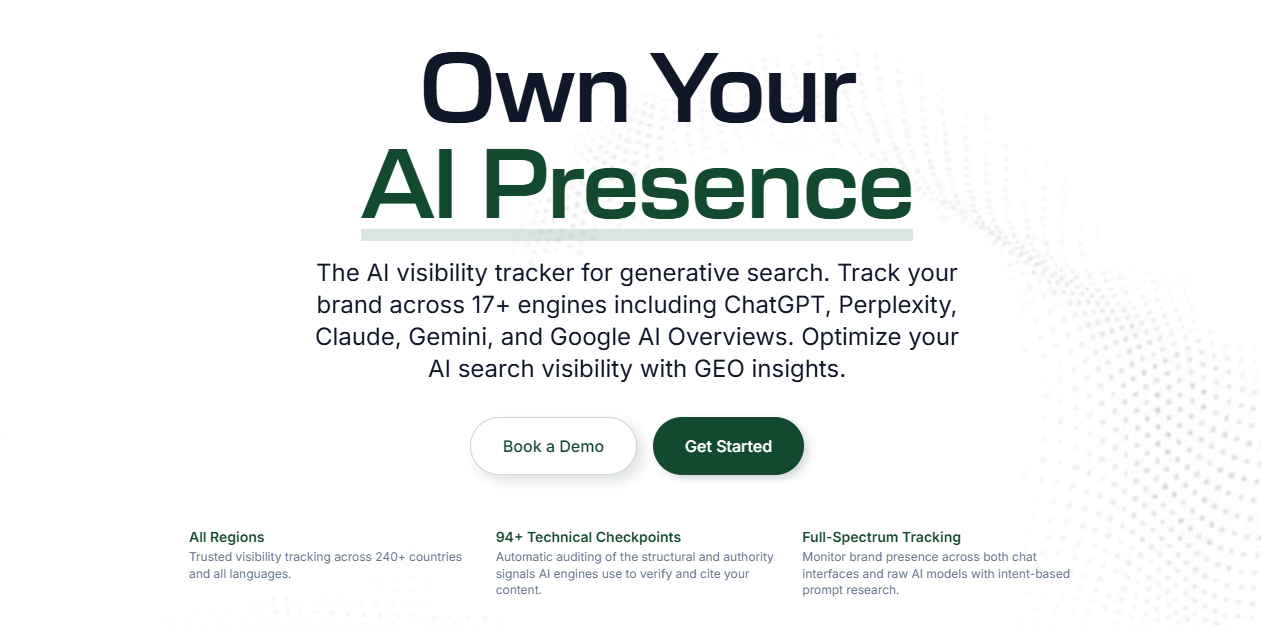
Rankscale is a well-rounded AI visibility platform that covers the essentials without an enterprise price tag. For most teams that just want reliable AI visibility tracking, it’s a strong default.
It runs your prompts across the major engines, reports where you appear in AI search, and rolls the data into clean analytics you can actually read.
As a GEO platform it balances depth and simplicity, with monitoring, reporting, and competitive tracking in one place. Key features include prompt tracking, competitor benchmarking, and a dashboard built for regular check-ins rather than one-off audits.
Evertune
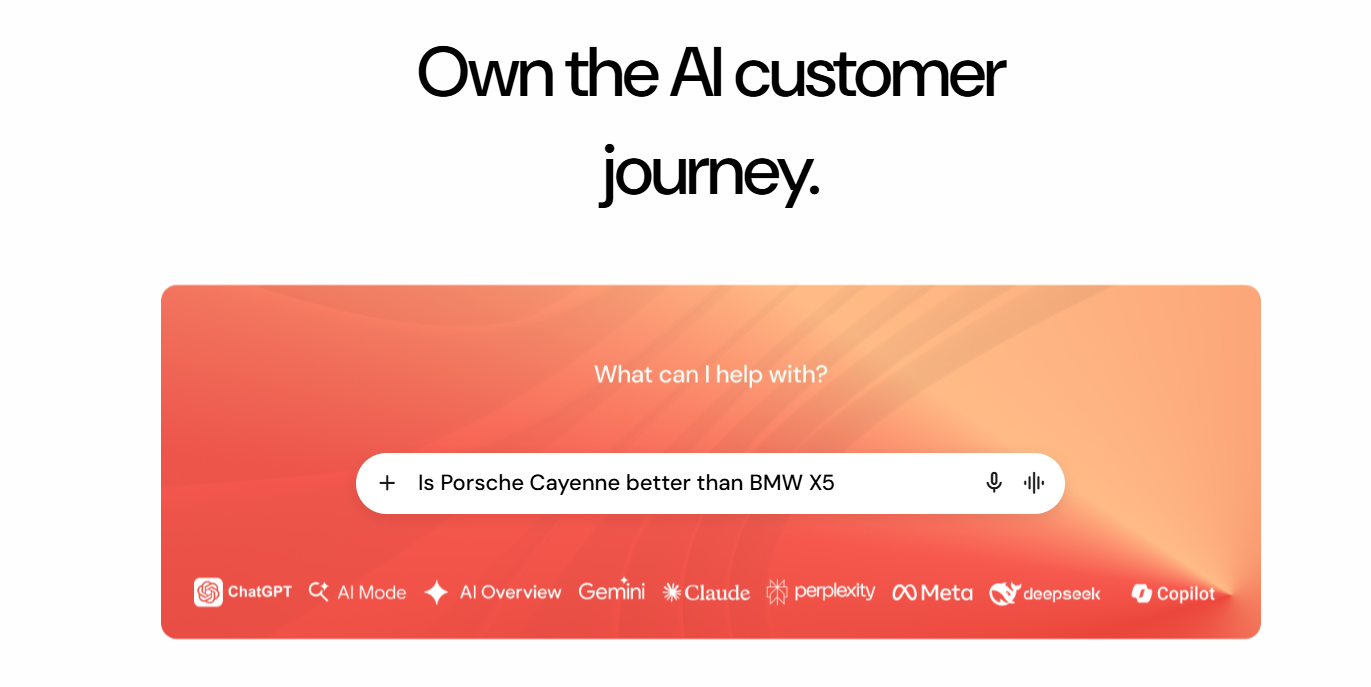
Evertune is built for enterprises that want to understand how AI systems talk about their brand at a deep level. It’s less a lightweight tracker and more an analytics engine.
It analyzes how each AI platform represents your brand across thousands of variations, giving you brand visibility data with real statistical weight behind it.
For a large team that needs to defend its position in AI search across many topics, that depth of analytics is the draw. Key features lean toward large-scale brand analysis and model-by-model reporting rather than quick monitoring.
Trakkr
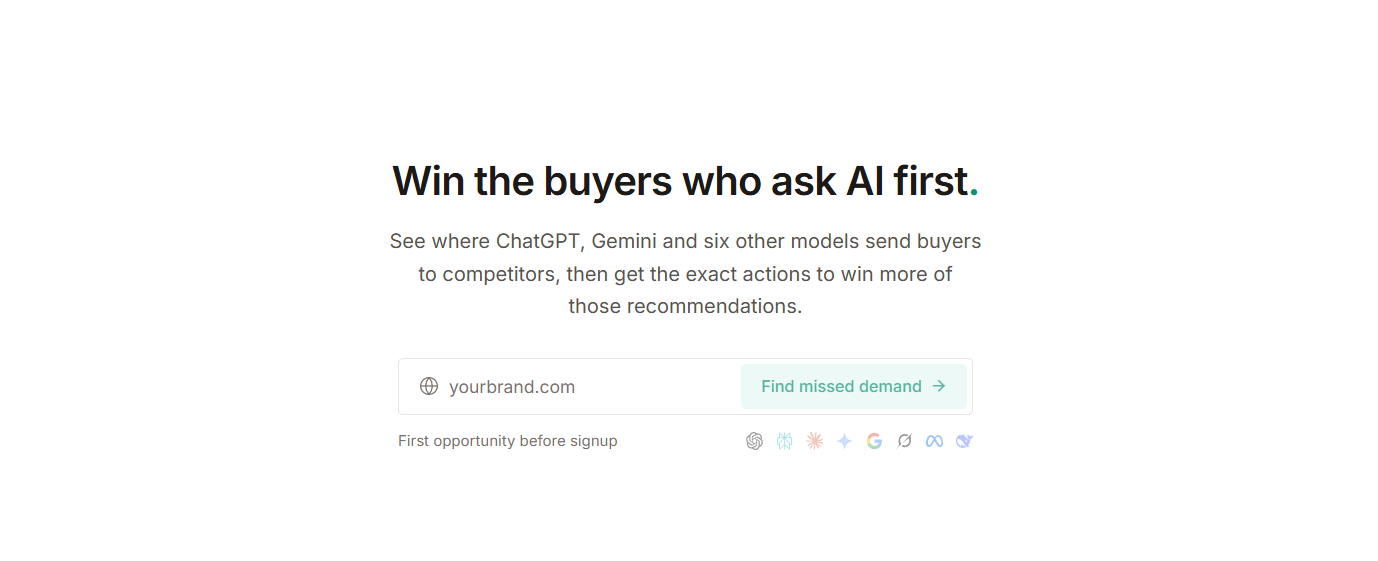
Trakkr is a GEO platform built with agencies in mind, where clean reporting and white-label tracking matter as much as the underlying data. If you manage GEO for clients, that focus counts.
It handles AI visibility monitoring across engines and pipes the results into client-ready reports, with a Looker Studio connection for teams that live in custom dashboards.
The monitoring is solid, but the real pull is a smooth geo workflow for agencies juggling many clients: branded analytics, scheduled reporting, and per-client tracking. Key features center on reporting and multi-client management.
Goodie AI
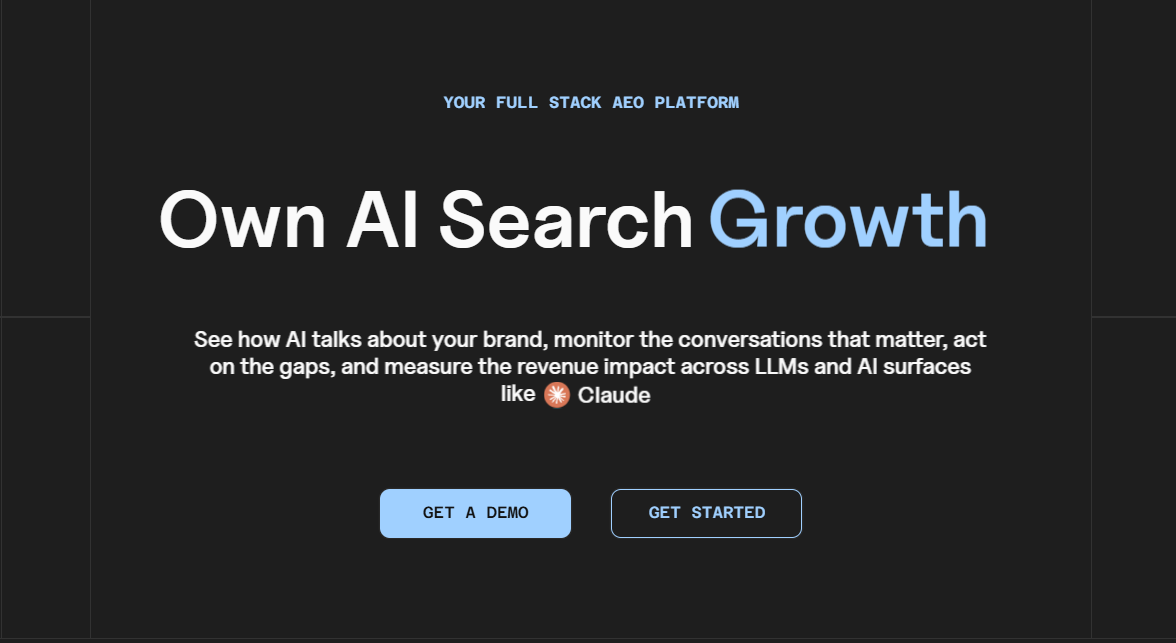
Goodie AI comes at GEO from the content side. Rather than only measuring visibility, this tool helps you create the content that gets pulled into AI answers in the first place.
It guides content optimization for generative engines, helping you structure pages so your content shows up in AI generated answers. That includes work like tightening your content around real questions and cleaning up structured data so machines read it clearly.
For teams whose gap is producing citable content rather than tracking it, Goodie AI fills that lane, and pairs naturally with a tracker on the measurement side.
Knowatoa
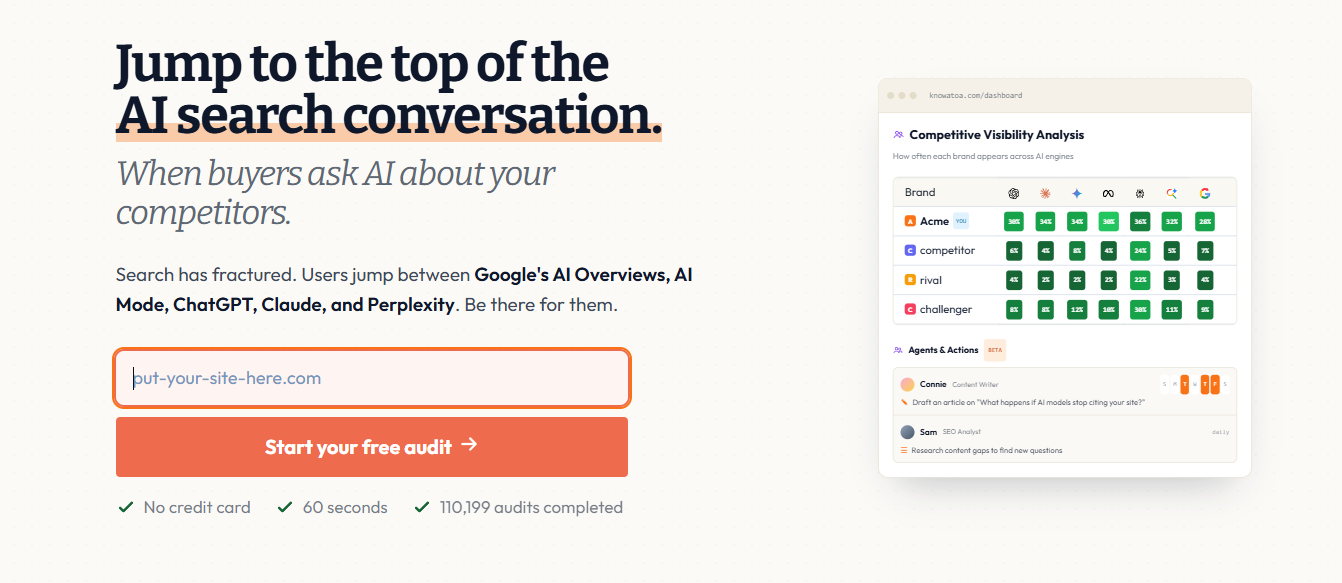
Knowatoa is a wallet-friendly option for AI search monitoring, aimed at teams that want to keep an eye on their presence without a big spend. It does the core monitoring job well.
It checks how you show up across AI search engines, watches for changes, and even helps you confirm that AI crawlers can reach your site in the first place.
The visibility tracking is straightforward and the monitoring is dependable, which is all a lot of smaller teams actually need. It won’t match an enterprise suite for analytics depth, but it covers the fundamentals at a price that works.
HubSpot AI Search Grader
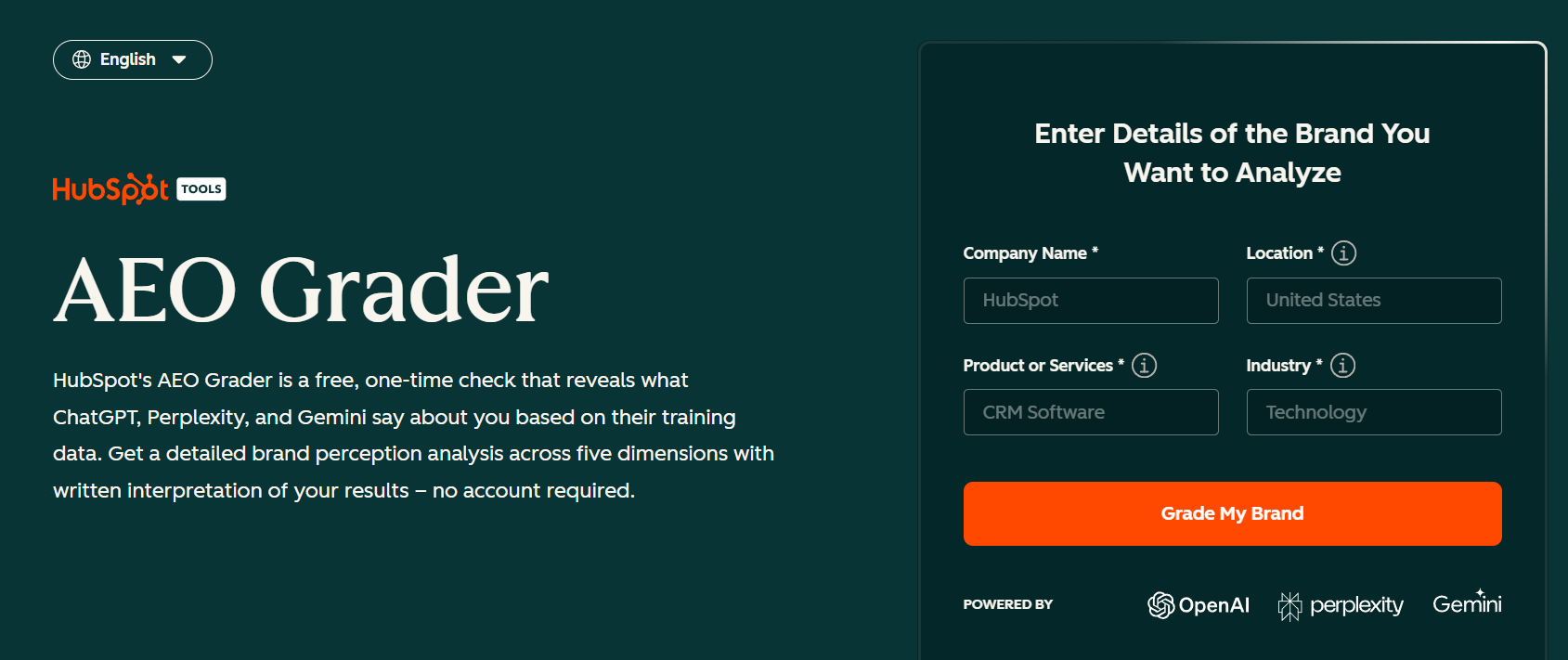
The HubSpot AI Search Grader is one of the better free tools for a fast read on your AI visibility. You enter your brand, and it returns a quick grade.
Think of it as a lightweight geo audit: it gives you a geo score and a snapshot of your brand visibility in AI answers, with no cost and no setup.
Key features are speed and simplicity rather than ongoing monitoring. It won’t replace a full platform, but for a small business testing the waters of AI search, it’s a genuinely useful starting point.
BrandRank.AI
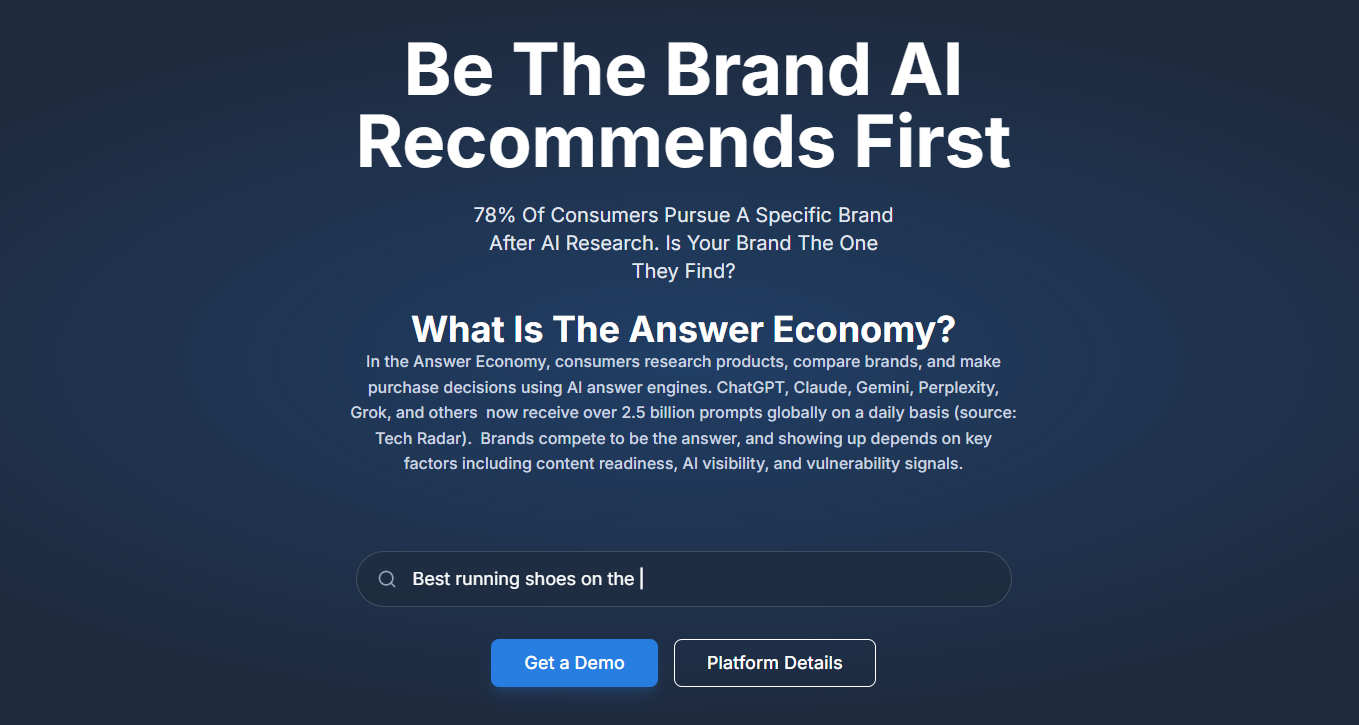
BrandRank.AI focuses on the reputation angle: not just whether you appear in AI answers, but how you’re portrayed. That monitoring lens makes it useful for brand-sensitive teams.
It tracks each AI mention of your brand, scores sentiment, and alerts you when the way AI describes you shifts. For a company that cares about accuracy and perception in AI search, catching a bad citation early is worth a lot.
One wrong citation can shape how buyers see you. Its monitoring leans toward reputation and messaging rather than pure ranking, which sets it apart from the tracking-only tools.
Daydream
Daydream is an enterprise-grade GEO analytics platform for teams that want to connect AI visibility to real business outcomes. As a geo platform it’s built for scale. It’s analytics-first, built for depth.
It ties your AI search performance to deeper analytics, helping large teams see not just where they appear but what it’s worth.
For enterprises running serious GEO programs, that level of analytics and reporting supports real optimization and content decisions, and it can fold content and visibility data into one view. It’s overkill for a small business, but for its target user, the depth is the point.
Am I On AI?
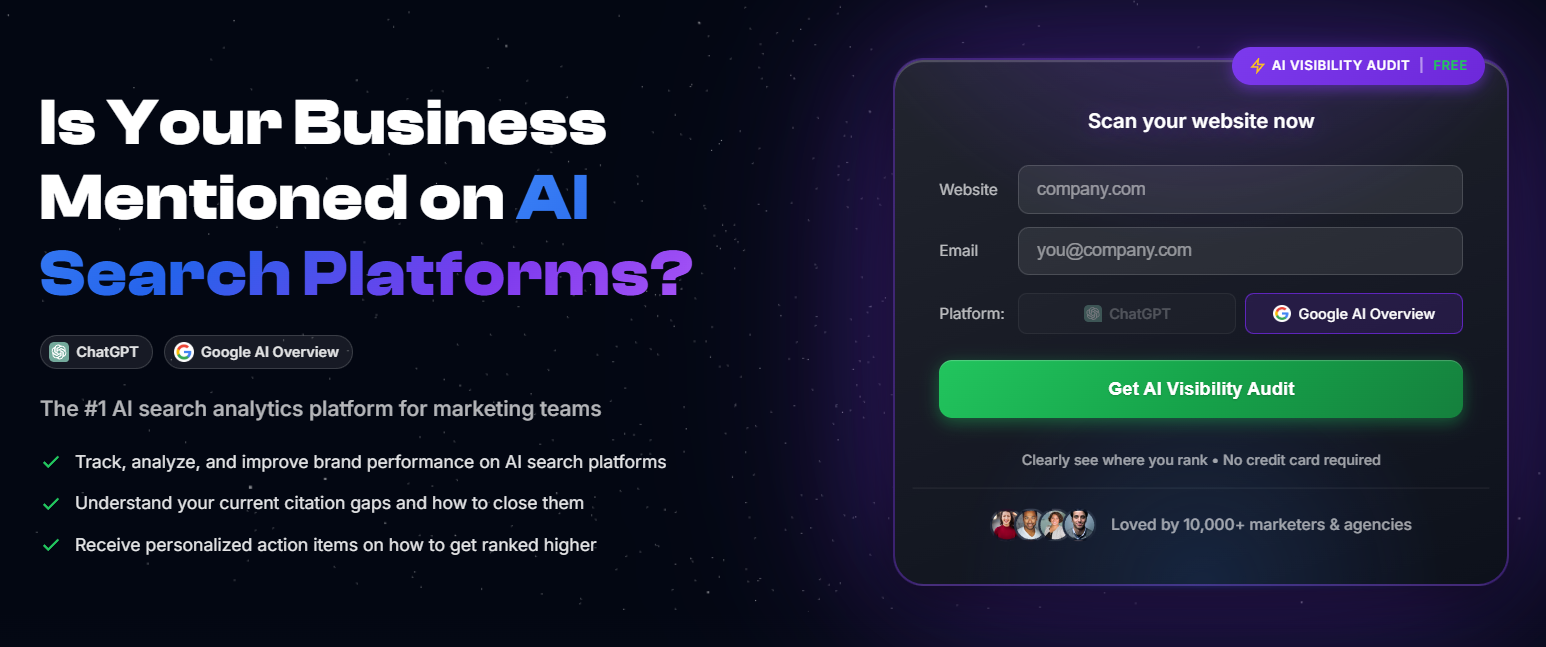
Am I On AI? is exactly what it sounds like: one of the simplest free tools for checking whether AI mentions you. You run a query and see if you earned a citation. If your name isn’t in that one citation, you know you have work to do.
There’s no dashboard and no commitment, just a quick check across AI tools to confirm your presence.
The monitoring is basic, but for a small business or a solo founder who just wants a yes-or-no answer on their AI search visibility, it’s the fastest way to get one. Use it as a spot check, then graduate to a fuller platform when you’re ready to track over time.
Link building cheat sheet
Gain access to the 3-step strategy we use to earn over 86 high-quality backlinks each month.
Now Over to You
So there are ten GEO tools, sorted by what they actually do, from free checkers to enterprise platforms. Whichever of these geo tools you pick, match it to the job. Most of them track or monitor your AI visibility.
A couple help with content optimization or enterprise analytics. And one, Respona, goes and earns the citations for you.
That’s the distinction worth remembering. Tracking tells you where you stand in AI search, which matters. But no dashboard moves the number by itself. Earning a citation is off-site work, built on getting mentioned in the content AI reads, and that takes real outreach. Each new citation is a mention you had to go earn.
If you’d rather skip the dashboards and just get cited, that’s where we come in.
Place your first order and our team will earn the mentions for you, so you’re the brand AI keeps recommending.
Frequently Asked Questions (FAQ)
What is a GEO tool, exactly?
GEO tools help you measure or improve how your brand shows up in AI answers. Some focus on AI visibility, some on content optimization, some on analytics.
The category overlaps with what people call AI search tools or answer-engine optimization tools, and it’s moving fast, so most GEO tools add features every few months. New geo tools launch almost weekly.
How is GEO different from SEO?
SEO optimizes for ranking in traditional search, including features like the Google AI Overview that sits above the results. GEO, generative engine optimization, is optimization for being cited in AI answers from the generative engines behind ChatGPT and similar tools.
They overlap, since AI often pulls from pages that already rank in Google AI Mode and beyond, but a strong SEO tool won’t necessarily track your AI visibility. That’s why a dedicated GEO tool exists.
Do I need a paid platform, or is a free option enough?
It depends on your goal. Free checkers like HubSpot’s grader or Am I On AI? are great for a quick geo score or a one-off check. But for ongoing monitoring and real analytics, a paid platform earns its keep.
Start free, then upgrade when you need continuous tracking rather than a snapshot.
What about the big SEO suites, like Ahrefs Brand Radar?
The major suites have moved in fast. Ahrefs Brand Radar and the Semrush AI toolkit both add AI visibility data to tools teams already use, and SE Ranking has its own AI features.
If you already pay for one, check whether its Brand Radar or equivalent covers your needs before buying a standalone GEO tool.
For deeper work, a purpose-built platform like Scrunch AI or the options above usually goes further than a suite add-on like Brand Radar.
Which GEO tool should an agency choose?
Agencies should weight reporting and white-label features heavily, since you’re presenting to clients.
A platform with strong tracking, a clean geo workflow, and Looker Studio support (like Trakkr) tends to fit better than a tool built for a single in-house team. Look at the geo features around multi-client management, not just the raw data.
Can these tools tell me why I’m not getting cited?
Partly. Good analytics show you where competitors appear and you don’t, and some tools flag whether AI crawlers can even reach your pages or whether your structured data and schema are clean.
Fixing structured data helps, but only so much. But the fix, earning more mentions in the content AI trusts, is an AI agent or a dashboard can’t do for you. That’s the off-site outreach piece, which is exactly the gap Respona closes.