[ad_1]
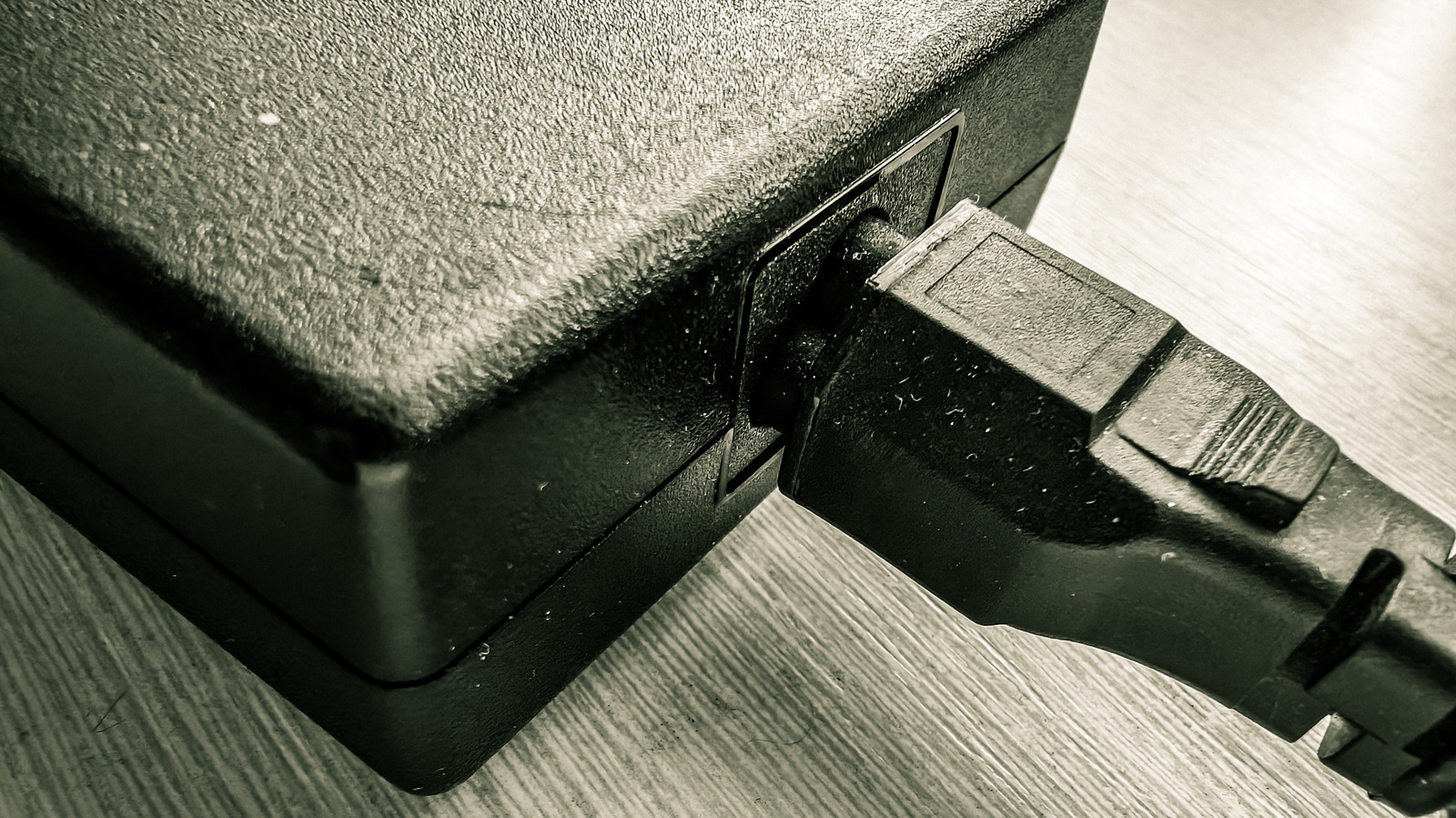
Once upon a time, every single laptop shipped with a bulky charging brick. These chargers were heavy, cumbersome and fairly finicky. However, times have changed. Laptop chargers are smaller and lighter than ever before. What happened? Here’s why bulky laptop chargers are going the way of the dodo.
GaN technology for the win
GaN (Gallium Nitride) semiconductors are simply more efficient than silicon semiconductors, which used to be the primary technology behind laptop chargers. Modern laptop chargers have adopted GaN technology, and that has enabled companies to manufacture more compact transformers and components. This led to these chargers shrinking by around 40 to 50 percent, while still delivering an average of 40W to 150W of power. Even powerful workstations and gaming laptops use GaN chargers nowadays, and they require a ton of power.
GaN chargers also create less heat than silicon chargers. This has allowed them to adopt quick-charging technologies, which often use a higher-charged current. Finally, they offer up to 99 percent efficiency, compared to around 85 percent for silicon.
How prevalent are GaN laptop chargers?
We don’t have any real numbers specifying the prevalence of GaN laptop chargers, but it’s getting harder to find powerful machines that use silicon semiconductors instead of GaN. The USB-C chargers that accompany modern MacBook Pro laptops? They are filled with GaN semiconductors. You’ll find this type of charging technology with higher-end models by Lenovo, Dell and just about everyone else.
Some entry-level laptops, like the MacBook Air and Neo, still use silicon-based charging technology. However, they can be outfitted with third-party GaN chargers. To that end, accessory companies like Anker have largely transitioned away from silicon and embraced GaN.
Are there downsides to GaN chargers?
One potential downside to using a GaN charger is that you just might not need it, so it could be a waste of money. The MacBook Neo, for instance, doesn’t support fast charging. Attaching a GaN charger won’t hurt the machine, but you’ll only get a modest speed bump.
Consumers do value speed, so GaN chargers tend to be more expensive than silicon chargers. This price difference is shrinking all the time, however, as the technology continues its journey toward mass adoption.
What other benefits do GaN chargers offer?
GaN chargers are much smaller, so they can slot behind items of furniture in a pinch. Also, many modern chargers tend to have a couple of integrated USB ports for charging multiple devices simultaneously. The increased power draw efficiency even makes them a slightly more eco-friendly option.
[ad_2]
Source_link