Summary
| Effective personalization depends on identifying high-intent behavioral signals, unifying customer data into real-time profiles, and activating insights instantly across channels. Success comes not from collecting more data, but from turning meaningful customer behaviors into timely actions that improve conversions, revenue, and customer lifetime value. |
You finally complete your marketing stacks with behavioural events being logged, customer data platform (CDP) is ingesting data, and personalisation tool has been live for two quarters. Yet campaigns still launch on fixed schedules, segments refresh weekly at best, and your email team is working from different audience logic than your push team. The data is present. The activation is not.
That gap is where the real personalization problem lives. Teams that treat behavioral data as a reporting asset rather than a real-time activation layer consistently leave revenue on the table because the distance between signal capture and customer experience is where intent expires.
This article breaks down the full signal-to-action framework for data-driven personalization: which behavioral events actually predict purchase intent, how they get structured into dynamic segments, how those segments fire across channels simultaneously, and how to measure whether any of it is actually moving revenue.
The behavioral signals that actually predict purchase intent
High-signal versus low-signal events
If you treat every click the same, your personalization ends up feeling robotic or, worse, irrelevant.
For example, someone landing on your homepage and bouncing is just background noise. But when a visitor looks at the same pair of shoes three times, checks the size guide, and searches for shipping costs, they aren’t just “browsing.” They’re giving you a loud, clear signal that they’re ready to buy but might have a specific lingering question. The difference between those two scenarios is the difference between a generic “come back soon” email and a timely, helpful nudge that actually solves a problem.
High-signal behavioral events are those that reveal intent, preference, or friction. Category affinity built from repeated visits to a product family, cart additions and removals, wishlist interactions, in-app scroll depth on specific content types, and loyalty point balance checks.
Low-signal events, including generic page visits, single-session bounces, and broad referral data, tell you someone was present but rarely tell you enough to personalize meaningfully. Building personalization logic on top of them produces campaigns that feel arbitrary to the recipient, because at the signal level, they essentially are.
Mapping signals to intent stages
A more useful frame is to think of behavioral data signals as intent stage markers. Early-stage signals include first category visits, search queries using broad or exploratory terms, and time-on-site without product interaction. Mid-funnel signals include repeat product views, search queries that name specific product attributes, and add-to-cart events. Late-stage signals include cart abandonment, price-drop alert opt-ins, and loyalty tier progression actions.
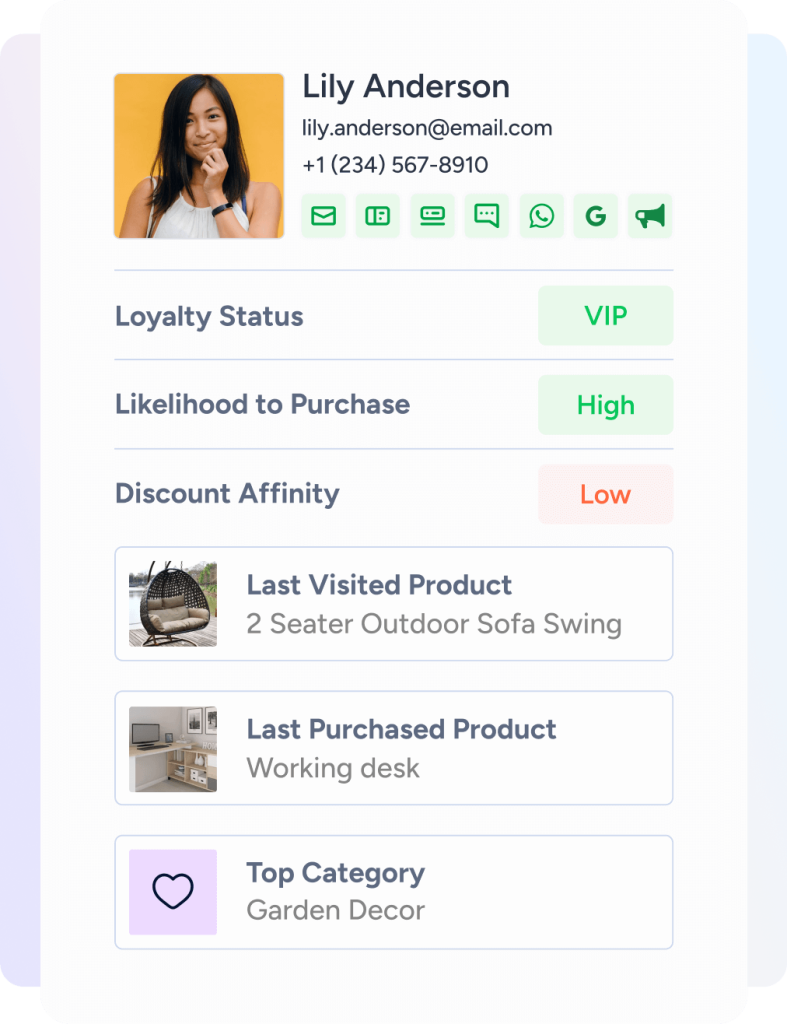
Each cluster narrows the personalization decision: what to show, through which channel, and with what urgency. A user who has viewed many pages in a single session and returned the next day is exhibiting a behavioral pattern that differs meaningfully from a user with an identical purchase history but lower engagement frequency.
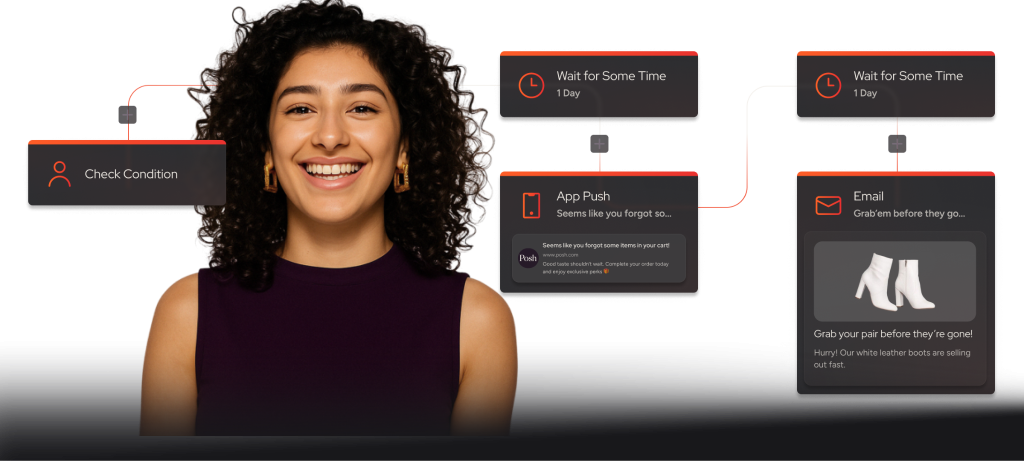
Behavioral analytics turns that distinction into a segment membership difference, and segment membership should determine what experience comes next.
From raw signal to actionable segment: how behavioral data gets structured
The unified profile and why it matters for anonymous visitors
The foundational requirement for behavioral personalization is a unified customer profile that merges anonymous and known behavioral data without dropping the thread between sessions. A visitor who browses without logging in is still generating high-value behavioral signals.
If those signals disappear the moment they authenticate, you have lost context that was already earned. A properly structured CDP stitches pre-authentication browsing behavior into the known profile at the point of identification, creating continuity that allows personalization to pick up exactly where the anonymous session left off.
Anonymous visitors represent a substantial portion of any brand’s web traffic, and their behavioral signals are often more revealing than purchase history because it tells the path to conversion.
Personalization that acts on those signals before a user identifies themselves addresses a use case that purely customer relationship management (CRM)-centric tools cannot serve well, because CRM systems have no record to act on until authentication occurs.
Dynamic segments versus static rules
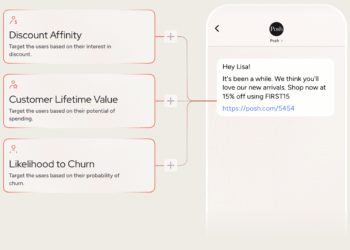
Static rule-based segments are a structural mismatch for behavioral personalization. They are defined once, applied broadly, and updated on a schedule that almost never aligns with the pace at which user behavior actually changes. A user who abandons a cart at 9 PM belongs in a cart-abandonment segment immediately, not after the next nightly batch refresh. Behavioral segmentation done properly means segment membership is event-driven, not schedule-driven.
Dynamic behavioral cohorts auto-refresh as user actions change. A user who completes a purchase exits the cart-abandonment cohort and enters a post-purchase nurture cohort in real time.
A loyalty member who crosses a tier threshold triggers a different experience the moment that event fires, not three days later when a CRM sync catches up. The window between behavioral intent and a competitive distraction is narrow, and closing that window requires segment infrastructure that moves as fast as user behavior does.
Cross-channel activation: turning behavioral triggers into coordinated personalization
One signal, multiple channels
A common failure mode in cross-channel personalization is that a behavioral signal reaches one channel and stops there. The email team picks up cart abandonment. The push team runs a separate trigger.
Neither knows what the other sent, and the customer receives two versions of the same nudge within hours. The result is parallel siloed campaigns presenting as a coordinated strategy, which frustrates customers and wastes spend rather than converting either.
Genuine cross-channel behavioral activation means a single event simultaneously triggers coordinated responses across email, web push, SMS, and on-site content, with each channel playing a distinct role rather than repeating the same message.
The personalization layer determines what each channel contributes based on the user’s history with that channel, their current device context, and which stage of the decision they appear to be in.
A concrete trigger sequence
Consider a user in a retail app who spends six minutes in a product category, views three items, and then exits without adding anything to their cart. This in-app stall combines category affinity with visible friction, making it a high-signal behavioral event worth acting on.
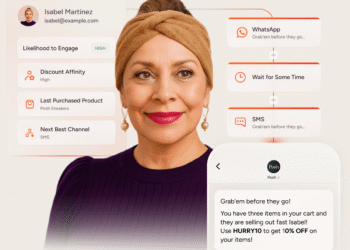
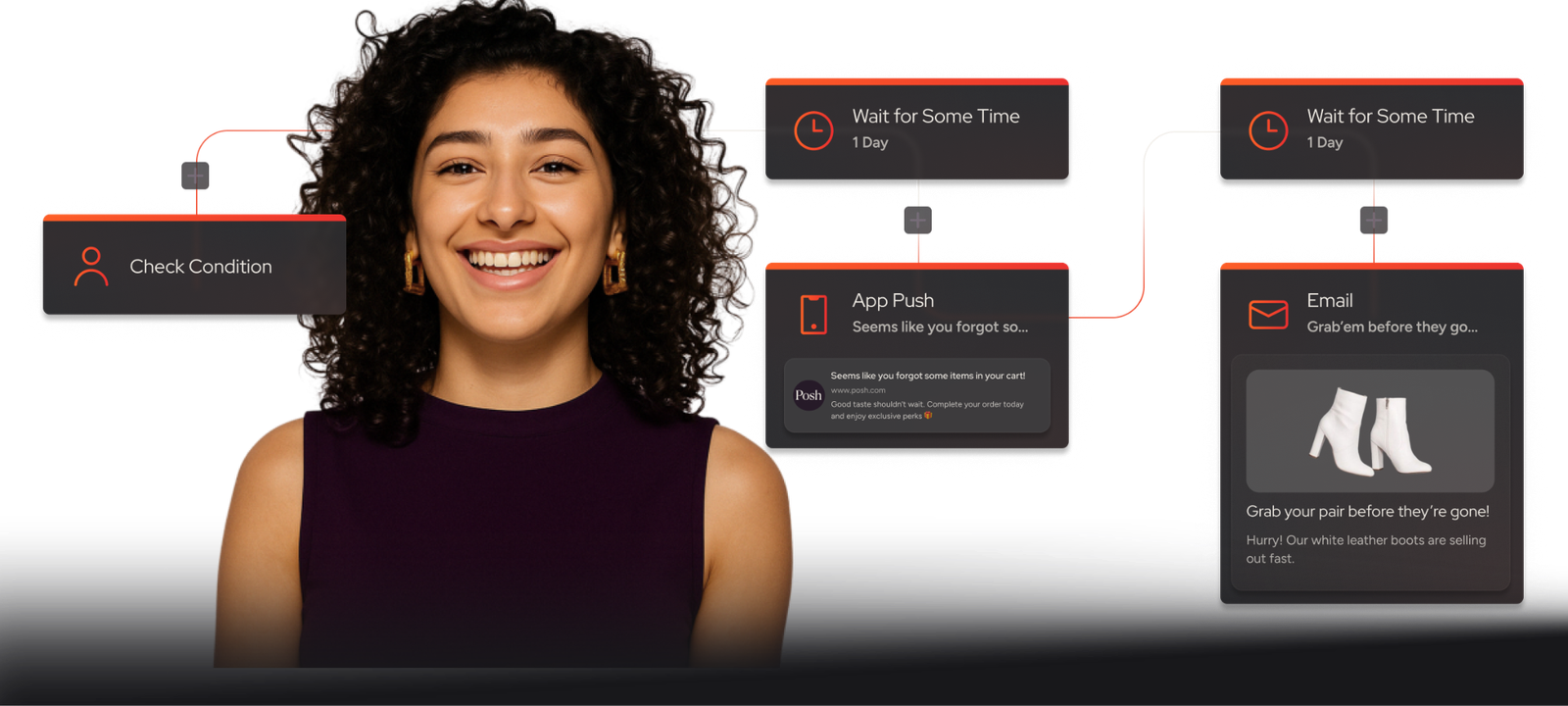
An effective personalization sequence could begin two hours after the stall, when a personalized push notification surfaces the most-viewed product with a message tailored to the user’s purchase history in adjacent categories.
If the push is not acted on, a personalized email at T+24 hours delivers the same product recommendation alongside social proof elements such as review counts and ratings drawn from real-time inventory data. If neither converts, on-site content on the user’s next visit automatically prioritizes that category and surfaces a “picked for you” module. Each step is informed by the same originating behavioral event, and none of it requires a campaign manager to manually build a new audience for each touchpoint.
Adidas achieved a 259% increase in average order value and a 13% conversion rate lift using exactly this kind of unified behavioral personalization approach.
Insider One’s journey orchestration platform enables this kind of trigger-based cross-channel sequencing without duplicating logic across channel-specific campaign builders.
The data-to-revenue gap: where behavioral personalization breaks down
Teams collecting behavioral data rarely have an insight problem. They have an activation latency problem: data sits in one system, segments are built in another, campaign logic lives in a third, and the engineering queue to connect them can take weeks. By the time a behavioral trigger reaches the customer experience layer, the intent moment it was meant to capture has already passed.
This fragmentation is structural, not accidental. Channel-specific tools cannot share behavioral signals natively, and CDPs built for analytics rather than activation produce clean data that never moves fast enough to drive real-time personalization. Marketing teams that depend on engineering support for segment refreshes are operating with a lag that behavioral personalization cannot afford.
MadeiraMadeira achieved 52X ROI after consolidating its journey logic into a single platform, eliminating the cross-tool handoff delays that had been compressing its ability to respond to behavioral signals at speed.
The organizational conditions that separate personalization leaders from laggards are not primarily about budget or tooling. They are about data architecture decisions: whether behavioral signals flow into a unified profile in real time, whether that profile is accessible to the activation layer without an engineering handoff, and whether cross-channel logic is defined once and executed consistently rather than rebuilt for each channel independently.
Measuring what matters: behavioral personalization metrics beyond open rates
The key performance indicator (KPI) stack that connects signals to outcomes
Open rates and CTRs are channel-delivery metrics that tell you whether a message was received and whether it generated a click. But they do not tell you whether the personalization decision behind the message was correct, whether the right user received the right content at the right moment, or whether the behavioral signal-action pair you built is compounding retention over time.
The KPI stack for data-driven personalization should include segment-level conversion lift measured against a control group, revenue per journey across the full trigger sequence rather than per individual message, LTV delta by behavioral cohort to track whether personalization is changing long-term customer value, and time-to-trigger latency to measure how quickly your system translates a behavioral event into a customer-facing response.
The last metric is frequently overlooked, if a campaign execution with time-to-trigger is 48 hours, then it is not executing behavioral personalization in any meaningful sense; they are running scheduled campaigns with behavioral labels attached.
Why cohort analysis outperforms aggregate reporting
Aggregate personalization reports hide the signal-action pairs that actually drive outcomes. When you report on email campaign performance as a whole, you lose the ability to see that a behavioral cohort of users who viewed a product three or more times before abandoning converts at a meaningfully higher rate when reached via push at T+2 hours rather than email at T+24 hours. That distinction is where optimization lives.
Behavioral cohort analysis, broken down by trigger type, channel sequence, and time-to-trigger, reveals which combinations compound retention and repeat purchase and which ones produce a single conversion without influencing the next. This is the level of measurement that separates teams actively improving their personalization engine from teams who are only reporting on it.
If you want to see how Insider One’s Smart Recommender and journey orchestration platform turn live customer data into coordinated, revenue-driving experiences, book a personalized demo to see the exact use cases, decision logic, and growth levers most relevant to your team.
FAQs
Demographic and CRM data describe who a customer is: their age, location, purchase history, and loyalty tier. Behavioral data describes what they are doing right now and what that action signals about intent. Personalization that combines both layers produces experiences that are simultaneously relevant to the person and timely to the moment. Behavioral signals alone, without profile context, produce generic nudges. Profile data alone, without behavioral signals, produces personalization that is accurate but delayed.
The starting point is a CDP architecture that generates and maintains a persistent anonymous identifier across sessions. This allows behavioral signals from an unauthenticated visit to accumulate into a meaningful profile before authentication occurs. At the point of login or identification, the anonymous profile merges with the known profile, preserving continuity. Personalization can then act on the full behavioral history, not just the post-login slice, which matters most for top-of-funnel experiences where anonymous traffic volumes are highest and intent signals are earliest.
Three requirements apply: a real-time event stream that captures behavioral actions as they happen rather than batching them, a unified profile layer that merges those events with known customer data without a manual refresh cycle, and an activation layer that can receive segment membership updates and trigger channel responses without an engineering handoff in between.
The specific tools matter less than whether those three capabilities are connected in a way that keeps latency low. Many teams have all three tools in their stack but have not connected them in a way that enables real-time activation.