[ad_1]
Summary
| Custom GPT apps are turning ChatGPT into a high-intent customer engagement channel where conversational interactions generate valuable behavioral data. To make this effective, brands need a CDP that connects in-chat activity with unified customer profiles, enabling real-time personalization, predictive targeting, and cross-channel orchestration powered by configurable AI agents rather than basic chatbots. Success should be measured through intent resolution, conversions, and cross-channel impact, not traditional engagement metrics alone. |
A customer opens ChatGPT, types a question about luggage for an upcoming trip, and within seconds, they are browsing your catalog, comparing carry-on dimensions, and asking about loyalty points. That session generates more behavioral signals in four minutes than a week of passive email opens. The question for your team is not whether the interaction happened. It is whether you captured it, connected it to their profile, and did anything useful with it afterwards.
That gap is where many engagement stacks are currently failing. Brands have spent years connecting email, push, SMS, and web into something resembling a coherent journey. ChatGPT apps, as a new category of brand-owned conversational surface, sit entirely outside those architectures. The in-chat moment is rich with intent, and what follows it is usually silence.
Why ChatGPT apps are becoming a real engagement channel
A general-purpose interface becomes a branded touchpoint
OpenAI’s custom GPT framework allows brands to deploy authenticated, interactive experiences directly inside the ChatGPT interface. These are not simple FAQ bots. They can surface product carousels, support transactional flows, authenticate returning users, and deliver personalized recommendations inside a conversational session. The interface handles natural language understanding; the brand supplies the logic, data, and content.
What makes this meaningful from a customer engagement standpoint is the user intent behind it. When someone opens a branded ChatGPT app inside a travel or beauty retail experience, they are already in a decision-making posture. That is categorically different from a passive web visit or a promotional email open. The session begins at a point of high intent, which means the cost of a generic or disconnected response is disproportionately high.
Why reaching alone does not make it a channel
ChatGPT has attracted a large and growing user base, but reach alone is not what makes it a viable engagement channel. What makes it viable is the combination of high intent, natural language interaction, and a framework that lets brands control the experience. Treated as a passive surface, it is just another impression. Treated as an entry point into a coordinated customer journey, it becomes something substantially more valuable.
The data problem most brands haven’t solved yet
In-chat signals fall outside legacy capture architectures
Every question a customer asks inside a ChatGPT app generates behavioral signal, and so does every product they explore or task they abandon mid-session. The problem is structural: most engagement platforms were built around web sessions, email events, and app interactions. An in-chat session inside a third-party AI interface is architecturally foreign to these systems. There is no pixel, no native SDK event, and no standard webhook that connects conversational sessions to the customer record automatically.
The result is a blind spot at the moment of highest intent. A customer asks detailed questions about a product, exits without converting, and the brand’s engagement stack has no record of the session. The follow-up email goes out the next morning carrying a generic promotional message rather than a continuation of the conversation that was already underway.
The CDP gap is the real blocker
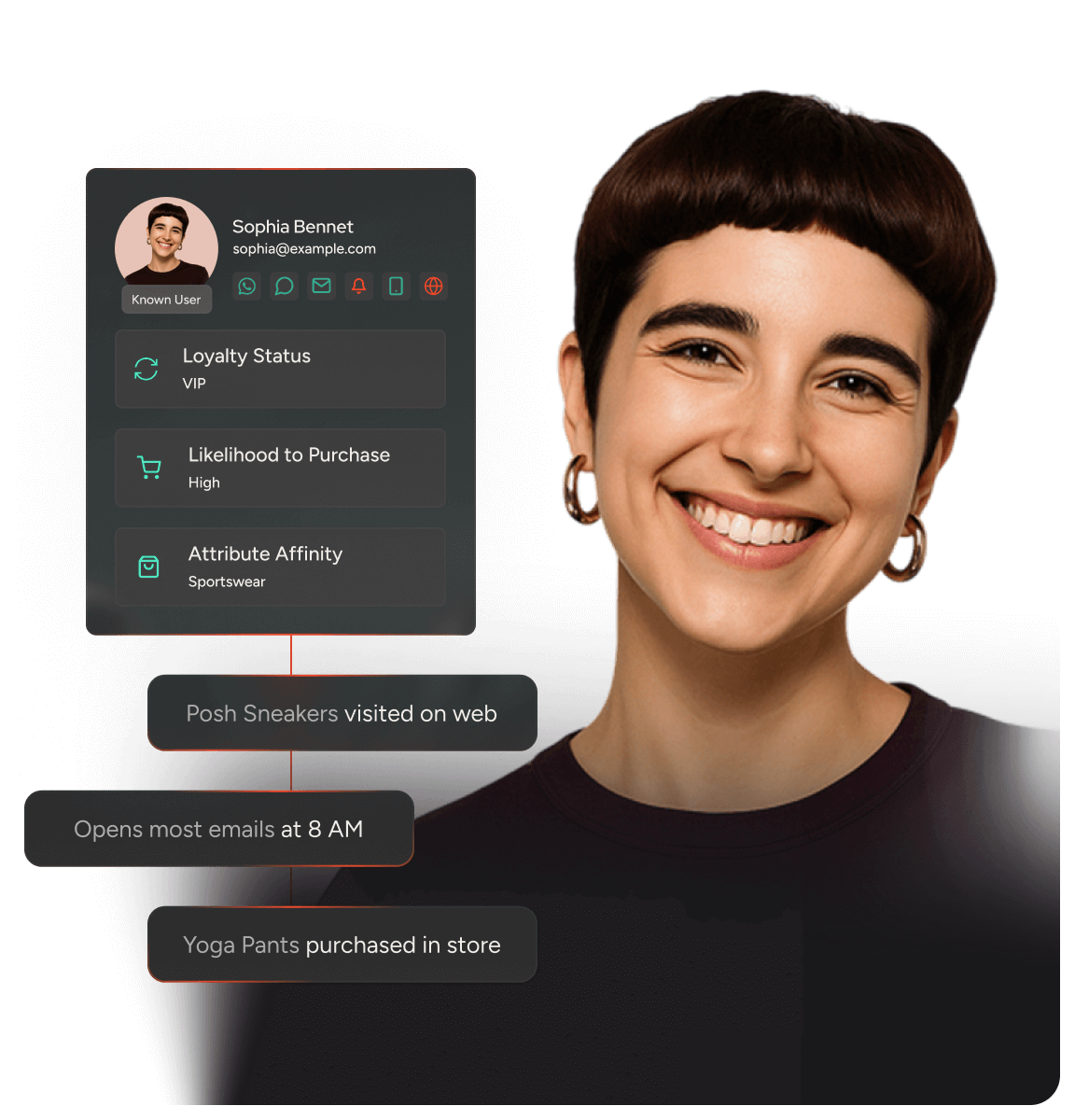
This is fundamentally a customer data management problem. Without a customer data platform (CDP) capable of ingesting real-time event streams from non-traditional sources and resolving them against a unified customer profile, in-chat behavior stays trapped in the session and expires. The customer’s broader context, including their purchase history, engagement tier, and likelihood to convert, never informs the conversational response. What this requires is not a passive data warehouse but an Actionable CDP, one capable of ingesting live event streams from non-standard sources and instantly activating them across every owned channel, distinguishing it from Data CDPs like those from legacy vendors that require separate tools for activation.
That missing loop also means the conversational signal never enriches the profile used to personalize email, push, and web.
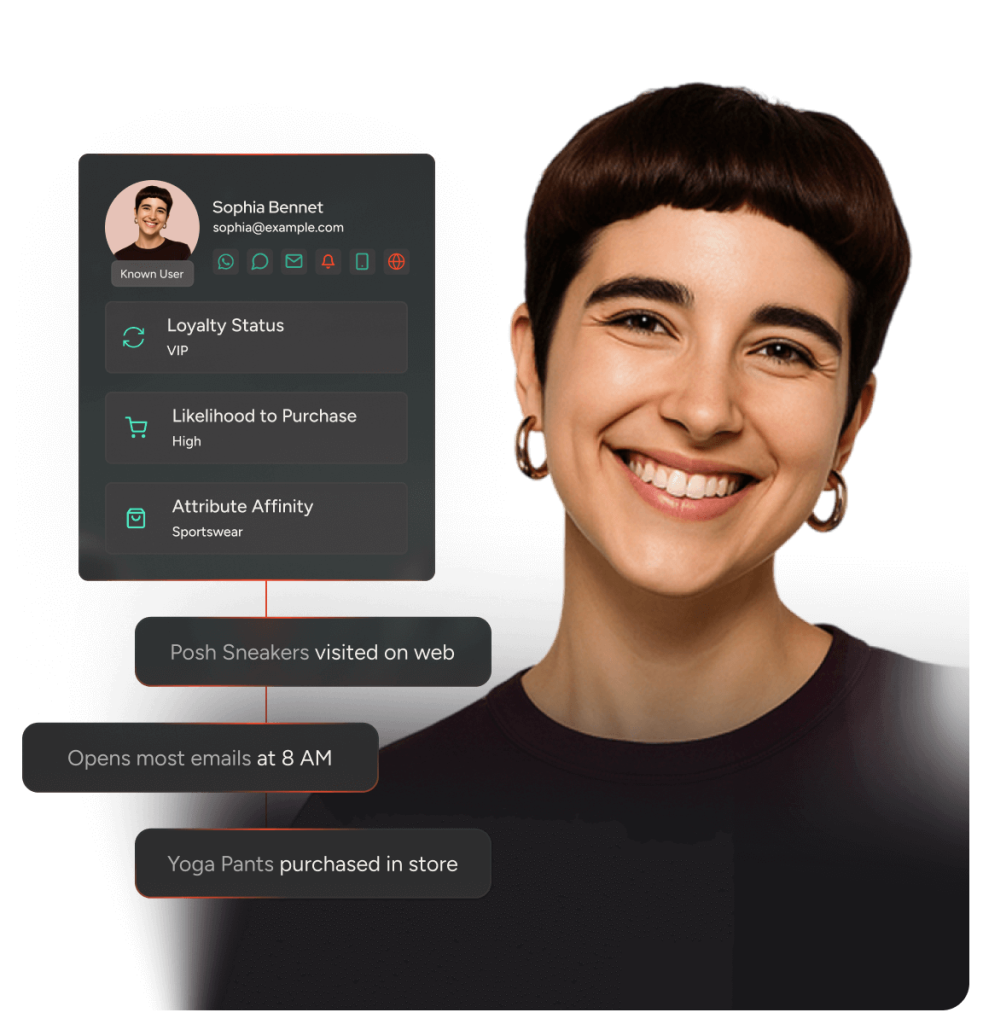
Adidas achieved a 259% increase in average order value and a 13% lift in conversion rate with Insider One in one month, and the underlying driver was unified data enabling relevance at scale.
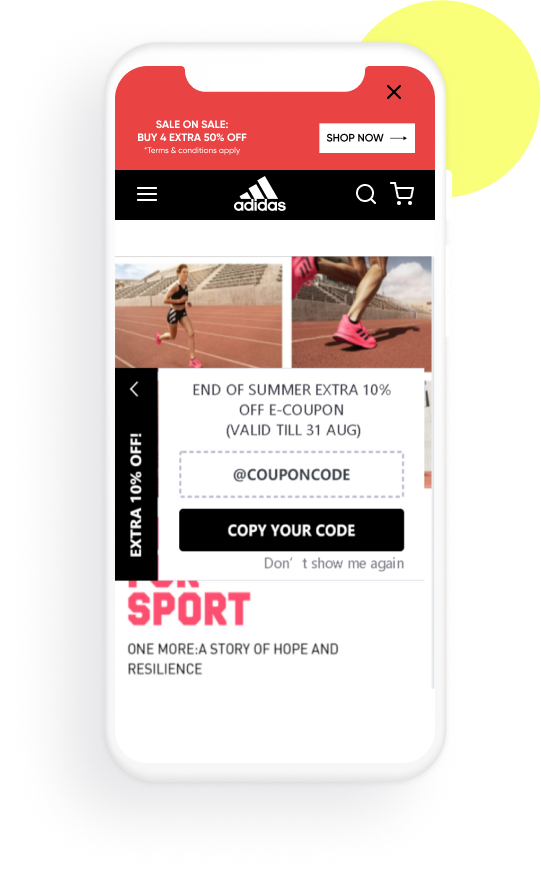
Personalization at that level requires a live customer profile, not a segmented list built from yesterday’s exports. ChatGPT apps need the same infrastructure, and many stacks are not yet providing it. Sirius AI™ addresses this directly: as users interact in-chat, it automatically assigns them to dynamic segments, such as “Likely to Purchase” or “High-Value Researcher”, in real-time, without manual data mapping or analyst intervention.
What personalized conversational engagement actually requires
Real-time profile access, not scripted response trees
Effective conversational customer engagement is not a matter of writing better chatbot scripts. It requires the engagement layer to pull from a live 360-degree customer profile at the moment the session begins, inform conversational logic with real-time audience segments and predictive intent signals, and update the profile as the session unfolds. Insider One’s Sirius AI™ powers this kind of real-time decisioning by connecting behavioral signals to unified profiles dynamically. What distinguishes Sirius AI™ is its Agentic AI capability: rather than simply informing journey logic, it autonomously generates complete omnichannel responses based on in-chat intent and can discover new audience segments 30X faster through AI-powered prompts.
A returning customer who previously purchased a mid-range product and has recently browsed premium alternatives should receive a different conversational experience from a first-time visitor asking the same opening question. The words in the question may be similar; the appropriate response is not.
Insider One’s AI-powered personalization infrastructure extends this logic to conversational surfaces, provided the underlying architecture supports it.
Journey continuity is non-negotiable
A customer who browses flights inside a ChatGPT app, compares two routes, and exits without booking has shown you exactly where they are in the consideration journey. If the next touchpoint they receive is a generic promotional push notification with no relation to what they just explored, the brand has wasted both the signal and the goodwill. Journey orchestration has to account for in-chat exits as trigger events, not invisible gaps. Insider One’s Architect resolves this with Next Best Channel logic, automatically determining whether WhatsApp, email, or push notification is the most effective follow-up based on each customer’s engagement history and predicted intent.
The practical requirement is a coordinated escalation path: when an in-chat session ends without resolution, the customer’s profile triggers a follow-up sequence across owned channels based on what they expressed intent around. That sequence could be an email with specific flight options, a WhatsApp message 24 hours later, or a personalized push notification timed by predictive engagement modeling. What it cannot be is nothing, because silence after a high-intent session is an opportunity permanently lost. For customers who expressed interest in an out-of-stock item during the session, Insider One can automatically trigger a Back in Stock or Price Drop notification the moment conditions are met—a closing loop most engagement stacks cannot execute.
How to connect ChatGPT apps to your omnichannel stack
The integration architecture that actually works
Connecting ChatGPT app interactions to an omnichannel engagement stack requires bidirectional data flow. The app authenticates the returning user (or collects minimal identity data from a new one), passes behavioral events to the CDP via a real-time API stream, and receives content decisions back from the personalization layer without adding latency that the conversational interface would not tolerate. Insider One implements this via its Web SDK integrated directly into ChatGPT UI components, with a Real-time Ingestion API and domain validation ensuring zero-latency personalization within the chat window itself, proving this is a ready-to-deploy solution, not a custom engineering project.
This is not a simple tag implementation. It requires the CDP to have flexible ingestion APIs capable of accepting non-standard event schemas, an identity resolution layer that can match an authenticated in-chat user to an existing customer profile, and a decisioning layer that can respond to event triggers with personalized content recommendations within the session window. Teams evaluating their platform should assess whether their current stack can handle this data flow before the ChatGPT app becomes yet another disconnected silo.
Importantly, these conversational journeys can be built and maintained by marketers without requiring data science or IT support, a key differentiator against enterprise stacks that demand engineering resources for each new touchpoint. Insider One provides built-in personalization across 12 or more channels without external integrations, removing that complexity entirely.
Treat the chat as an entry point, not a destination
A common framing that produces weak ChatGPT engagement strategies is treating the app as a self-contained experience that either converts or does not. A more productive approach treats every in-chat session as an entry point into the broader customer journey, with the in-chat experience responsible for qualifying intent, collecting signals, and routing the customer to the most appropriate next engagement. This is the operating model of an AI-Native Experience Platform, where every in-chat interaction feeds automatically into a coordinated, AI-optimized journey across all owned channels.
For a customer in early research mode, the right escalation might be an email with editorial content, driving them back to a richer owned surface. For a customer expressing specific purchase intent who exits mid-session, the right escalation might be a WhatsApp message with a direct path to checkout. An omnichannel engagement platform is what connects these entry points to appropriate follow-up. Without that connection, the chat session ends and the opportunity disappears.
Measuring what conversational engagement actually delivers
Why standard KPIs do not translate
Open rates and click-through rates are artefacts of broadcast engagement models. They measure whether a message was received and whether the recipient took a single binary action. Conversational sessions have neither of those properties. A session that produces no click but resolves a customer’s question and moves them meaningfully closer to purchase may be more valuable than a session that generates a click leading nowhere.
Standard customer engagement metrics need to expand to accommodate this reality.
The metrics that map more cleanly to conversational engagement include intent resolution rate (did the session answer what the customer was trying to find out?), session-to-purchase conversion attributed across a multi-touch window, and session abandonment patterns that reveal where conversational flows lose customers.
Insider One accelerates performance optimization further through A/B Split Winner Auto-selection, which continuously tests conversational flow variants and automatically promotes the highest-performing version—eliminating the manual analysis cycle that slows most optimization efforts.
These require reporting and measurement infrastructure that tracks sessions as units of interaction rather than individual events, which is a meaningful architectural shift from how most platforms handle attribution today.
Incrementality is the right evaluation frame
The strongest business case for investing in ChatGPT app infrastructure is built on incrementality: how does in-chat engagement change downstream behavior in owned channels? A customer who interacts with a ChatGPT app and then receives a coordinated follow-up sequence should show different conversion behavior compared to a matched control group that received the follow-up without the in-chat touchpoint. That delta is the measurable value of the conversational layer.
MadeiraMadeira achieved 52X return on investment (ROI) with Insider One’s Architect, a result that came from coordinating touchpoints across the customer journey rather than optimizing any single channel in isolation. The same principle applies to conversational channels: the value of the in-chat touchpoint is not fully visible at the session level. It shows up in what happens next.
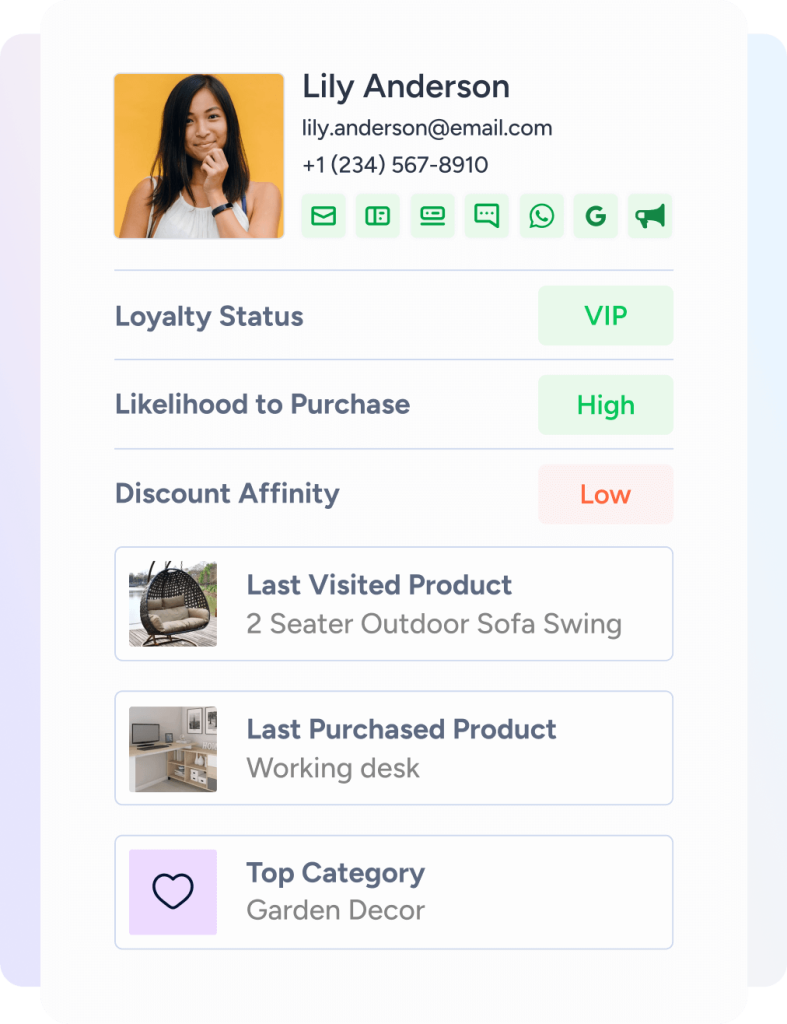
If you want to see how Insider One’s Architect, AI personalization, and Sirius AI™ turn live customer data into coordinated, revenue-driving experiences, book a personalized demo to see the exact use cases, decision logic, and growth levers most relevant to your team.
FAQs
Not necessarily, but it does require the right data infrastructure. If your customer data platform (CDP) has flexible real-time ingestion APIs and a live identity resolution layer, a ChatGPT app can be connected as a new event source without rebuilding the core stack. The complexity depends on what your current platform can handle architecturally.
Authentication is the most reliable method. If the ChatGPT app includes a sign-in or account-linking step, the authenticated user identifier can be resolved against the existing customer profile in the CDP. Without authentication, probabilistic identity matching based on available signals is possible but less precise.
That depends on where the customer sits in the journey and which channels they are most responsive to, which is exactly the kind of decision a well-configured journey orchestration layer should be making based on the customer’s engagement history and predicted intent. WhatsApp and email are strong options for high-intent exits; web push works well for re-engagement at lower intent thresholds.
No. Travel, financial services, media, and health brands all have use cases where conversational resolution of complex questions can shorten the decision cycle and build loyalty. The data and journey continuity requirements are the same regardless of sector.
[ad_2]
Source_link