[ad_1]
Summary
| SMS works best as a real-time trigger within an omnichannel journey, not as a standalone channel. Effective cross-channel sequencing depends on a unified customer profile that links behavior, consent, and purchase history. Suppression and frequency controls must be managed at the journey level to avoid conflicting messages. True SMS impact is only visible through multi-touch attribution, not last-click models. Identity resolution is essential; without it, web and SMS data remain disconnected and break journey continuity. |
Running email, push, and SMS as separate programs is a common starting point. The problem surfaces when a customer abandons a cart, receives a push notification, ignores it, gets an email two hours later, and then receives an SMS with the same offer the following morning, with no awareness of what came before.
Each channel fires on its own schedule, against its own logic. The customer experiences it as noise. That’s not an omnichannel program; it’s three-channel programs running in parallel.
The distinction matters because channel stacks assembled this way produce diminishing returns at scale. Engagement rates drop, opt-outs climb, and attribution becomes increasingly difficult to interpret.
What those stacks are missing is not more channels, it’s coordinated sequencing logic, shared data, and suppression rules that treat every message as part of a single conversation with the customer. SMS, used correctly, is often the element that makes that conversation feel continuous.
| Capability | Siloed SMS | Insider One SMS |
| Timing | Static scheduling windows | Send Time Optimization via Sirius AI |
| Channel routing | Manual rule-based branching | AI-Powered Next Best Channel decisioning |
| Identity | Client-side, cookie-dependent | Server-Side Identity Resolution (cross-device) |
| Audience targeting | Static broadcast lists | Predictive Segments (Likelihood to Purchase) |
| Deliverability | Third-party SMS gateway | Native BSP: >95% deliverability |
| Governance | Per-channel send caps | Journey-level exclusion + Dry Run simulation |
| Attribution | Last-touch only | Multi-touch with incremental lift measurement |
Why SMS belongs at the centre of omnichannel, not the edge
SMS is the highest-immediacy trigger layer
There’s a structural reason SMS earns a different position in a well-designed omnichannel stack: open rates are near-instant, delivery is reliable even without an app installed, and the medium carries an implicit urgency that email and push notifications don’t.
Insider One operates as a native BSP (Business Service Provider) for SMS and WhatsApp, with direct carrier connections that enable >95% message deliverability and faster template approvals than platforms relying on third-party SMS gateways. The native BSP infrastructure also eliminates the latency and reliability risks that third-party routing introduces in time-sensitive trigger sequences.
That makes SMS uniquely suited to time-sensitive moments, including flash sale notifications, cart abandonment reminders with short expiry windows, and post-purchase confirmations that need to land fast.
When omnichannel marketing automation treats SMS as a broadcast add-on, it loses that advantage entirely. The message gets scheduled and sent regardless of what happened on other channels. When a platform treats SMS as the high-immediacy trigger layer, it reserves the channel for moments where speed and direct reach genuinely matter, and routes lower-urgency communication through email or in-app messaging instead.
The unified customer profile that makes it possible
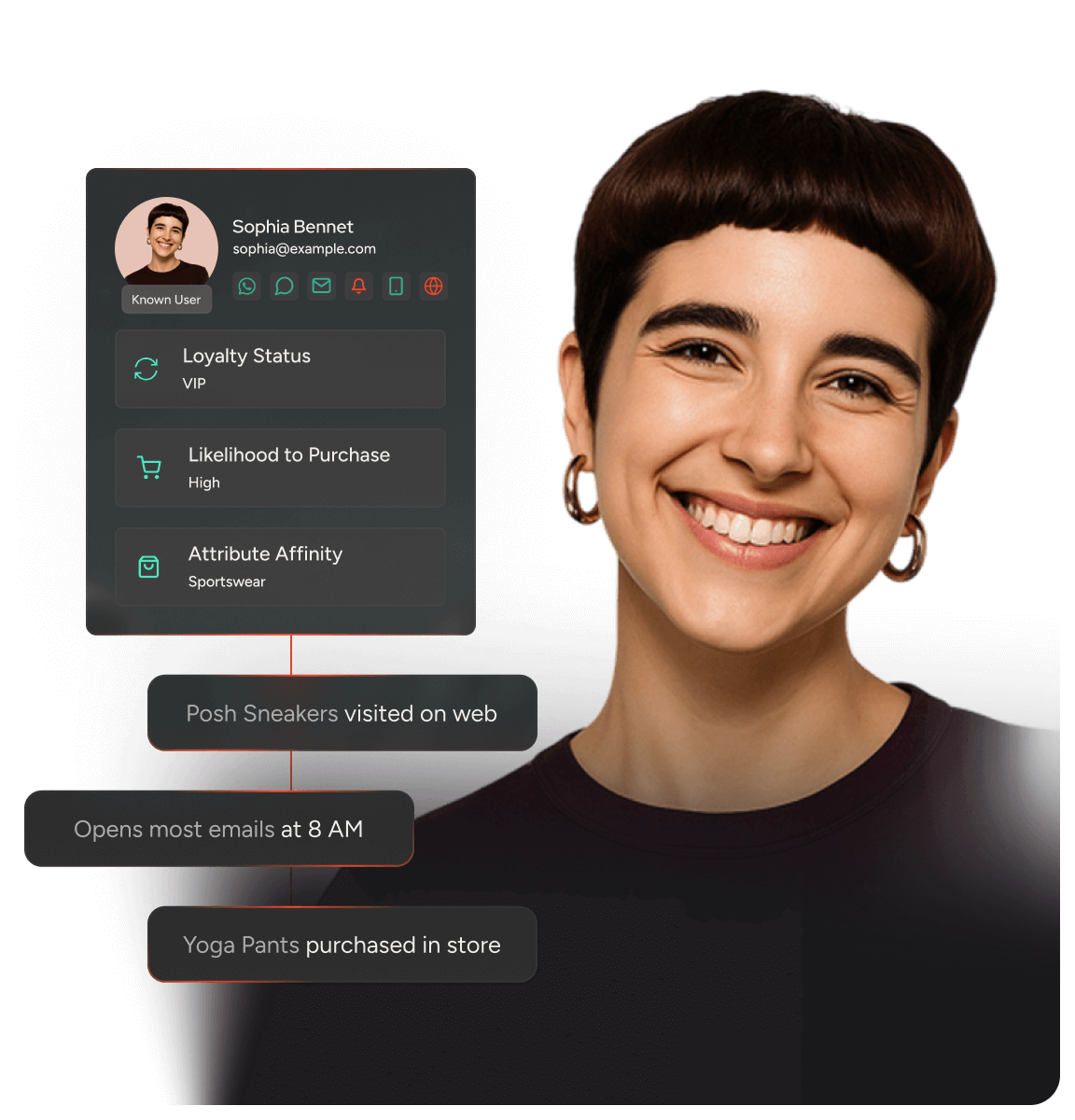
The prerequisite for that kind of routing is a unified customer profile that aggregates behavioral signals across channels in real time. Without it, the SMS logic has no visibility into whether the customer has already converted via email, whether they’ve received three push notifications in the past 24 hours, or whether their consent status changed yesterday.
A customer data management layer that resolves identity across sessions and channels is what allows SMS to act on the full picture rather than its own isolated data slice.
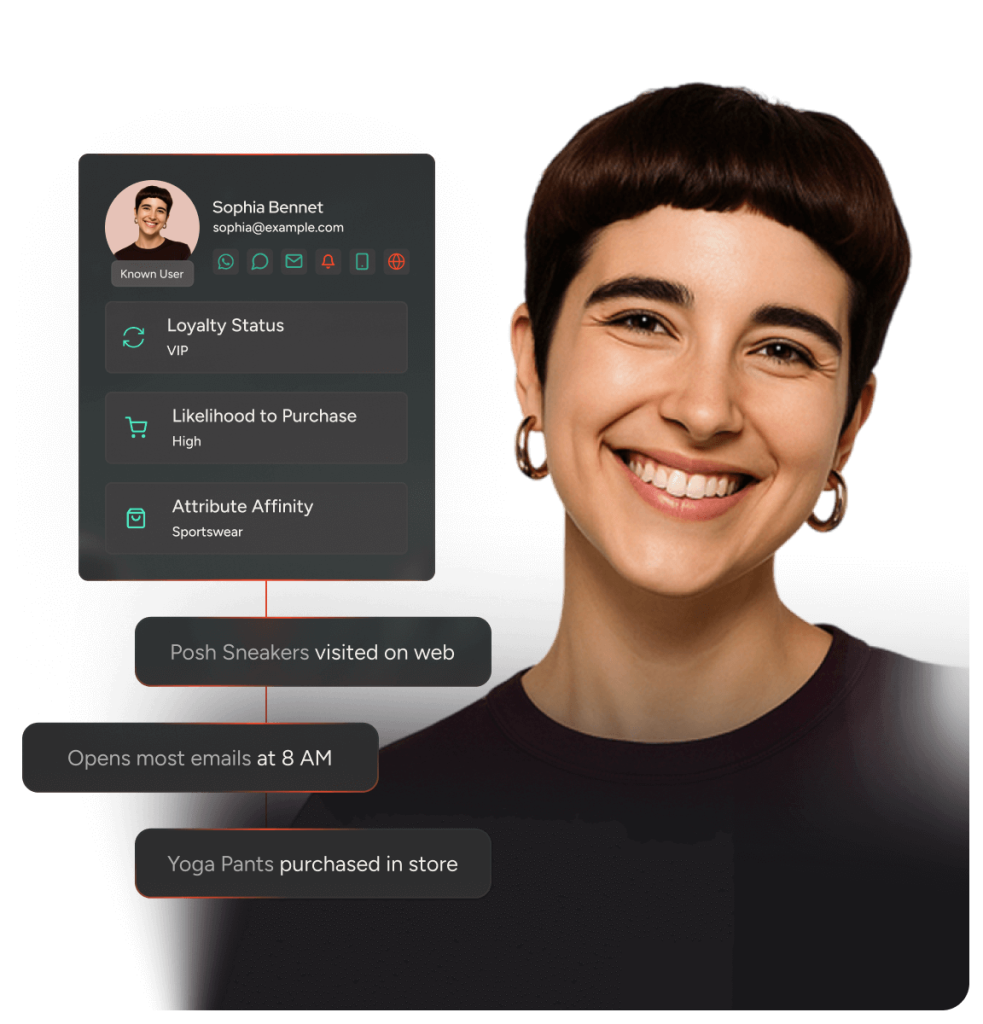
In practice, this means the profile needs to hold not just contact attributes and purchase history but active channel engagement state: what the customer opened, when they last converted, and which channels they are currently opted in to. That data has to be accessible at the moment a journey step evaluates whether to send an SMS, not batched and refreshed hourly.
The data foundation omnichannel SMS requires
What the SMS logic actually depends on
SMS sequencing logic in a cross-channel journey depends on four primary inputs: real-time behavioral events, current consent and opt-in state, channel engagement history, and purchase or lifecycle stage. Each one gates a different decision point.
A behavioral event, like a cart abandonment, triggers the journey entry. Consent state determines whether SMS can fire at all. Channel engagement history shapes which channel fires first.
Lifecycle stage influences message content and the urgency of the timing.
If any of these inputs are missing or stale, the logic misfires. A customer who opted out of SMS last week but whose opt-out hasn’t propagated to the journey engine will receive a message they explicitly declined.
A first-time visitor who abandoned a cart but hasn’t yet been identified as an SMS subscriber will be targeted incorrectly. These aren’t edge cases; they’re common failure modes in stacks where data freshness and identity resolution aren’t treated as foundational requirements.
Identity resolution is the prerequisite
Identity resolution is the step most teams underinvest in, and it’s also the one that determines whether cross-channel suppression and sequencing can work at all. An anonymous web session that later converts to an email sign-up, and later still matches a known SMS subscriber, needs to be unified into a single profile retroactively. Insider One uses Server-Side Identity Resolution, which maintains cross-device accuracy even when browser cookies are blocked or cleared, a critical advantage over client-side solutions that lose identity continuity across devices.
If that stitching doesn’t happen, the customer journey engine sees three separate users and treats them accordingly, sending redundant messages across what is actually the same person at different stages of identification.
Resolving identity across anonymous and known states is a technical dependency, but it’s also an operational one. Teams need clear rules about which identifier takes precedence, how quickly profiles merge, and how consent captured in one context propagates to others. Getting this right before scaling SMS in an omnichannel program prevents the suppression and sequencing logic from breaking silently.
Learn more about how Insider One’s Server-Side Identity Resolution works across anonymous and known states.
Sequencing SMS within a multi-channel journey
Cart abandonment: where SMS earns its place
A well-sequenced cart abandonment journey doesn’t start with SMS. It typically starts with a push notification or an email, sent within the first hour, because those channels carry lower friction and cost.
SMS enters the sequence only if prior touches haven’t produced a conversion, and only after a meaningful time gap, often 12 to 24 hours, that gives the customer time to act without feeling overwhelmed. Insider One’s Sirius AI applies Send Time Optimization at the individual level, selecting the exact delivery window when each customer is most likely to engage based on their historical activity patterns — moving beyond static 12- or 24-hour offset scheduling to AI-powered personalised timing.
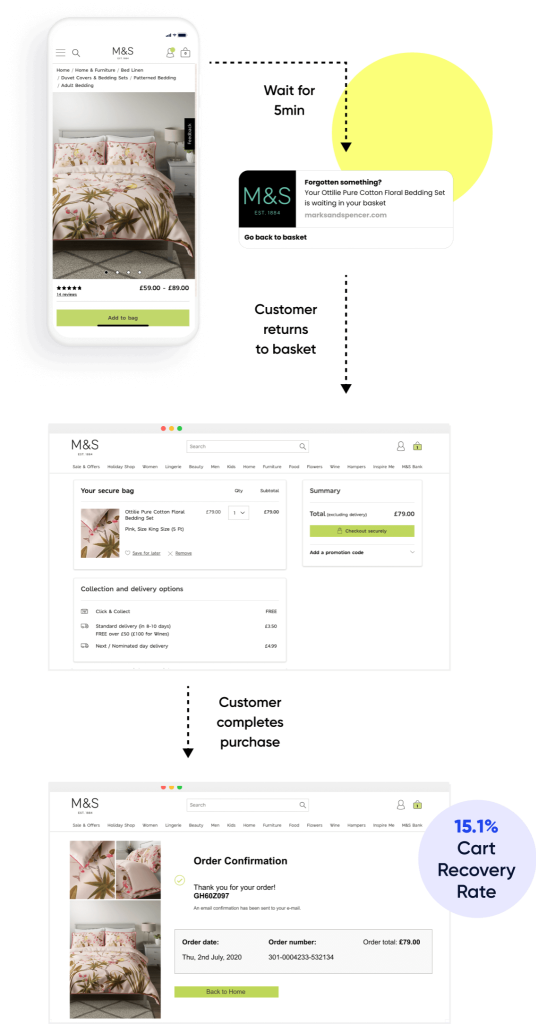
For example, Marks & Spencer achieved a 15.1% cart recovery rate using web push notifications as part of a recovery sequence. The recovery logic wasn’t just about the message; it was about which channel fired, in what order, and under what conditions. That sequencing discipline is what separates a coordinated journey from a batch of independent reminders.
Post-purchase and re-engagement journeys
Post-purchase journeys are where SMS often outperforms expectations because customers are at peak engagement immediately after a transaction. A confirmation message that includes a relevant cross-sell recommendation or a loyalty program prompt, sent within minutes of purchase, lands in a context of active intent.
Email handles the detailed order summary; SMS handles the fast, direct follow-up that drives the next action.
Re-engagement journeys present a different logic problem. Here, the question is not which channel to prioritize but whether any channel should fire at all until engagement signals suggest the customer is receptive. Insider One’s Predictive Segments surface a Likelihood to Purchase score for each profile, enabling teams to restrict SMS re-engagement to high-propensity users rather than broadcasting to the full dormant segment — reducing opt-out risk while concentrating spend where it converts.
SMS carries a higher opt-out risk with dormant users than email does. A sensible re-engagement sequence tests email and push first, measures open and click signals, and only routes customers into SMS if they’ve shown responsiveness. Sending SMS to a disengaged segment as a “last resort” often accelerates opt-outs rather than recovering the relationship.
Financial services and travel: extending the same orchestration logic
In financial services, SMS is the high-immediacy channel for account fraud alerts, where a real-time transaction anomaly trigger must reach the customer within seconds. In travel, booking reminders and gate-change notifications follow the same logic: email carries the detailed itinerary; SMS carries the time-sensitive update. Insider One’s predictive segments, including likelihood to purchase and churn risk scores, adapt natively to these verticals without custom engineering per industry, enabling AI-powered personalisation across e-commerce, financial services, and travel from a single platform.
Handoff logic: first touch versus follow-up
The decision about whether SMS fires as the first touch or a follow-up should be driven by prior channel engagement, not a fixed template. A customer who consistently ignores email but opens SMS within minutes is a candidate for SMS-first routing.
A customer who converts regularly through email should be protected from unnecessary SMS touches that add friction without value. This kind of adaptive routing requires engagement history at the profile level and a journey orchestration layer that can apply conditional branching based on it. Insider One’s AI-Powered Next Best Channel automates this routing decision at the journey step level, selecting the optimal channel for each individual customer based on real-time engagement data, without manual conditional rule configuration.
Frequency governance and suppression across channels
Why per-channel send caps are not enough
Per-channel send caps are a minimum standard, not a solution. Capping SMS at four messages per week does nothing to prevent a customer from receiving two emails, two push notifications, and four SMS messages in the same week, which is ten touchpoints that may feel relentless regardless of any individual channel’s compliance with its own limits.
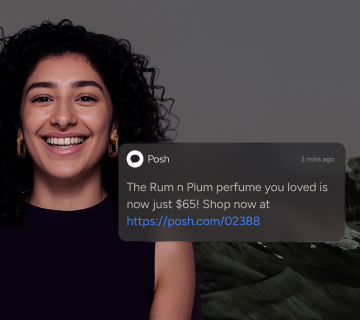
Cross-channel frequency governance requires a global view of contact pressure across every active journey.
The most common failure mode is the post-conversion gap. A customer completes a purchase via email click. The SMS cart abandonment that was already queued fires 20 minutes later because the journey engine hasn’t received the conversion event in time to suppress it. This erodes trust and wastes send budget simultaneously. Suppression windows need to be event-driven and propagate in real time, not batch-processed.
What shared frequency governance looks like in practice
Effective cross-channel governance operates at three levels. Global send caps set a ceiling on total touchpoints per customer per rolling period, regardless of channel. Post-conversion suppression windows pause all active journeys for a defined period after a purchase or other qualifying action. Opt-out honoring propagates immediately: if a customer opts out of SMS, every active journey that has an SMS step needs to remove that step or reroute before the next scheduled send. Insider One’s Architect adds a Dry Run simulation mode that previews journey outcomes before activation, exposing frequency conflicts and suppression gaps before they reach live customers.
Slazenger achieved 49X ROI using omnichannel orchestration that coordinated messaging across channels without overwhelming customers. The revenue outcome reflected not just the reach of the messages but the precision with which they were targeted and timed.
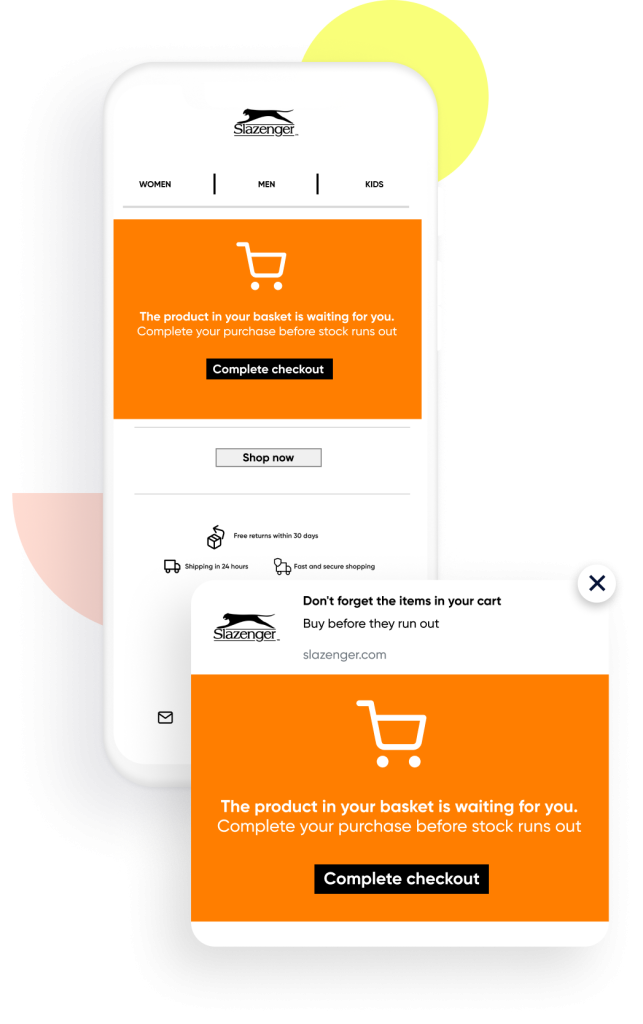
Exclusion logic is invisible to the customer when it works, and very visible when it doesn’t. Getting the governance infrastructure right is what keeps cross-channel marketing programs defensible at scale.
Measuring SMS contribution in an omnichannel stack
Why last-touch attribution misleads
Last-touch attribution assigns full credit to whichever channel produced the final click before conversion. In a multi-step journey where email warmed the customer, push re-engaged them, and SMS delivered the final nudge, last-touch credits SMS entirely and erases the contribution of everything that preceded it.
In a different sequence where SMS re-engaged an inactive customer who then converted through a web session two days later, last-touch credits the web session and assigns SMS zero value.
Neither outcome reflects reality. Last-touch SMS attribution will either systematically overstate or understate its contribution depending on where it sits in the sequence. The only reliable framing is multi-touch, which distributes credit across every channel interaction that preceded conversion and allows teams to evaluate SMS’s incremental contribution rather than its positional luck.
The metrics that actually matter
For SMS in an omnichannel stack, three metrics carry the most diagnostic weight. Incremental revenue lift compares outcomes for customers who received an SMS touchpoint against a holdout group that didn’t, isolating the channel’s true contribution.
| Metric | What it measures | Why it matters for SMS |
| Incremental revenue lift | Revenue uplift vs. holdout group | Isolates SMS true contribution from positional luck |
| Channel-assisted conversion rate | SMS participation in multi-touch paths | Captures value beyond last-touch sequences |
| Opt-out rate trend | Opt-outs per journey segment over time | Health signal for frequency and relevance issues |
| Deliverability rate | Messages delivered vs. sent | Insider One native BSP targets >95% delivery |
Channel-assisted conversion rate measures how often SMS participated in a conversion path without necessarily being the last touch. Opt-out rate is a health signal: a rising opt-out rate on a specific SMS journey indicates frequency, relevance, or timing problems that need addressing before they compound.
Surfacing these metrics requires that SMS data and conversion data share a common customer identifier across systems. If SMS analytics live in a separate dashboard disconnected from your customer relationship management (CRM) and web analytics, the cross-journey view simply isn’t available. The platform infrastructure needs to support unified reporting as a baseline, not as an advanced configuration.
Building an omnichannel SMS program that holds together
The difference between an SMS program that compounds results over time and one that generates short-term lifts followed by opt-out spikes comes down to architecture decisions made before the first campaign sends. Is identity resolution in place? Is the customer profile unified and real-time? Do suppression rules operate at the journey level? Is attribution set up to measure incremental contribution rather than positional credit?
These aren’t advanced optimizations for teams that have “figured out the basics.” They’re the basics. Teams that treat them as a foundation from the start build omnichannel customer journeys that get more efficient as the data accumulates, rather than more chaotic.
SMS is not difficult to add to a stack; SMS that actually contributes to a coherent customer experience requires the same infrastructure discipline as every other channel in the program.
If you want to see how Insider One’s platform and customer data management turn live customer data into coordinated, revenue-driving experiences, book a personalized demo to see the exact use cases, decision logic, and growth levers most relevant to your team.
FAQs
No. Sequence position should be determined by the customer’s engagement history across channels, not a default template. Customers who respond faster to SMS than email should be routed accordingly, which requires engagement data at the profile level and conditional branching in the journey engine.
A suppression window pauses all active journey steps for a customer after a qualifying event, such as a completed purchase. The window duration depends on the journey type, but the key requirement is that it fires in real time from a conversion event, not from a batched data sync. Any delay creates the risk of a suppression miss.
Opt-out rates vary by industry, message frequency, and audience composition. Rather than chasing a universal benchmark, treat your opt-out rate as a relative health signal: a rising rate on a specific journey segment or time period indicates a relevance or frequency problem that needs investigation. A declining rate after a journey redesign signals improvement.
The sequencing logic, suppression rules, and real-time data requirements described here do require a capable platform. The degree of engineering involvement depends on how that platform handles integrations and journey configuration. Some teams run complex omnichannel programs through marketer-configurable tools; others require closer collaboration with technical resources. The honest answer is that it depends on your existing stack and the complexity of the journeys you’re building.
Insider One’s native BSP infrastructure and Sirius AI Send Time Optimization address two of the biggest execution challenges: deliverability and timing. The native BSP connection targets >95% deliverability, while Sirius AI selects the precise send window for each customer, removing reliance on fixed offset scheduling that treats all customers identically.
[ad_2]
Source_link