[ad_1]
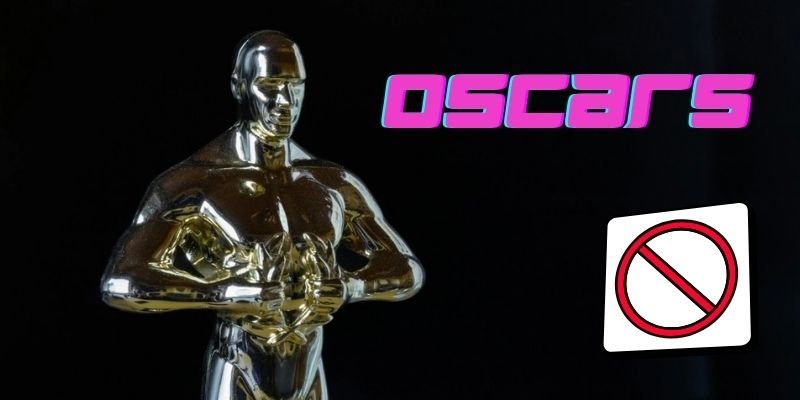
Now actors and writers are supposed to be human. As the Academy released its rules for the 99th Academy Awards, the organization declared that any movies with “AI generated actors” or “AI written screenplays” would be ineligible for acting or writing prizes (but otherwise still eligible).
So what do you do, exactly, in a time when we can no longer be sure if AI is a tool or a threat? Hollywood is going to have to make that call soon. The Academy released its latest statement on what’s eligible for an Oscar, including how they’re going to approach AI actors and writers for the next Oscars. And they said: An AI generated performer can never win an Oscar for acting. Screenplays must be human-authored.
The Academy didn’t outright ban the use of AI, which was an important distinction. The Academy says, for the 99th Oscars, that only human actors credited as actors in a movie will be eligible to win for acting, “in accordance with their consent as expressed in their employment agreements, or otherwise as permitted by law.
Human authorship will be a requirement for all Screenplays.” And in those sentences, the Academy also included the language that it will “seek additional information in regard to the use of AI technologies and human authorship.”
Basically, the Academy is saying, “If you want to use AI, fine, you can. Just don’t try to claim that the robot was in the movie, or the screenwriter.” But that distinction is important because Hollywood has found that AI and synthetic performers are already making for a weird conversation, if not outright controversy.
An AI performer is perfect for everything: They can act, and they can talk, and they will never be late to set. So what’s wrong? Who owned that performance? Who consented to it? Who should the performance pay go to? And what about the actual actor who would have acted in that role?
These are just a few of the questions that were brought out by the debate around AI actors and actors who have given permission for a digital version of themselves to exist, as it spilled out into the labor fight last year.
This announcement also comes as the industry is grappling with AI in the wake of the writers and actors strike. The Writers Guild recently stated that its 2023 agreement already set guidelines for artificial intelligence work in the scope of coverage projects, including those designed to protect writers from having their work used to diminish credit or pay due to AI usage.
This background helps clarify why the Academy is acting now. Though awards rules can seem purely ceremonial, in Hollywood they often drive industry practice very quickly. No one wants to campaign all year only to find their project is no longer eligible.
Actors, too, have been fighting strongly for control over digital replicas. SAG-AFTRA’s fact sheets about digital replicas and synthetic performers center the argument on issues of consent, voice, likeness and compensation. That is really the crux of the question.
An actor’s face is a specific image. An actor’s voice is unique audio data. And the essence of acting is that a human being brings history, anxiety, ego, grief, timing, and yes occasionally human magic to the role. Remove all that, and you may have a visual representation, but have you retained a performance?
The argument over Val Kilmer made that even more complicated. Earlier coverage on the Kilmer AI recreation in As Deep as the Grave showed how delicate the technology can feel. His estate approved the use, and the filmmakers contended it was a nod to Kilmer’s affinity with the part.
While this is a less egregious scenario than a studio concocting an entirely new digital celebrity, it still shows the industry walking a tightrope. Reverent revival versus creepy pastiche.
The academy also implemented other rule changes, letting actors score more than one nomination in a single acting category if multiple roles rate highly enough and letting international films qualify in different ways. And coverage of the sweeping Oscars rule overhaul mentioned that the AI rules will be part of changes that modernize the awards in multiple directions at the same time.
Still, let’s be honest: the AI ruling is the one people will argue about over dinner. Multiple nominations are kind of intriguing; fake, synthetic stars are a whole other can of worms. But, as it looks so far, the academy appears to be steering clear of a clumsy extreme.
They’re not trying to say AI doesn’t exist. At this point, that would be absurd. Visual-effects people and film editors and sound technicians and production staff have already begun testing out machine-learning methods.
But the new guidelines establish a clear boundary between authorship and performance: technology can be used as an aid to a craft but not to replace the actor or director who’s in the running for awards.
There’s a very real practical component as well. Studios now have clear notice ahead of the awards season, for example, that if they submit a screenplay they wrote with excessive AI, there will be questions, or if the “performance” was done by a synthetic actor or a digital double, and it does not represent any human performance that was authorized, then there will be problems.
Some of the most audacious of these experiments will probably not be done, and in a way, this is probably a good thing. It is one of Hollywood’s enduring quirks that it always falls in love with shiny new objects, and then expresses shock when one is found to be too expensive.
The emotional component of this decision is simple; it is that the audiences still wants to feel that what they’re looking at on the screen represents a human performance, in a way that they know is real; and I know, this may sound old-fashioned. Good.
The Academy Awards is predicated on that old-fashioned idea of a human performance and the possibility that it will surprise you or make you feel some other strong emotion: anger or joy, disgust, or perhaps just a tear in the dimly light cinema with a stranger you’re seated next to.
AI can imitate aspects of these emotions, perhaps one day imitating them very well. Today, that imitation doesn’t get you a statuette.
[ad_2]
Source_link