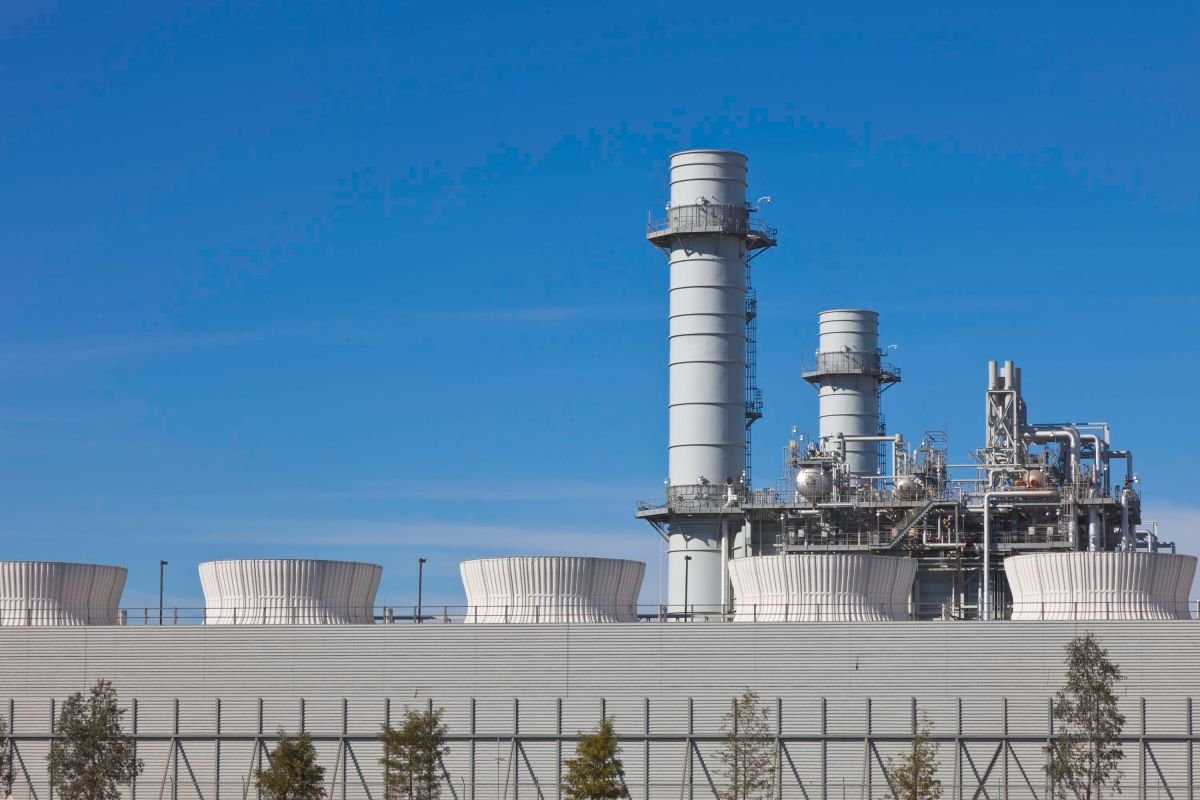
Tech companies, including Microsoft and Meta, have been falling in love with natural gas lately, rushing to build power plants fed by the fossil fuel to drive their data centers. But their embrace might be a little too tight — the cost to build one of the facilities has spiked 66% in the last two years, according to a new report from BloombergNEF.
While natural gas prices remain low in the U.S. despite the ongoing war in Iran, the price to build a new combined cycle gas turbine (CCGT) power plant has risen from less than $1,500 per kilowatt of generating capacity in 2023 to $2,157 last year, the report said. What’s more, it now takes 23% longer to complete a new facility.
Data centers are one of the main drivers of a surge in demand for electricity, pushing not just tech companies to invest in natural gas, but utilities as well. Data center operators have been urged by the Trump administration to “bring their own power,” but utilities tend to pass on the cost of new generation to customers. That has led to a growing backlash to data centers among the general public.
While data centers aren’t the only driver of new demand for electricity, they are one of the fastest-growing users. New additions are expected to reach 2.7x current demand, pushing it up from 40 gigawatts today to 106 gigawatts by 2035. Part of the driver is the sheer scale of new data centers. Today, only 10% of facilities are 50 megawatts or larger. Over the next decade, the average data center will be larger than 100 megawatts.

Until recently, tech companies have favored grid-connected data centers backed by power purchase agreements for wind, solar, and batteries. But rising demand for electricity, driven by AI and public animus toward data centers, has pushed more new natural gas projects.
The scramble for natural gas power plants has caused a shortage of gas turbines. By the end of this year, prices for the equipment, which constitutes up to 30% of a new power plant’s cost, are expected to be up 195% over 2019 prices. The manufacturing technique required to make gas turbines doesn’t lend itself to scaling quickly, either. As a result, waitlists are stretching into the early 2030s.
Not everyone is all in on natural gas, though.
Google has started to outline a new approach to adding generating capacity to the grid that relies on renewables paired with long-duration energy storage, including Form Energy’s massive iron-air batteries, which can release electricity over the course of 100 hours. Unlike gas turbines, solar panels and batteries have gotten cheaper over time, offering an alternative to sky-high costs for natural gas power plants.
When you purchase through links in our articles, we may earn a small commission. This doesn’t affect our editorial independence.