
Jessica Abbadia

Julia Salume
07 April 2026
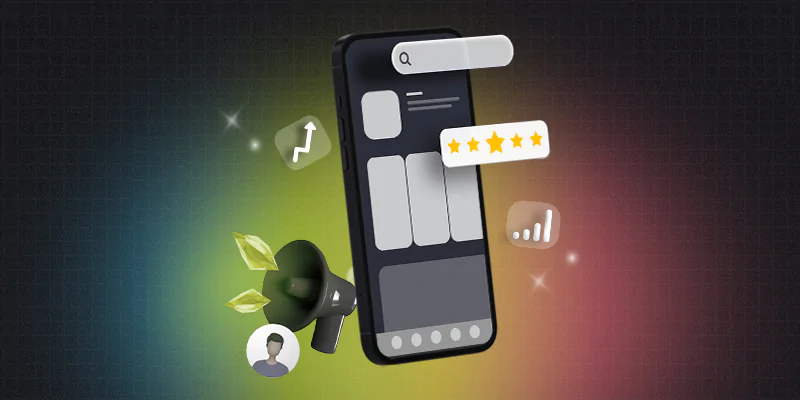
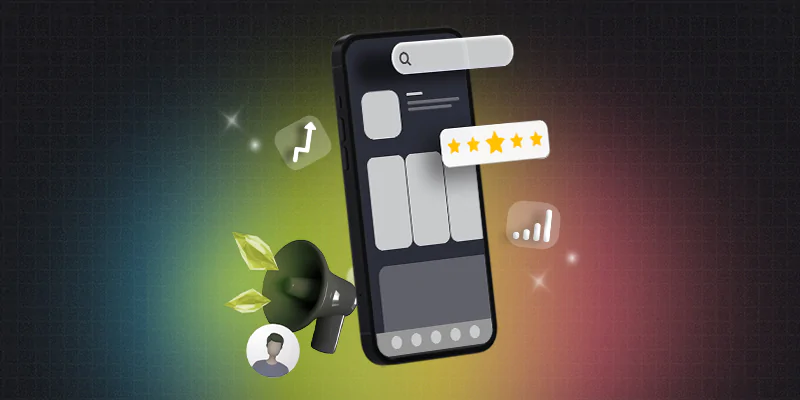
Influencer marketing has become a key channel for marketers, especially with the explosion of social platforms such as Instagram and TikTok. With 3 billion monthly active users, Instagram remains one of the most powerful platforms for influencer content. And it is not alone. TikTok delivers higher engagement rates than Instagram, and YouTube offers the longest brand recall of any social platform. Every time you scroll, there is either a well-known creator or a niche micro-influencer endorsing a product or service. The big question is: how should you use influencer marketing within your mobile app strategy?
The Benefits of Influencers
Having an influencer associated with your brand can significantly increase brand value, reach, and engagement. The right influencers will resonate with your target market and can even open up additional market segments you were not reaching before. You can leverage influencer content to promote your app with video ads or even repurpose the content created by the influencers themselves. According to Aspire, 69% of marketers report that influencer-generated content outperforms brand-directed alternatives. There are multiple examples of apps using influencers to drive growth:
- Duolingo has embraced influencer marketing for both evergreen and seasonal campaigns, seeing massive returns and sustained followings across social channels
- BetterMe partners with fitness and wellness creators on TikTok to demonstrate the app in real daily routines, building trust through authentic content
- Glossier turned loyal customers into TikTok creators who featured the brand’s app naturally in “Get Ready With Me” videos, spending minimal budget on product samples while driving significant app engagement
- Supercell has leaned heavily into influencer marketing across its game portfolio, partnering with creators on YouTube, Twitch, and TikTok to drive engagement and new player acquisition for titles like Clash of Clans and Clash Royale
- Dream11, the fantasy sports app, collaborated with 15 regional influencers and cricket creators during the Indian Premier League season to promote its app in multiple languages
These are just a few of the thousands of apps that use influencers in their marketing campaigns.
A Word of Warning
The ROI for influencer marketing looks strong on the surface. According to Influencer Marketing Hub, brands earn an average of $5.78 for every $1 spent on influencer marketing, with top-performing campaigns returning $18 to $20 per dollar. The industry itself reached $32.55 billion in 2025 and is on track to pass $40 billion in 2026.
While these numbers are impressive, it is worth being cautious when it comes to apps specifically. Clicks from influencer marketing content carry between 50 and 70% lower CPIs and higher retention than other paid social ads. But that does not mean the results are guaranteed. Influencer marketing can certainly form part of a successful app campaign, but it is not recommended to make it the central pillar of your app marketing efforts. For one, you cannot know what the effectiveness of a campaign will be, and it is really difficult to measure and scale. According to Archive, between 26% and 60% of marketers cite measuring ROI as their primary obstacle with influencer campaigns.
So if you need to scale quickly and get downloads at less than $4 per user, for example, you cannot rely on influencer marketing alone. There will be influencer campaigns that will get you users for $50 per user, and others that will get you users at $2.50 per install. The tough part is that you just cannot know for sure, and most of them do not deliver the right results. The fact that an influencer has 500k followers does not mean that you will get more than 50 installs when they post about your app. It is a real and common situation that we have seen hundreds of times across many different client types and verticals.
Key Takeaway
For branding purposes, influencer marketing is great. When it comes to performance, however, you will need the solidity provided by mobile media. Only mobile media will provide you with the optimal solution, whether that is Meta Ads, Google Ads, Apple Search Ads, TikTok Ads, ad networks, Snapchat, or Pinterest. You can measure, predict, optimize, and scale, and most importantly, you can achieve great results on a consistent basis.
The smartest approach in 2026 is to combine both. Use influencer content as creative fuel for your paid campaigns. Repurposing high-performing creator content into paid media can significantly lower your cost per install. But the foundation of your growth strategy should still be measurable, scalable paid media.
Frequently Asked Questions
What is influencer marketing for mobile apps?
Influencer marketing for mobile apps is a strategy where brands partner with content creators to promote an app through authentic content on platforms like Instagram, TikTok, and YouTube. Instead of traditional ads, influencers demonstrate how an app works in real scenarios, building trust and driving downloads through genuine recommendations rather than paid placements alone.
Does influencer marketing actually work for app installs?
It can, but results vary widely. Some campaigns deliver installs at $2.50 per user while others cost $50 or more per install. The key factor is alignment between the influencer’s audience and your target user. Influencer marketing tends to work best for brand awareness and top-of-funnel discovery, but it is difficult to scale or predict with the consistency of paid media.
What is the average ROI of influencer marketing?
Brands earn an average of $5.78 for every $1 spent on influencer marketing, according to Influencer Marketing Hub. Top-performing campaigns can return between $18 and $20 per dollar invested. However, these averages skew toward physical products and e-commerce. App marketers should expect more variability and should track CPI and retention rather than relying solely on earned media value.
Should I use micro-influencers or macro-influencers for my app?
For most app campaigns, micro-influencers tend to deliver better results. They typically have higher engagement rates and more targeted audiences. Around 40% of total influencer marketing budgets now go toward micro-influencers, and they charge significantly less per post than macro-level creators. The trade-off is that you will need to manage more partnerships to achieve comparable reach.
Can I use influencer content in paid ads?
Yes, and this is one of the most effective approaches in 2026. Repurposing influencer-generated content for paid campaigns (a practice known as whitelisting or spark ads) often outperforms traditional brand-produced creative by 20% to 50%. Many app marketers now treat influencer partnerships as a content creation pipeline as much as an awareness channel.
How do I measure the success of an influencer campaign for my app?
Track cost per install (CPI), retention rates at Day 1, Day 7, and Day 30, and the quality of users acquired compared to other channels. Use UTM parameters, unique promo codes, and attribution tools to connect installs back to specific influencers. Avoid relying solely on vanity metrics like impressions or follower counts.
For true digital performance, get in touch with the Moburst team. We have helped both well-established brands and startups craft successful strategies to achieve mobile app success.
Jessica Abbadia
Jessica is Moburst’s VP of Organic. She specializes in enhancing organic performance for apps and games all over the world, while actively developing innovative methods for increasing app visibility and conversion, as well as offering her vast knowledge for the benefit of the mobile community.
She graduated from law school and now serves as an animal rights activist who also loves reading books while sipping a strong coffee and holding one – or more – of her three cats.
Julia Salume
Julia is the Head of Influencer Marketing at Moburst, where she leads strategy and execution for cross-industry campaigns. With over 12 years of experience in influencer management, digital strategy, and brand partnerships, she has led successful collaborations for more than 30 global brands and built long-term relationships with over 1,000 creators around the world.
Her work has contributed to award-winning campaigns, recognized for delivering both creative impact and measurable results. Originally from Brazil, Júlia has lived in seven countries and brings a sharp, global perspective to her role, along with a strong sense of cultural fluency and adaptability.