Omnichannel marketing fails when the systems, teams, and data that power it don’t connect. Most enterprise brands already operate across email, mobile, web, and paid media. Most brands struggle with coordination, not presence. When customer profiles stay fragmented, attribution systems conflict, and teams optimize for different KPIs, the customer experience breaks down.
This article walks through eight structural challenges that prevent omnichannel marketing from working at scale and the practical steps required to solve them. You’ll learn how to unify customer data with identity resolution, establish a single source of truth for attribution, align organizational incentives, and build the governance frameworks that make cross-channel orchestration sustainable.
What are the key takeaways?
Omnichannel marketing fails when data, channels, and teams operate independently instead of as a unified system.
- Data silos and identity resolution gaps are common causes of omnichannel failure and often matter more than channel strategy
- Channel coordination works best with customer-level rules that guide channel-level campaign calendars
- Measurement disputes disappear when teams align on incrementality testing over attribution models
What is omnichannel marketing?
Omnichannel marketing is coordinated engagement across every channel where customer context and identity persist throughout the journey. Multichannel marketing operates channels independently. Omnichannel unifies them around the customer.
Why do omnichannel challenges persist?
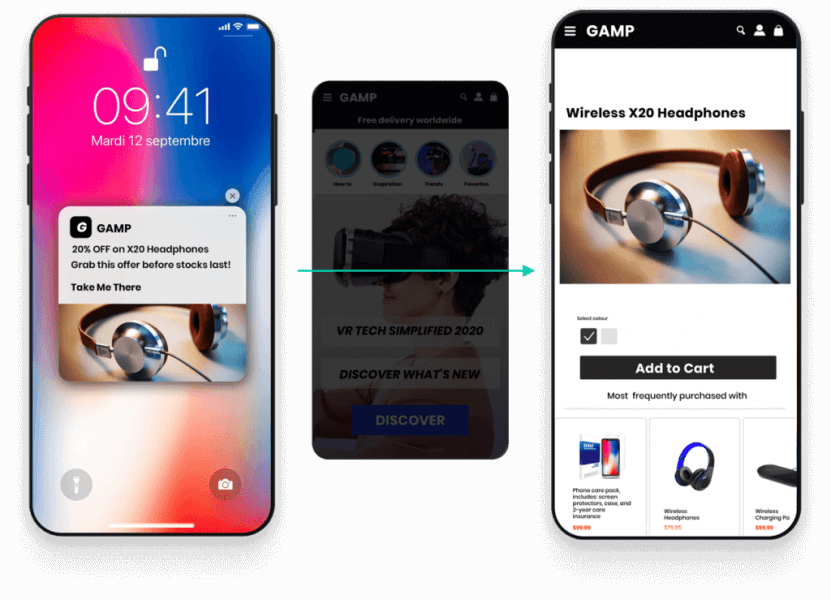
Picture this: a campaign fires on email, SMS, and push in a short time because multiple teams launched independently. The customer unsubscribes from everything.
This happens because of a few root causes:
- Data debt: Customer records live in disconnected systems like CRMs, ESPs, and POS terminals with no shared identity layer, so teams operate on partial views
- Organizational silos: Channel owners optimize for channel KPIs like email open rate or push CTR rather than customer-level outcomes like CLV, creating internal competition instead of coordination
- Measurement fragmentation: Attribution models differ by channel, so no one agrees on what drove the conversion, and budget allocation becomes political
These root causes explain why the challenges below keep surfacing, even after significant tool investments.
What are the top challenges of omnichannel marketing?
The challenges below are ordered by how frequently they block omnichannel execution across enterprise marketing teams.
Why do data silos and identity resolution failures break omnichannel marketing?
A customer browses on mobile, adds to cart on desktop, and purchases in-store. Your systems treat these as separate people.
Identity resolution requires deterministic matching, such as linking email, phone, and user ID, and probabilistic matching, such as device fingerprinting and behavior patterns. Most teams lack the infrastructure to do both reliably. Duplicate profiles inflate audience counts. Suppression lists miss converted customers. Personalization breaks when the profile is incomplete.
The result: wasted ad spend on customers who already converted and generic experiences that erode trust.
Why does real-time data latency matter?
Does your abandoned cart email arrive while the customer is still on the site, or later when they’ve already purchased elsewhere?
“Real-time” means different things depending on the use case. Cart abandonment triggers need very low latency. Loyalty tier updates can tolerate batch syncs. Most teams inherit batch-oriented architectures and retrofit real-time on top, creating inconsistent freshness across channels.
A customer receives a discount offer for an item they purchased recently because the purchase event hasn’t synced yet. That’s the failure mode.
Channel coordination and messaging conflicts
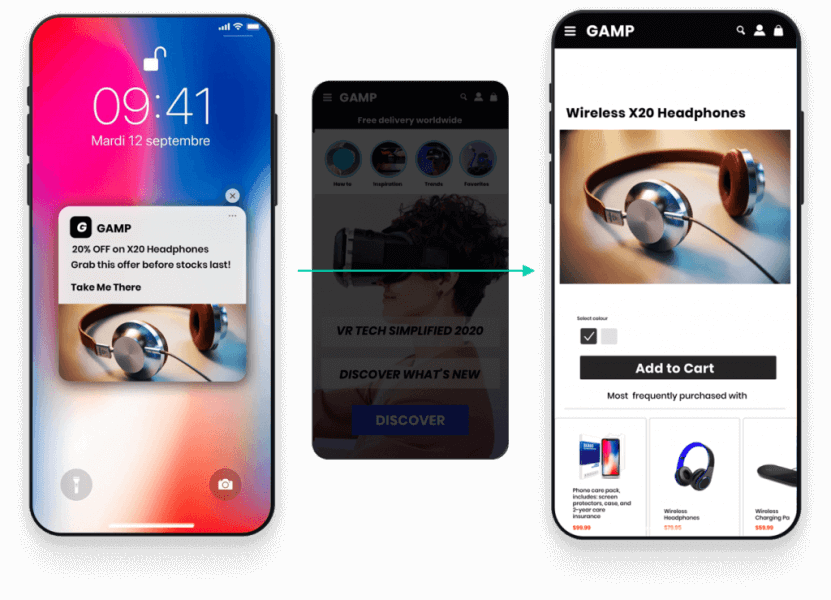
A customer receives an email, push notification, and SMS about the same flash sale in a short time. They unsubscribe from all three.
Channel coordination requires customer-level orchestration rules, not channel-level campaign calendars. Most teams lack a single system that enforces frequency capping, suppression windows, and conflict resolution across all channels. Coordination becomes a manual process that breaks at scale.
A simple rule template:
- Frequency cap: Set a weekly cap on marketing messages per customer across all channels
- Suppression window: No promotional outreach soon after a purchase or support ticket
- Channel priority: If multiple channels qualify, select based on engagement history
If you want to see what these rules look like when they’re enforced centrally, not managed in spreadsheets, book a demo and we’ll walk through a real cross-channel frequency and conflict setup.
Personalization that scales without spamming
Personalization doesn’t mean sending more messages with the customer’s first name inserted. It means sending fewer, more relevant messages at the right moment.
Scaling personalization requires predictive scoring to identify which customers are likely to convert, suppression logic to exclude customers who don’t need the nudge, and creative variants that match customer context. Teams without suppression logic send the same campaign to everyone, including customers who would have converted anyway. This inflates costs and trains customers to wait for discounts.
Customer service context handoff
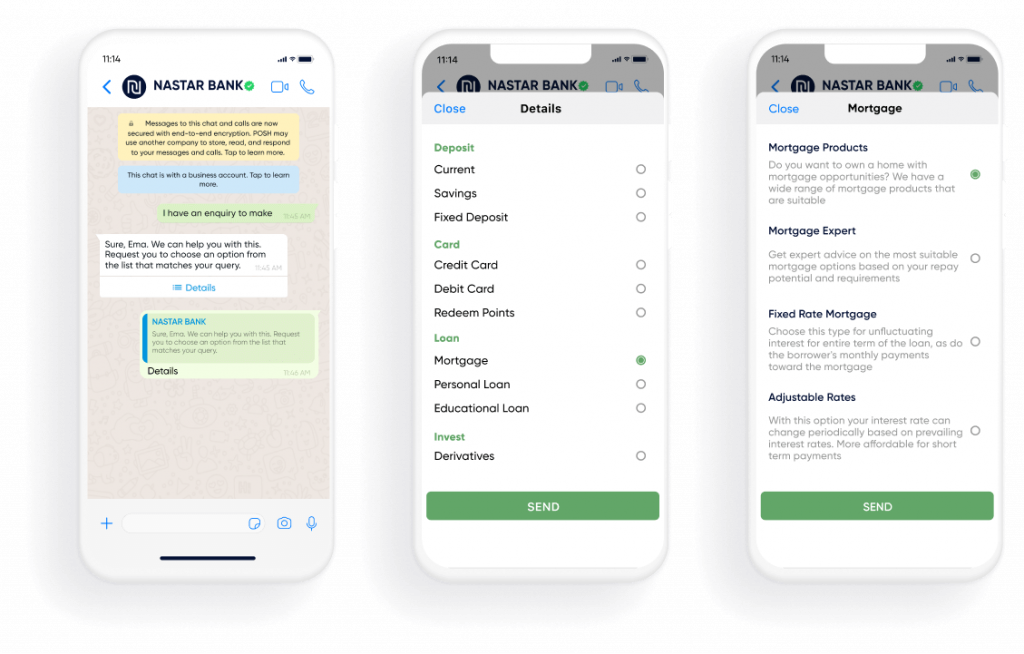
A customer starts a conversation on WhatsApp, gets transferred to a phone agent, and has to repeat their entire issue because the agent has no visibility into the chat history.
Context handoff requires a shared customer profile that surfaces recent interactions, open tickets, and relevant purchase history to every touchpoint. The service console must receive a context payload when a handoff occurs, with low latency. When this fails, customers perceive the brand as fragmented, and first-contact resolution drops.
Want to see how teams stitch messaging and support context into one customer view without waiting on a rebuild? Start in the product demo hub and jump straight to the flows that matter.
Measurement and attribution disputes
Every channel team claims credit for the same conversion. No one agrees on the source of truth.
Attribution models serve different purposes. Last-click is simple but ignores upper-funnel influence. Multi-touch attribution distributes credit but requires complete cross-device tracking, which iOS changes have eroded. Marketing mix modeling works at aggregate level but can’t optimize individual campaigns.
Teams with fragmented tracking should start with incrementality tests before investing in complex multi-touch attribution. Otherwise, teams optimize for the metric their attribution model rewards, which often doesn’t reflect true incremental impact.
Online-to-offline reconciliation
Your email campaign drove store visits, but your analytics only shows the online click, not the in-store purchase.
Several methods can link offline conversions to online marketing:
- Loyalty ID: Customer logs in online and swipes loyalty card in-store, creating a direct match
- Coupon code: Unique codes distributed via email/SMS and redeemed at POS
- Call tracking: Dynamic phone numbers on landing pages that attribute calls to campaigns
- Store visit attribution: Platform-level signals from Google and Meta that estimate store visits from ad exposure
Match rates vary widely. Loyalty linkage can be relatively high, while coupon codes are often much lower. Layer multiple methods rather than relying on one.
Inventory accuracy across channels
A shopper sees “In Stock” online, drives to the store, and finds the shelf empty.
Inventory accuracy requires near-real-time sync between the order management system (OMS), POS, and ecommerce platform. Most architectures rely on batch updates, which creates phantom stock: inventory that appears available but has already been sold through another channel.
For brands offering buy online, pick up in-store (BOPIS), the stakes are higher because the customer has already committed time and travel.
Privacy and consent propagation
A customer opts out of email marketing, but the change takes too long to propagate to your SMS and push systems. They receive messages they explicitly rejected.
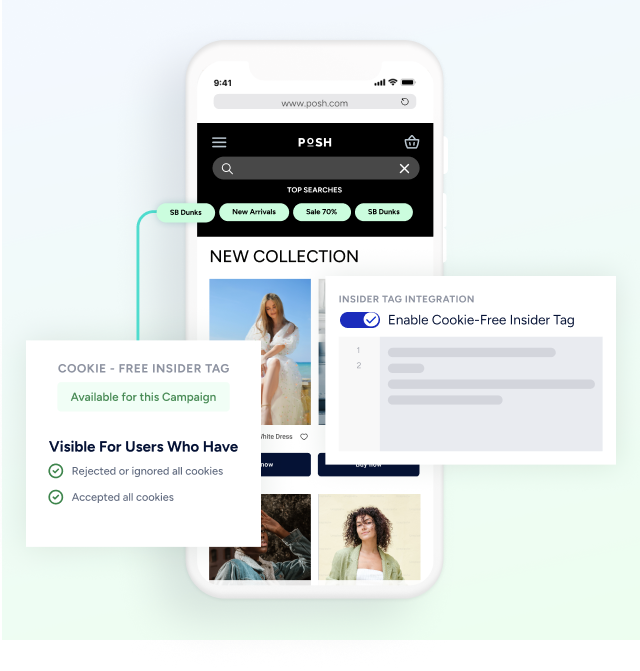
Consent propagation requires a single source of truth that syncs to all downstream systems with defined latency service-level agreements (SLAs). Regional variations complicate this: GDPR requires different handling than CCPA. Email opt-out doesn’t automatically apply to SMS in all jurisdictions. Teams with several marketing systems often discover consent sync is the hardest integration to maintain.
If consent is still getting lost between systems, book a demo to see how a single preference signal can propagate across channels with clear SLAs.
Organizational ownership and incentive misalignment
The email team optimizes for open rate. The push team optimizes for CTR. No one owns the customer relationship.
Omnichannel execution requires shared KPIs at the customer level, like CLV or repeat purchase rate, rather than channel-level metrics that create internal competition. Without a cross-channel owner, coordination becomes a negotiation, and the customer receives conflicting messages.
A simple RACI template:
- Responsible: Channel specialists who execute campaigns within their channel
- Accountable: A cross-channel owner who enforces coordination rules
- Consulted: Brand and creative teams that review messaging consistency
- Informed: Analytics teams that provide unified reporting across channels
Journey orchestration complexity
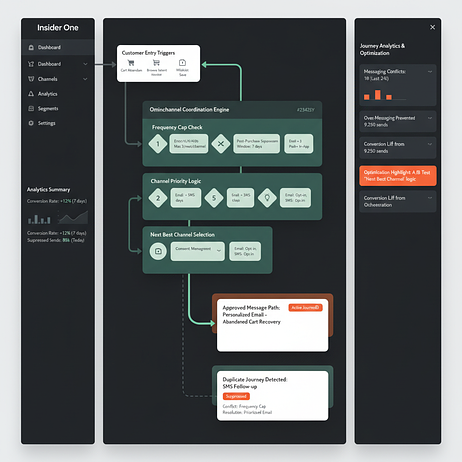
The journey builder demo looks simple. After some time, you have dozens of overlapping journeys with conflicting triggers and no one knows which one a customer will enter.
Orchestration complexity grows exponentially with the number of journeys. Most tools lack native conflict resolution for what happens when a customer qualifies for multiple journeys simultaneously. Customers receive duplicate messages from different journeys, or they enter a journey that’s no longer relevant because a higher-priority event occurred.
Retail and travel teams with many active journeys need explicit eligibility rules and journey prioritization logic to reduce duplicate sends and improve conversion rate.
If your journey map is becoming too complex to manage, the product demo hub shows how prioritization and eligibility rules keep orchestration manageable at scale.
Legacy technology and integration debt
You can’t replace your entire stack at once, but you also can’t achieve omnichannel with disconnected tools.
| Approach | Best for | Tradeoff |
| Suite (single vendor) | Teams with limited technical resources | Vendor lock-in, slower innovation |
| Best-of-breed + CDP | Teams with strong data engineering | Higher integration maintenance |
| Warehouse-first | Teams with existing data warehouse investment | Latency constraints for real-time use cases |
If you have data engineers, best-of-breed with strong platform integrations offers flexibility. If you don’t, suite platforms reduce operational burden.
Disadvantages and risks of omnichannel marketing
Omnichannel isn’t always the right investment. It carries real risks when executed poorly.
- Complexity tax: Every additional channel increases coordination overhead. Start with a small number of channels that cover your highest-value customer segments before expanding
- Data quality dependency: Omnichannel amplifies data errors because bad data propagates to every channel. Invest in data validation and identity resolution before scaling channels
- Privacy exposure: More touchpoints mean more places where consent can be violated. Implement a single preference center with defined sync SLAs before activating new channels
- Diminishing returns: After a certain point, adding channels doesn’t increase reach because you’re already reaching the same customers. Measure incremental reach per channel, not just total reach
- Total cost of ownership: The visible platform cost is often a fraction of the integration, training, and maintenance costs. Model full TCO including headcount before committing
Omnichannel makes sense when your customers genuinely use multiple channels and expect continuity between them. If your customers primarily use one channel, depth beats breadth.
How do you solve key omnichannel challenges?
The playbooks below address the highest-impact challenges and include prerequisites, steps, and success metrics.
Unify customer identity across channels
Problem: Customers appear as multiple profiles across systems, breaking personalization and inflating audience counts.
Prerequisites:
- A persistent identifier (email or phone) captured at a meaningful rate across channels
- Access to event-level data from your primary touchpoints
Steps:
- Audit your current identifiers: which systems capture email, phone, user ID, and device ID?
- Define your identity hierarchy: which identifier is the primary key, and which are secondary?
- Establish merge rules: when profiles share an identifier, which attributes win?
- Implement a reconciliation cadence: regular batch for historical cleanup, real-time for new events
- Set up duplicate monitoring: alert when merge rate drops or duplicate rate spikes
Success metrics:
- Reduction in duplicate profile rate
- Increase in known user percentage
- Decrease in suppression list misses
Eliminate phantom inventory
Problem: Inventory appears available online but is already sold through another channel, leading to order cancellations.
Prerequisites:
- Centralized inventory source that receives updates from all sales channels
- Ability to configure webhooks or near-real-time feeds from POS systems
Steps:
- Map your inventory flow: source system to hub to channels
- Define freshness SLAs per channel: BOPIS requires near-real-time sync; marketplace listings can tolerate slower batch updates
- Implement reserve logic: when a customer adds to cart, reserve inventory for a defined window
- Set up phantom stock alerts: trigger when available quantity diverges from sellable quantity
- Test edge cases: simultaneous purchases across channels, returns processed mid-sync
Success metrics:
- Reduction in order cancellation rate due to out-of-stock
- Increase in BOPIS fulfillment rate
- Decrease in customer complaints related to availability
Build a cross-channel measurement framework
Problem: Channel teams claim credit for the same conversions, and budget allocation becomes political rather than data-driven.
Prerequisites:
- Unified customer ID that persists across channels
- Access to conversion data with timestamps and channel source
Steps:
- Define your north-star metric: revenue, CLV, or repeat purchase rate
- Establish attribution windows: how long after an impression or click does a conversion count?
- Run a baseline incrementality test: hold out a random segment from a campaign and measure the difference
- Layer attribution models: use last-click for operational reporting, incrementality for budget decisions
- Create a reconciliation cadence: regular review where channel leads align on shared metrics
Success metrics:
- Reduction in attribution disputes between channel teams
- Increase in incrementally measured ROAS
- Alignment between attributed revenue and actual revenue growth
How does Insider One help solve omnichannel challenges?
The challenges above share a common root: disconnected data, channels, and teams. We address this by unifying a customer data platform (CDP), journey orchestration, and artificial intelligence (AI)-powered personalization in a single platform.
- Data silos → customer data platform: We stitch customer profiles across web, app, API, and offline channels using configurable identity resolution, so teams operate on a single customer view
- Channel coordination → Architect: Architect, Insider One’s customer journey orchestration solution, enforces frequency caps, suppression rules, and channel prioritization across email, SMS, WhatsApp, push, and paid media from a single canvas
- Personalization at scale → Sirius AI™: Sirius AI™, Insider One’s extensive set of AI capabilities, includes Next Best Channel selection, Send Time Optimization, and predictive segments that identify which customers need a nudge and which don’t
- Measurement → Unified reporting: Journey-level analytics surface conversions, revenue, and average order value (AOV) across all channels, reducing attribution disputes
If you’re ready to connect identity, orchestration, and measurement into one operating system, book a demo and we’ll map it to your current stack and blockers.
FAQs
Data silos occur when customer records live in disconnected systems like CRMs, ESPs, and POS terminals with no shared identity layer. Teams end up operating on partial views of the customer, which breaks personalization and inflates audience counts.
Channel coordination requires customer-level orchestration rules that enforce frequency capping, suppression windows, and conflict resolution across all channels. Most teams need a single system to automate these rules rather than relying on manual coordination.
Multichannel marketing operates channels independently, often with separate goals and data. Omnichannel marketing coordinates these channels around a unified customer identity so context persists across every touchpoint.
Attribution disputes occur when different channel teams use different attribution models, each claiming credit for the same conversions. Teams should start with incrementality tests to validate true incremental impact before investing in complex multi-touch attribution.
Connecting online marketing to offline purchases requires layering multiple linkage methods: loyalty ID matching, unique coupon codes redeemed at POS, call tracking with dynamic phone numbers, and platform-level store visit attribution signals.