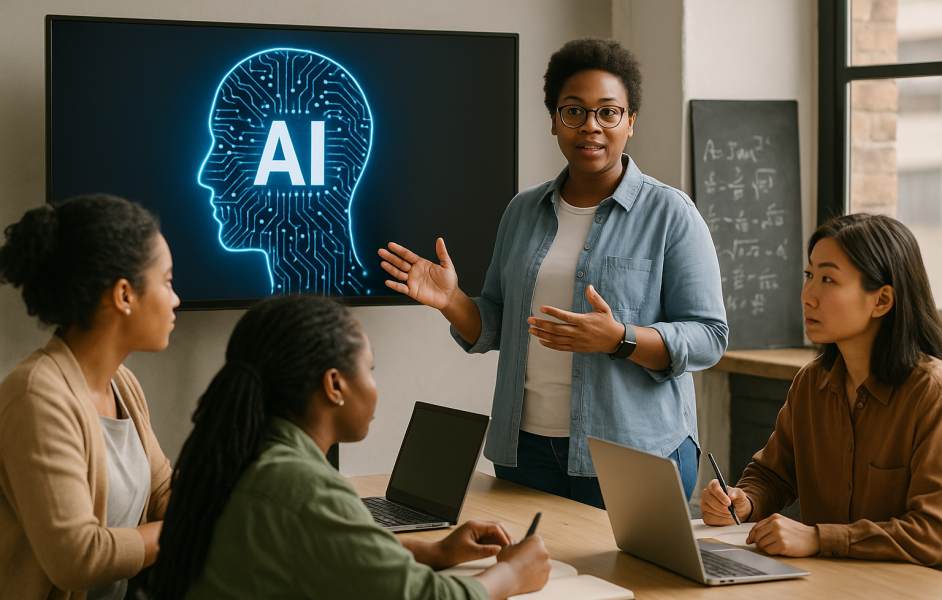
AI is reshaping the workforce at a breakneck speed, yet training efforts aren’t meeting the moment. Despite a quarter of executives feeling bullish on the technology, only 12% of workers have received AI-related training in the past year. This lack of preparation not only hinders the successful and safe adoption of AI, but also creates uncertainty amongst employees around the technology’s impact on their jobs. As the gap between executive excitement and employee reluctance grows, it’s clear that organizations need training tools to help build AI confidence and usher in this new era of innovation.
AI will enhance, not replace
Perhaps the most important factor of building AI confidence is helping employees understand how the technology will fit into their roles. Despite the amount of misinformation floating around, in most instances, AI is not meant to replace employees. In fact, recent companies that attempted to replace humans with AI are struggling to achieve the ROI they imagined. Instead, the real value of AI comes from using it to augment employee skill sets, productivity, and competitiveness in their fields. By efficiently handling more routine and administrative-heavy tasks, the technology allows employees to focus on higher-value tasks.
However, it’s just as important to note that integrating AI does not make this possible on its own, employees must understand how to use it effectively to unlock its full potential. Without the right training, AI can lead to concerns around data privacy, bias, and inaccuracies – making this foundational knowledge non-negotiable. That’s why both upskilling and cross-skilling are essential to keeping pace with change.
Upskilling vs cross-skilling
Upskilling and cross-skilling training both are used to help employees expand their skill sets and are critical tools when looking to adopt AI. While similar, it’s important to understand the difference between the two.
- Upskilling is the process of strengthening existing skills and focuses on helping employees advance in their job and gain higher responsibilities. A great example of upskilling is training IT leaders – who already have a strong foundation in technology – to gain a deeper understanding of AI.
- Cross-skilling is just as important, but it’s often overlooked in AI training. Cross-skilling (also known as cross-training) is the process of developing new skills that apply across different functions and focuses on training more than one employee in an organizational task. The adoption of AI and cross-skilling strategies must also be done simultaneously to ensure success. A great example to demonstrate cross-skilling would be a marketing leader with minimal technology background. As AI is increasingly used across departments, cross-skilling ensures that every employee is able to use the technology based on their specific roles and responsibilities.
Benefits of training in the age of AI
With industries, markets, and everyday business practices evolving, employee skills and knowledge remain the bedrock of organizational innovation. Employees want purpose and impact, and aligning corporate goals with employee ambitions is a guaranteed way to boost engagement. In addition, providing employees with the ability to alleviate burdensome tasks through AI helps boost overall satisfaction at work.
In an increasingly competitive landscape, meeting these needs and retaining top talent is crucial to sustaining productivity and growth. And while recent arguments state that those who already possess AI skillsets will take over jobs, 79% of learning and development professionals believe that it’s less expensive to reskill a current employee than to hire a new one.
Upskilling and cross-skilling in action
If upskilling and cross-skilling are not a current part of a learning and development program, organizations can leverage resources they already have available. Here are some best practices when getting started:
- Assess Current Skillsets: Identifying upskilling and cross-skilling priorities is more difficult without a base-level understanding of the skillsets one’s employee base possesses, and which ones they will need to build confidence in AI. Given teams are already familiar with their roles and the organization as a whole, surveying the current level of AI knowledge and identifying gaps is a great place to start.
- Set Attainable Goals: With this foundational understanding of your workforce, the next step is to set upskilling and cross-skilling goals. It’s important to understand the “why” behind these training programs and identify where employees can and should grow. Goals should be set on an individual contributor level, while also identifying objectives for larger teams and the organization as a whole.
- Rethink Learning Formats: Even the most robust training programs won’t move the needle if it’s not delivered in a format that resonates with your workforce. In fact, 86% of companies are unhappy with their existing training programs that they have in place. Employers are increasingly finding that live or in-person training programs no longer suffice. Instead, video-based learning that offers flexibility and better accessibility to various learning styles may be the best route for highly-complex topics like AI.
- Prioritize Responsible AI: Implementing data privacy, security and data governance best practices is a crucial step in ensuring that employees use AI responsibly. In addition, implementing a bias and transparency framework to validate AI output and build confidence with AI effectiveness within the organization can be crucial. To help with this, organizations should consider building “AI champions” to teach employees how to effectively use AI so that humans can benefit from the productivity gains and yet have the skills to protect from hallucinations and bias.
- Monitor and Promote: For upskilling and cross-skilling to be impactful, employees need to have the opportunity to expand their responsibilities. Organizations should enable a reward structure that motivates employees to look for creative ways to use AI to help improve departmental and organizational efficiency and fast track innovation.
The bottom line
While AI holds exponential promise for the modern workplace, employees are the linchpins who will determine its success. Regardless of their role, department, or expertise, having a foundation of AI knowledge will benefit career trajectories and the business as whole. By focusing not only on upskilling tech-forward employees, but cross-skilling to create a larger AI-centric culture, organizations can reap the benefits of improved engagement, talent retention, and competitive market expertise.