Loyalty in North America is entering what the Global Customer Loyalty Report 2026 calls the Value Age. But when we zoom in on the US and Canada, a more nuanced picture emerges. North America is confident, data-driven, and highly invested in loyalty. At the same time, consumer expectations are sharp, and the perception gap between brands and customers remains a critical challenge.
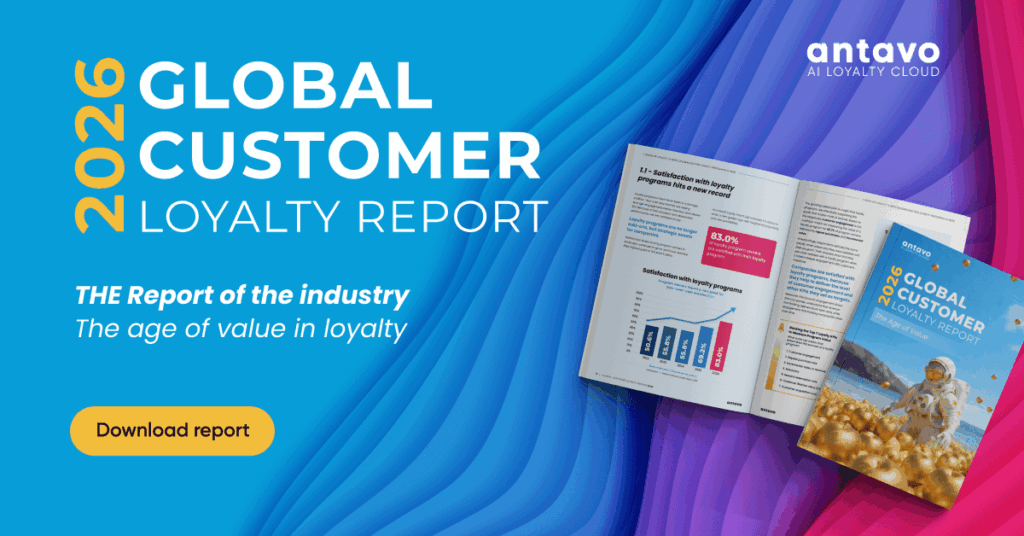
Below, we break down the trends shaping loyalty in the US and Canada, highlighting where regional data diverges from global benchmarks and what that means for marketers. All the statistics in this article are from Antavo’s Global Customer Loyalty Report 2026. Make sure to download it for more regional, global and industry-based findings on loyalty and AI.
United States: Loyalty as a strategic growth engine
If there is one word to describe the US loyalty landscape in 2026, it is confidence. While 83% of program owners globally report being satisfied with their loyalty program, in the US that figure jumps to 89%. This aligns with the broader global trend of loyalty entering a “golden age,” but US marketers are clearly ahead in perceived performance.
Budget allocation follows the same pattern. Globally, brands dedicate around half of their marketing budget to loyalty and CRM. In the US, the average allocation reaches 59%, significantly higher than the global average of 51%. For companies planning to launch, the number is even higher at 61%.
AI Adoption is ahead of the curve
The Value Age is defined by AI-powered, adaptive loyalty ecosystems. US marketers are leaning into this shift.
- 64% currently use AI-driven personalization, compared to 51% globally
- 64% use AI-powered tools to manage loyalty programs, well above the global benchmark
- AI preparedness scores are skewed higher, with 15% rating themselves at the maximum 10/10, nearly double the global share
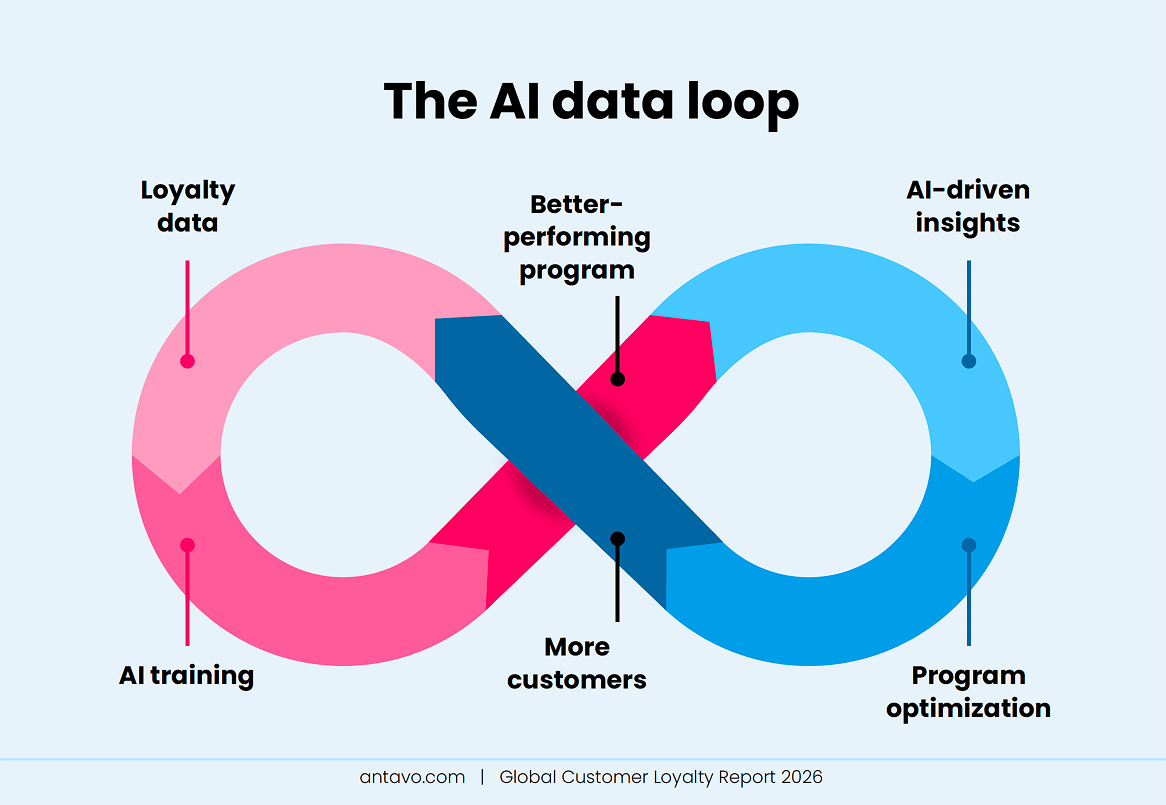
This reflects a virtuous cycle highlighted in the report: loyalty fuels AI with consented data, and AI optimizes loyalty performance in return.
However, challenges remain. Data quality and fragmentation are cited by 39% of US marketers as a barrier to analysis, echoing the global theme of “data blindness.” Even in a mature market, insight extraction remains difficult.
The Consumer Reality: High Expectations, Conditional Loyalty
On the consumer side, US members are highly engaged, but they are aware of the market reality.
- 79% agree loyalty programs helped them save money, above the global baseline
- 52% say they are more likely to join a loyalty program than last year, significantly higher than the 43% global average
However, only 30% agree they shop exclusively with brands that have loyalty programs. That mirrors the global perception gap highlighted in the report: brands may overestimate loyalty’s exclusivity effect.

US customers are motivated primarily by savings, but they expect seamless digital access and relevant rewards. The bar is high. Transactional value gets them in; sustained personalization keeps them active.
Canada: Loyalty as everyday utility
Canada presents a slightly different dynamic. Loyalty is deeply embedded in consumer life, but expectations are practical and value-driven. Canadian consumers belong to an average of 3.45 loyalty programs, slightly below the global average of 3.68. This suggests a more curated approach to membership.
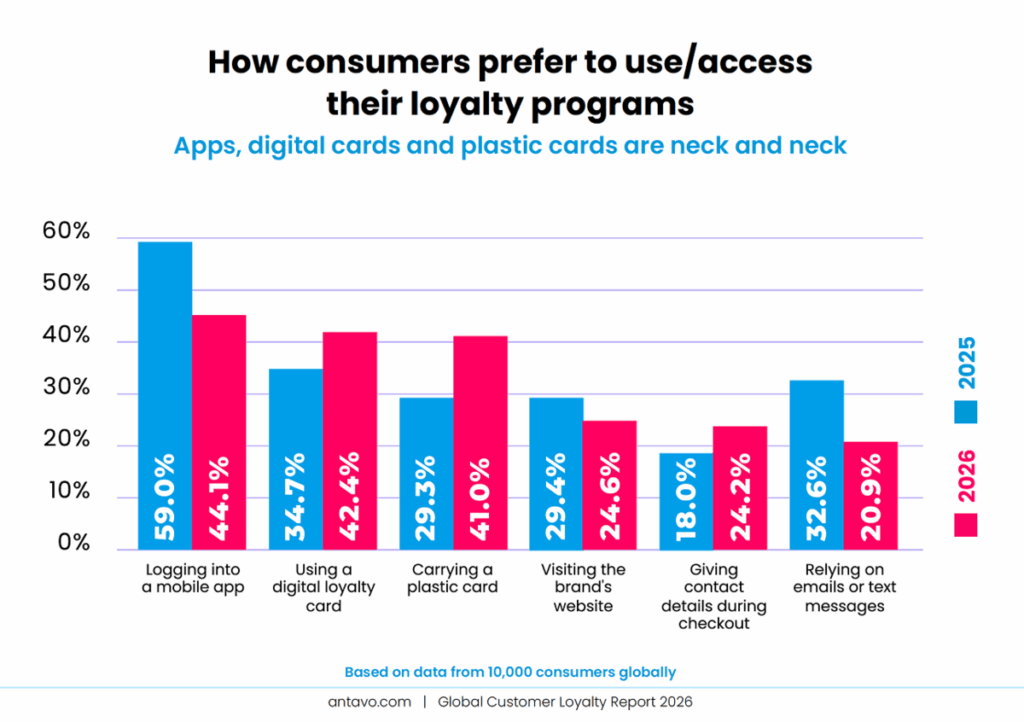
Channel preference stands out. While 44% of consumers globally prefer logging into a mobile app, in Canada only 40% do, and 51% still carry a plastic card, significantly above the global 41%.
This reinforces a key insight from Chapter 4 of the report: customers do not necessarily want “more apps.” They want frictionless identification. In Canada, physical access remains relevant.
Customer disappointment centers on reward attainability
Globally, the number one frustration is how long it takes to earn rewards. In Canada, that frustration is even stronger, as 57% say it takes too long to earn rewards, compared to 49% globally
This is a critical signal. In a market known for strong coalition programs and retail loyalty heritage, Canadian consumers expect transparent and achievable value exchange.
On the positive side:
- 81% agree loyalty programs helped them save money, slightly above global levels
- 71% say using loyalty programs is now part of their life, compared to 66% globally
Loyalty in Canada is not optional. It is habitual. But habits alone do not guarantee emotional loyalty.
Canadian consumers appear slightly more discerning. To gain their trust, value must feel meaningful, not marginal. This creates an opportunity for loyalty-led rewards that go beyond discounts. If rewards are attainable, relevant, and personalized, brands can close the perception gap and avoid quiet quitting.
Conclusion: North America is invested, but the value test is ongoing
Across both markets, loyalty is strong, funded, and strategically important. In the US, loyalty programs are highly integrated into AI strategies, heavily funded, and delivering strong ROI. Marketers are confident, and adoption of advanced capabilities is high. In Canada, loyalty is culturally embedded and widely used, but consumers are pragmatic. They expect accessible rewards and clear value exchange. For both of them, the real question is: how intelligently can we evolve?
If you’re exploring how ways to launch or revamp a loyalty program with a next-gen loyalty technology either in the US or Canada, book a call with Antavo’s loyalty experts. And don’t forget to download our report!