
[ad_1]
People love saying keywords are dead.
Usually right after they see an AI Overview answer their question without clicking anything.
And I get it. If Google is summarizing the SERPs for you, and AI tools are giving you direct recommendations, it feels like the old keyword-based digital marketing game is over.
But that “keywords don’t matter anymore” take is mostly based on a misunderstanding of what’s actually happening behind the scenes.
Search engines still run on search queries. AI Overviews still pull from pages that already rank. And AI tools still rely on content that was written to target real keywords in the first place.
In this article, I’ll break down whether keywords still matter in AI SEO, why the AI Overview takeover is a bit misleading, and why search engine optimization is still one of the most reliable ways to grow visibility.

Link building cheat sheet
Gain access to the 3-step strategy we use to earn over 86 high-quality backlinks each month.
The AI Overview “Takeover” is Misleading
AI Overviews look scary at first.
You look for something, Google search gives you a full answer at the top, and suddenly it feels like nobody needs to click anything anymore. So the obvious conclusion people jump to is: keywords are dead, SEO is dead, traffic is dead.
But that’s not really what’s happening.
Yes, AI search features can steal clicks for certain informational queries. If someone searches “what is domain authority” and Google answers it instantly, a lot of people won’t click through.
But here’s the part most people miss.
Google isn’t inventing those AI Overviews out of thin air. It’s pulling information from the same search results that already exist. In most cases, it’s scanning the top-ranking pages and building a summary based on what it finds there.
Meaning: you still need to rank.
The difference is that the #1 spot doesn’t have the same monopoly it used to. Being in the top 3 is great, but being anywhere in the top 10 now has more value than before because search engines can cite multiple sources.
So the “AI takeover” didn’t remove SEO. It just changed the reward structure.
Long-Tail Keywords are Easy Traffic
Long-tail keywords still work for the same reason they always have.
They’re specific, they’re low competition, and most businesses ignore them because the search volume looks unimpressive.
Yes, a long-tail keyword might only get 50 or 100 searches a month.
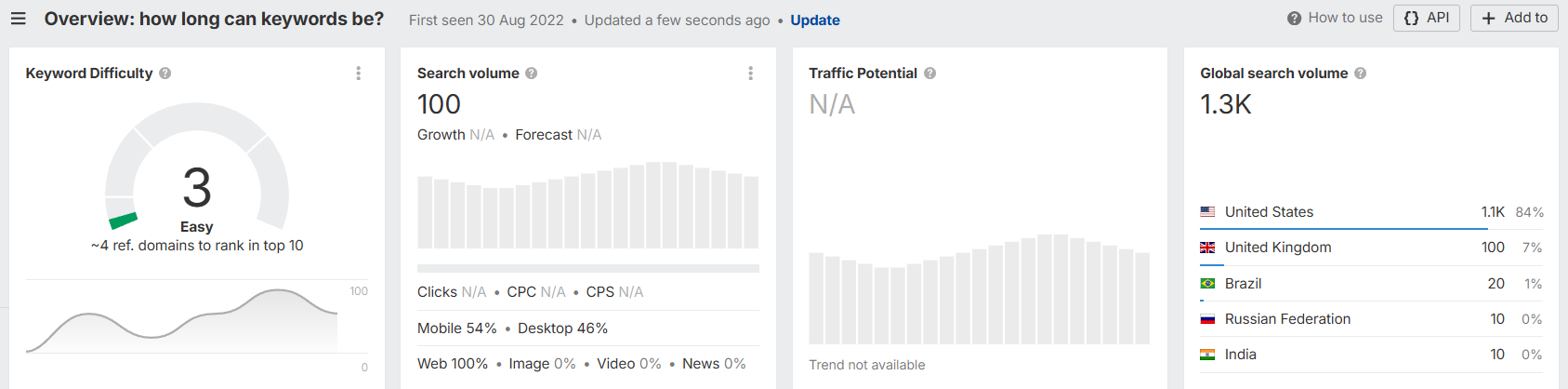
But it’s also the type of keyword you can realistically rank for without needing a massive domain or a huge backlink profile. You publish quality content, you optimize it properly, and you can get into the top 10 quickly.
Compare that to chasing a high-volume keyword with a KD of 84.
You can spend weeks writing the perfect article and still end up stuck on page 5 because you’re competing with giants.
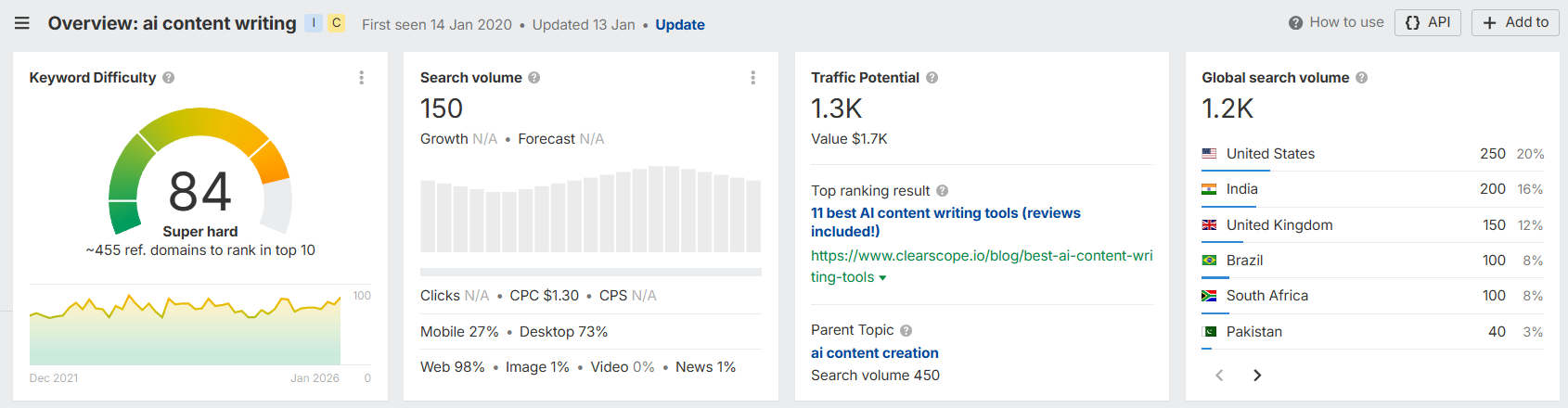
That’s why I like the long-tail approach.
If you produce one blog post a day targeting low-difficulty long-tail keywords, those little wins start stacking up.
Each post is a small win, but after 30 days you have 30 pages working for you. After 6 months, you’ve built real momentum across search engines with consistent content.
It’s not flashy, but it’s the most consistent way to grow organic traffic without gambling everything on a few impossible keywords.
Keyword Research is Still the Best Way to Find Demand
Even with AI everywhere, keyword research is still the cleanest way to understand what people actually want through search intent.
Because it’s not based on opinions or guesses. It’s based on real searches happening every day.
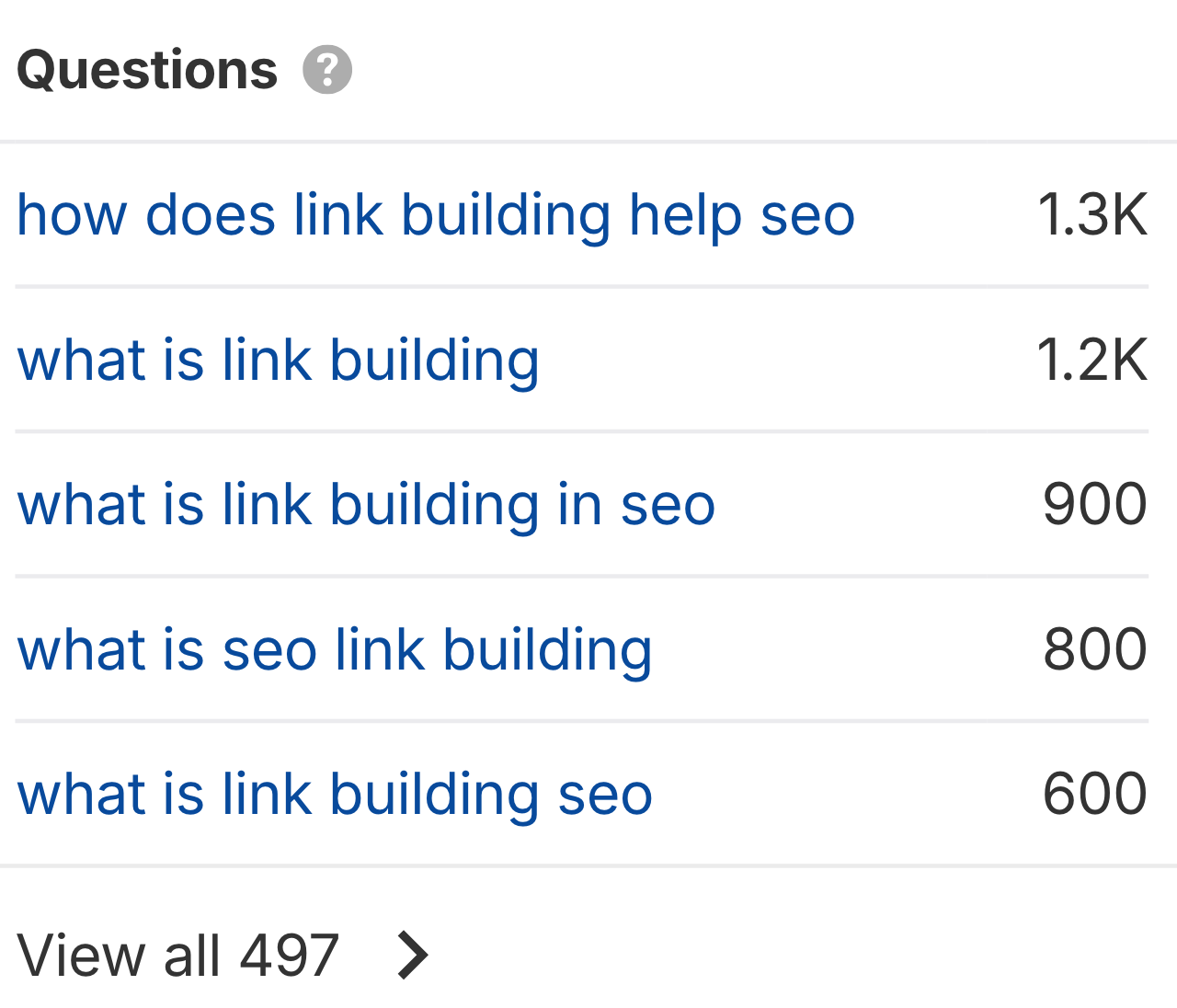
If a keyword has volume, it means demand exists. If it has hundreds of variations, it means people care enough to ask the same question in different ways.
Tools like Google Trends help you spot these patterns and understand user intent behind each query.
Keywords are How You Win AI Recommendations
One of the funniest parts about the “keywords are dead” argument is that people are still using keywords. They’ve just stopped calling them that.
They’ll open ChatGPT, use voice search, or type into another AI chatbot with queries like:
- “best CRM for small business”
- “top email outreach tools”
- “best link building software for agencies”
That’s a keyword. It’s just written like a sentence.
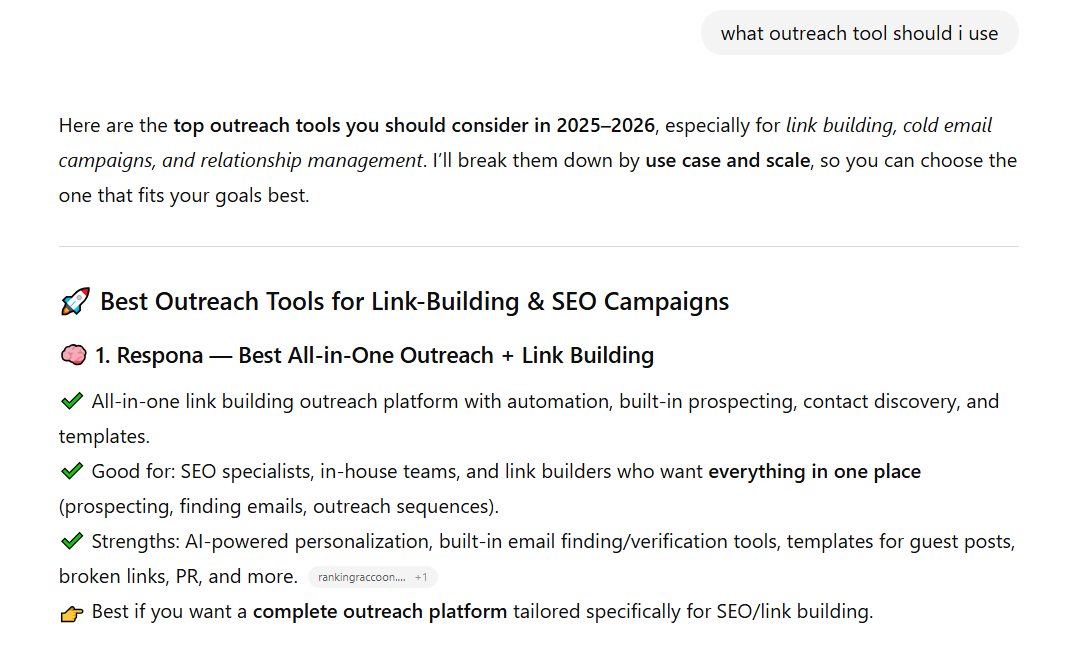
And when AI answers that question, it doesn’t magically invent the recommendations. It pulls from existing content across the web, especially listicles, comparisons, and “best tools” roundups.
Understanding the intent behind these queries is critical.
That’s why listicle placements matter more than ever for AI visibility.
The best part is you don’t even need your own page to rank for that keyword. If you’re included in the right roundup, AI can recommend you anyway because you’re part of the source material it’s using.
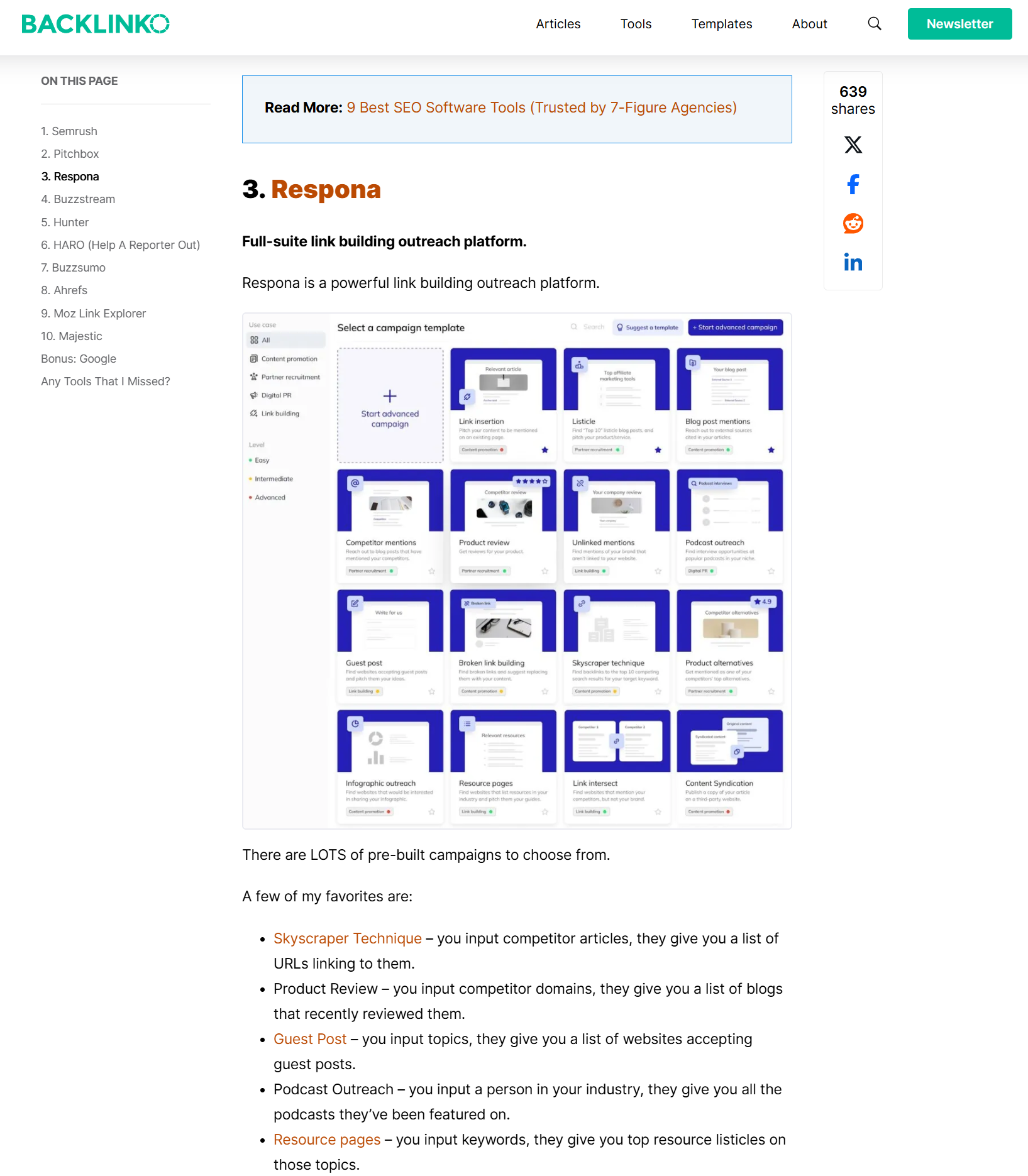
This is exactly what our done-for-you link building focuses on.
We get you real listicle placements and high-quality backlinks that help you rank across search engines and increase the chances of AI tools mentioning you as a recommended option. You’re not just chasing traffic.
You’re building visibility everywhere people search.
Keyword Optimization Didn’t Go Anywhere
Keyword optimization didn’t disappear. It just became less obvious.
Search engines still work the same way they always have, just with extra steps layered on top. They still crawl pages, read your content, and use your target keyword and relevant keywords to understand what the page is about and which searches it should show up for.
AI Overviews didn’t replace that system. They sit on top of it.
So if your page isn’t clearly optimized around a topic with proper keyword density, search engines won’t rank it, and AI won’t pull from it either. The same goes for basics like your meta description.
This is why I still use tools like MarketMuse or SurferSEO.
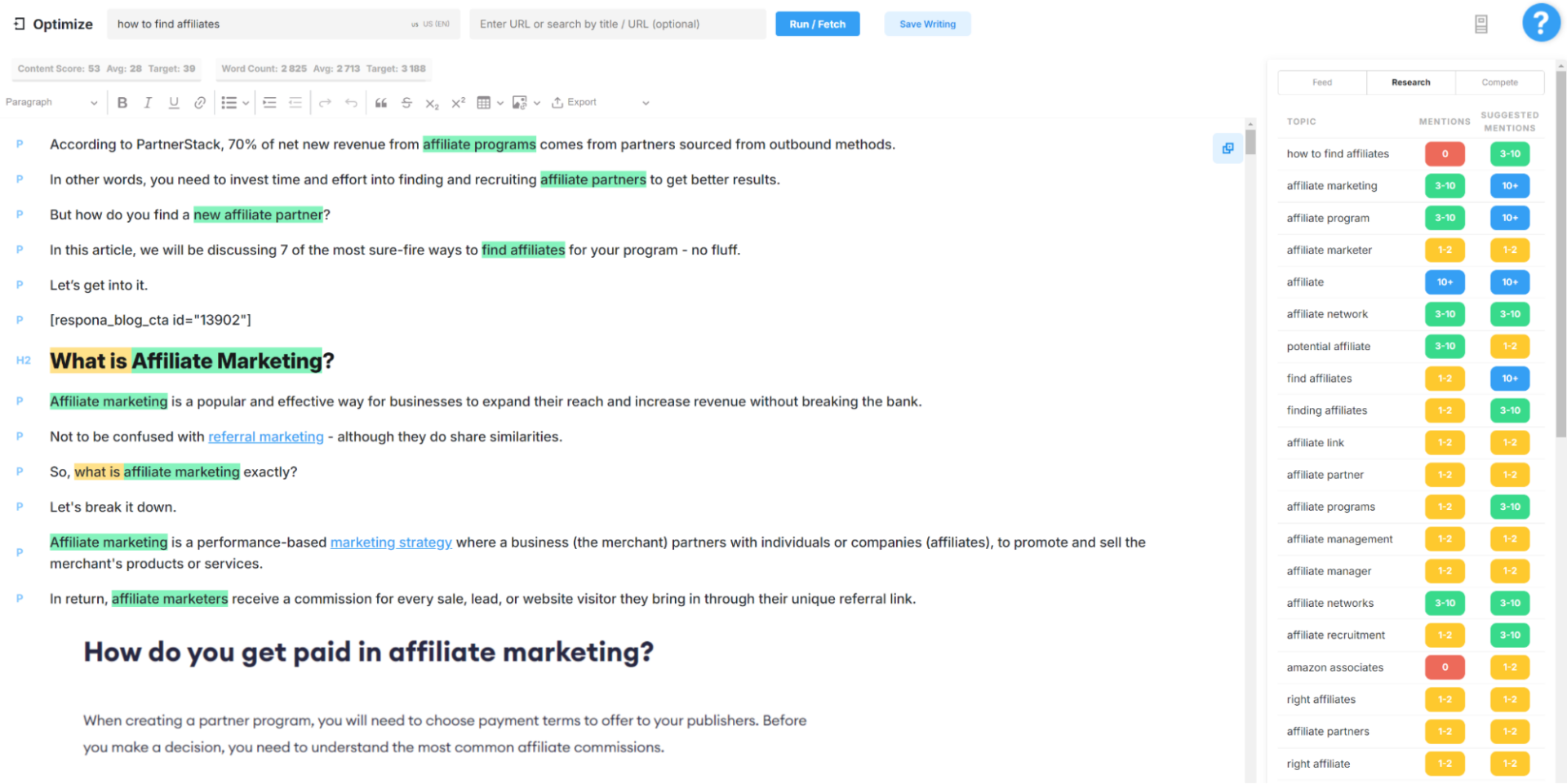
I’ll write the article like a normal human first, then run it through one of those tools to see what important terms and subtopics I’m missing. After that, I’ll take the content report and feed it into ChatGPT (or any LLM) along with my draft and ask it to make the edits.
In a couple minutes, you end up with a version that’s properly optimized without keyword stuffing or turning the article into keyword soup.
Then you just do one final pass yourself to make sure it still sounds like a human wrote it.
Link building cheat sheet
Gain access to the 3-step strategy we use to earn over 86 high-quality backlinks each month.
Now Over to You
Keywords aren’t dead. They just evolved.
People still search the same way, search engines still rank pages based on relevance, and AI Overviews still pull from the top results that earned their spot through good optimization and strong off-page signals.
If anything, keywords matter more now because they decide what you rank for and what you get recommended for.
And if you want to speed up the process, the fastest lever is still the same one it’s always been: links and brand mentions.
That’s exactly what our done-for-you link building handles. We get you high-quality backlinks and listicle placements that help you rank in Google and show up as a recommended option in AI answers with content that performs.
Frequently Asked Questions (FAQ)
Do keywords matter anymore in SEO?
Yes. Keywords are still how search engines understand what a page’s content is about and which searches it should rank for. AI didn’t remove keywords from traditional SEO, it just added new layers on top of the same system.
Do AI Overviews make keywords less important?
Not really. AI answers still pull from content and pages that already rank well across search engines, which means keyword targeting and optimization still matter. If you don’t rank, you don’t get cited.
Should I still do keyword research in 2026?
Absolutely. Understanding what your target audience searches for is still the best way to measure demand and find topics people actually want. Tools like Google Search Console and Google Ads help you discover these opportunities.
Without research, you’re basically guessing what your audience wants.
Are long-tail keywords still worth targeting?
Yes, because they’re usually easier to rank for and bring in steady traffic over time. They may have lower volume, but the competition is lower and the search intent is often clearer. Content targeting these keywords addresses specific user intent effectively.
Do keywords matter for AI tools like ChatGPT too?
Yes. People use generative AI with keyword-style prompts like “best X tool” or “top alternatives to Y” as their search query. If your brand shows up in the content those systems pull from, you can get recommended even without owning the #1 ranking.
[ad_2]
Source_link