Last week, I discussed the new brick-and-mortar Amazon entry: a big box store with a large helping of Amazon logistics, data mining, and merchandise expertise. As part of that Amazon discussion, two brand stumbling blocks came under scrutiny. One: Amazon’s continued lack of understanding of customers in brick-and-mortar grocery stores. Two, Amazon’s lack of designing and articulating brand-relevant differentiation.
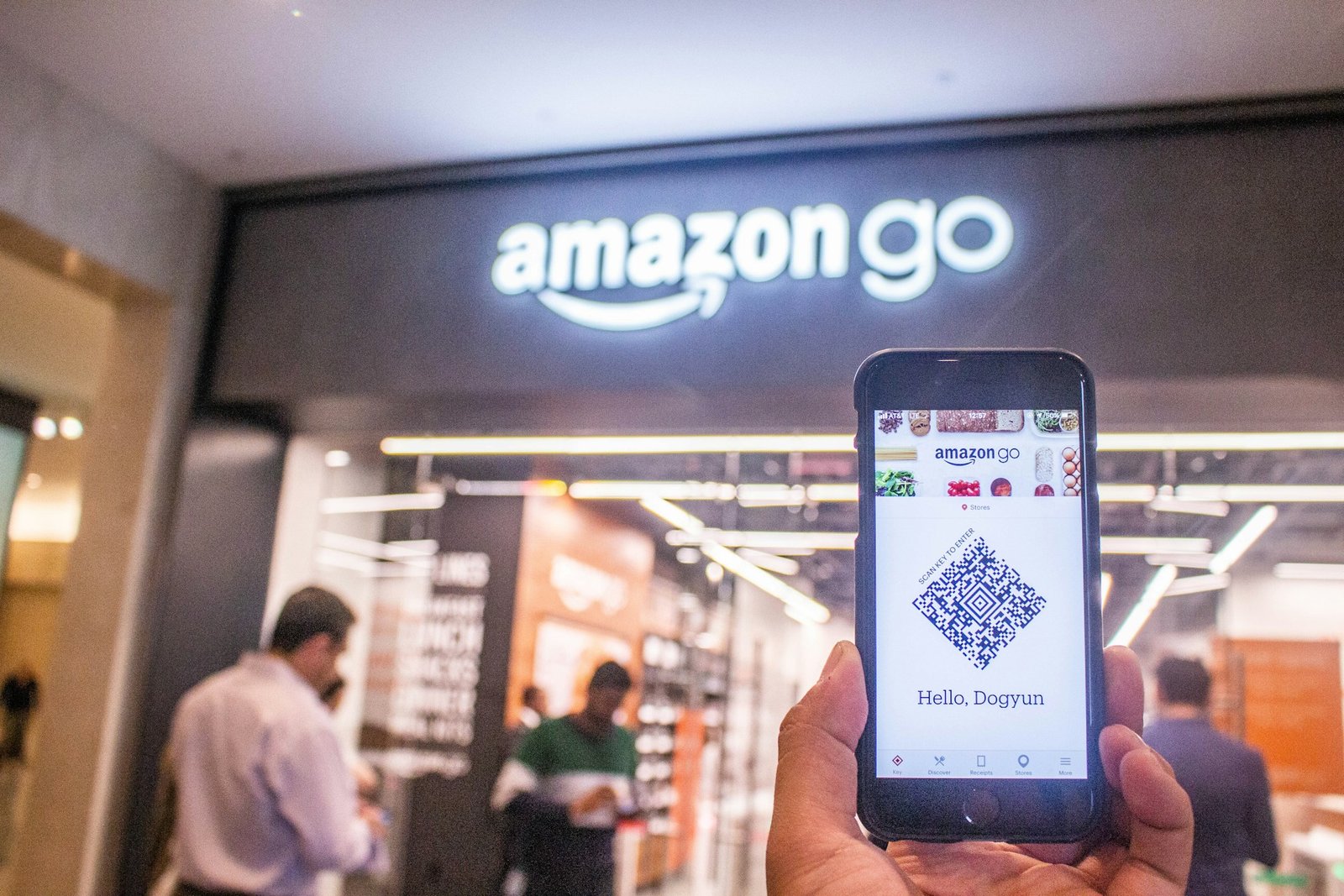
The latest news is that Amazon is closing all of its Amazon Fresh and Amazon Go formats. All of them. Poof. Goodbye to 57 Amazon Fresh stores and 15 Amazon Go locations. Amazon told the press that Amazon Fresh and Amazon Go “… failed to deliver a distinctive customer experience with an economic model that could be scaled up successfully.” Apparently, these dead concepts will be converted to Whole Foods stores.
What is fascinating about the PR comment is the link made between relevant differentiation and profitability. Brand management is designed to grow customer-perceived brand value by generating and delivering a relevant, differentiated brand promise. What is common sense within basic brand-building principles is uncommon sense among today’s brand principals.
This article is part of Branding Strategy Insider’s newsletter. Join the world’s smartest marketers and subscribe here for actionable insights delivered directly to your inbox.
If Amazon can seemingly fail to grasp the very basics of brand management, imagine what is happening across other brands. Starbucks and Chili’s Bar & Grill are stellar outliers in a world of poorly performing, mismanaged brands.
A lack of facility with basic brand-building principles is undermining brands’ health and resources. Whether you like it or not, brand mismanagement affects all of us. We see mismanagement in price hikes, reduced package contents, and stock prices.
Yes, again, our higher education is partly at fault. Business schools perceived brand management as fluff, as a “trade” and not as a profession. Universities must recognize the need for brand management as a necessary discipline and one that deserves a degree. The focus on digital and economics is nice. But if brands are mismanaged, neither digital nor economics will generate shareholder value. Money is always the end game; the goal. Without customer-perceived brand value (Amazon’s problem with its grocery experiments), there is no shareholder value.
Do you know how to build customer-perceived brand value leading to shareholder value?
Let’s look at Amazon’s lack of understanding of customers in a brick-and-mortar grocery store. Why? Because knowing your prime prospects and knowing their needs and problems is step one. Data, of which Amazon has more than most brands, tells you what people have bought. Data tells you what, when, and how much. Data, at the moment, does not tell you how customers actually feel when in a particular purchase environment. At the moment, data do not yet feel. The ability of data to understand “why” is not as valuable. Pre-created lists of “whys” are not the same as deep dives and genuine insights. My cleaning service uses three smiley faces, which in no way reflect how I really feel. Amazon’s Whole Foods stores follow up a grocery delivery with an email asking me to rate the service. The icons represent services I have no idea about. How do I know if my selected grocery items were put together properly?
In 2022, CEO Andy Jassy indicated that Amazon was planning to “go big” in grocery. Even then, four years ago, it was clear that Amazon Fresh and Amazon Go were not going to be the game-changers that Amazon and exhilarated observers expected. In 2022, it was also clear that Amazon’s 2017 purchase of Whole Foods had not changed the grocery landscape as expected.
In his statements, Mr. Jassy noted that part of the problem with Amazon Fresh and Amazon Go was that many stores opened during the pandemic. The pandemic excuse has been the default for brands that are being mismanaged. In 2022, some observers noted that Amazon did not yet truly understand grocery. Some said the focus on technological convenience, such as smart shopping carts and ‘just-walkout’ intelligence, led Amazon astray.
As the Financial Times noted at the time, no one says they are going to the grocery store because of smart shopping carts. Shopping carts that think are nice. But shopping carts do not pull items off of shelves. Shopping carts cannot tell you if that cantaloupe is ripe or if there are moldy strawberries in the just-picked-up bunch. Shopping carts are not the person behind the meat or fish counter who answers random, consumer questions – not preplanned questions, about which cut of meat will satisfy an immediate need, nor which package will feed 6 people.
It is a mistake to assume that shoppers want people-less stores for grocery shopping. Peruse the perimeter of your local grocery store and observe how many shoppers are conversing with the butcher or the person behind the fish counter. See how many people are conversing with each other. People have questions. People want to chat about that cut of meat, how many people that chicken will serve, or which fish is boneless.
During the 2022 interview, Amazon indicated that grocery is still “in the early stages” of concept development. OK, understandable. Grocery, like many retail businesses, has a steep learning curve. Although technology can play a role, it is not the driver for food shopping.
Amazon admitted (finally!) in last week’s PR relating to the shutdown of Amazon Fresh that customers were just not “won over” by its high-tech shopping carts. Amazon also admitted that the Amazon Go convenience store concept, which let customers check out electronically without waiting in line, also never resonated with shoppers on a large scale.”
Blaming the pandemic may be a reason why the various Amazon grocery concepts faltered. Amazon could also blame the weather. But, making technology the star attraction might also be a reason. Amazon’s grocery technology is wonderful. But, for grocery, Amazon needs to grasp that its technology is also soulless.
Shopping for food is emotional and social, and says things about the shopper. People want to be smart shoppers. A smart cart has nothing to do with being a smart shopper.
There is a humanity to grocery shopping. Many purchase decisions are both calculated and spontaneous. People rely on their internal value equation when making purchase decisions. Decision-making is not always effortless. Just go to the granola bar section of your market. When faced with so many items, decision-making becomes difficult. Sure, you can go online and do a check while shopping. But the technology created for Amazon grocery did not address decision-making. Which one do I buy?
Which brings us to Amazon’s second foible in grocery retailing: relevant differentiation.
Amazon can only hope that, as it ventures into new grocery ideas, such as the Chicago megastore, its executives now recognize that technology is a feature that delivers benefits, not the benefits themselves. Those benefits need to be articulated in relevant, differentiated ways. Saying that “just-walk-out technology” is convenient is generic and a brand feature. A brand feature is the support for the relevant, differentiating functional, social, and emotional benefits. Exactly what is Amazon’s brand promise for its grocery brands? What is the promised relevant differentiated experience at Amazon grocery or Amazon megastore?
Relevant differentiation is critical. Without relevant differentiation, your brand exists in the commodity corner; a generic me-too alternative.
In last week’s article, the plight of Ozempic was reviewed. Ozempic now exists in a customer-perceived sea of sameness. Ozempic is using advertising to highlight its relevant differentiation to potential users.
The Wall Street Journal wrote about Ian Schrager, the hotelier and co-founder of famed Studio 54, discussing Mr. Schrager’s commitment to his Public hotel brand. Mr. Schrager states that he has been preoccupied with other hotel commitments and his focus on Public wavered. But now Mr. Schrager is back. One commentator told The Wall Street Journal, “… Public’s biggest challenge may be standing out in the crowded hospitality landscape that Schrager helped create….”
Yes. When hotel holding companies such as Hilton, Marriott, and IHG have dozens of offerings, including many boutique brands, creating relevant differentiation is essential. Hotels tend to differentiate on category must-dos such as amenities (or lack of), price, services (or lack of), and location. I was once told by an IHG hotel operator that the key differentiator of his hotel was offering three bottles of water at no charge to guests. Three bottles of water are a specific feature. What is the benefit of three free bottles of water?
Remaining relevantly differentiated in a changing world is critical to a brand’s health. Relevant differentiation is a key driver of purchase intent. Relevance means the brand is current in customers’ minds. Relevance means the brand is perceived as addressing current customer needs. Relevance, along with differentiation, is necessary for defining brand value. Is the branded experience a customer receives or expects to receive relevant and differentiated relative to other brands?
Do you know how to create relevant differentiation?
Amazon is struggling to achieve relevant differentiation in grocery. Yet there are core constructs and principles that can help your brand stand out in today’s challenging retail environment. If only your universities would sign on to teaching proper brand management.
Always be in touch with customers’ needs and problems. Never take your eyes off how the world is changing and how customers are responding to these changes. Customers respond with emotions. What are the ways in which your brand can use its heritage, its provenance, to generate new ideas? Unlike trust that takes time to rebuild, relevance and differentiation can be renewed quickly. Relevance and differentiation depend on news that makes sense for the customer and the brand. Innovation and renovation are key. But innovation and renovation must begin with customer needs and problems. It is difficult to imagine customers telling Amazon that their biggest issue was the shopping cart.
During the 2003-2005 McDonald’s turnaround, one of the key elements we seeded within the organization was changing the product development process to be customer-need-and problem-driven rather than manufacturer-driven. In product development meetings, McDonald’s executives would say, “We need a new chicken sandwich.” Why? Because we think we need that. OK, but do your customers think?
Turned out, the biggest problem at the time was that moms with kids had nothing to eat. Moms with kids bought a beverage and possibly stole a fry or two from their kids’ meals. These caregivers did not want a burger. Too much. This serious problem was solved by introducing the chicken Caesar salad with Paul Newman dressing.
As a marketer, your job is to compete. Compete differently with The Blake Project.
Relevant differentiation, even if it is a new idea, is comforting. Providing products and services that truly understand customers is comforting. For a customer, it is comforting to say, “This is made for me because that brand really understands my needs and my problems.”
Given the resources spent on developing grocery concepts, it would be great if Amazon invested some of those resources in building grocery brands that resonate with customers, generate customer-perceived brand value, and drive enduring, profitable growth. This can only happen if Amazon – and other brands – hire leaders who understand the basics of brand management. And that will only be possible if our universities change their ingrained, unfortunately out-of-date perceptions of brand management.
The basics of brand management lead to value creation. Value creation leads to shareholder value, leading to enduring, profitable growth.
Contributed to Branding Strategy Insider by: Joan Kiddon, Partner, The Blake Project, Author of The Paradox Planet: Creating Brand Experiences For The Age Of I
At The Blake Project, we help clients worldwide, in all stages of development, define and articulate what makes them competitive and valuable at pivotal moments of change. Please email us to learn how we can help you compete differently.
Branding Strategy Insider is a service of The Blake Project: A strategic brand consultancy specializing in Brand Research, Brand Strategy, Brand Growth, and Brand Education
Post Views: 29